Healing Magic
The Art of Restoration and Care
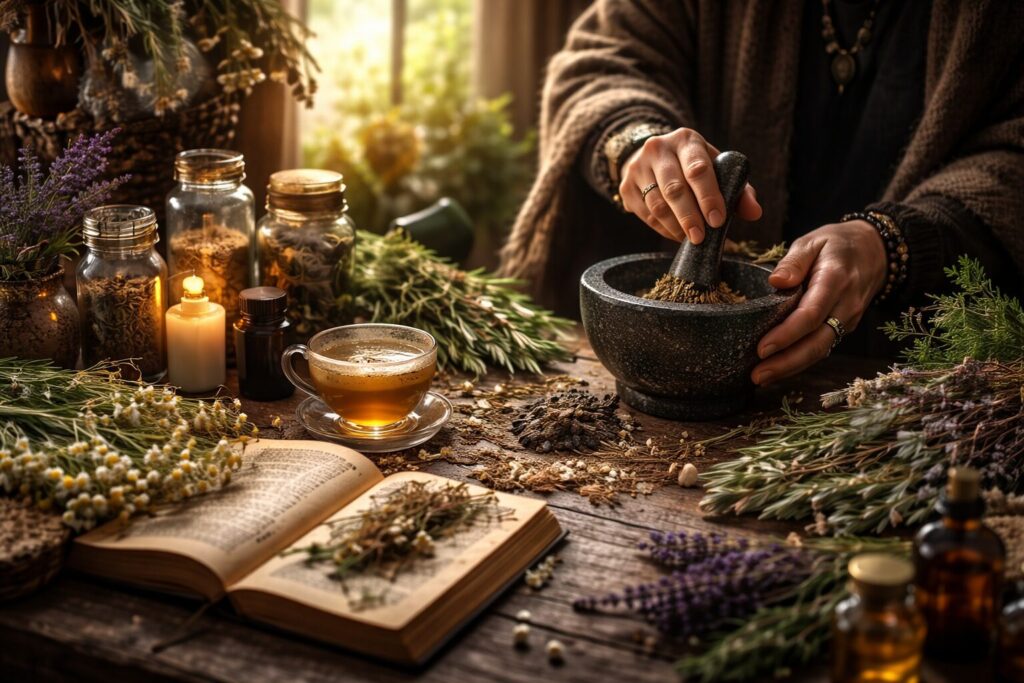
Healing magic is the art of restoration — of guiding body, mind, and spirit gently back toward balance. It is one of the oldest and most instinctive expressions of the Craft. Wherever people have brewed herbs for the sick, laid hands upon the weary, whispered blessings over wounds, or gathered in prayer around the suffering, healing magic has been present. It does not promise miraculous cures or instant transformations. Rather, it seeks to support the natural processes of renewal already woven into living things.
Within the Coven of the Veiled Moon, healing is understood as both a personal practice and a communal responsibility. No person exists entirely apart from the circles that sustain them. When one member struggles, the currents of care ripple outward; when one regains strength, the entire community feels the lifting of that weight. Healing therefore happens in many forms. Sometimes it is quiet and intimate — a warm cup of herbal tea prepared with intention, a hand held in comfort, a soft prayer offered in the night. At other times it becomes collective — a circle gathered to mend grief, restore courage, or steady a friend during illness or hardship.
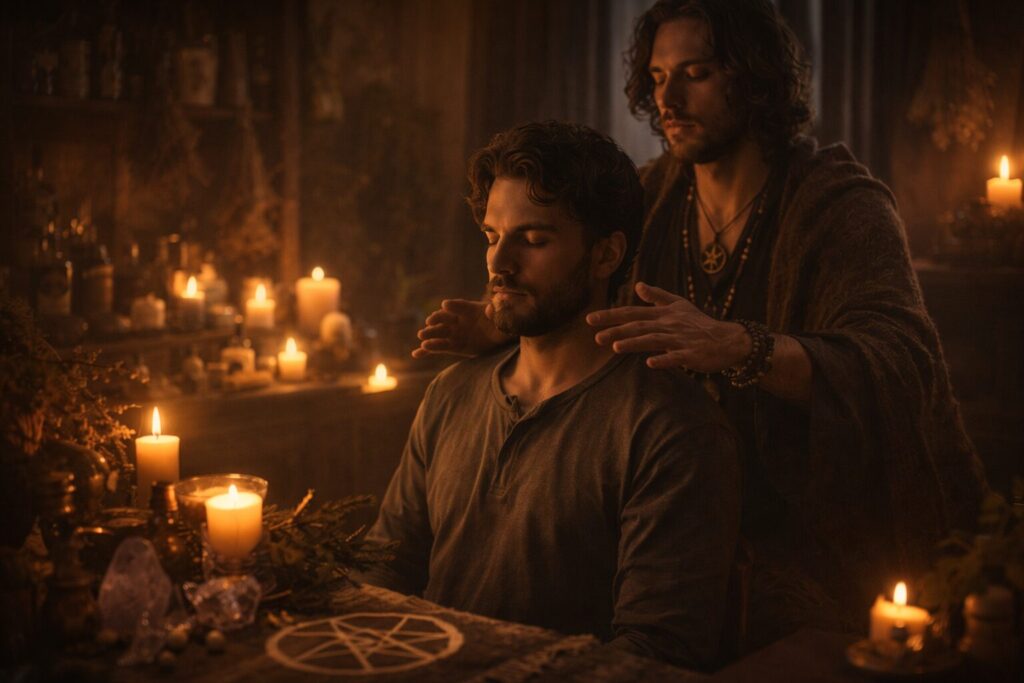
Healing magic rarely stands alone. It moves easily alongside other branches of the Craft. Herbalism provides the language of plants and remedies drawn from the living earth. Kitchen magic transforms nourishment into a ritual of comfort and restoration. Candle magic focuses intention through flame, while prayer and blessing lend voice to compassion and hope. Dream work may reveal hidden sources of imbalance, and divination can guide the healer toward the right timing or remedy. In each case the magic does not replace care already known to the body or the wisdom of medicine; it supports them.
The work of healing usually begins simply. A poultice placed upon a wound, a lavender sachet tucked beneath a pillow, a charm carried quietly for strength during recovery — these are humble acts, but they form the foundation of deeper practice. With experience, healing magic may expand into consecrated amulets, ritual blessings, circle-based healing rites, or the tending of spaces and homes that have fallen into distress. At its most profound, healing becomes less about individual ailments and more about restoring harmony wherever imbalance appears.
Yet the heart of healing magic is humility. A healer does not command the body to mend, nor do they claim authority over another’s recovery. Instead they offer support, care, and intention — creating conditions in which renewal can take root. Healing magic works best alongside medicine, therapy, and the body’s own remarkable intelligence. To pretend otherwise is not only mistaken but dangerous.
For this reason the Coven of the Veiled Moon teaches that healing must always be practiced with patience, clarity, and compassion. Recovery often unfolds slowly, like the knitting of a wound or the gradual return of strength after illness. Magic does not force this process; it accompanies it. The practitioner listens, steadies, and lends energy where it is welcome.
To practice healing magic is therefore to serve. Whether tending a friend, supporting a coven member, or restoring peace to a troubled home, the work is never about power or spectacle. It is about care freely given — an act of solidarity and reverence for the fragile, resilient web of life that binds us all.
The Foundations of Healing Magic
Across cultures and magical traditions, healing rarely relies on a single technique. Instead it emerges from several overlapping currents working together. Herbs may support the body, prayer may steady the spirit, energy work may restore balance, and the environment itself may be cleansed or renewed. Understanding these foundations helps practitioners see healing not as one spell, but as a network of supportive forces acting together.
Physical Support
Herbs, nourishing food, oils, baths, rest, and gentle care support the body’s natural recovery. These practices are often the most ancient and practical forms of healing magic.
Emotional & Mental Care
Comfort, prayer, calm environments, and compassionate conversation help stabilize the mind and heart, allowing deeper recovery to begin.
Energetic Alignment
Practices such as laying on hands, Reiki-style work, ritual blessing, and focused intention seek to restore balance in the subtle currents surrounding a person.
Environmental Balance
Spaces themselves may need healing. Cleansing a home, restoring calm to a room, or tending the spirit of a place can help support the well-being of those within it.
The Currents of Healing Magic
Healing magic rarely moves through only one method. More often it flows through several intertwined currents at once: physical care, blessing, nourishment, energy, symbol, and the restoration of harmony in the spaces we inhabit. Each current supports the others, forming a gentler and more complete approach to restoration.
Herbs and Remedies
One of the oldest healing currents is the use of plants, teas, oils, baths, compresses, and simple remedies prepared with both practical care and magical intention.
Nourishment and Kitchen Care
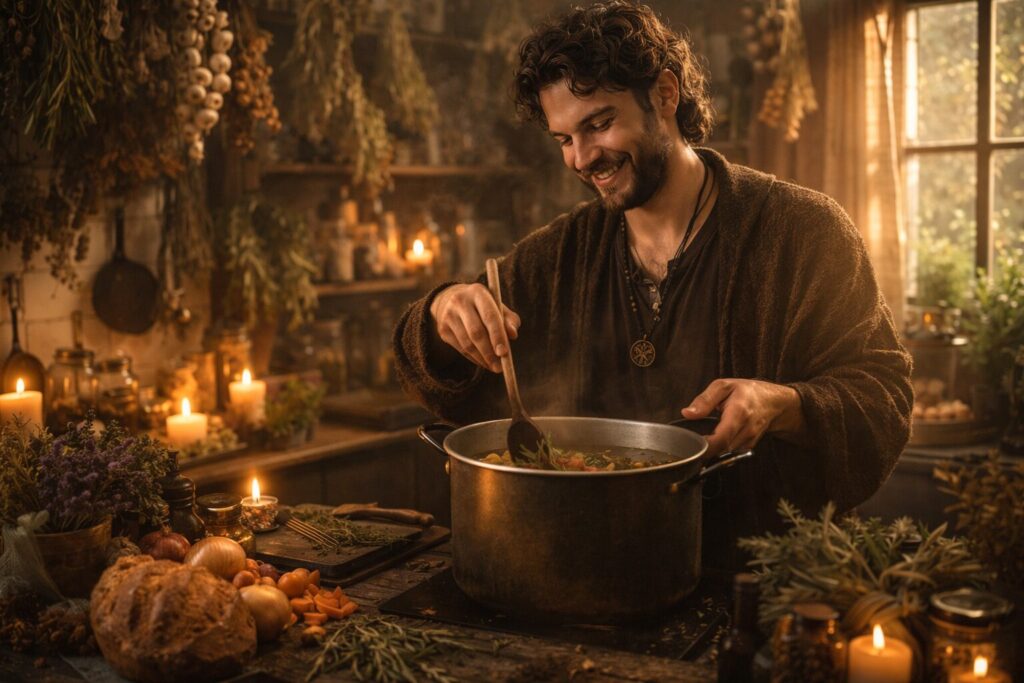
Food, tea, broth, and warm kitchens often become the first temple of healing. In this current nourishment itself becomes ritual: comfort offered through preparation, blessing, and daily care.
Prayer and Blessing
Healing often travels through words spoken with devotion: whispered blessings, formal prayers, and sacred speech that steadies the spirit during illness, grief, or recovery.
Energy and Touch
Some healing practices work through touch, near-touch, gentle channeling, or focused intention. These methods include laying on hands, energy balancing, and modern systems such as Reiki.
Symbols, Charms, and Supports
Amulets, sachets, sigils, stones, threads, and consecrated objects can hold ongoing supportive intention, helping sustain comfort, protection, resilience, or calm during longer periods of recovery.
Dream, Insight, and Sacred Timing
Healing sometimes requires listening as much as doing. Dreams, divination, and ritual timing can reveal when to rest, when to release, and which path of support may be most helpful.
No single current carries the whole work. Healing magic is usually layered — practical care joined to prayer, energy joined to nourishment, ritual joined to patience. In this way healing becomes less a single spell than a woven field of support.
Forms of Healing Practice
Healing work takes many shapes. Some forms are deeply practical and domestic; others are ritual, communal, or energetic. In most real practice they overlap. A person may receive herbs, rest, prayer, touch, cleansing, and symbolic support all at once. The strongest healing traditions rarely isolate one method from the others.
Herbal and Kitchen Healing
Plants, nourishment, teas, broths, and herbal preparations support the body’s natural recovery. These practices are among the oldest forms of healing magic, blending practical care with gentle intention.
Prayer, Blessing, and Sacred Speech
Words spoken with compassion can steady the spirit and calm the mind. Across cultures, prayers, chants, and blessings have long been used to invite comfort, resilience, and clarity during times of illness or hardship.
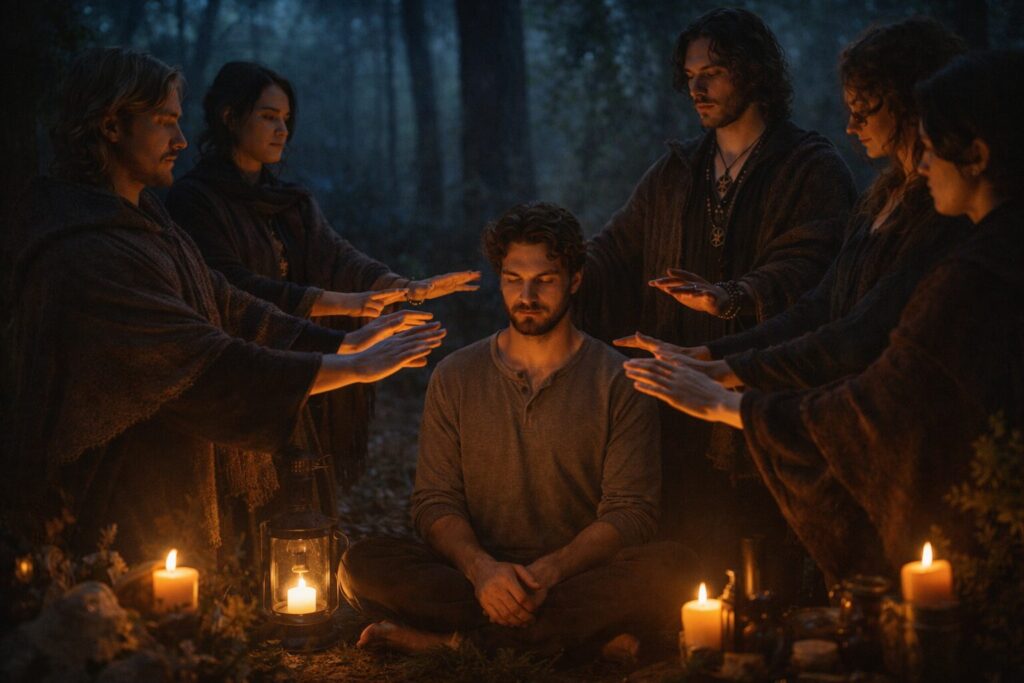
Energy Healing and Laying on Hands
Touch or near-touch healing seeks to restore balance in the subtle currents of the body. Whether through traditional laying on of hands or modern systems such as Reiki, the focus is on gentle alignment rather than force.
Cleansing and Environmental Healing
Spaces themselves may require renewal. Smoke cleansing, bells, salt, and ritual blessings can help restore calm to a home or gathering place, supporting the well-being of those who dwell within it.
Symbolic Supports
Amulets, sigils, crystals, and small crafted charms can hold supportive intention over longer periods. These objects act as anchors, helping carry healing focus through days or weeks of recovery.
Dream and Divinatory Guidance
Healing sometimes requires listening as much as doing. Dreams, cards, or other forms of divination can reveal when to rest, when to release, and which forms of support may be most helpful.
Healing Anchors
Some healing practices are small, repeatable acts that sustain intention over time. These anchors do not replace deeper care, but they help carry healing energy through days and weeks of recovery.
Laying on Hands
With clear consent, healing touch or near-touch can become a focused act of comfort, channeling steadiness and care while reminding the recipient that they are supported rather than left alone in their pain.
Coven Healing Circle
A shared candle, repeated blessing, or cord-cutting rite for strain and sorrow allows healing to move through community, gathering many voices and many hands into one field of care.
Amulet for Recovery
A small consecrated object — such as a copper coin wrapped in blue thread — can hold ongoing intention during convalescence, supporting patience through the slower phases of healing.
Cleansing the Home
After illness, grief, or conflict, a space may need restoration. Smoke, bells, salt, or a four-corner blessing can help clear stagnation and welcome a calmer current back into the home.
Nourishing Food Magic
Soup, bread, broth, and other comforting food prepared with deliberate care can become healing in the deepest sense — sustaining the body while reminding the spirit that it is being tended with love.
Quiet Daily Blessings
Not every healing act needs ceremony. A hand on the shoulder, a prayer at dawn, or a whispered blessing before sleep can form a steady rhythm of support over time.
Healing anchors do not replace deeper care. They help carry intention across days and weeks, giving restoration a material shape that can be returned to again and again.
Healing Traditions Across Cultures
Nearly every culture has developed ways of tending suffering through some combination of plants, prayer, touch, ritual, timing, and community care. These traditions are not interchangeable, and they should not be flattened into a single vague spirituality. Yet across their differences, they often reveal a common truth: healing is strongest when practical care and spiritual meaning are allowed to support one another.
Across Europe, healing traditions often grew from the close relationship between household knowledge, village custom, herbal practice, and sacred speech. Remedies were practical and immediate: teas, compresses, poultices, smoke, baths, food, protective charms, and spoken blessings passed through families or local communities. Healing was rarely separated cleanly into categories like “medical” and “magical.” It was simply part of how people cared for one another.
In these traditions, prayer and charm frequently lived side by side. A healer might know which plant soothed a fever, which prayer steadied the frightened, and which simple ritual restored a room after sickness or sorrow. Healing often belonged to ordinary life rather than grand ceremony. It happened at the hearth, at the bedside, in the herb garden, and in the hands of those who had learned to tend body and spirit together.
This current connects strongly to the modern magical understanding of healing as something both practical and sacred. It reminds us that restoration often begins with humble acts repeated faithfully over time.
In many religious traditions, healing is approached through prayer, blessing, vigil, and the invocation of divine aid. The language and theology differ across cultures, but the underlying impulse is deeply familiar: when suffering exceeds our personal strength, we gather the heart, the voice, and the community into an act of reverent support.
Devotional healing may include spoken prayer at the bedside, anointing with oil, the laying on of hands, lighting candles, communal petitions, or simple repeated blessings over food and water. These practices often emphasize humility. The healer does not claim to command life itself, but to ask, invite, or bless in hope that comfort, strength, and renewal may come.
This current connects closely with magical healing because both understand words, intention, and sacred timing as real supports. It also helps remind modern practitioners that healing work can be solemn, patient, and relational rather than dramatic.
Across African diaspora traditions, healing often appears as a deeply layered practice combining plants, bathing, cleansing, prayer, protective work, spiritual discernment, and communal care. These systems developed under conditions of violence, survival, migration, and adaptation, so their healing practices often carry both practical knowledge and profound cultural memory.
In many of these traditions, healing does not separate body, spirit, home, and community into unrelated problems. Instead, imbalance in one area may affect the others. A person may be strengthened through baths, herbs, prayer, cleansing rites, and attention to the spiritual and social conditions surrounding suffering. This holistic instinct is one of the great points of connection with healing magic more broadly.
The respectful lesson for modern practitioners is not to borrow what does not belong to them, but to recognize the seriousness and sophistication of healing systems that understand restoration as relational, embodied, and spiritually meaningful.
In a number of East Asian traditions, healing is often understood through the language of balance, circulation, vitality, and the proper movement of life-force. While the systems themselves are distinct and should not be collapsed together, many share an interest in how energy, breath, environment, and bodily condition interact.
This is one of the reasons practices such as Reiki are often meaningful to modern magical practitioners. Reiki is not an ancient universal category, but a specific modern Japanese healing system that belongs within a broader family of energy-oriented approaches. Its inclusion on a page like this makes sense when treated respectfully: as one example of a healing current centered on channeling, touch, and supportive presence.
What connects these perspectives to healing magic is the idea that restoration is not only about removing symptoms, but about helping life move well again — through steadiness, alignment, balance, and proper support.
Many Indigenous healing traditions understand human well-being as inseparable from relationship: relationship to land, to community, to ceremony, and to inherited ways of knowing. In such traditions, healing may involve plants, songs, bathing, prayer, elders, ritual specialists, and practices tied closely to the cultural life of a people.
For modern readers, this part of the conversation calls for special care. These traditions are not open decorative material for spiritual borrowing. They are living systems with their own obligations, meanings, and guardians. The respectful response is to learn that healing can be profoundly place-rooted and community-rooted without assuming that every sacred practice is ours to use.
This matters to healing magic because it expands the imagination. It reminds us that restoration is not only individual. It can also involve right relationship with home, land, and the larger living world.
These traditions are not “all the same,” nor should they be reduced to interchangeable forms of generic spirituality. But when viewed respectfully, certain recurring patterns do appear. Again and again we see healing joined to:
- Practical care — herbs, food, baths, touch, rest, and bodily support
- Sacred meaning — prayer, blessing, ritual, timing, and symbol
- Relational healing — family, community, healer, patient, and place all matter
- Humility — healing is invited, supported, and tended, not dominated
- Rebalancing — the goal is often restoration of harmony rather than sudden conquest
This is where healing magic finds its wider context. It is one branch of a much older human effort to accompany suffering with skill, care, and reverence. The forms vary. The underlying seriousness does not.
Ethics, Limits, and Responsibility
Healing work asks more of a practitioner than skill alone. It asks for honesty, restraint, compassion, and the maturity to know where magic helps, where it does not, and when other forms of care must be honored. Because healing touches real vulnerability, its ethics must be clear.
One of the first ethical truths of healing magic is that it should not be framed as a guaranteed cure. The practitioner does not command the body to mend by sheer force of will, nor do they conjure instant wholeness out of suffering. Instead, they offer support: steadiness, intention, care, blessing, and conditions in which healing may become more possible.
This matters because language shapes expectation. When healers speak as though they can fix anything, they risk feeding false hope, spiritual dependency, or shame in those whose pain does not quickly improve. Healing is rarely simple. Bodies recover at different rates. Grief moves in waves. Exhaustion lifts slowly. Trauma may require long and careful attention. Magical practice must be humble enough to respect that reality.
A wiser understanding sees healing as accompaniment rather than domination. Magic may comfort, strengthen, calm, clarify, bless, or help remove what hinders restoration. But it does not erase the complexity of illness, injury, or emotional pain with a theatrical promise.
Healing magic works best when it is placed beside medicine, therapy, rest, nutrition, and other forms of responsible care rather than against them. A prayer, a blessing, a healing rite, or a consecrated charm may offer real comfort and meaningful support, but none of these should be used to discourage medical attention or replace necessary treatment.
In the Coven of the Veiled Moon, we treat healing work as complementary. Magic can help steady the spirit during illness, soothe fear, create a supportive atmosphere for recovery, or help a person feel cared for and spiritually held. Medicine, counseling, and clinical care, meanwhile, address dimensions of suffering that require their own knowledge and discipline. These are not enemies. They can be allies.
To suggest otherwise is irresponsible. A mature healing tradition must be able to say clearly that doctors, medicine, and therapy are not failures of magic. They are often part of the very field of support through which healing becomes possible.
Healing offered without consent can easily become intrusive, presumptuous, or coercive. This is especially true in practices involving touch, energetic work, intense prayer, or highly personal spiritual interpretations of someone else’s suffering. Good intention does not erase bad boundaries.
Whenever possible, healing should be invited, requested, or clearly welcomed. Even when a person does desire support, they may have limits: no touch, no public ritual, no naming of their condition, no dramatic prayer, no advice beyond what was asked. Ethical practitioners respect these limits.
Boundaries matter for the healer as well. No one should be pressured into carrying more pain than they can responsibly hold. A practitioner may support another without making themselves the sole source of care, and without confusing compassion with total emotional availability.
Few things are more dangerous in healing work than the figure who promises certainty where none exists. The “miracle healer” who guarantees results, blames the suffering person for not improving, or presents themselves as uniquely gifted beyond all ordinary limits can cause real spiritual and emotional harm.
Vulnerable people are often looking for hope, and hope can be manipulated. They may spend money they do not have, delay necessary treatment, remain in fear, or come to believe that failure to recover reflects a lack of faith or worthiness. These dynamics are unethical whether they occur in religious, magical, or New Age settings.
Responsible healing work makes room for uncertainty. It speaks carefully, avoids grandiose claims, and refuses the temptation to turn another person’s suffering into proof of one’s power.
Healing is often slow. It may come as better sleep before renewed strength, as a return of appetite before relief, as clarity before joy, or as the easing of one layer of pain while another still remains. Ethical practice respects this layered nature of recovery.
Impatience can distort healing work. A practitioner may become attached to visible results, push too many rituals too quickly, or mistake activity for progress. But restoration is not always dramatic. Sometimes the most powerful healing act is a small one sustained over time: a daily prayer, a cup of tea, a room kept peaceful, a hand held without demand.
Humility means trusting that not everything must bend to the healer’s timetable. The goal is not to prove magical effectiveness. It is to serve the living process of repair with steadiness and care.
A person is never only a symptom. Ethical healing practice remembers that illness, injury, grief, and exhaustion affect many parts of life at once: the body, the emotions, the mind, the home, the rhythms of sleep and work, and the sense of identity itself. To care well is therefore to look beyond a single problem and remember the dignity of the whole person.
This includes protecting privacy, avoiding sensational language, and resisting the urge to interpret every struggle as a dramatic spiritual lesson. Sometimes suffering is not symbolic. Sometimes it is simply painful. Healing work should make space for that reality without forcing meaning where none is helpful.
At its best, healing magic is a practice of reverent companionship. It does not reduce the sufferer to a case, a lesson, or a spiritual project. It meets them as a person worthy of care.
Healing is not limited to the human body alone. Homes, rooms, gathering spaces, and even landscapes may also fall into forms of imbalance that call for care. After illness, conflict, grief, or long strain, a place can feel heavy, unsettled, or somehow out of tune with itself. In many magical traditions, part of healing work therefore involves tending the spirit of a place as well as the person within it.
This kind of restoration may begin with simple acts: opening the windows after sickness, cleaning with intention, bringing in fresh water, light, or flowers, sounding bells in the corners of a room, or blessing the thresholds of a home. More formal practices may involve candles, prayer, salt, smoke, or spoken words of peace and rebalancing. What matters most is not spectacle but attentiveness — the recognition that places, like people, can hold memory, absorb strain, and respond to care.
Healing a place is often especially important after periods of distress. A bedroom where someone has suffered, a home marked by repeated conflict, or a room heavy with grief may benefit from gentle ritual cleansing and re-consecration. Such work does not erase what happened, but it can help shift the atmosphere from stagnation toward rest, from fear toward steadiness, from emotional residue toward renewed possibility.
Within the Coven of the Veiled Moon, this aspect of healing matters because human well-being is never entirely separate from environment. We recover in places, not in abstractions. The rooms we sleep in, the kitchens where we are fed, the thresholds we cross each day, and the land that holds our homes all shape the conditions in which healing unfolds. To tend a place, then, is also to tend the people who dwell there.
For those who wish to explore this dimension more deeply, it connects closely to our work on sacred places, home currents, and the living presence of environment. Healing magic, at its fullest, restores not only the person but the field around them — the wider weave of life in which recovery becomes possible.
Signs Healing Is Working
Healing rarely appears as a sudden transformation. More often it unfolds through small shifts in body, mood, energy, and environment. Recognizing these quieter signs helps practitioners understand that restoration is already underway even when the final outcome has not yet arrived.
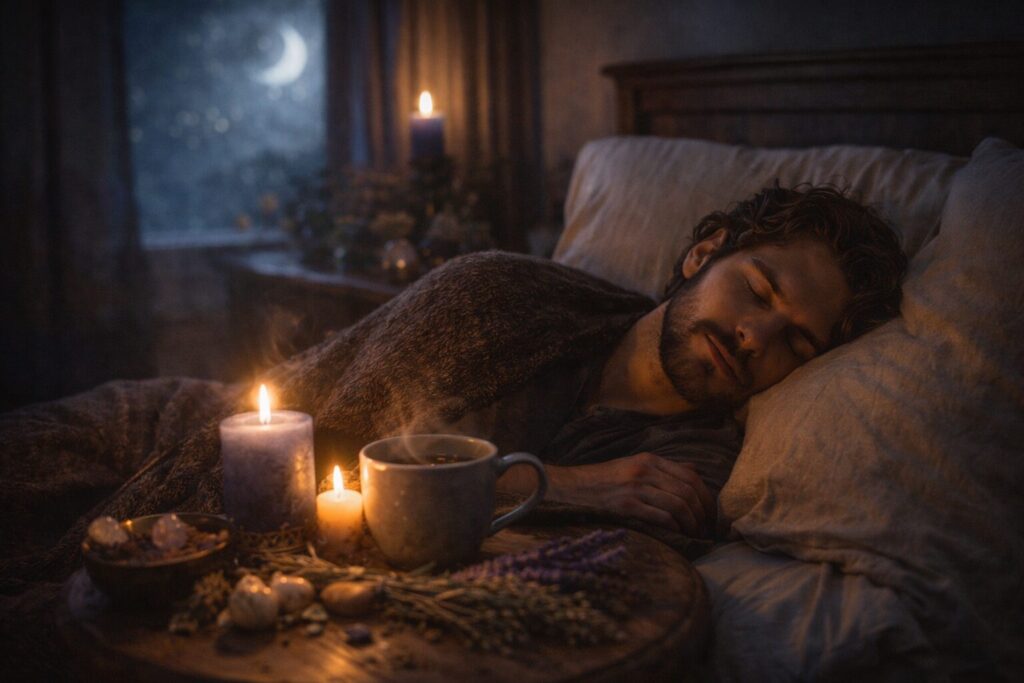
Better Rest
One of the earliest signs of healing is often improved sleep. The body begins to release tension, dreams settle, and deeper rest becomes possible.
Return of Appetite
As strength returns, appetite and digestion often improve. This signals that the body is ready again to receive nourishment and rebuild its energy.
Calmer Mind
Healing frequently begins with quieting of fear or emotional turbulence. Anxiety softens, thoughts slow, and moments of peace become easier to reach.
Energy Returning
Even small increases in energy—standing longer, walking further, focusing more easily—may indicate that recovery has begun to take root.
Improved Atmosphere
Rooms once heavy with tension or illness begin to feel lighter. People may notice more ease in conversation, laughter returning, or a sense of calm in shared spaces.
Renewed Hope
One of the deepest signs of healing is the return of hope. The person begins to imagine future possibilities again rather than feeling trapped within the present pain.
Healing magic is among the most compassionate forms of the Craft because it begins not in spectacle, but in care. It does not seek to dominate suffering or force the body into obedience. Instead, it listens for what is needed, supports what is fragile, and lends strength where strength has grown thin. In this way, healing is less an act of conquest than an act of accompaniment — walking beside pain with steadiness, reverence, and patience.
At its best, healing magic reminds us that restoration is rarely isolated. Bodies heal within homes, within relationships, within communities, and within the larger conditions of daily life. A prayer spoken at the right moment, a cup of tea prepared with intention, a room gently cleansed after grief, a hand held in silence, a candle lit for courage — none of these may seem grand on their own, yet together they form a field of support in which recovery can begin to breathe. Healing often arrives not through one great gesture, but through many small fidelities practiced over time.
This is why humility remains central to the work. The healer does not claim absolute power over illness, sorrow, or exhaustion. They do not promise what cannot honestly be promised. Instead, they help create the conditions in which wholeness may return if and as it is able. Medicine, therapy, prayer, ritual, rest, nourishment, and community all belong within this wider understanding of healing. Each supports the others. None must stand alone.
Within the Coven of the Veiled Moon, healing is therefore understood as a sacred form of service. To tend another person with care, to bless a home after hardship, to help restore calm where there has been fear, to support the weary without demanding performance from them — these are not small things. They are acts of real devotion to life’s interwoven fabric.
To practice healing magic is to remember that restoration is not always dramatic, but it is always meaningful. It is the quiet return of balance, the slow reweaving of strength, the patient easing of strain, and the enduring truth that care itself is a kind of magic. When approached with wisdom, compassion, and respect for all the forms of help a person may need, healing magic becomes not a fantasy of control, but a practice of presence — one that serves life by helping it mend.