
The Harvest Moon & the Balance of What Remains
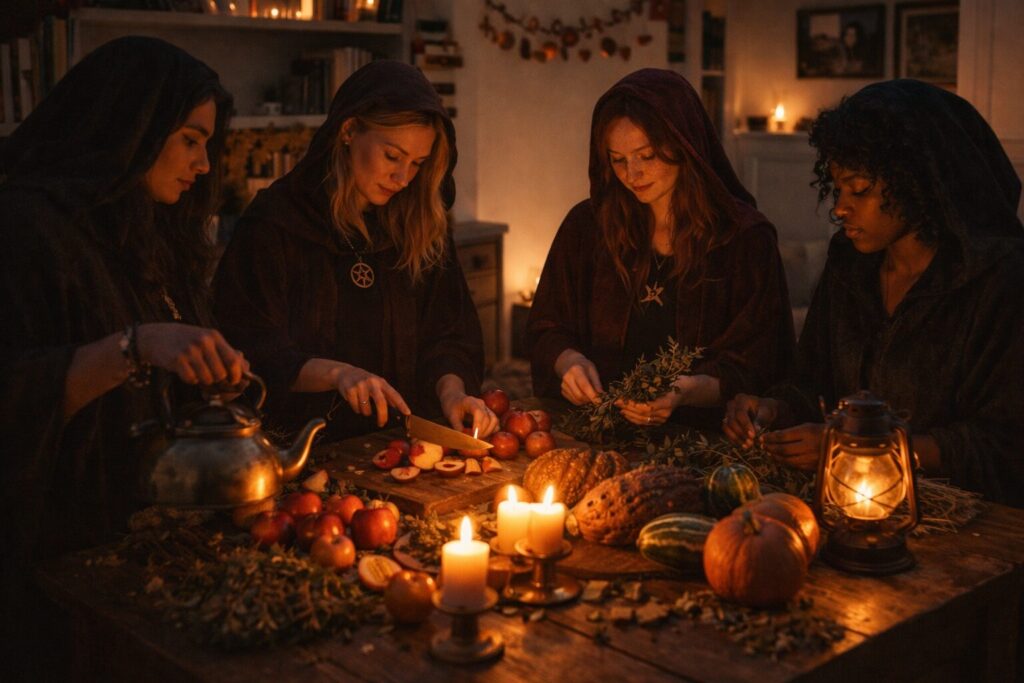
Mabon marks the Autumn Equinox, a pivotal threshold in the ritual year where light and dark stand in near equality before the balance inevitably shifts. It is not a celebration of perfect harmony, but a moment of reckoning — a pause where the fullness of the year can finally be measured with honesty. From this point forward, the light wanes. What has been grown must now be carried, shared, stored, or released.
Unlike the urgency of Lughnasadh’s first harvest or the stark finality of Samhain, Mabon occupies a quieter, more reflective space. It is the sabbat of integration — the work of taking stock of what has been gathered and deciding what it truly means. Gratitude alone is not sufficient here. Mabon asks for discernment: what was gained at a sustainable cost, what required too much, and what can no longer be justified as the year turns inward.
Historically, this season was tied to weighing stores, repairing tools, settling obligations, and preparing households for winter. Spiritually, the same logic applies. Mabon invites an inventory of effort, relationship, belief, and practice. What nourished you? What depleted you? What must be simplified so that the coming dark does not become a burden, but a place of rest and reflection?
The presence of the Harvest Moon deepens this work. Traditionally rising bright and low near the equinox, it extended working hours in the fields — a literal lantern for the final gathering before cold set in. Symbolically, it serves the same function today: illuminating what remains unfinished, what still needs attention, and what can no longer be postponed. Under this moon, reflection becomes practical rather than abstract, and preparation becomes an act of care rather than fear.
Mabon is not a festival of endings, nor is it a celebration of abundance for its own sake. It is a sabbat of right measure — of enjoying what is ripe without clinging, of giving thanks without illusion, and of choosing carefully what will accompany us into the dark half of the year. It teaches that balance is not a static state, but an ongoing relationship with time, land, and self.
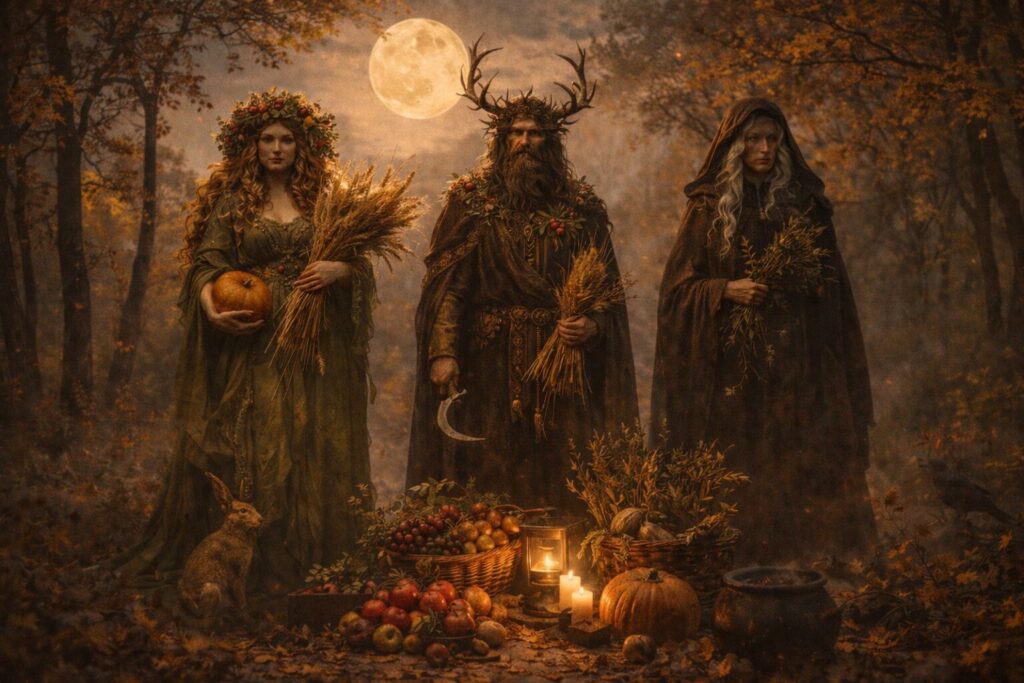
Balance at the Equinox: Seeing Clearly
Mabon’s balance is not an ideal state to be achieved, but a moment of clear sight. Light and dark stand near equal, revealing where life has drifted out of proportion. This sabbat invites honest assessment rather than self-correction through force.
A simple practice is to name two truths: one place of genuine gratitude, and one place where adjustment is needed so that balance can be sustained through the dark half of the year.
Harvest Gratitude and Reciprocity
Gratitude at Mabon is paired with memory. What has been harvested did not arise without labor, land, and cost. Witches often mark this sabbat by acknowledging not only what was gained, but what made it possible.
- Offer a portion of food or drink back to the land or spirits of place.
- Name unseen labor — yours or others’ — that supported your abundance.
- Commit to one act of reciprocity before winter arrives.
Gathering, Storing, and Preparing Wisely
Mabon is an excellent time for practical magic: pantry work, protection charms, and preparing the home and self for colder months. The emphasis is not hoarding, but right measure — taking what is needed without binding oneself to excess.
Cleaning, organizing, and blessing storage spaces can be powerful acts of seasonal alignment.
Release: The First Gentle Letting-Go
If Lughnasadh introduces reckoning, Mabon introduces release. This is not banishment or grief, but a dignified clearing. What cannot be carried into winter should be released while it still holds form.
Many witches write down a habit, obligation, or fixation that has become unsustainable, then burn, bury, or dissolve it — replacing it with a single, realistic commitment they can keep.
| Tradition / Path | What They Call It | How They Honor It | Core Spiritual Focus |
|---|---|---|---|
| Wiccan (MCC-leaning core) Gardnerian • Alexandrian • Eclectic Wicca • Reclaiming-influenced • Solitary | Mabon / Autumn Equinox Second harvest; balance and gratitude | Sabbat rite with harvest altar, gratitude offerings, balance workings, and preparation for the dark half of the year. | Equilibrium; gratitude for what has ripened; conscious preparation—storing wisdom, not just supplies. |
| Eclectic / Neo-Pagan (MCC-leaning practice) | Mabon / Autumn Equinox Harvest home; seasonal gratitude | Blended observance — ancestor-prep, gratitude lists, harvest foods, and “what to keep/what to release” rituals. | Integration; honest inventory; gratitude with discernment; aligning choices before the inward season begins. |
| Traditional Witchcraft | Harvest Home Names vary by region and line | Protection + store rites — blessing pantry, reinforcing wards, and working for steady luck through winter. | Safeguarding what you’ve gained; practical balance; preparing the home and spirit for leaner months. |
| Druidry / Green Craft | Alban Elfed Light of the Water | Land rite — equinox prayers, offerings of harvest fruits, and honoring balance as sacred order. | Balance in nature and self; harmony; preparing the inner life to match the season’s turning. |
| Heathen-Adjacent Devotional Eclectic practice (not reconstructionist) | Harvest Toast House observance; timing varies by climate | House + gratitude rites — toasts for abundance, blessings for stores, and offerings to land/house spirits. | Household luck; gratitude and readiness; strengthening protection as daylight declines. |
| Heathen / Ásatrú Reconstructionist / revivalist streams | Harvest Blót Often tied to local harvest timing | Blót + feast — offerings and communal sharing to honor the powers that sustain land, kin, and luck. | Reciprocity; community strength; honoring the season’s gifts and the obligations that come with them. |
| Hellenic-Adjacent Devotional Eclectic practice (not reconstructionist) | Autumn Offerings Earth and harvest devotion themes | Offerings + gratitude — libations, fruit, bread, and prayers for balance, humility, and wise stewardship. | Gratitude with responsibility; stewardship; honoring the earth’s generosity without entitlement. |
| Hearth & Kitchen Witch | Harvest Blessing Mabon / Equinox | Hearth magic — cooking seasonal foods, pantry blessings, apple and spice charms, and home protection refresh. | Nourishment and preparation; comfort as magic; keeping the home steady as the outside cools. |
| Animist / Spirit Worker | The Second Harvest Listening to the land’s “yes” and “no” | Relationship-work — offerings to land spirits, tending shrines, and giving thanks with reciprocity. | Reciprocity; balance; gratitude expressed through action; preparing relationships for the dark season. |
| Hedge Witch / Journey Work | The Balancing Gate Light and dark held together | Trance + integration rites — journeys for balance, releasing excess, and strengthening the self for inward work. | Integration; honest inventory; recalibration; choosing what enters the dark half of the year with you. |
| Folk Catholic / Syncretic Harvest blessings • saints’ feast days • regional autumn customs | Harvest Blessings Household prayers for stores and protection | Home devotion — prayers of thanks, food blessings, and acts of charity as gratitude made real. | Gratitude as devotion; humility; preparing the household through prayer, generosity, and care. |
| Dianic / Goddess-Centered | Mabon / Autumn Equinox Balance, boundaries, and sovereignty | Goddess devotion — rites for balance, self-worth, and releasing roles that drain life-force. | Sovereignty through balance; discernment; honoring cycles of giving and receiving without self-erasure. |
| Spiritualist / Mediumistic | Season of Balance Recalibration before the inward season | Prayer + grounding — gratitude practice, cleansing, and strengthening spiritual hygiene as days shorten. | Discernment; grounding; balance of emotion and action; preparing for deeper inner work ahead. |
The Harvest Moon: A Lantern for the Last Gathering
The “Harvest Moon” is not only poetic language. Near the equinox, the moon can rise close to sunset, creating unusually bright evenings that historically helped people finish the work of gathering and storing. In the ritual year, it functions the same way: a lantern that reveals what remains, what is unfinished, and what must be secured before the long inward season arrives.
In witchcraft practice, this moon supports quiet clarity: reflection that becomes practical action, and preparation that grows from care rather than fear.
Equinox Balance: Two Truths Held at Once
Mabon teaches a mature kind of balance: not neutrality, not denial, but the ability to hold two truths at once. Fullness and impermanence. Gratitude and cost. Joy and the beginning of descent.
This is why the equinox matters spiritually. It trains the practitioner to live inside the real cycle — to enjoy what is ripe without clinging, and to prepare for winter without panic.
The Harvest King: From Strength to Yielding
If Lughnasadh often carries the image of the Harvest King in his peak — ripe, crowned, undeniable — Mabon leans into his yielding. Sovereignty that knows when to release is part of the harvest’s mythic logic: what feeds us must be taken, and what is taken must be honored.
In many traditions, the “king” appears as a seasonal pattern: the life-force that reaches fullness and then returns to the land. This is not weakness. It is continuity — power that does not cling.
Why Mabon Matters: Integration and Right Measure
Mabon matters because it teaches integration — taking what was gained and making it usable, sustainable, and ethically held. It asks what the harvest is for: not just enjoyment, but nourishment, stability, and the ability to move through the dark half of the year with steadiness.
- Gratitude becomes deeper when it includes memory and limits.
- Preparation becomes wiser when it avoids fear and avoids excess.
- Magic becomes stronger when it aligns with land, season, and real life.
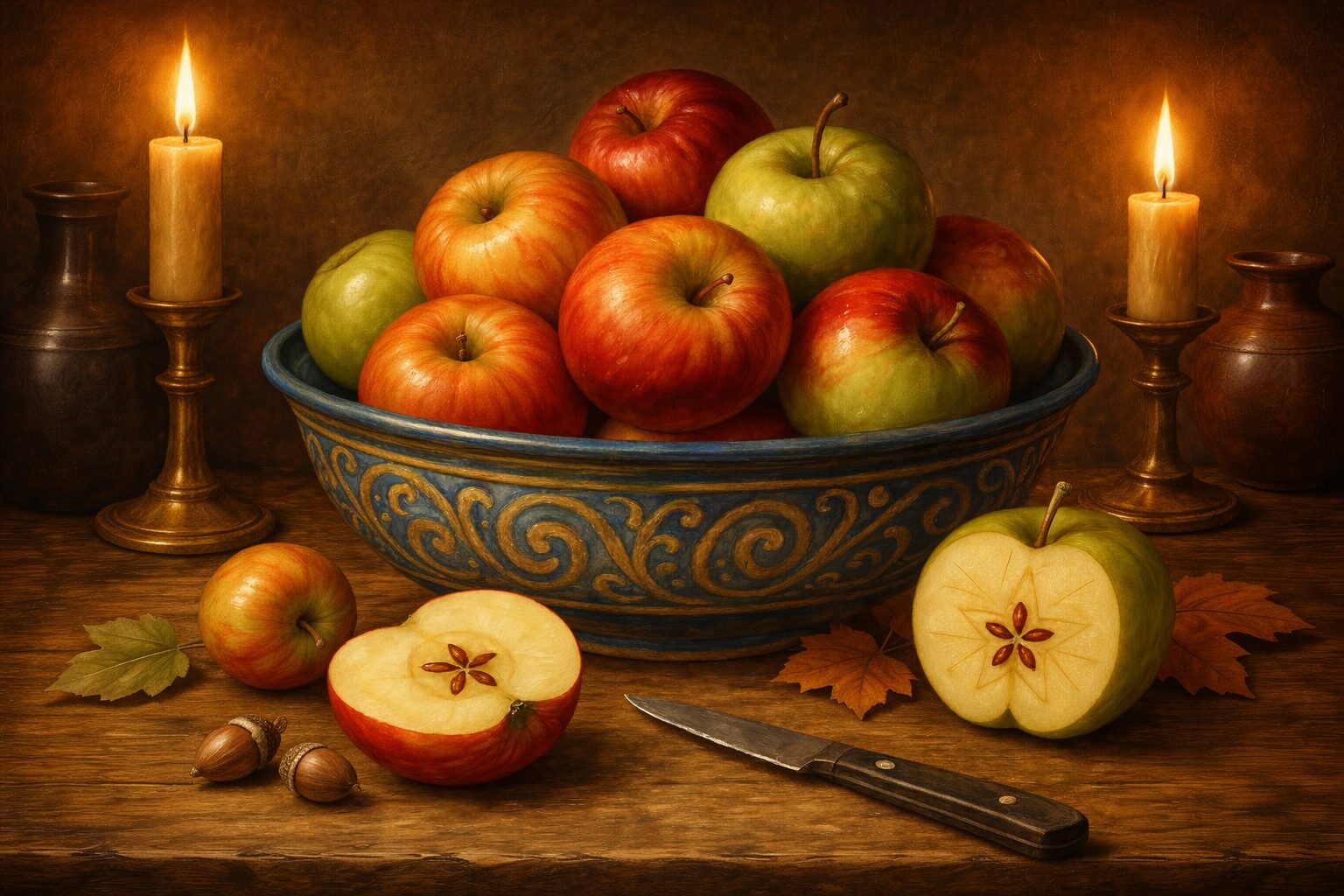
Mabon brings the work of the harvest into focus and asks what will be done with it. This sabbat is not concerned with spectacle or finality, but with responsibility. What has been gathered must now be held, shared, and carried wisely. The choices made here — what is stored, what is given away, and what is released — shape not only the coming winter, but the quality of the inward season itself.
In modern practice, many witches find Mabon overlapping naturally with cultural harvest observances such as Thanksgiving. This blending is understandable. Both arise from the same agricultural rhythm: gratitude for sustenance, shared meals, and recognition of interdependence. Where Mabon differs is in its insistence on discernment alongside thanks. Gratitude alone is not enough; it must be paired with memory, reciprocity, and restraint.
Mabon teaches that abundance is not meant to be consumed all at once, nor clung to out of fear. It is meant to be stewarded. This is the harvest that asks for balance — not as an abstract ideal, but as an ongoing practice rooted in land, labor, and relationship. What is honored feeds us. What is excess must be released. What remains must be tended with care.
As the light continues to wane and the year turns inward, Mabon offers a steady passage. It prepares us to enter the dark half of the year without denial or dread, carrying forward only what truly sustains. In this way, the Harvest Moon becomes both a lantern and a lesson — illuminating not just what we have, but how we choose to live with it.