The First Harvest and the Work of Becoming
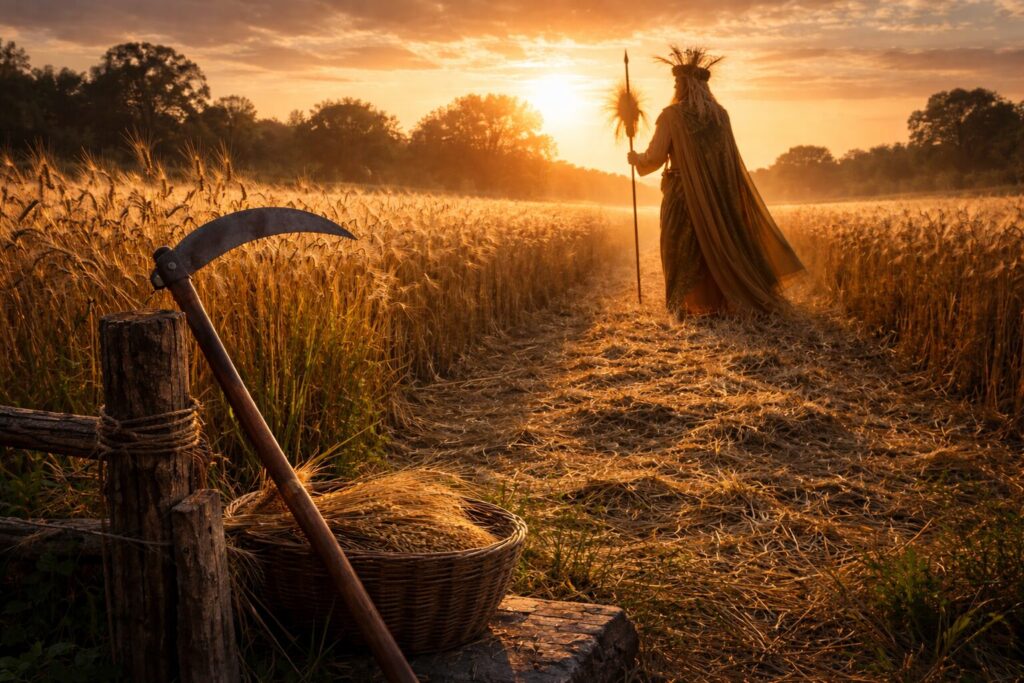
Lughnasadh marks the first true harvest of the ritual year — not the end of growth, but the moment when growth becomes accountable. The fields are no longer only green promise; grain bends heavy on the stalk, fruit ripens under a sun that has begun its slow retreat. What has been nurtured now asks to be gathered, measured, and used wisely. This sabbat stands at a quiet but unmistakable threshold: abundance is present, yet impermanence has entered the conversation.
Known also as Lammas, the “loaf feast,” Lughnasadh is rooted in the transformation of raw potential into sustenance. Seed becomes grain, grain becomes bread, effort becomes nourishment. Unlike the exuberant fertility of Beltane or the stark reckoning of Samhain, Lughnasadh carries a more sober wisdom — one that honors work, skill, and consequence. It is a season that asks not only what has grown, but how it was grown, at what cost, and what must now be released to continue the cycle.
In Celtic tradition, this festival bears the name of Lugh, a figure not of simple solar power, but of mastery — many-skilled, disciplined, luminous through craft rather than domination. His presence here reframes harvest as more than reward; it becomes an evaluation of relationship between land, labor, and spirit. Lughnasadh is not about passive abundance. It is about earned fruit, reciprocal exchange, and the sober joy of recognizing what effort has shaped into form.
For practitioners today, Lughnasadh invites an inward harvest alongside the outward one. It is a time to witness personal growth honestly, to name successes without illusion, and to acknowledge what no longer serves the coming season. Gratitude and discernment walk hand in hand here. The year has begun to answer back — and this sabbat teaches us how to listen.
The Harvest King as Living Force
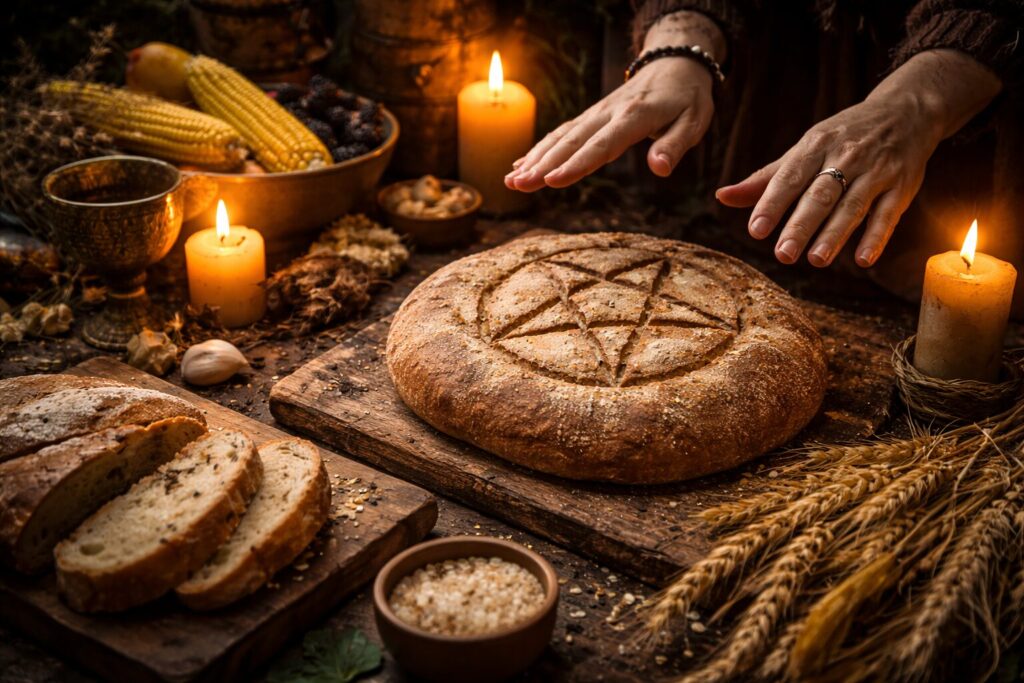
At Lughnasadh, the Harvest King stands fully embodied — not as myth alone, but as the living expression of the season’s power. He is the vitality that has ripened, the strength that has reached its peak, and the presence that knows its reign is finite.
In practice, witches engage this force not through worship alone, but through recognition: the moment when growth becomes visible, measurable, and accountable.
Labor, Skill, and Earned Abundance
The Harvest King rules only what has been worked. Lughnasadh honors labor — physical, creative, magical — as the source of abundance. What has not been tended does not ripen.
- Baking, crafting, and finishing long works
- Blessing hands and tools
- Honoring skill as devotion
Discernment at the Height of Power
This sabbat teaches restraint at the moment of strength. The Harvest King knows that unchecked power becomes waste. Discernment here is not loss — it is wisdom.
Witches ask: What must be gathered now? What must be released while it still holds dignity?
Ritual Logic of the First Harvest
Bread is broken, not hoarded. Fire is steady, not wild. Celebration is present, but grounded. This is harvest with responsibility.
What is honored feeds us. What is ignored decays.
| Tradition / Path | What They Call It | How They Honor It | Core Spiritual Focus |
|---|---|---|---|
| Wiccan (MCC-leaning core) Gardnerian • Alexandrian • Eclectic Wicca • Reclaiming-influenced • Solitary | Lughnasadh / Lammas First harvest; skill, sacrifice, and gratitude | Sabbat rite with bread-baking, harvest offerings, gratitude prayers, and workings for prosperity and right effort. | Gratitude for what has ripened; honest accounting of effort; accepting that growth always costs something—and choosing the cost wisely. |
| Eclectic / Neo-Pagan (MCC-leaning practice) | Lughnasadh / Lammas Name differences reflect different sources and regions | Blended observance — bread magic, garden offerings, gratitude journaling, and harvest-themed spellwork. | First-fruits gratitude; celebrating progress; strengthening what works; letting go of what isn’t yielding. |
| Traditional Witchcraft | Lammas / First Harvest Often tied to local grain and field customs | Harvest + luck rites — field blessings, bread charms, hearth offerings, and prosperity work with strong boundaries. | Practical abundance; protection of stores; “keep what you’ve earned” magic; gratitude paired with discernment. |
| Druidry / Green Craft | Lughnasadh Often linked to Lugh: skill, sovereignty, and right action | Land rite — offerings of first fruits, prayers for the harvest, and honoring skilled work and community labor. | Right effort; reciprocity with land; honoring craft and mastery; gratitude for what the earth gives and what people build. |
| Heathen-Adjacent Devotional Eclectic practice (not reconstructionist) | First Harvest House observance; timing varies by climate | House + prosperity rites — bread and ale offerings, gratitude to land spirits, and blessings for stores and work. | Household abundance; protection of resources; honoring the season of labor and the rewards it brings. |
| Heathen / Ásatrú Reconstructionist / revivalist streams | Harvest Blót Regional calendars vary; often tied to local harvest timing | Blót + feast — offerings for prosperity, protection, and luck; communal sharing of food and drink. | Reciprocity and luck; strength of the household and community; honoring the season’s work and its rightful reward. |
| Hellenic-Adjacent Devotional Eclectic practice (not reconstructionist) | Harvest Offerings Demeter/earth-devotion themes (varies by practitioner) | Offerings + gratitude rites — libations, bread, grain, and prayers for abundance with humility and balance. | Gratitude; humility before the earth; nourishment as sacred; acknowledging the costs of cultivation and the dignity of labor. |
| Hearth & Kitchen Witch | Lammas Loaf Mass; bread blessing and home abundance | Hearth magic — baking, sharing food, pantry blessing, and gratitude for the hands that feed the home. | Nourishment; storing and sustaining; gratitude in practical form; generosity without self-neglect. |
| Animist / Spirit Worker | First Fruits Offerings to land and field spirits | Relationship-work — offerings of harvest foods, shrine tending, and reciprocity rites with the land. | Reciprocity; honoring the land’s labor with your own; keeping relationship balanced in a season of taking. |
| Hedge Witch / Journey Work | The Cutting of the Grain Harvest as spiritual threshold | Trance + discernment rites — journeys about what to keep, what to cut, and what must be offered to move forward. | Honest harvest; discernment; releasing what drains you; strengthening what truly feeds your life. |
| Folk Catholic / Syncretic Loaf Mass (Lammas) • harvest blessings • regional grain customs | Lammas / Harvest Blessing Bread blessing; prayers for stores and household | Home devotion — blessed bread, prayers of thanks, and practical acts of charity and sharing. | Gratitude as devotion; blessing the household; sharing the harvest; humility and care in abundance. |
| Dianic / Goddess-Centered | Lughnasadh / Lammas Sovereignty and the harvest of the self | Goddess devotion — rites of self-worth, gratitude for embodied labor, and releasing roles that no longer serve. | Sovereignty; dignity of labor; reclaiming value; harvesting the self with honesty and compassion. |
| Spiritualist / Mediumistic | Season of Gratitude Counting blessings; strengthening foundations | Prayer + grounding rites — gratitude practice, cleansing, and practical blessings for stability and protection. | Discernment; gratitude without denial; grounding; strengthening spiritual hygiene as the year begins to turn toward autumn. |
The Harvest King and Seasonal Sovereignty
Across Indo-European traditions, the Harvest King represents the moment when vitality reaches its height and must begin its descent. His power is real — and temporary.
This figure appears as Adonis, Attis, Tammuz, John Barleycorn, and the Green Man in his ripened form.
Lugh Within the Harvest Kingship
Lugh does not replace the Harvest King — he refines him. Where the king embodies life-force, Lugh embodies mastery, skill, and the clarity to rule well before yielding.
Sacrifice Without Spectacle
Lughnasadh holds sacrifice not as violence, but as release. Grain is cut so it may feed. Power yields so the cycle may continue.
How MCC Holds This Mythic Cycle
At MCC, the Harvest King is understood as a living pattern — not a literal ruler, but a seasonal truth. Myth gives shape to experience, and experience keeps myth alive.
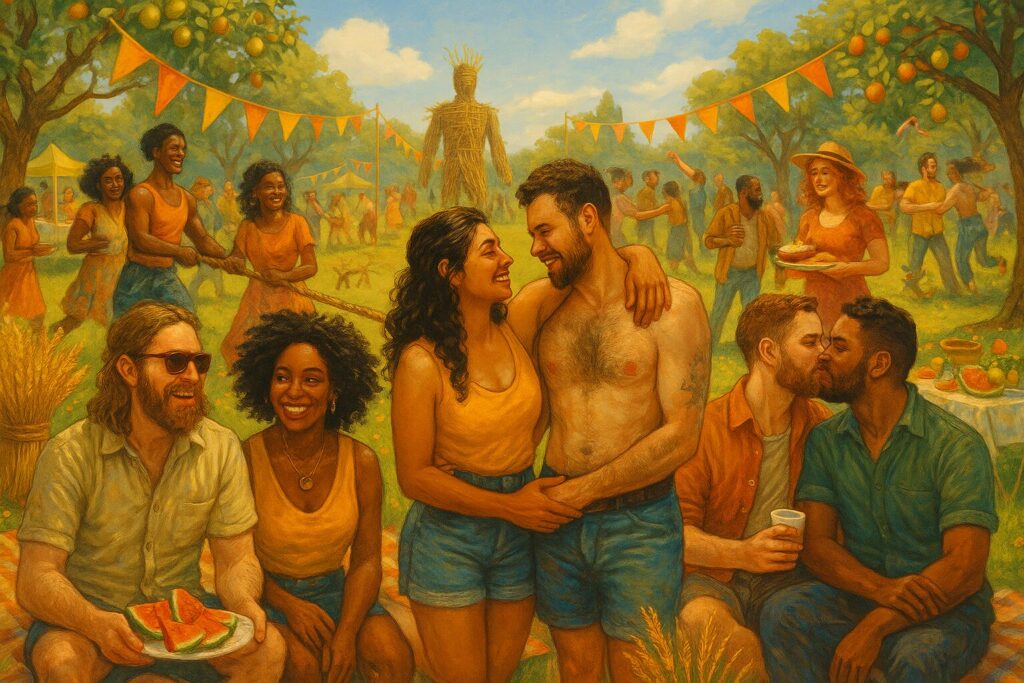
Lughnasadh teaches us that the first harvest is not a conclusion, but a conversation. The land has spoken through growth, ripening, and limitation, and now it waits for our response. To harvest well is to acknowledge what has been given without forgetting what was required to bring it into being. Gratitude without memory is incomplete; abundance without discernment quickly becomes excess.
This sabbat invites a mature form of thankfulness — one that recognizes effort, honors limits, and accepts responsibility for what we choose to carry forward. The work of the season is not merely to gather, but to decide: what feeds us, what drains us, and what must be released so that what remains can be tended with care. Lughnasadh reminds us that every cycle of growth contains the seeds of both fulfillment and decline, and that wisdom lies in meeting that truth without avoidance.
As the light subtly shifts and the long arc toward autumn begins, Lughnasadh offers a steady footing. It asks us to stand honestly in what we have made — in our lives, our practices, and our relationships with land and spirit — and to move forward neither grasping nor denying. The harvest we honor now shapes the winter we will one day enter, and the soil we prepare for the turning yet to come.
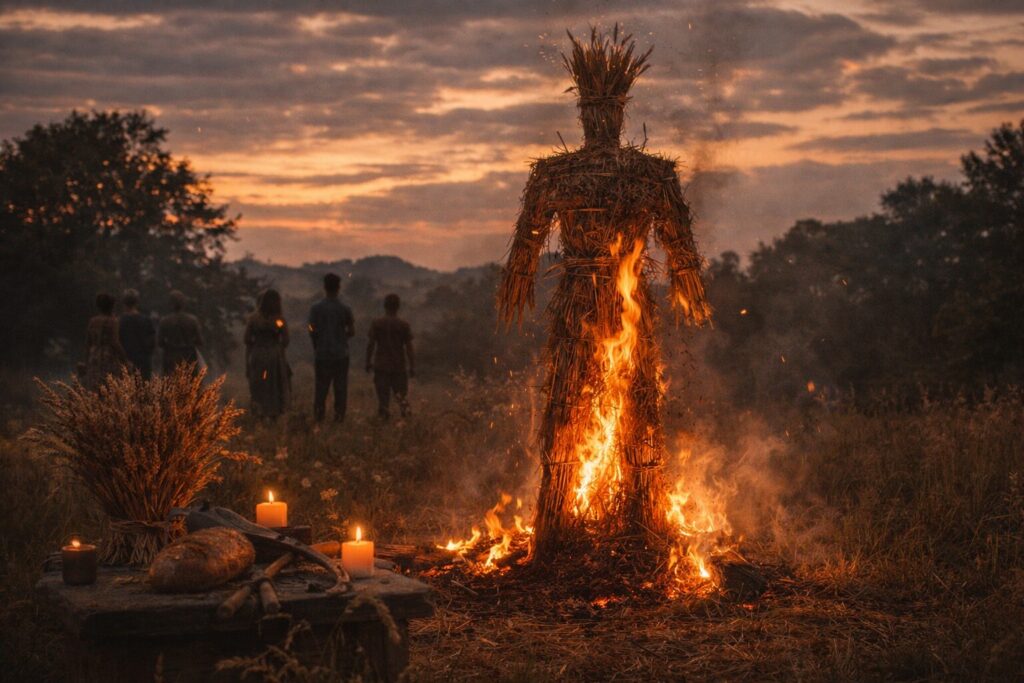
“They’ve taken and slain him again and again, yet still he rises to feed the land.” -Burns (John Barleycorn)