
Encountering the Sacred
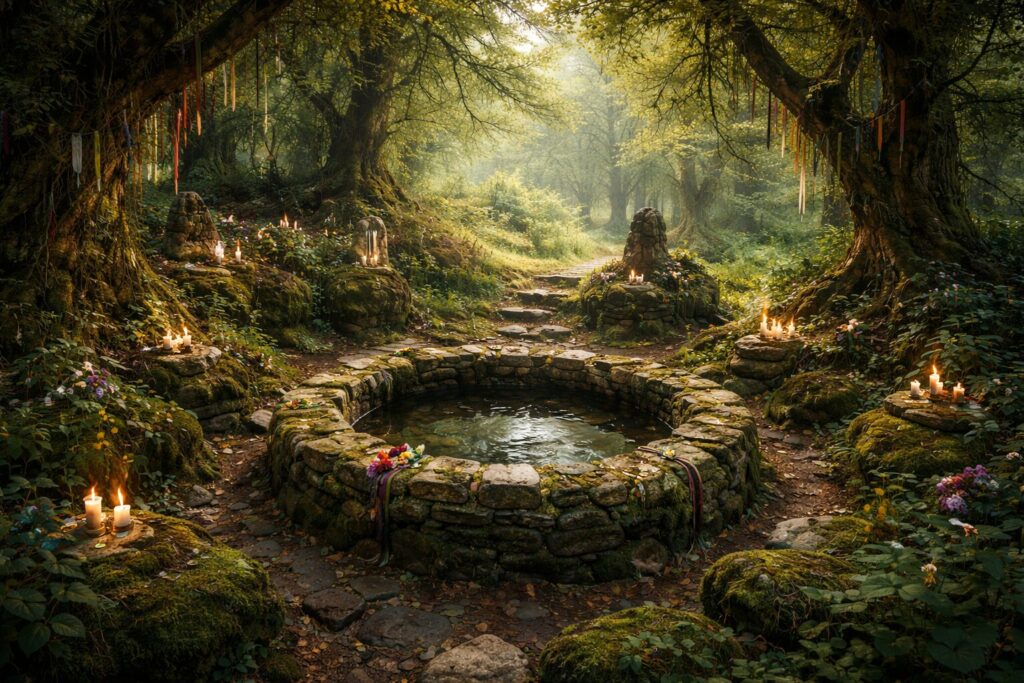
Sacredness is not a property objects possess on their own. It is a relationship. Something becomes sacred when attention gathers around it with intention — when it is marked, held apart, and approached with care. To call something sacred is to say: this is not ordinary space anymore. We have crossed a threshold.
Every spiritual tradition, whether ancient or modern, formal or intuitive, is built around this act of distinction. Sacredness does not erase the world; it reframes it. A grove becomes a temple. A season becomes a holy time. A stone becomes an altar. The same physical reality remains — but the human relationship to it changes.
Sacredness is therefore not about superstition or fragility. It is about orientation. It is the deliberate act of turning toward meaning. It is the human instinct to recognize that some experiences ask for a different posture — slower breath, quieter voice, deeper presence.
To encounter the sacred is to step into a conversation with something larger than the self.

Humans mark sacred things because we need points of reference beyond survival. We need places to gather the invisible dimensions of our lives — memory, longing, grief, gratitude, awe — and give them structure.
Across cultures, sacredness most often attaches to places, times, objects, actions, relationships, and thresholds of transition. A mountain becomes sacred because it is encountered as more than geography. A festival becomes sacred because it holds communal memory. A ritual becomes sacred because it gathers attention into a single intentional act.
Sacredness is not about believing an object is magical in itself. It is about recognizing that human consciousness can consecrate experience. Once something is consecrated, behavior changes. Voices lower. Movement slows. Care increases. Sacredness reshapes conduct.
This distinction is ancient. It is one of the oldest technologies humans have developed: the ability to carve meaning into the flow of time and space. Sacredness tells us where to stand, when to gather, how to remember, and what deserves reverence.
Not all sacred acts are public. Some of the most powerful consecrations occur in silence: lighting a candle at night, touching an altar before leaving home, walking alone in the woods, whispering a name, breathing with intention.
Private sacredness is not lesser than communal ritual. It is the inner architecture that makes communal ritual meaningful. Without personal consecration, public ceremony becomes theater. With it, even a single gesture becomes a temple.
Sacredness lives in the space between action and awareness. It is the ability to step out of ordinary time and deliberately inhabit a moment. Many practitioners find that their deepest sacred experiences are quiet ones — moments that cannot be photographed or shared, only carried.
Humans gather to reinforce what they hold apart. Festivals, rites of passage, seasonal celebrations, funerary rites, initiations — these are not decorative traditions. They are technologies of meaning.
Communal sacredness creates shared memory. It anchors identity. It reminds individuals they belong to something larger than themselves. When a group marks sacred time together, they synchronize attention and emotion. They build rhythm. That rhythm becomes culture.
Ritual is not escape from the world. It is a method of returning to it with alignment. Communities that gather around sacred acts are not retreating from reality; they are shaping how reality is understood and inhabited.
Sacred objects and places are experienced as powerful not because they violate physics, but because they hold concentrated relationship. Some are endowed with magic through deliberate ritual work. Some are impressed with divine presence through devotion. Some function as channels — bridges between human attention and larger spiritual currents.
Power can be tapped, channeled, and in certain traditions communicated with. It is relational energy, sustained through focus and attunement. Magical tools may lose potency if neglected, because their power depends on maintenance. Sacred places, however, often accumulate strength through repeated visitation. Generations of reverence leave an imprint.
This is why ancient holy sites continue to feel charged even centuries later. Even distant echoes of ritual accumulate. Attention leaves residue. Devotion layers upon devotion.
Ultimately, everything is divine in some sense. If divinity permeates existence, it follows that energy gathers unevenly. Certain places become reservoirs. Certain objects become anchors. Sacredness emerges where attention, intention, and presence converge repeatedly over time.
The difference between a sacred object and a magical one lies in origin. Sacred things derive power from connection to the divine or to accumulated reverence. Magical objects are constructed, charged, and activated through technique. They are more mobile, more accessible, but often less enduring without renewal.
Both participate in the same field. One grows like a spring. The other is built like a vessel. Each holds power differently — but power they hold.

Sacredness is not a category reserved for rare objects or distant places. It is a mode of relationship. It is the decision to approach parts of life with deliberate attention and reverence. Some spaces hold centuries of devotion. Some objects carry the imprint of ritual. Some moments become thresholds simply because we step into them consciously.
Power accumulates where attention returns.
A shrine becomes sacred because hands keep touching it. A grove becomes sacred because feet keep walking toward it. A season becomes sacred because memory gathers there year after year. Sacredness is less about possession than participation. It exists because humans continue the conversation.
There are, however, rare places that stand apart even from this pattern — locations recognized across generations as sites where the divine does not merely visit but dwells. These places are treated as set apart not only because communities revere them, but because they are experienced as points of direct presence. They are not constructed sacredness. They are encountered sacredness. Such sites often become pilgrimage centers, guarded thresholds, or ancestral landscapes where the boundary between worlds feels permanently thin.
Most sacred spaces, though, are communal. They are built and maintained by shared attention. They endure because people return. Sacredness in this form is a collective act — a weaving of memory, ritual, and care. Communities do not invent the divine, but they cultivate the conditions where its presence becomes perceptible.
Magical tools, consecrated objects, holy places — each represents a different way of storing and transmitting that conversation. Some are constructed. Some are inherited. Some arise naturally where devotion settles and remains. None are isolated from the world. They are points where the divine becomes easier to hear.
If everything participates in divinity, then sacredness is not exclusion. It is concentration. It is the recognition that certain locations, objects, and acts act as lenses. Through them, the larger field of existence becomes sharper, more audible, more present.
To live spiritually is not to escape the ordinary. It is to learn where the ordinary opens.
And once you recognize those openings — once you learn how sacredness gathers — the world begins to reveal itself as layered rather than flat. Not divided into sacred and non-sacred, but into places where attention sleeps and places where it has awakened.
Sacredness is the practice of keeping that awakening alive.