Reclaiming the Divine Through Witchcraft
In the borderlands of myth and memory, long before written creeds or canonical prayers, humans turned to the sky and soil, fire and stream, not to dominate them—but to speak with them. The earliest known deities were not kings upon clouds but the breath of wind, the pulse beneath rock, the flicker of firelight. These were gods not of hierarchy, but of immediacy: archetypal forces arising from the living world, reflections of awe and intimacy with nature. Today, in the evolving practices of Neopaganism, Wicca, and Satanic witchcraft, these same forces are reborn—not as historical reconstructions, but as modern revelations. They are not fossilized myths, but living presences.
Kael is one of many contemporary witches who do not see Wicca and witchcraft as opposing paths, but as reflections of a deeper truth: that witchcraft is a practice of direct engagement with the sacred, however it manifests. It is in this spirit that the seeming divisions between Neopaganism, Wicca, and witchcraft dissolve, revealing a shared hunger to rediscover the gods not just of light—but of shadow, defiance, memory, and earth.
Ancient Voices: Archetypes Beyond Time
The earliest pantheons—the Sumerian, Vedic, Egyptian, and even pre-Indo-European—spoke not of isolated deities but of cosmic relationships: Sky and Earth, Sea and Flame, Life and Death. These pairings were often gendered, yes, but more essentially, they were complementary energies. The Sumerian An and Ki (Sky and Earth), the Vedic Dyaus and Prithvi, the Greek Uranus and Gaia—all reflect a primal tension and unity. These are not only historical relics; they are mirrors to contemporary theologies.
Neopaganism reclaims these forces, not by reconstructing their temples, but by listening to what still speaks: the wild, the ritual, the seasonal turning. Paganism “is not about reenacting the past but about re-engaging with the numinous in the present”*. Wicca, with its Goddess and Horned God, reimagines these ancient pairings as living, embodied presences. They are not idols, but faces of the sacred encountered in ritual, in moonlight, in flesh.
In Wiccan liturgy, the Goddess speaks: “I am the soul of nature who gives life to the universe. From me all things proceed and unto me they must return.” This echoes not only Gaia or Isis, but the unnamed matriarchal deities of Neolithic Europe and the nurturing sea-goddesses of the abyss. The Horned God, too—so often misunderstood—is not a satanic figure but a chthonic one: representing fertility, instinct, sacrifice, and seasonal death. He is the consort, the wild twin, the stag in the forest and the lord of the hunt.
But shadow does not belong to Wicca alone.
While Wicca emphasizes balance, harmony, and the wheel of the year, Satanic and Left-Hand Path witchcraft walk another circle—a deeper spiral into the interior. Here, the sacred is not found through alignment with external rhythms, but through confrontation with what has been repressed, forbidden, or cast out. Where Wicca names the moon phases, this witchcraft names the abyss.
Yet this path, too, is ancient. The figure of Satan—reviled in Christian doctrine—is, to many witches and Luciferians, a modern mask of much older gods: Prometheus who stole fire, the Gnostic serpent who gave Eve the fruit of knowledge, Set who killed Osiris not as evil, but as necessary change. The Devil was created not simply as an enemy of God, but as a necessary shadow to define orthodox boundaries. Satanic witches work within that shadow, not to glorify evil, but to reclaim what was once sacred and made unclean by dominant religion. It is the resonance of Lucifer not as a fallen angel, but as a light bearer—a flame within exile. This redefinition is not mere provocation. In Theistic Satanism and Luciferianism, Lucifer becomes a gnostic guide—one who awakens the divine within the practitioner. This is not blasphemy—it is apotheosis. It is reclaiming the godself.
Lilith, likewise, is not a demoness, but a sovereign queen—cast out not for evil, but for refusing domination. Her story echoes the stories of older goddesses like Ereshkigal, Hekate, or the dark forms of Inanna. In many Satanic or dark witchcraft circles, Lilith is invoked not in rage but in power, as the sacred feminine in her unyielding form.
Despite their differences in tone, the three paths share a cosmology of encounter. Whether the witch kneels before a forest altar or summons shadow spirits in a blackened circle, the act is the same: to speak with the sacred directly.
Neopagans and Wiccans affirm multiplicity, nature as sacred, and the cycle of death and rebirth. Other witches affirm the sacred in exile, the flame of inner sovereignty, and the necessity of confronting the shadow. Both value ritual, myth, personal gnosis, and spiritual autonomy. Both reclaim figures once labeled dangerous and make them holy again. Both carry the heartbeat of the earliest human rituals.
As Kael’s life attests, a witch need not choose one path. His practice is fluid—shaped by Gardnerian foundations, hedge traditions, Gnostic explorations, and the raw flame of historical truth. The gods he honors are not jealous; they are many-voiced, and they welcome being named.
Toward a Living Practice
To stand as a modern witch is to recognize that belief is not linear. It is woven. The divine is not one name but many masks. The light is not separate from the shadow; they are different faces of the same flame. And in that light, whether cast by the full moon or the forge of rebellion, the witch walks—not backward into history, but forward into meaning.
One reflects the stars. One reflects the seasons. One reflects the self.
In all three, the reflection is sacred. Neopaganism, Wicca, and witchcraft each offer a mirror. As Kael reminds us, “The gods speak in symbol and flame, in whisper and storm. What matters is not the name we give them, but the truth they awaken within us.”
* Hutton, Ronald (The Triumph of the Moon, 1999)
* Jeffrey Burton Russell (The Devil, 1977)
Explore Sacred Wisdom
Connect with the divine through witchcraft and pagan traditions.
Neopagan Beliefs
Uncover the core beliefs and rituals that ground our mystical practices and empower your path.
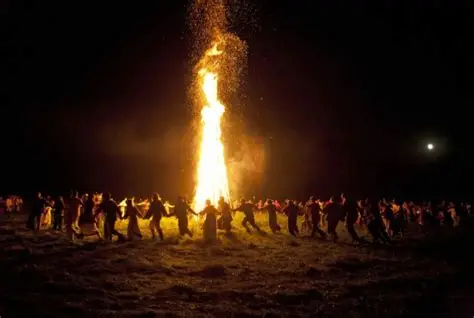
Reclaiming the Divine Through Witchcraft
Engage with the core beliefs and practices that inspire Kael’s work.
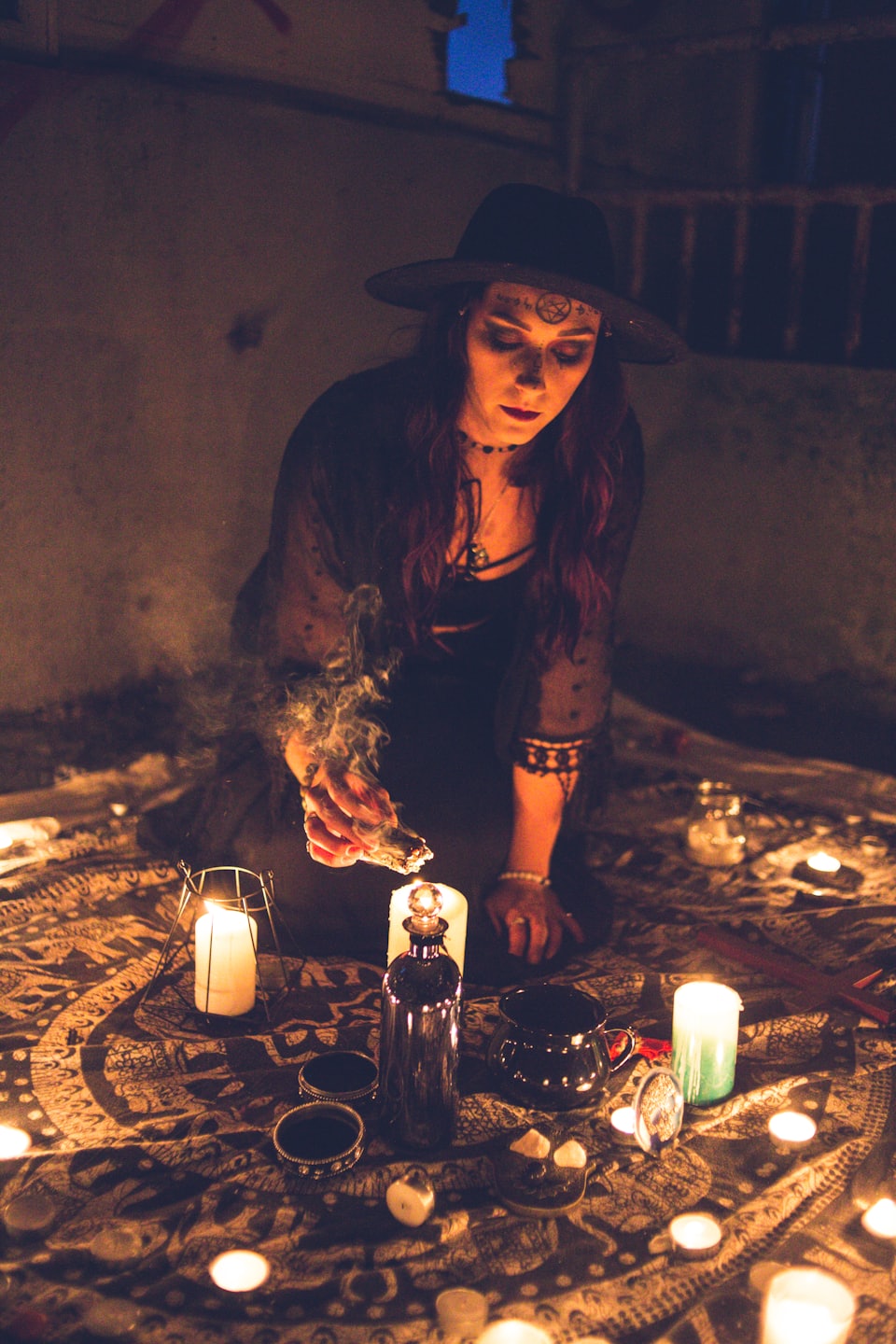
Divine Connections
Learn how to forge a sacred bond between the human and the divine through ritual and meditation.
Wisdom from Our Community
Discover heartfelt reflections from those who have journeyed with us, celebrating the transformative power of our sacred gatherings.

Joining the coven opened new paths of understanding and connection; the team’s guidance felt both profound and nurturing.

Maya L.
Spiritual Wellness Advocate
Their expertise and dedication created an inspiring experience that deepened my spiritual practice beyond expectations.

Elias R.
Community Event Organizer
Every session left me feeling uplifted and connected, a true testament to the care and knowledge shared by the team.

Nina K.
Author & Blogger
Embrace the Sacred Thread Connecting Us All
Discover profound spiritual insights and join a vibrant community celebrating witchcraft and pagan traditions.
- Ancient Wisdom Unveiled
- Rituals for Daily Empowerment
- Connecting with Nature’s Cycles
- Sacred Symbols and Their Meanings
- Community Stories and Experiences