
Culinary Magic
The Craft of Transformation Through Food
There are many forms of magic that shape the world around us—through space, through symbol, through spirit. Culinary magic is one of the few that moves in the opposite direction. It is not cast outward, but inward. It is prepared, transformed, and then taken into the body, where the working continues beneath the surface of thought.
At its foundation, culinary magic is the art of transformation. Raw ingredients are changed through heat, time, and intention into something new. This transformation is not only physical, but energetic. Fire alters structure. Water carries and blends. Salt preserves and defines. What begins as separate elements becomes a unified whole—flavor, texture, and meaning combined.
In this way, the act of cooking becomes a form of spellcraft. A recipe is not just instruction, but structure. Ingredients are not just materials, but correspondences. The movements of the cook—cutting, grinding, stirring, tasting—become gestures of will, shaping the outcome as surely as any spoken incantation.
This distinguishes culinary magic from broader hearth practices. In hearth and home magic, the space itself is the working: the home is tended, protected, and infused with intention. Here, the focus narrows. The magic is not the kitchen, but what is made within it. The food itself becomes the vessel.
And then, something unique occurs. The working is consumed.
What is prepared with intention is not placed on an altar, or left to act at a distance. It is eaten, absorbed, and carried into the body. Of all magical practices, this is one of the most intimate. It is not only something you perform—it is something you become.
Because of this, culinary magic carries both power and responsibility. The discipline of the craft includes care for the body: thoughtful sourcing, clean preparation, proper storage, and an awareness that not all substances are meant to be ingested. Intention does not replace discernment—it works alongside it.
This page offers a framework for understanding and practicing culinary magic as a deliberate art. The examples that follow are not prescriptions, but demonstrations—ways to see how structure, correspondence, and process can come together in a working. From there, the practice becomes your own.
In hearth magic, the home is the working.
In culinary magic, the food itself becomes the spell.
And once taken in, it does not simply act upon you.
It becomes part of you.
Foundational Concept
What Is Culinary Magic?
Culinary magic is the practice of shaping intention through food. It works through transformation: through ingredient choice, through preparation, through heat, timing, texture, flavor, and the deliberate gestures by which a meal is made. Where some forms of magic act upon a room, a symbol, or a distant situation, culinary magic moves through what is prepared and then taken into the body. It is a craft of correspondence, embodiment, and change.
Transformation
At the center of culinary magic is change itself. Raw becomes cooked. Separate elements become one dish. Heat alters texture, aroma, and form. This visible transformation mirrors the deeper magical principle that matter, energy, and intention can be guided into new relationship.
Correspondence
Ingredients carry character as well as function. Herbs, salts, oils, roots, fruits, grains, sweetness, bitterness, and spice each bring different symbolic and practical qualities. In this way, a recipe becomes more than nourishment alone: it becomes a structured arrangement of meanings working together toward a purpose.
Process
Culinary magic does not live only in what is used, but in what is done. Chopping, grinding, kneading, stirring, simmering, tasting, plating, and serving are all part of the working. Repeated actions build rhythm. Rhythm builds focus. Focus gives shape to intent.
Embodiment
What is made here is not merely observed or set aside. It is consumed. This is one of the most intimate dimensions of the craft. The food becomes part of the body, and the body becomes part of the working. Culinary magic therefore asks not only what we wish to create, but what we are willing to carry within ourselves.
Culinary magic overlaps with hearth practice, herbal kitchen work, and even bordering forms like simmer pots—but its center remains the same: food prepared with intention as a vessel of transformation.
Part of a Living System
Where Culinary Magic Draws Its Power
Culinary magic does not stand alone. It grows from the wider field of hearth practice, ingredient wisdom, and the disciplined handling of materials. These pages expand the foundations beneath the craft, from the tending of sacred domestic space to the correspondences of herbs, salts, and preparations used with care.
Hearth & Hedge
The broader current of everyday domestic magic: tending the home, shaping atmosphere, protection, blessing, and the living spirit of the hearth.
Ingredient CorrespondenceHerbs
Explore the character, symbolism, and practical magical uses of herbs as allies in cooking, preparation, and intentional workings.
Foundation & PreservationSalt
A substance of boundary, purification, flavor, preservation, and grounding—one of the most essential materials in both magical and culinary practice.
Everyday PracticeHerbal Kitchen Magic
A lighter and more accessible approach to kitchen-centered herb use, ideal for simple household workings and early exploration of the craft.
Oils
Culinary oils, infused oils, and ritual oils each belong to different branches of practice. This page centers food use, but oil work will be explored more fully in its own dedicated space.
Together, these form the wider ecology of the craft: the home that holds it, the ingredients that feed it, and the practical disciplines that make it safe, coherent, and alive.
Structure of Practice
Types of Culinary Workings
Not every dish carries the same purpose. Culinary magic becomes clearer and more effective when intention is paired with form. The categories below are not rigid systems, but useful ways of understanding how different kinds of food can be shaped toward different kinds of outcomes.
Nourishment
These workings center on restoration, grounding, and support. They are often warm, steady, and sustaining. Soups, broths, grains, breads, and slow-cooked meals lend themselves well to this category. The intention is not force, but reinforcement—helping the body and spirit settle, recover, and regain strength.
Focus: stability, healing, endurance, care
Attraction
Attraction-based workings draw, soften, and harmonize. They often make use of sweetness, warmth, fragrance, and inviting presentation. Teas, desserts, shared dishes, and foods prepared for others can all serve here. The goal is not control, but invitation—creating conditions where connection, affection, or opportunity may more easily arise.
Focus: connection, affection, openness, magnetism
Protection
Protective culinary work tends toward foods that fortify, cleanse, or define boundaries. This may include strong flavors, warming spices, preserved elements, or grounding dishes that build resilience over time. These workings are less about aggression and more about strengthening the field of the self.
Focus: boundary, resilience, warding, clarity
Activation
Activation work brings movement, energy, and momentum. It often appears in bright, sharp, or stimulating foods: spiced dishes, citrus elements, invigorating teas, or quick-prepared meals. These workings are useful when something needs to begin, shift, or gain direction.
Focus: energy, motion, courage, initiation
Clearing
Clearing work aims to remove, reset, or lighten. It may involve bitterness, acidity, simplicity, or lightness in form. Broths, teas, simple preparations, and foods that cut through heaviness can serve this function. These workings are often preparatory, making space before something new is built.
Focus: release, purification, discernment, reset
Celebration
Celebration work is communal, expansive, and often abundant. It includes feasts, shared meals, seasonal dishes, and offerings prepared with joy and intention. Here, the working is not only in the food itself, but in the gathering it supports and the atmosphere it helps create.
Focus: joy, connection, abundance, honoring cycles
Many dishes will overlap categories. A nourishing meal may also protect. A celebratory feast may also attract. These distinctions are not rules, but lenses—ways of seeing how intention moves through form.

Illustrations of Practice
Example Culinary Workings
The following are not prescriptions, but demonstrations. They show how intention, ingredient, process, and form can come together in a working. These are frameworks—adaptable, adjustable, and meant to be understood rather than copied exactly.
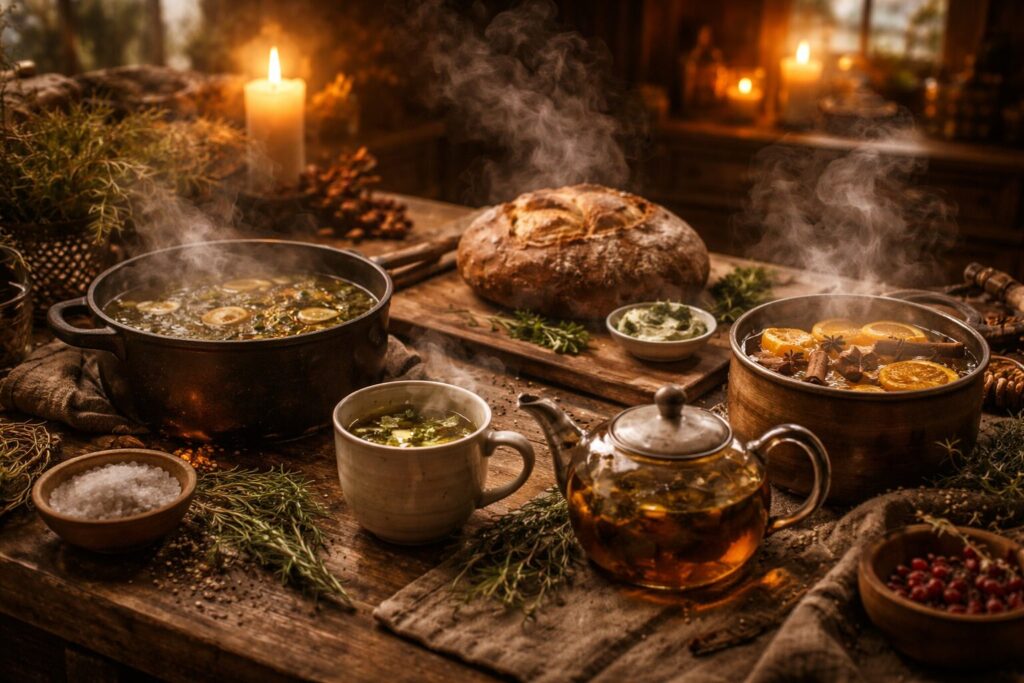
Protection Broth
Structure
- Base: water or stock
- Garlic, onion
- Black pepper, bay leaf
- Salt
- Optional: root vegetables
Method
Combine ingredients and bring slowly to a simmer. Allow the broth to cook over time rather than rushing it. Skim, stir, and adjust seasoning with attention. Let the process be steady, layered, and patient.
Working Logic
This is a slow-built form. The extended simmer supports endurance, layering, and reinforcement. Garlic and pepper bring strength and activation, while salt grounds and stabilizes. The result is not a sharp barrier, but a sustained field of support.
Sweetening Tea
Structure
- Hot water
- Rose, chamomile, or similar gentle herbs
- Honey
- Optional: cinnamon or vanilla
Method
Steep the herbs in hot water. Add sweetness gradually, tasting as you go. Let the process be calm and deliberate rather than hurried. Drink slowly.
Working Logic
This is a softening form. Warmth opens, sweetness draws, and gentle herbs support calm connection. It is suited to reconciliation, emotional ease, or creating a more receptive internal state.
Grounding Bread
Structure
- Flour
- Water
- Salt
- Yeast or starter
Method
Mix and knead the dough with steady, repeated motion. Allow time for rising. Shape, bake, and rest before cutting. The process should not be rushed.
Working Logic
Bread is a form of embodied stability. The repetition of kneading builds rhythm and grounding. The rise introduces transformation through time. Salt anchors. The final result supports presence, steadiness, and connection to the physical.
Simmer Pot (Boundary Practice)
Structure
- Water
- Citrus, herbs, spices
- Optional: resins or aromatic additions
Method
Gently simmer ingredients to release aroma into the surrounding space. Maintain low heat and replenish water as needed. This is not prepared for consumption.
Working Logic
The simmer pot sits at the boundary between culinary magic and hearth practice. It uses the same processes—heat, infusion, transformation—but directs the result outward into the space rather than inward into the body. It is included here to show how closely these practices relate, and where they diverge.
These examples demonstrate structure, not authority. The craft develops through adaptation, observation, and relationship with materials. Over time, your own methods will take shape.
Depth, Ethics & Responsibility
Feeding the Body, Feeding the Spirit
Culinary magic is intimate by nature. What is made may be shared, offered, or taken into the body, which means the craft asks for more than creativity alone. It asks for discernment, honesty, and a willingness to think carefully about what is being prepared, for whom, and to what end.
Consent and Influence
Feeding another person is already a meaningful act. To add magical intention to that act makes it more intimate still. Because of this, culinary magic should be approached with care when it is meant to affect someone beyond oneself. There is a difference between preparing a meal in the spirit of blessing, comfort, welcome, or peace, and preparing something with the aim of steering another person against their knowledge or will.
Different traditions draw that line in different places, but the ethical question remains important: are you nourishing, inviting, and supporting—or are you attempting to override? Culinary magic is at its strongest when it works in partnership with truth, relationship, and consent rather than covert manipulation.
Nourishment vs. Control
One of the most useful distinctions in this craft is the difference between feeding strength and forcing outcome. A grounding meal can support stability. A sweet tea can soften one’s own internal state. A protective broth can help reinforce resilience. These are forms of nourishment: they build, steady, and support.
Control works differently. It seeks to bend, compel, or bypass. Because food enters the body so directly, this distinction matters deeply here. Culinary magic gains dignity when it is used to foster wellbeing, courage, clarity, hospitality, devotion, celebration, and care—not as a hidden instrument for domination.
Lineage, Culture, and Respect
Food is never only personal. It carries memory, geography, family, class, migration, religion, survival, and celebration. Recipes move through lineages. Ingredients have histories. Techniques are inherited, adapted, and carried across generations. Culinary magic becomes richer when it remembers that food is part of culture as well as craft.
This does not mean a practitioner may only cook from one narrow inheritance, but it does call for respect. Learn where methods come from. Notice when something is sacred, ceremonial, regional, or bound to a people’s history. Let curiosity be paired with humility. The goal is not aesthetic borrowing for atmosphere, but relationship with what one is actually making.
Offering, Sharing, and Hospitality
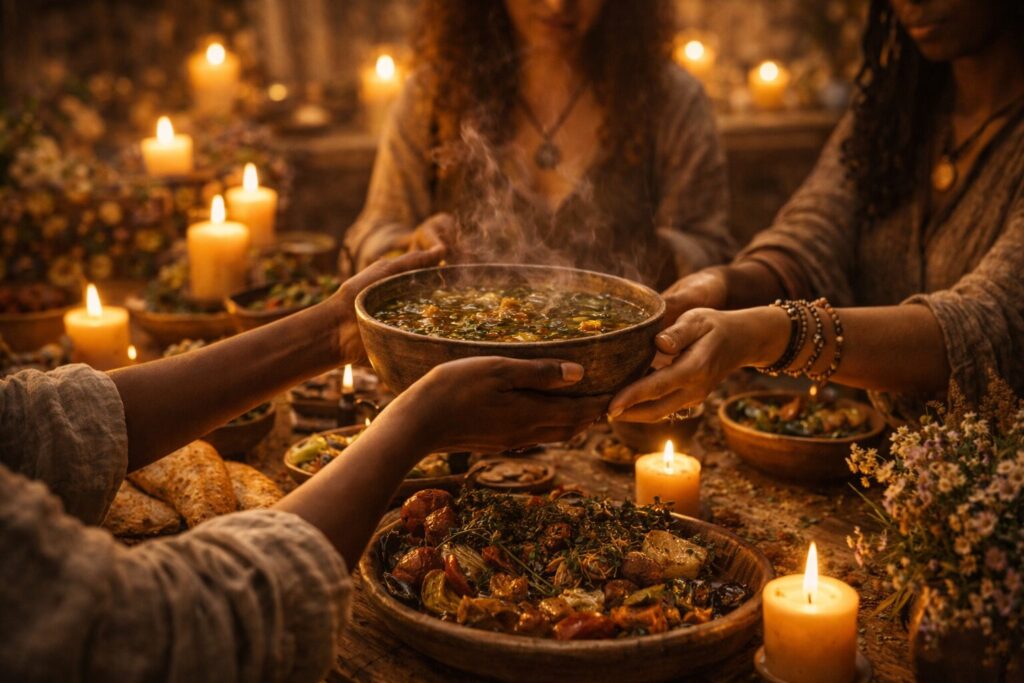
Culinary magic is not only private. It can also be communal. A meal prepared for family, coven, guests, or ritual company shapes atmosphere as surely as it nourishes bodies. In these cases, the food becomes part of a larger field of exchange: welcome, gratitude, reverence, celebration, care.
Shared food can therefore function as offering in more than one sense. It may be offered to spirits, deities, ancestors, or the dead. It may be offered to the living as a gesture of blessing and fellowship. It may be offered to a season, a sabbat, or a rite. Hospitality itself can be magical, because it creates a field in which people are received rather than merely fed.
The Body as the Final Vessel
What sets culinary magic apart from many other forms of practice is that the working does not remain outside the self. It is digested. It is absorbed. It enters blood, tissue, memory, sensation, and mood. Even when the magical effects are understood symbolically rather than literally, the intimacy remains the same: this is a craft whose vessel is the body.
That is why cleanliness, safety, sourcing, and proper handling are not separate from the magic. They are part of its integrity. To work through food is to acknowledge that the spiritual and material are not divided here. Care for the body is one expression of care for the craft.
Why Culinary Magic Matters
Culinary magic matters because it restores one of the oldest truths of craft: transformation is not abstract. It happens in matter, in time, in labor, in relationship, and in the ordinary acts by which life is sustained. To cook with intention is not to escape the world, but to enter it more deliberately.
In this sense, culinary magic is both humble and profound. It asks for no rare temple. It asks for attention, care, and understanding. It turns preparation into ritual, nourishment into meaning, and the shared table into a place where the visible and invisible meet.

Closing Protocol
A Simple Pattern for Culinary Work
No single recipe defines the craft, but a simple pattern helps many practitioners work with greater clarity. This is not a rigid law or a mandatory sequence for every meal. It is a practical rhythm: a way of moving from purpose into preparation, from preparation into transformation, and from transformation into relationship. In culinary magic, the work is not finished when the food is made. It ripens through serving, receiving, memory, and gratitude.
Choose
Begin with the true purpose of the dish. Know what you are making and why. A meal may be shaped toward comfort, celebration, protection, clarity, healing, grounding, blessing, hospitality, attraction, remembrance, release, or simple nourishment. Not every working needs elaborate symbolism, but it should have coherence. The dish, the mood, and the intention should belong to the same current.
Prepare
Gather ingredients with attention and care. Consider freshness, cleanliness, sourcing, season, and suitability. Wash, cut, measure, arrange, and ready the space with presence rather than haste. Preparation is not separate from the spell; it is the first embodiment of it. The manner in which ingredients are handled begins shaping the atmosphere long before heat is applied.
Transform
Cook with presence. Heat, timing, repetition, rhythm, stirring, kneading, steeping, baking, simmering, and seasoning all become part of the working. This is the moment when raw material changes its nature and takes on form. Intention is not merely “thought at” the food; it is worked through gesture, attention, sensory awareness, and the practical art of making something real.
Serve
Bring the dish forward with awareness. Plating, portioning, setting the table, offering the first bowl, choosing who is fed, and how the food is presented all shape the final expression of the work. A dish served carelessly carries a different current than one served with steadiness, warmth, and intention. Service is part of the magic because it determines how the work enters relationship.
Receive
Eat, share, or offer with attention. Culinary magic is not complete when the food leaves the oven or pot. It completes itself in reception: in the body, in the household, in the gathered table, in the atmosphere created around the act of nourishment. The spell is taken in through taste, scent, warmth, memory, and the simple fact of being fed.
Reflect
Notice what the process created. Observe not only whether the food “worked,” but how it felt, what mood it shaped, what memories it stirred, how it was received, and what changed in the room or in yourself. Reflection turns instinct into skill. Over time, it helps a practitioner learn which ingredients, methods, timings, and atmospheres truly support the kind of work they are trying to do.
Give Thanks
Close by acknowledging what made the work possible. Give thanks to the earth that grew the food, to the lives and labors woven into the meal, to the fire or heat that transformed it, and to the household, spirits, ancestors, season, gods, or living powers you understand as part of the exchange. In many animist and pagan ways of seeing, gratitude is not decorative. It is part of right relationship. Celebration, blessing, and thanks complete the circuit of receiving.
Choose. Prepare. Transform. Serve. Receive. Reflect. Give Thanks.
May the work be well made, well shared, and well received — with thanks to earth, to life, and to all powers rightly honored in the making.
Culinary magic is one of the oldest forms of craft, though it is not always named as such. Long before formal systems, long before written correspondences or structured traditions, there was the simple act of taking what the world provided and transforming it into something that could sustain life. Fire, water, grain, salt—these were not only tools of survival, but the beginnings of a relationship between human intention and the materials of the world.
To work with food in this way is to step into that lineage, whether consciously or not. Every meal carries the imprint of choice, of care, of attention given or withheld. Even without ritual language, the act of preparation shapes outcome. Culinary magic does not invent this process. It recognizes it, refines it, and works with it deliberately.
What makes this form of magic distinct is not complexity, but intimacy. Other workings may remain outside the self—placed in a room, carried by symbol, or directed toward a distant goal. Culinary magic crosses that boundary. It is taken in. It becomes part of the body, part of the moment, part of memory. It moves through sensation, nourishment, and presence.
Because of this, it asks for a certain kind of honesty. What you prepare reflects what you bring to it: your state of mind, your level of care, your attention to detail, your respect for the materials you use. There is no separation here between the practical and the magical. Cleanliness, sourcing, patience, and skill are not secondary concerns—they are expressions of the craft itself.
Over time, this practice becomes less about isolated workings and more about relationship. With ingredients. With process. With those you cook for. With your own body. A practitioner begins to notice how certain foods feel, how certain preparations settle or stir, how repetition builds familiarity, and how familiarity deepens into quiet understanding.
There is no requirement that every meal be a spell. But there is an opportunity, always present, to approach what you make with a little more awareness, a little more intention, and a little more care.
In doing so, something subtle shifts.
The act of cooking becomes less about producing food, and more about participating in transformation.
And of all the ways to shape the unseen, this remains one of the most direct.
You do not only witness the result. You carry it forward within you.