Weaving of the Rite
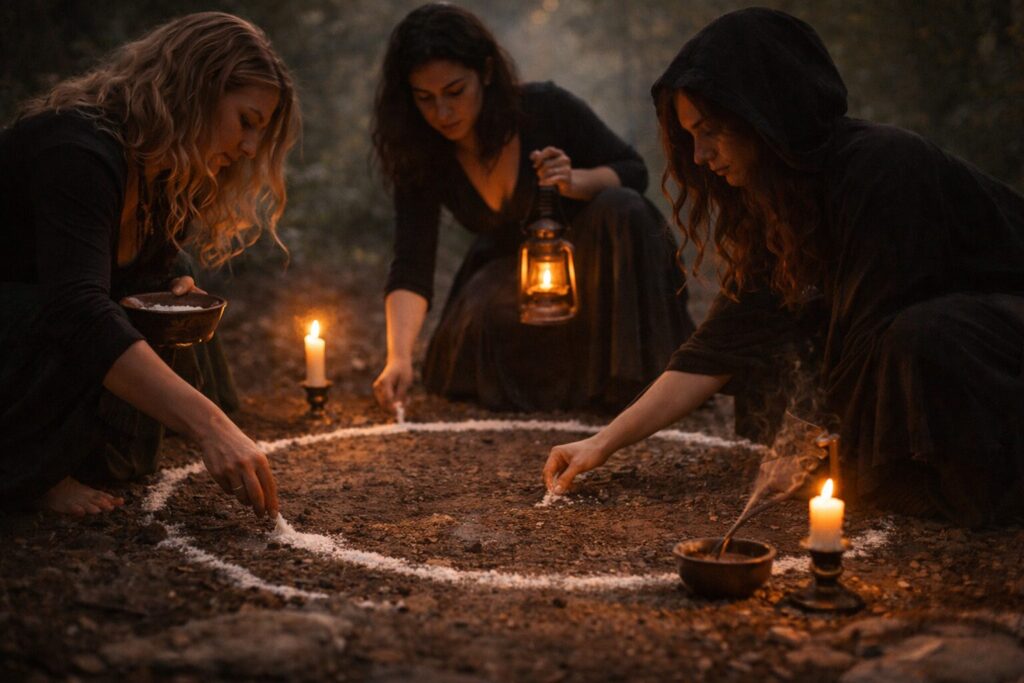
Casting a circle and performing ritual is not about rigid rules or theatrical perfection. It is about shaping a space that feels set apart—focused, intentional, and alive. The structure of ritual serves several purposes at once: it grounds the body in the present moment, steadies the mind, and creates a container in which intention can be held long enough to do meaningful work. At the same time, it functions as magical technique, directing attention and energy so the working does not scatter or collapse under its own weight.
At its heart, ritual is an act of relationship. It connects practitioner to place, to spirit, to deity, and to the deeper currents of the self. The sequence below reflects a rhythm shared across many traditions—not as a mandate, but as a proven pattern. You may follow it closely, adapt it to circumstance, or allow it to evolve as your practice deepens. What matters is not rigid repetition, but coherence.
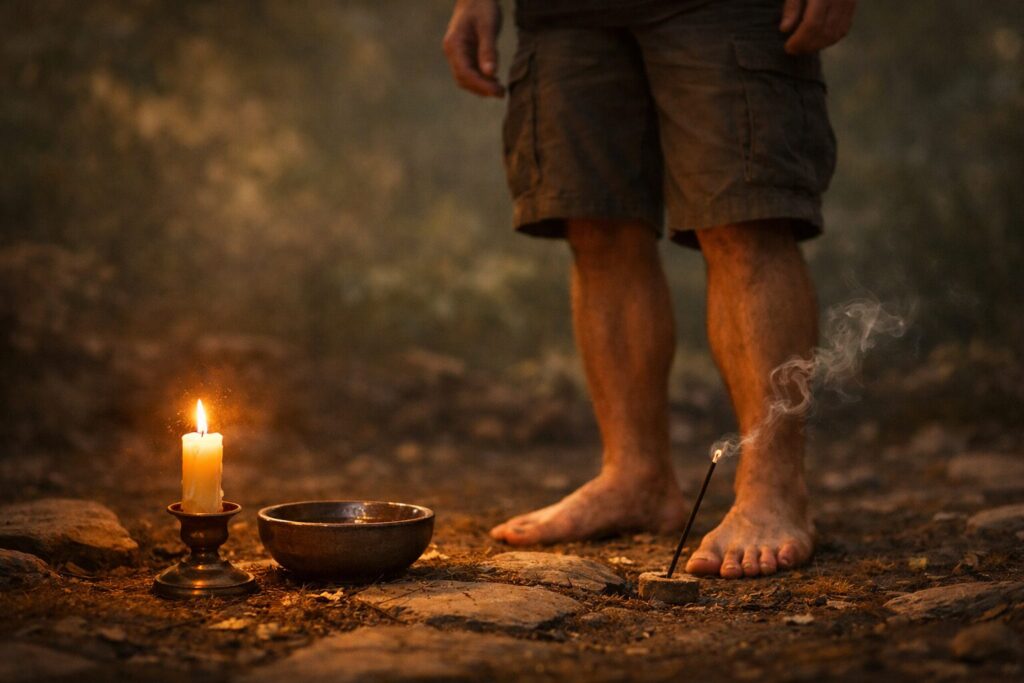
The rite begins with grounding. Before anything is invoked or shaped, attention must be gathered. This is done through breath, posture, and visualization—often imagined as roots sinking into the earth or light anchoring the body. Grounding is not merely calming; it is protective. It stabilizes awareness and helps prevent spiritual or emotional overwhelm by ensuring that the practitioner is fully present in their body before engaging the work.
Once centered, purification and grounding are often repeated together. Cleansing the space and the self—using smoke, water, salt, sound, or simple physical tidying—sets the energetic tone of the rite. This is not about removing imagined “contamination,” but about clearing distraction and establishing intention. Returning to grounding immediately afterward reunifies body and spirit, ensuring that the practitioner is not acting from abstraction, but from embodied awareness.
With attention gathered and space prepared, the practitioner casts the circle. This act marks the ritual boundary, distinguishing sacred time and space from the ordinary flow of the day. The circle functions both as protection and as container: it holds the working in place so energy can be raised, shaped, and released with clarity. A circle may be traced with wand, athame, hand, or visualization—the tool matters less than the steadiness and intention with which it is cast.
Many traditions then call the quarters or elements, acknowledging Air, Fire, Water, and Earth as witnesses and participants. Facing each direction in turn helps balance the rite and situates the work within the wider world. Whether understood symbolically, energetically, or devotionally, this step affirms that the working does not exist in isolation—it is part of a larger, living system.
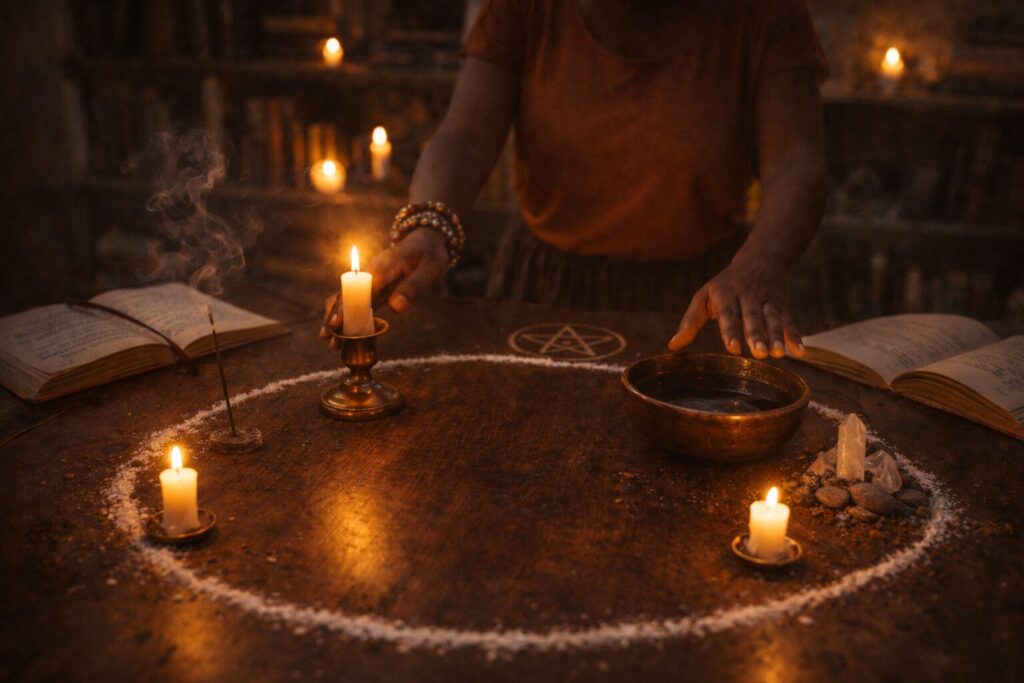
At the heart of the rite is invocation. This may involve welcoming deities, ancestors, spirits, or guiding presences, or it may take the form of a quieter alignment with sacred forces. Invocation can be spoken, sung, whispered, or held in silence. Its purpose is relationship: not command, but invitation. It establishes who is present in the working and clarifies the spiritual context in which the rite unfolds.
Only then does the practitioner move into the working itself. This is the central act—spellwork, divination, blessing, prayer, oath, or transformation. Within the charged circle, intention is enacted through deliberate action: lighting candles, speaking words, moving energy, offering gifts, or entering focused meditation. Trust in the flow of the rite matters here, but so does discipline. This is where preparation shows its value, allowing intuition to move within a stable frame rather than dissolving into impulse.
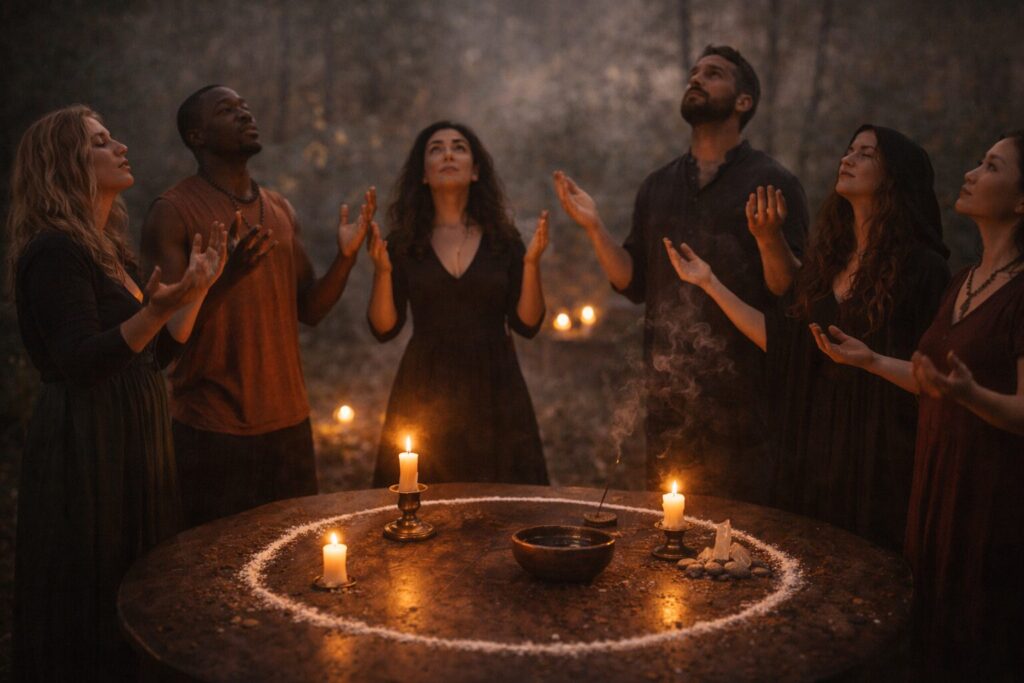
As the working concludes, attention turns toward gratitude and release. Deities, spirits, and elemental forces are thanked and dismissed with respect, not abruptly severed. This step begins drawing energy back toward the center, signaling that the rite is moving toward closure rather than collapse.
Finally, the practitioner opens the circle, gently dissolving the boundary between sacred and ordinary space. This is not an erasure, but a transition. The work is complete; its effects continue. Energy is grounded, awareness returns fully to the body, and the practitioner steps back into everyday time carrying the intention forward.
As the final candle dims and the space settles, remember that ritual is both pathway and canvas. These steps offer a shape—tested by time and echoed across traditions—but how you move through them is yours to discover. Some workings require every boundary and bell; others need only breath and will. Whether your rite was elaborate or spare, the circle now rests, and the magic moves with you. Let your practice grow as you do: rooted, responsive, and alive.
Continue the Work