Knot & Cord Magic
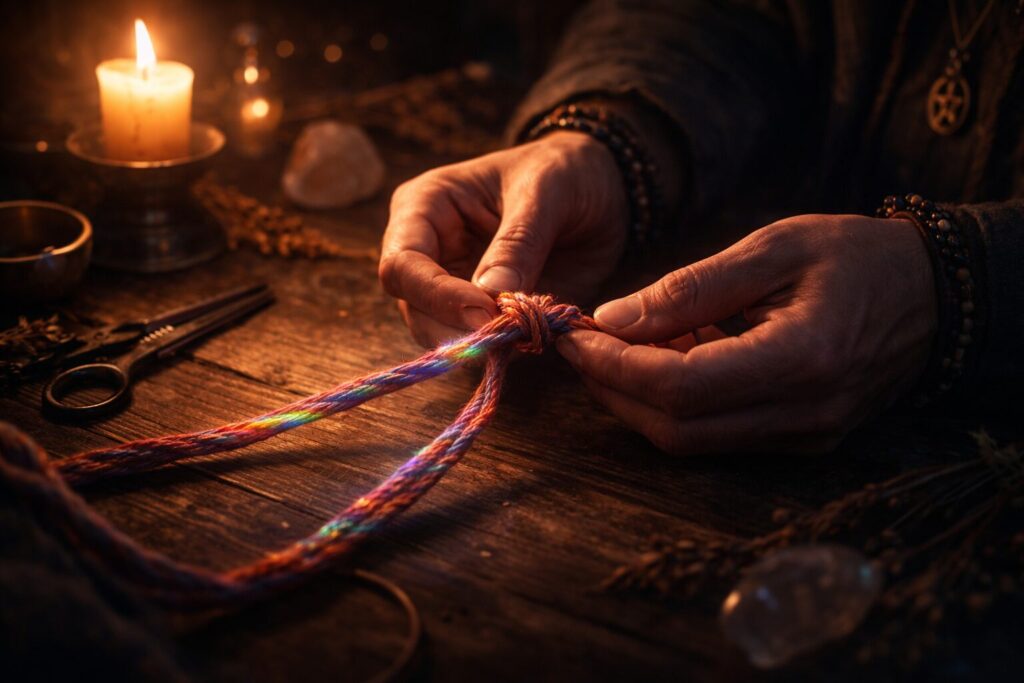
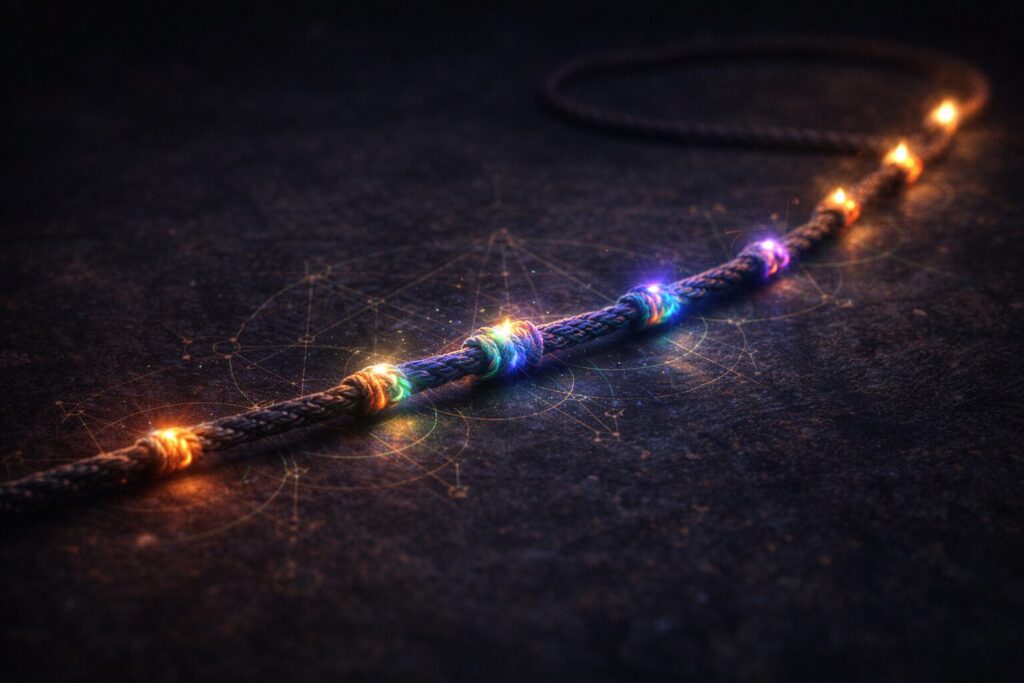
Knot and Cord Magic is the weaving of will into fiber—the act of binding intention into form so it may be carried, held, or released in time. Each knot becomes a point of containment: a measured act of focus fixed into the physical world, held in tension until it is deliberately released. In this way, cord magic is not only symbolic—it is functional. It allows a working to persist beyond the moment of casting, to unfold gradually, or to be carried until the precise moment it is needed. In this sense, it overlaps closely with binding magic, which similarly works to contain, restrict, or hold a force in place until conditions for release are met.
The act of tying is both practical and transformative. Repetition, pressure, and sequence create a rhythm through which intention is stabilized. Breath, words, and attention may be worked into the cord, aligning the practitioner’s body with the motion of the hands until the working becomes steady and coherent. What might begin as a simple action—loop, pull, tighten—becomes a structured method for building and holding energy over time.
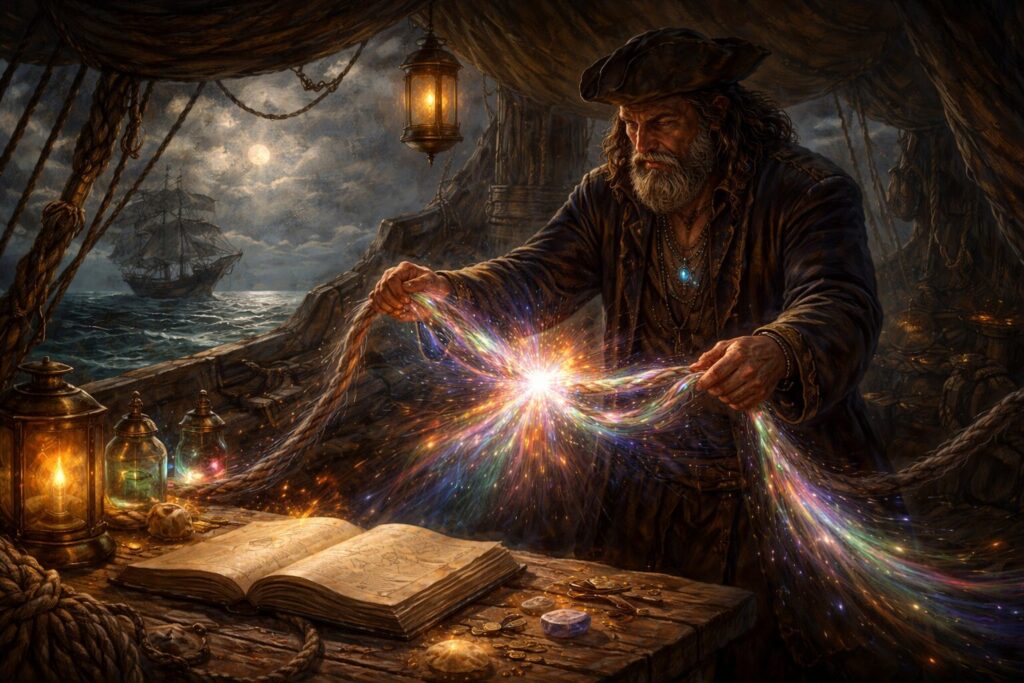
This is among the oldest forms of applied magic, present wherever cord, thread, and meaning have been brought together. Sailors once purchased “wind knots” from witches of the shore, untying one to call a breeze, two for a steady wind, three for a storm. Healers bound illness into cords and cut them to release the body from its hold. Knots marked time, secured protections, sealed intentions, and carried workings across distance. In each case, the cord served not as decoration, but as a device—something made to hold, contain, and eventually act.
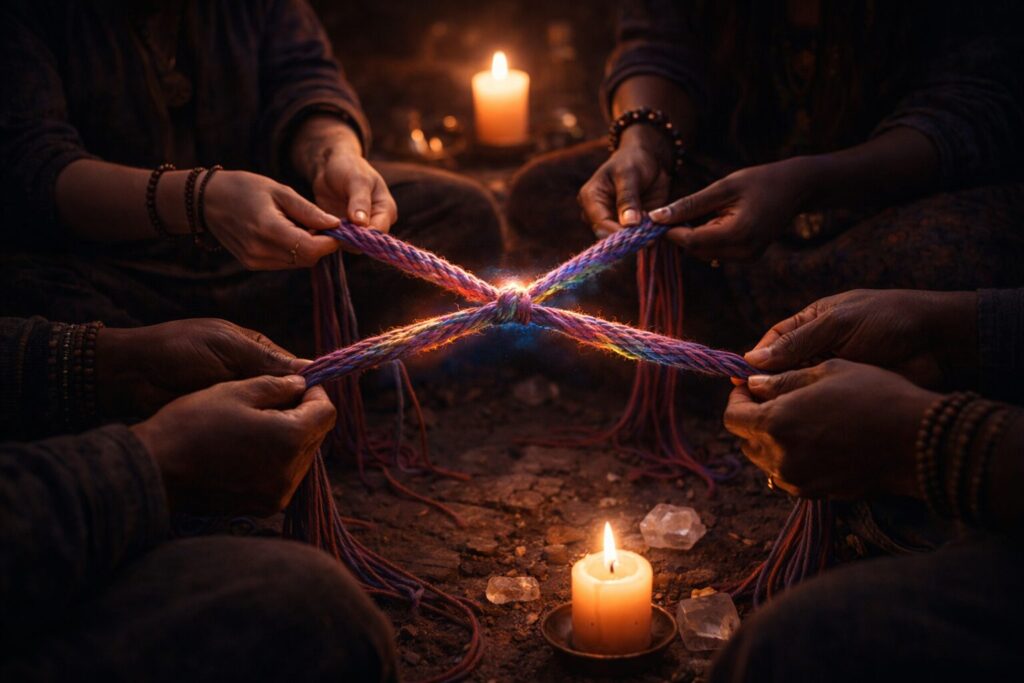
In the Coven of the Veiled Moon, knot magic is practiced both individually and in circle. Alone, a practitioner may work quietly, tying intention into cord with measured repetition. In group settings, cords may be braided together—three, nine, or more—allowing multiple practitioners to contribute to a single working. The process is steady rather than forceful. Energy is not raised in a sudden surge, but built through accumulation, reinforced with each knot, and held until it is time to release.
Because of this, knot magic naturally cultivates a meditative state—not as its goal, but as a byproduct of doing the work correctly. The hands move, the breath steadies, and the mind follows the pattern. Like prayer beads in other traditions, the cord gives the mind a path to follow—but unlike them, each knot leaves something behind.
At a Glance
Knot & Cord Magic
A form of spellcraft that binds intention into physical structure through knots, braiding, tension, repetition, and timed release.
Core Idea
Will is fixed into cord so the working can be stored, carried, strengthened over time, or deliberately released when needed.
Primary Mechanism
Repetition, sequence, pressure, and symbolic containment. Each knot serves as a point of held intent within a larger structure.
Best Suited For
Protection, binding, luck, healing, gradual spell release, threshold work, vow magic, and long workings that benefit from patience.
Working Temperament
Steady, accumulative, tactile, and disciplined. This is less explosive magic than sustained magic—built by rhythm rather than force.
Meditative Value
The repeated motion of tying and braiding steadies breath and attention, making the work naturally conducive to concentration and trance-adjacent focus.
Main Caution
Emotion imprints easily into fiber. Work tied in agitation, confusion, or haste may preserve the very current the practitioner meant to master.
Practice
Working with Knot & Cord Magic
Knot and cord work rewards patience, sequence, and clarity. The strength of the art lies not in spectacle, but in how precisely intention is fixed, held, and released.
Choosing Material
The material matters because it shapes both the feel and function of the working. Cotton and wool tend to suit grounded, practical spellwork; ribbon often lends itself to vow work, beauty rites, or ceremonial use; rougher fibers such as hemp can feel especially appropriate for durable protections, bindings, or long workings meant to endure. The cord need not be expensive, but it should be chosen deliberately. Texture, flexibility, and color all contribute to the temperament of the work.
Number and Structure
Knot magic becomes stronger when its structure is intentional. Three knots may suit a focused or simple working; seven often carries a fuller ritual weight; nine is especially common where gradual release, layered intention, or completion is desired. Braids add another layer of meaning, especially when multiple strands represent forces to be joined: self and goal, practitioner and spirit, or several participants contributing to one working. The pattern itself is part of the spell.
Charging the Cord
A cord may be charged through repetition, breath, chant, prayer, visualization, or focused silence. Some practitioners speak a line at each knot. Others breathe intention into the fiber before tightening it, or hold the cord between the hands until the body settles into a steady rhythm. The aim is not theatrical intensity, but coherence. The cord should leave the working feeling inhabited by the intention placed within it.
Storage, Carrying, and Placement
Once worked, a cord should be kept in a manner consistent with its purpose. Protective cords may be hung over thresholds, concealed in a room, or carried on the body. Luck or confidence cords may be kept in a pocket or bag and touched before an important moment. Healing cords may remain near a bedside, while cords meant to bind or banish are often stored out of casual reach until the proper time for release or disposal. Placement is part of activation.
Release Methods
How a cord is released determines how the working concludes. Untying tends to suit gradual unfolding, measured release, or spells designed to open over time. Cutting is more decisive and is often used where a condition must be broken, ended, or severed. Burning may transform and send the work onward; burial may seal, ground, or remove it from active circulation. A spell tied carefully deserves an ending chosen with equal care.
Meditation as Method
Though knot magic is primarily a working tool, its method naturally cultivates concentration. The repeated motion of tying, braiding, counting, and tightening steadies the breath and gives the mind a pattern to follow. This can make the practice deeply meditative, especially for those who focus best through movement and touch. Yet the meditative state is not separate from the magic; it is one reason the work can become so stable. Calm attention is itself part of the enchantment.
Structure
Correspondences & Working Uses
Knot and cord magic is simple in material but rich in structure. The cord, color, knot count, and method of release all shape how the working behaves over time.
| Aspect | Common Correspondences |
|---|---|
| Materials | Cotton for practical everyday workings; wool for warmth, endurance, and hearth-centered magic; silk or ribbon for refined, ceremonial, beauty, or vow work; hemp or rough cord for durable protections, bindings, and long labor. |
| Colors | Red for will, vitality, and courage; black for binding, warding, and containment; white for clarity, blessing, and purification; green for healing, luck, and growth; blue for calm, truth, and steady thought; gold for solar intention, honor, and success. |
| Knot Counts | Three for focus and a compact working; seven for ritual weight and layered intent; nine for completion, gradual release, or cumulative spellcraft; thirteen for deeper or longer-term workings where endurance matters. |
| Best Uses | Protection, binding, luck, healing, vow magic, threshold charms, banishment, long-term support work, and spells meant to unfold in measured stages. |
| Charging Methods | Breath, chant, spoken phrases, prayer, visualization, silent concentration, candle-side repetition, circle blessing, or the repeated contribution of several practitioners to one shared cord. |
| Release Methods | Untie for gradual unfolding or measured release; cut for severing, ending, or decisive change; burn for transformation and sending; bury for sealing, grounding, or removal from active circulation. |
| Placement | Carried on the body for luck or confidence; hung above a threshold for protection; kept near the bed for healing or dream work; stored hidden away for bindings, banishments, or long workings awaiting the correct moment. |
| Working Temperament | Steady, accumulative, disciplined, tactile, and patient. This is magic built by repetition and containment rather than sudden force. |
Lore & Responsibility
Memory, Binding, and Responsibility
Knot and cord work is rarely neutral. What is tied is not only shaped by intention, but by mood, clarity, timing, and the state of the practitioner at the moment of making.
Knots as Holders of Memory
In many magical understandings, a knot does more than symbolize intention: it preserves a moment of directed will. The tension in the cord mirrors a tension in the work itself, held in place until something changes. For this reason, knot magic often carries a sense of memory. A finished cord may continue to hold the emotional quality, purpose, and pattern impressed into it long after the rite itself has ended.
Binding Is Not the Same as Control
Knot magic overlaps naturally with binding magic, but the two should not be confused with total domination. To bind is often to limit, contain, delay, restrain, or hold a current in place. It may be protective, preventative, or stabilizing. This is different from imagining that every problem can simply be “tied up” and forced into obedience. Good practice distinguishes between containment and control.
Why Emotional State Matters
Fiber takes imprint easily because knot work is built through repetition, touch, and sustained focus. Anger, panic, resentment, confusion, and compulsion can become part of the pattern just as surely as devotion, steadiness, or love. A cord tied in agitation may preserve agitation. A working made in calm tends to carry calm. This does not mean one must be perfect before beginning, but it does mean that clarity is itself part of the craft.
From Folk Practice to Ceremonial Structure
Knot magic has deep folk roots because it arises from ordinary materials and repeatable gestures. It belongs naturally to household craft, sea lore, healing charms, handfasting customs, and protection work. Over time, these practical forms have also entered more formal systems, where number, sequence, timing, consecration, and symbolic layering become increasingly structured. The result is not a contradiction, but a spectrum: simple folk methods at one end, highly formalized workings at the other.
Care, Disposal, and Ending the Work
A cord should not be forgotten merely because it is small. Once worked, it deserves to be stored, released, or destroyed with intention. Some cords are untied when their work is complete. Others are cut, burned, buried, or sealed away depending on the nature of the spell. The important principle is that the ending should match the working. A deliberate spell deserves a deliberate conclusion.
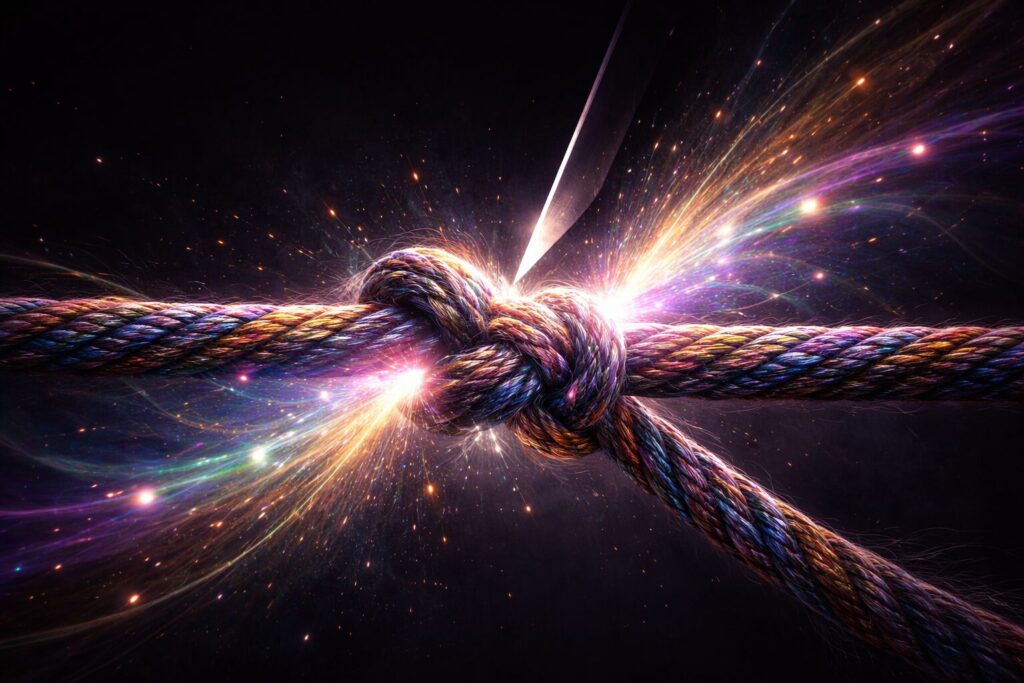
Most knot workings become clearer when approached in a deliberate sequence. The form may vary, but the basic rhythm remains much the same:
The strength of the working lies not only in the intention itself, but in the care with which it is structured. To choose the cord deliberately, to tie with steadiness, to release with purpose, and to close the work without haste—this is part of the deeper discipline of knot magic.
Knot and Cord Magic teaches that not all power must move at once. Some workings are best cast in stages, built through repetition, held in tension, and released only when their time has come. In this way, the cord becomes both method and memory: a simple thing made significant by attention, structure, and will.
There is humility in this art. It asks the practitioner not merely to desire a result, but to build toward it patiently, knot by knot, with enough clarity to know what is being tied, why it is being held, and when it should be released. The work is rarely dramatic, yet it can be enduring precisely because it is deliberate.
To practice knot magic well is to understand that form itself can carry force. A cord may be humble in appearance, but once worked, it becomes a record of intention moving through time. What is tied carefully may continue to labor quietly long after the hands have left it.