Symbolic & Archetypal Currents
Magic does not operate in a vacuum.
It operates in symbol.
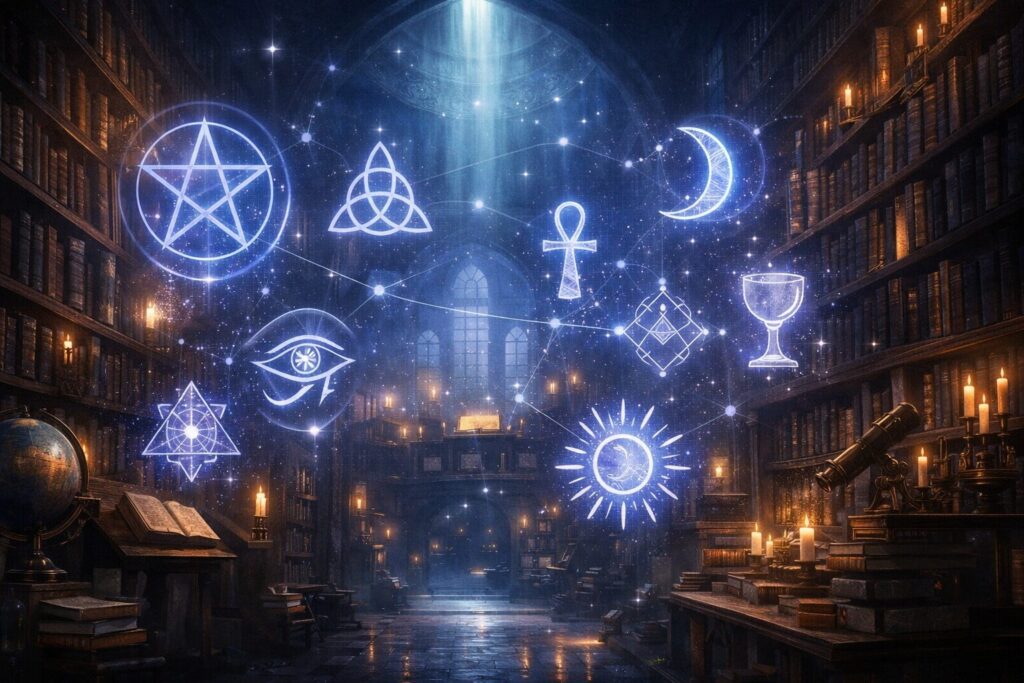
Every act of perception is filtered through pattern. Every ritual gesture, every image held in the mind, every name spoken in a circle participates in a symbolic architecture older than any individual practitioner. Symbols are not decorative additions to magic; they are the medium through which magic becomes intelligible, transmissible, and actionable.
A symbol is compression. It condenses vast fields of meaning into a graspable form. A single image — a star, a serpent, a mother, a tower, a crossroads — carries emotional charge, mythic history, and practical correspondence at once. Symbols are containers of pattern. They store relationships between forces. They allow the mind to hold complexity without dissolving into chaos. In ritual practice, this compression is not abstraction; it is power made portable.
Symbols also function as bridges. They connect psyche and cosmos, inner perception and outer structure. The language of myth, tarot, astrology, and sacred geometry persists across cultures not because humanity repeats itself accidentally, but because consciousness organizes experience through recurring forms. These forms act as shared maps. They allow practitioners separated by geography or era to recognize the same terrain of meaning.
The work of Carl Jung gave one influential name to this phenomenon: the collective unconscious — a reservoir of inherited symbolic patterns that shape how human beings imagine, dream, and interpret reality. Jung did not invent archetypes; he described their persistence. Likewise, the mythographer Joseph Campbell traced how cultures across the world express the same structural stories in different costumes. The hero, the descent, the trickster, the mother, the destroyer, the rebirth — these are not merely narratives. They are recurring channels through which experience becomes intelligible.
Esoteric traditions extend this insight into practice. Correspondence systems, planetary symbolism, tarot archetypes, and ritual language operate as deliberately constructed symbolic grammars. They do not replace reality; they reveal its patterning. A tarot spread is not cardboard predicting fate. It is a symbolic interface that allows hidden relationships to surface. Astrology is not celestial superstition; it is a structured vocabulary for mapping cycles, temperament, and timing. In both cases, symbol becomes a working instrument.
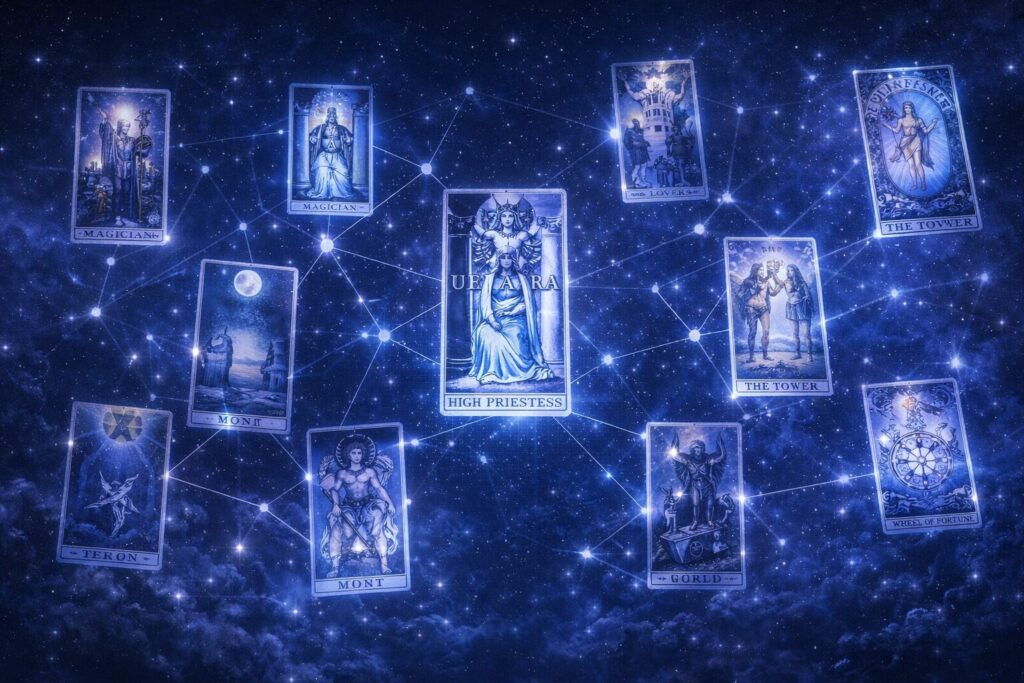
Archetype is therefore not an abstract theory. It is a communication channel. It is how information travels between layers of experience — personal, cultural, and transpersonal. When practitioners report that spirits speak in images, dreams, myths, or sudden symbolic insight, they are describing the native format of consciousness encountering the native format of communication.
Spirits speak in symbol because symbol is the native format of consciousness.
Magic, in this light, is a literacy. To study symbolic currents is to learn the grammar through which perception becomes meaning and meaning becomes action. The practitioner who understands archetype is not escaping reality into imagination; they are learning to navigate the structures that already shape how reality is perceived, interpreted, and transformed.
Symbolic work is therefore not optional ornamentation. It is the architecture through which magic becomes legible. To practice without symbol would be to attempt speech without language — intention without form, force without direction. Archetypal currents give shape to power. They provide the shared coordinates through which practitioners, spirits, and traditions recognize one another across time.
And in that recognition, magic becomes communicable, repeatable, and alive.
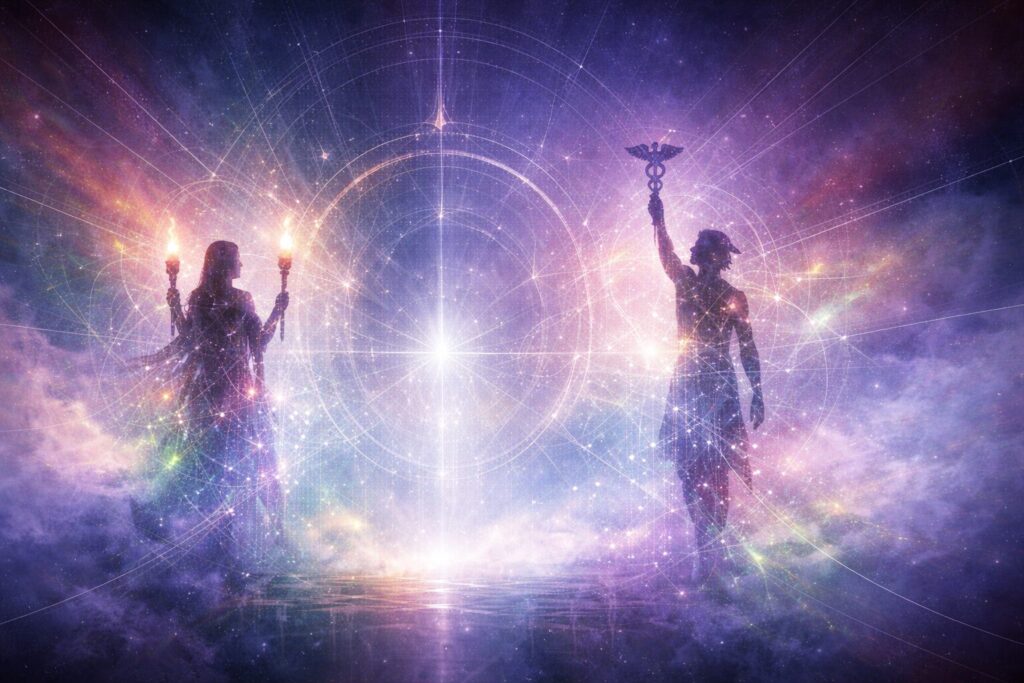
Archetype & Symbol as Structure
Archetype as Structure
Archetypes are not characters or stories. They are structural roles consciousness organizes around. Across cultures and eras, the same patterns recur: the hero, the mother, the guide, the destroyer, the threshold, the descent, the rebirth. These repetitions are not imitation. They are architecture surfacing through myth.
Jung described these as inherited symbolic templates within the collective unconscious. Joseph Campbell traced how cultures express them in different narrative costumes while preserving the same structure. The names change; the architecture remains.
For magical practitioners, archetypes act as coordinates. They orient the mind inside symbolic space. Invoking a mother, a crossroads, or a tower activates currents the psyche already recognizes. Power travels along familiar pathways.
Symbol as Magical Technology
Symbols are compression engines. They condense layered forces into graspable forms. A sigil, a glyph, a tarot image, or a geometric figure allows complex meaning to remain stable under attention. Symbol is not ornament — it is an interface.
Correspondence systems stabilize intention. They give energy a repeatable shape. This is why magical traditions develop alphabets, diagrams, and iconographies: not to decorate power, but to navigate it.
Used skillfully, symbol becomes a container that holds focus long enough for transformation. The practitioner is operating in the grammar through which magic becomes legible.
Myth, Correspondence & Reality
Myth as Correspondence System
Myth is symbolic mapping. It encodes relationships between forces in narrative form. Persephone becomes descent and return. Mars becomes motion and conflict. The Tower becomes collapse before restructuring. Myth turns correspondence into memory.
In magical work, myth supplies trajectory. A descent ritual carries different currents than an ascent ritual. A trickster working differs from a healing one. Myth gives transformation a recognizable shape.
Tarot and astrology function as portable mythologies — shared symbolic environments where patterns can be named and worked intentionally.
Symbol and Reality
Symbol does not replace reality. It shapes how reality is perceived and acted upon. Language directs attention. Attention directs interpretation. Interpretation directs behavior.
Magic operates at the intersection of meaning and force. Ritual reorganizes the symbolic filters through which the world is encountered. When perception shifts, action shifts. When action shifts, outcomes follow.
To study archetypal currents is to become literate in the structures already shaping experience. Symbolic magic is deliberate navigation of living architecture.
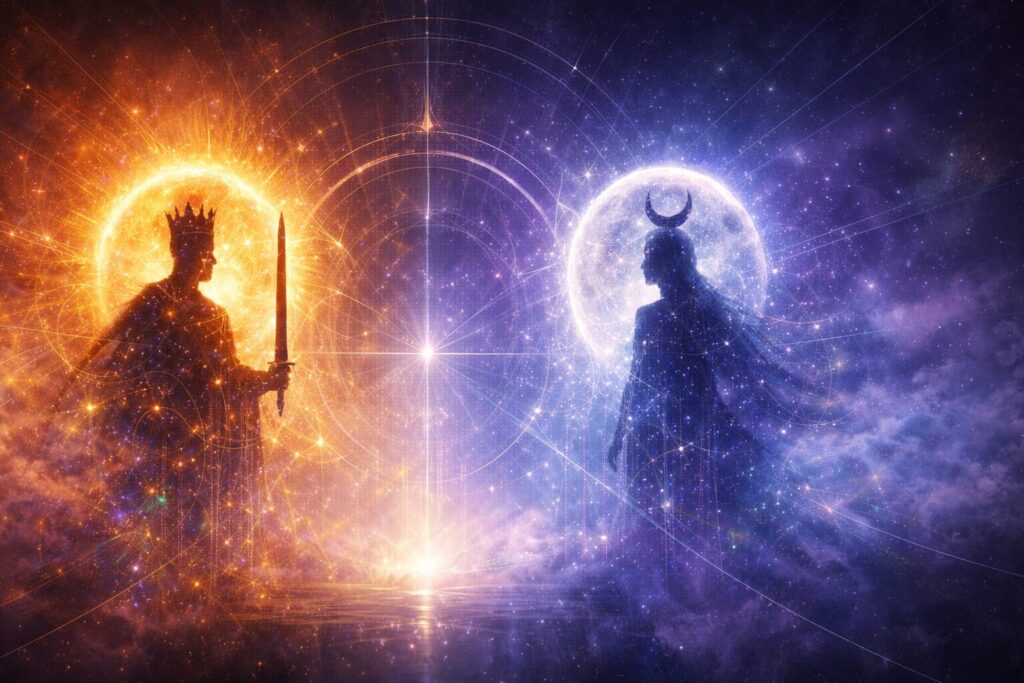
To work with symbol is not to escape reality — it is to recognize the architecture through which reality is already experienced. Every perception arrives filtered through pattern. Every decision is shaped by meaning. Every ritual is a deliberate arrangement of symbols designed to guide attention, emotion, and force toward a chosen outcome.
Archetypal literacy does not weaken magic by explaining it. It deepens practice by revealing the channels through which magic travels. When a practitioner understands the structural role of an image, a myth, or a glyph, they are no longer improvising blindly. They are navigating a shared symbolic terrain that has guided human imagination for millennia.
Symbols are how consciousness speaks to itself. They are also how spirits, traditions, and cultures communicate across time. A ritual image is never isolated. It carries echoes of countless prior uses, emotional residues, ancestral memory, and collective recognition. To step into symbolic work is to step into an ongoing conversation that began long before the practitioner arrived and will continue after.
Magic becomes intelligible when symbol is treated as language rather than ornament. The witch is not inventing meaning from nothing; they are composing within an existing grammar. Archetypal currents provide the syntax through which intention becomes form and form becomes effect.
To practice symbolic magic is therefore an act of literacy. It is the cultivation of fluency in the patterns that already shape perception, myth, and transformation. The practitioner becomes reader, translator, and architect at once — capable of recognizing the currents beneath appearances and working with them deliberately.
In that fluency, magic ceases to feel arbitrary. It becomes navigable. Symbol is not a veil over reality; it is the map by which reality is traversed.