Create a Space
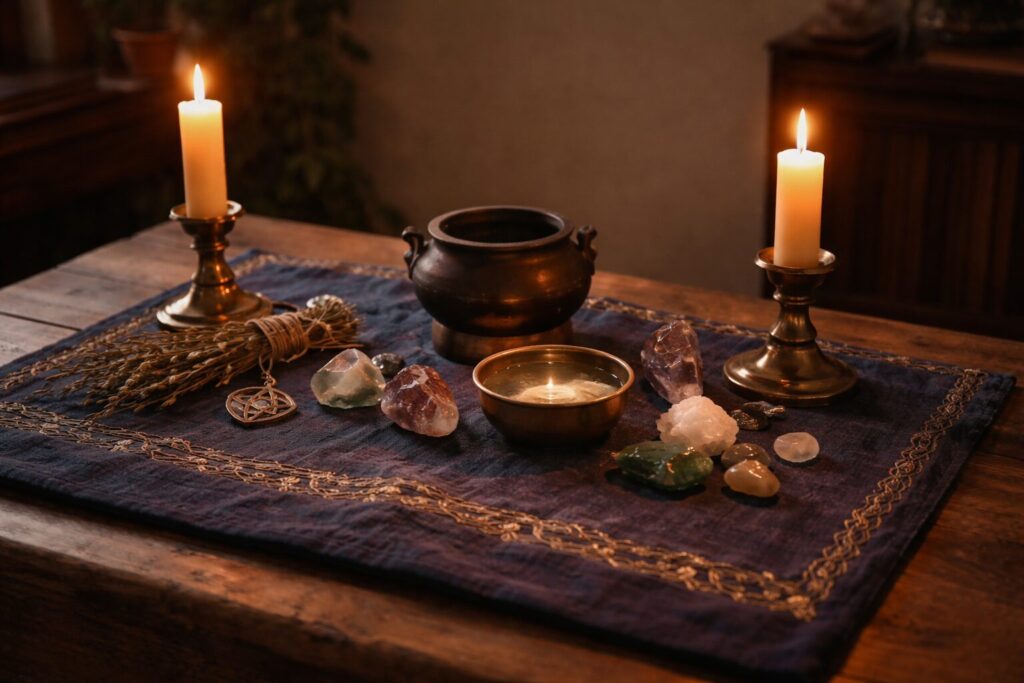
An altar is not simply a collection of tools, nor is it defined by aesthetics alone. It is a deliberate arrangement of space, symbol, and attention—a place where intention is given form and practice is anchored in the physical world. Whether modest or elaborate, permanent or temporary, an altar serves as a point of orientation: a surface where meaning gathers, actions become intentional, and relationships—both internal and external—are made visible. This guide explores the foundational considerations of altar setup, focusing on structure, symbolism, and coherence, so that the space you create can support your work as it grows and changes over time.
Orientation What an Altar Is (and Isn’t) A deliberate boundary for attention, relationship, and work
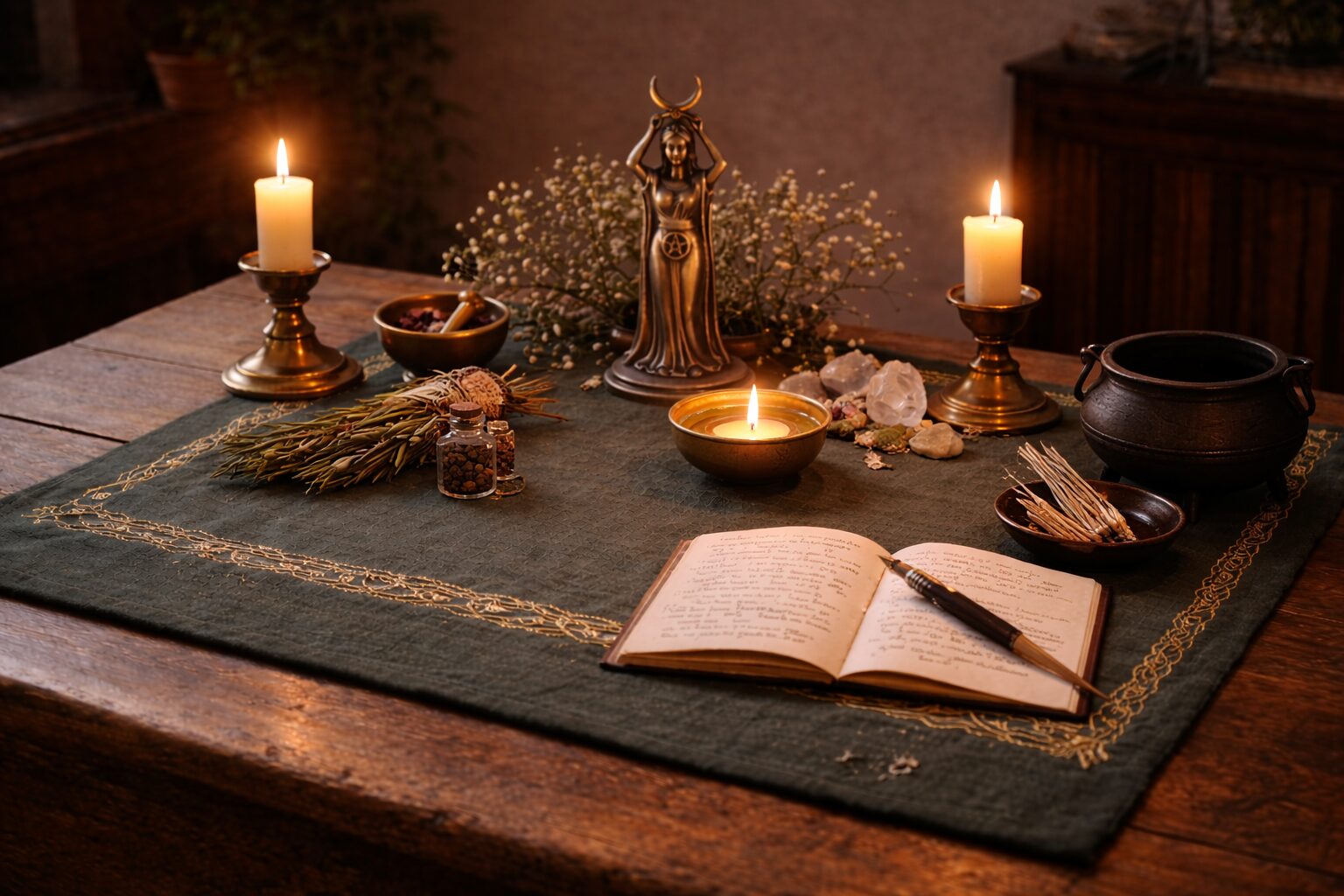
At its simplest, an altar is a focal point you return to—a place where intention becomes structured and relationship becomes repeatable. It is not defined by ornate tools, aesthetic perfection, or how closely it resembles someone else’s setup. A working altar is meant to be approached, used, and renewed.
It also isn’t just a shelf for magical objects. When an altar becomes storage or decor, it stops functioning as a boundary between the ordinary and the intentional. Open space is not “missing.” It is part of the altar’s design: it leaves room for breath, motion, and work.
Practical + sacred Choosing Your Space Continuity matters more than size; boundary matters more than perfection
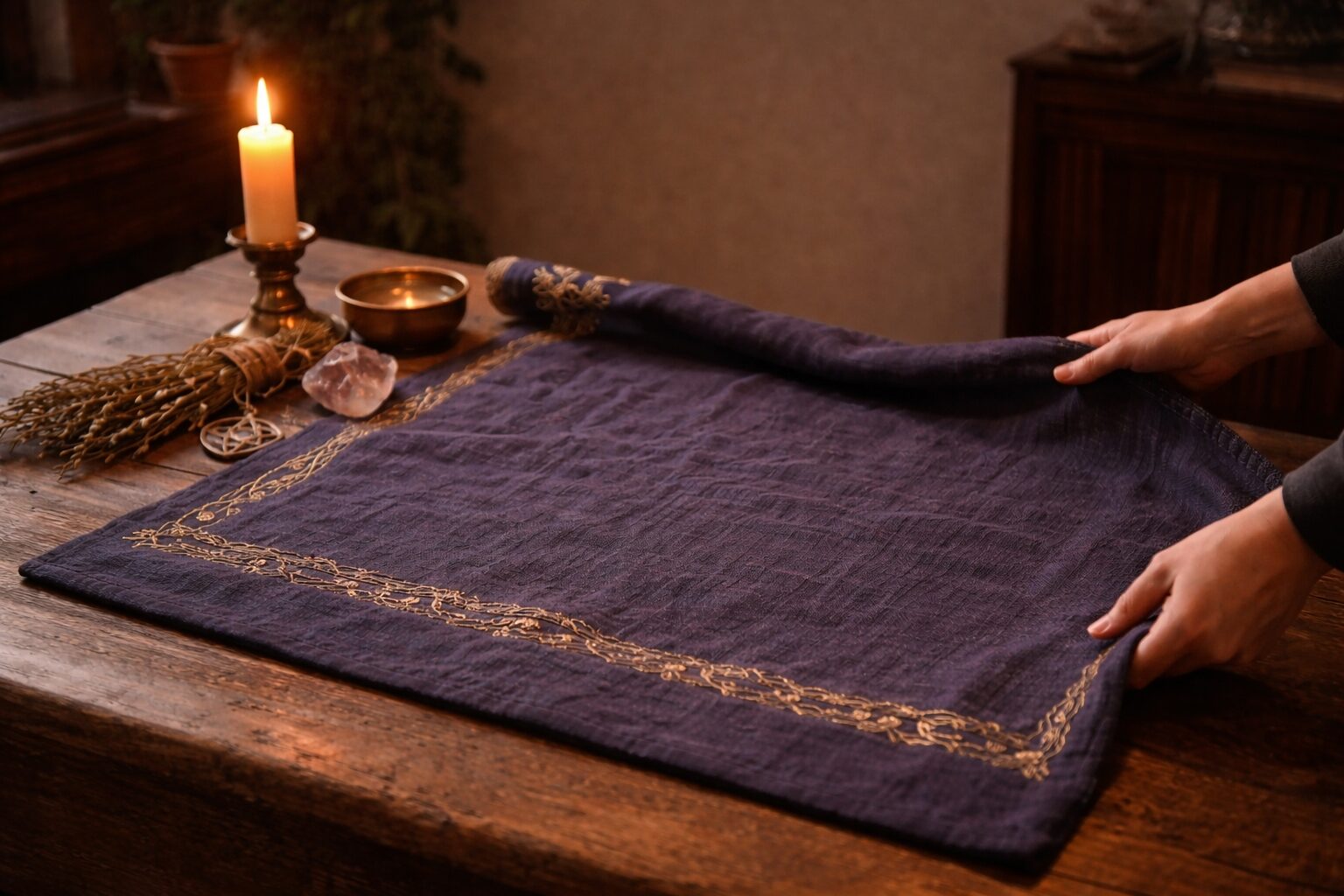
The best altar location is not always the most dramatic—it is the one that supports focus, continuity, and respect. A stable surface and predictable access matter more than size, expense, or “perfect” aesthetics.
Permanent altars build familiarity and return. Temporary or portable altars emphasize clarity and intention. Neither is lesser; each simply answers different realities of space, privacy, and routine.
Continuity
Returning to one place trains attention quickly—your body learns “this is where we do the work.”
Boundary
A cloth, tray, or cover sets the space apart—even in a shared room or busy household.
Function
Choose a surface you can actually work at. If your hands can’t move, the altar becomes decorative.
Process Altar Setup in Stages Preparation → placement → refinement → use
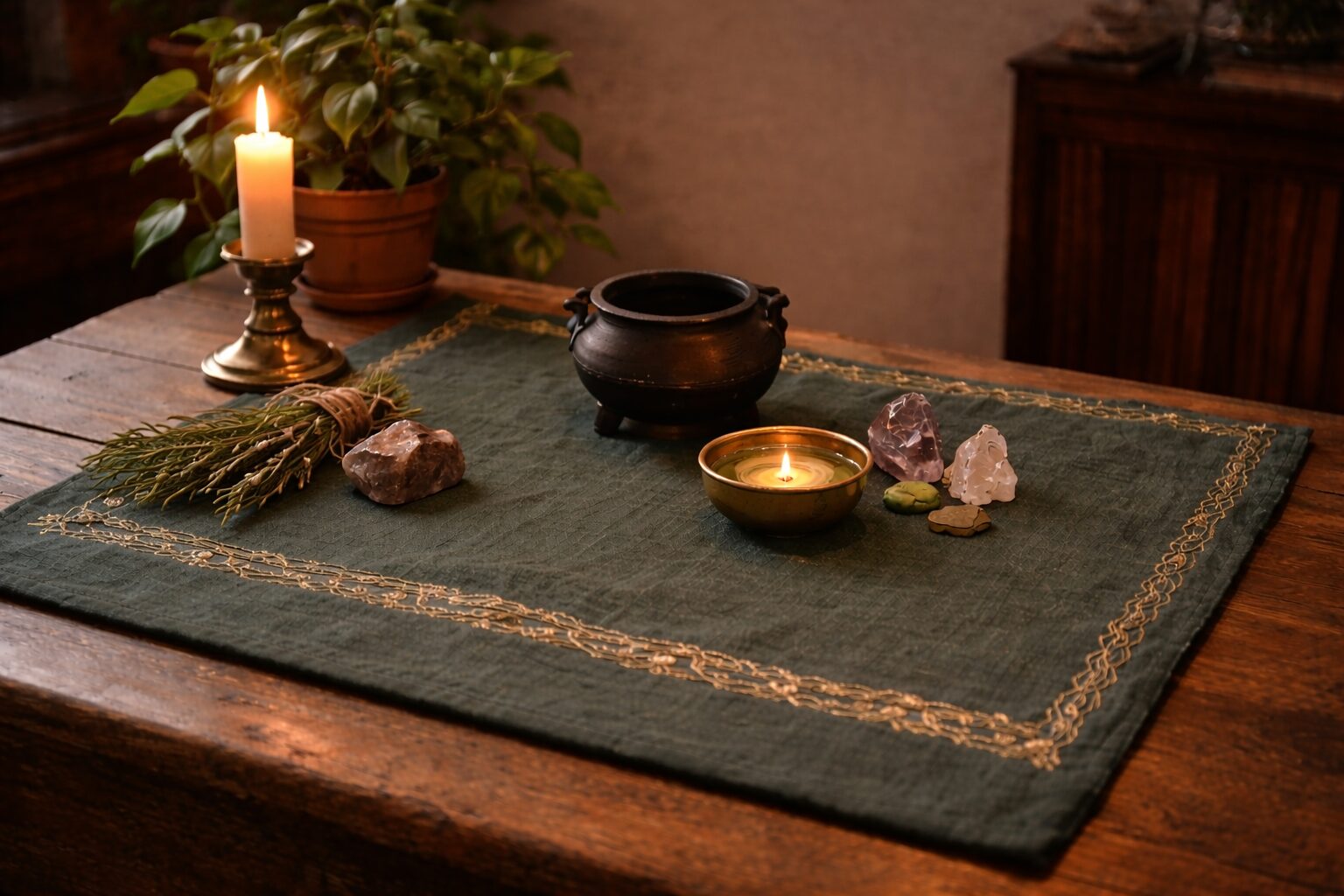
Altars are rarely completed all at once. They are shaped through return. The most stable altars begin with a prepared surface, then gain coherence through placement, and only later accumulate complexity through use.
A useful altar begins with structure: where your working space is, where your anchors live, and what gets moved during work. Let the altar become familiar before it becomes elaborate.
Symbolic structure Correspondence and Coherence Not trivia—alignment that keeps the space intelligible
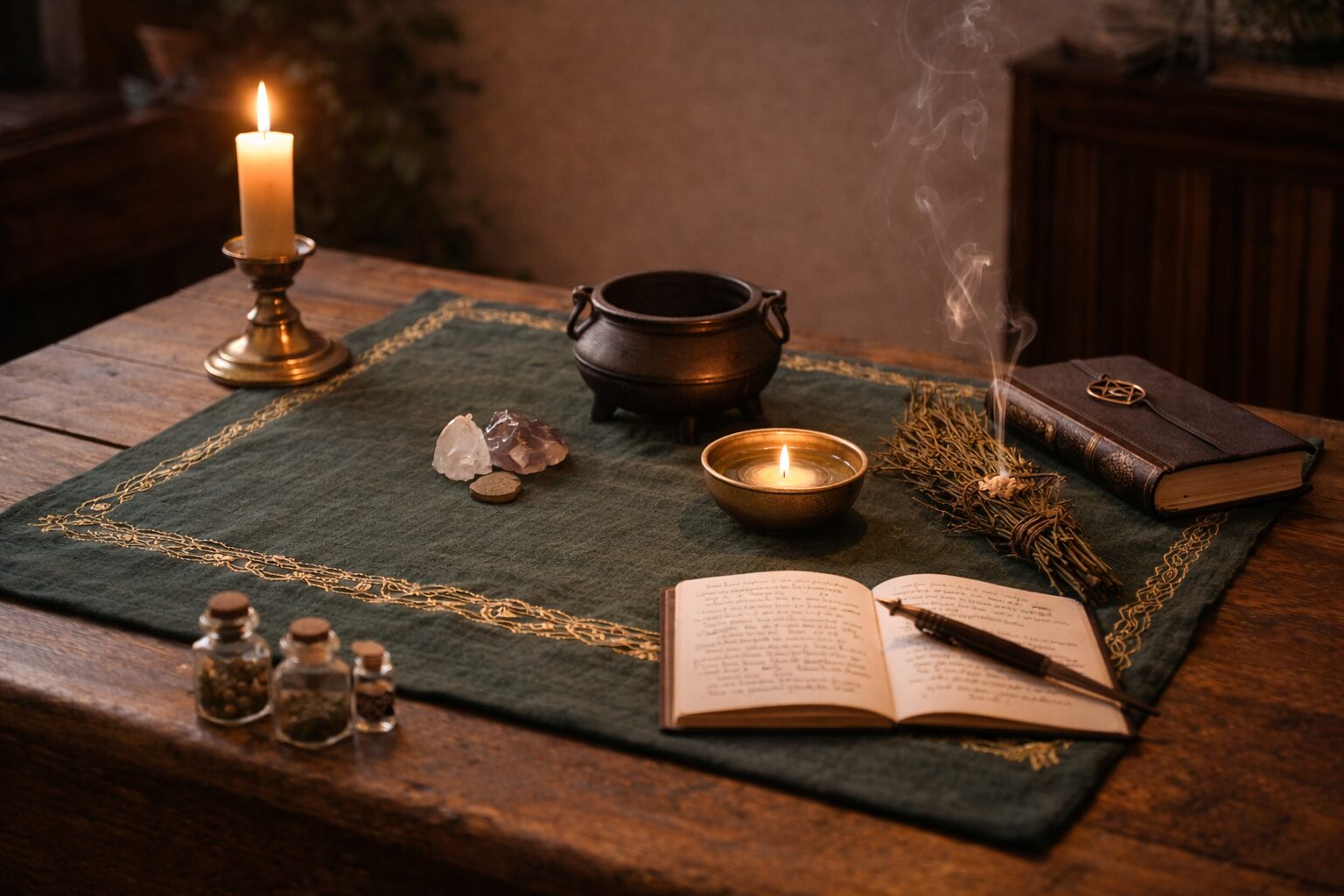
Correspondences let an altar speak a consistent symbolic language. Materials, colors, layout, and tone can either reinforce one another or pull in competing directions. Coherence makes the space easier to enter and easier to trust.
This doesn’t mean you need an encyclopedic system. It means you choose a few relationships that matter—elemental balance, seasonal tone, a deity’s symbols, a planetary emphasis, a house-style—and you let the altar agree with itself.
Material
Wood, stone, metal, cloth—repeat textures that match the “feel” of the work.
Color & Tone
Color sets atmosphere fast. Pick a tone and let the altar remain faithful to it.
Rhythm
Seasons and lunar timing can shift an altar without breaking continuity.
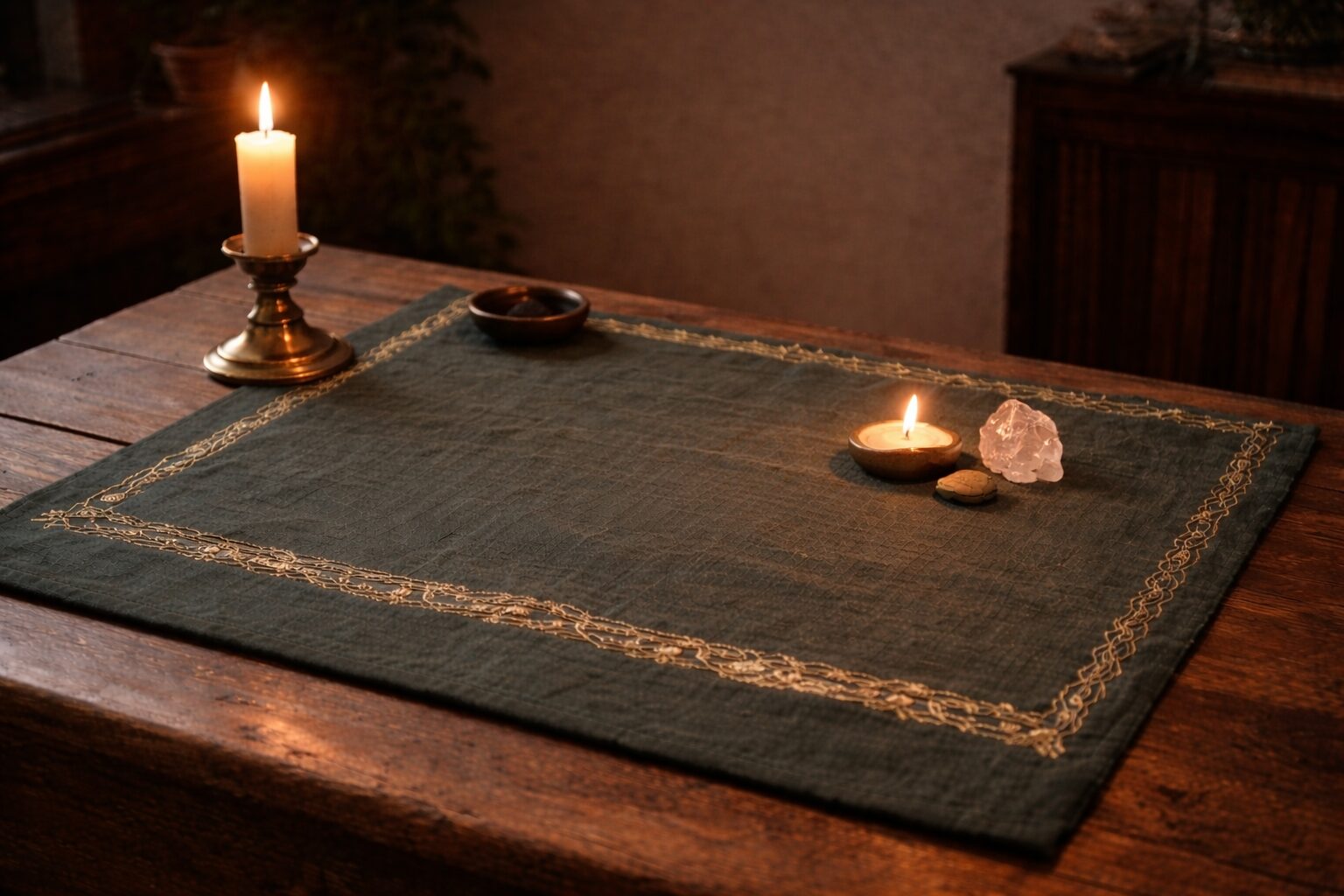
Coherence can be warm and living, or it can be restrained and contained. Both are legitimate languages. Restraint—fewer objects, more empty space, sharper geometry—can be especially useful for boundaries, endings, oaths, and any work where focus must be tight.
Use defines form Devotional, Working, and Living Altars Presence, action, or both—clarity prevents clutter
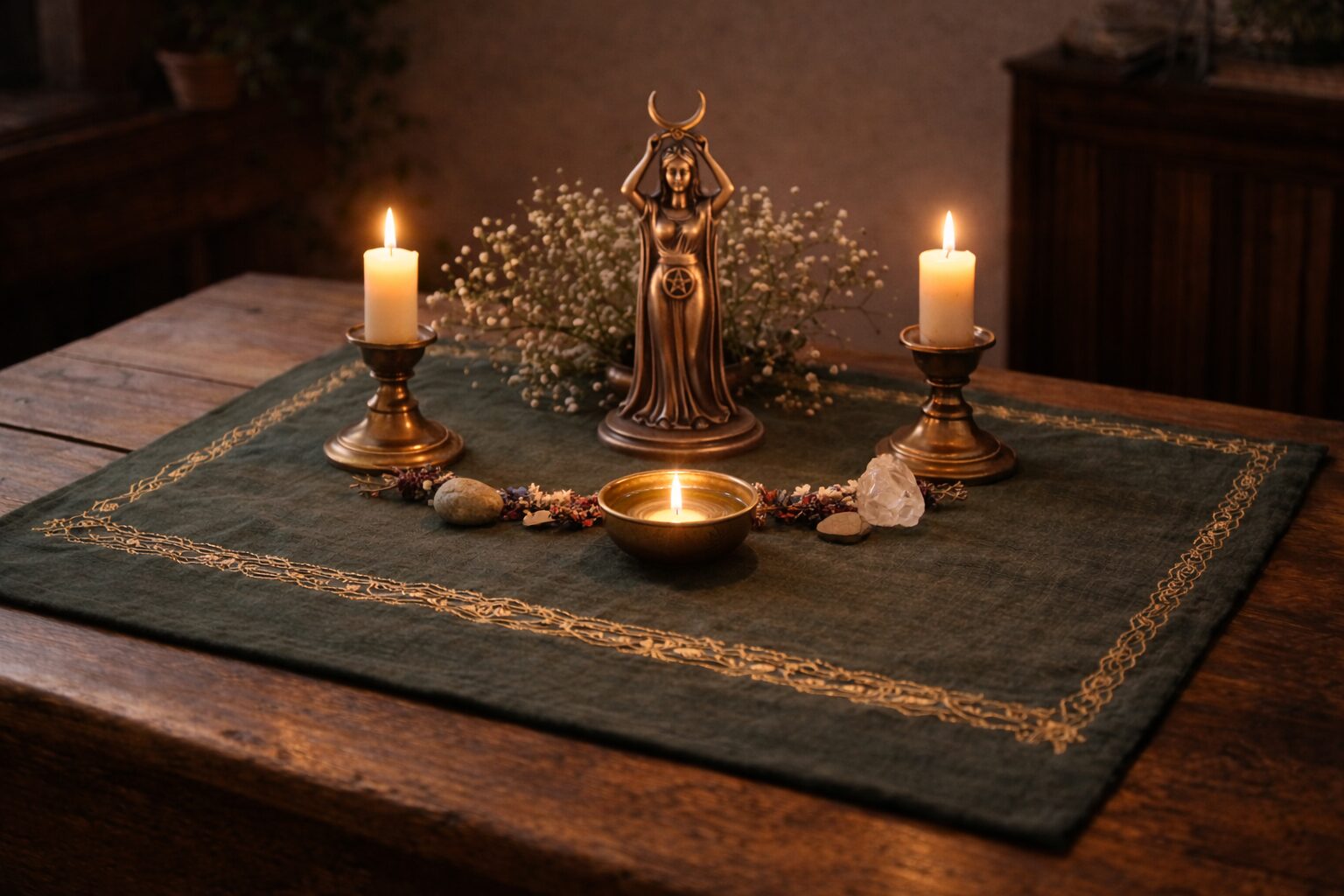
Altars shift roles over time. Some are devotional—maintained for presence and relationship. Some are working altars—designed for spellwork, where tools move and layouts change. Many become blended spaces that hold both reverence and function.
The key is clarity: knowing which mode you’re in today. A devotional altar becomes powerful through steadiness. A working altar becomes powerful through precision. A blended altar becomes powerful through boundaries.
Devotional
Maintained more than rearranged; emphasizes continuity, care, and presence.
Working
Designed for action; benefits from open space, clear placement, and rotation between workings.
Blended
Reverence and action share one place; requires anchors (stay) and working sets (rotate).
Maintenance Care, Change, and Renewal Refresh, simplify, and let the space evolve
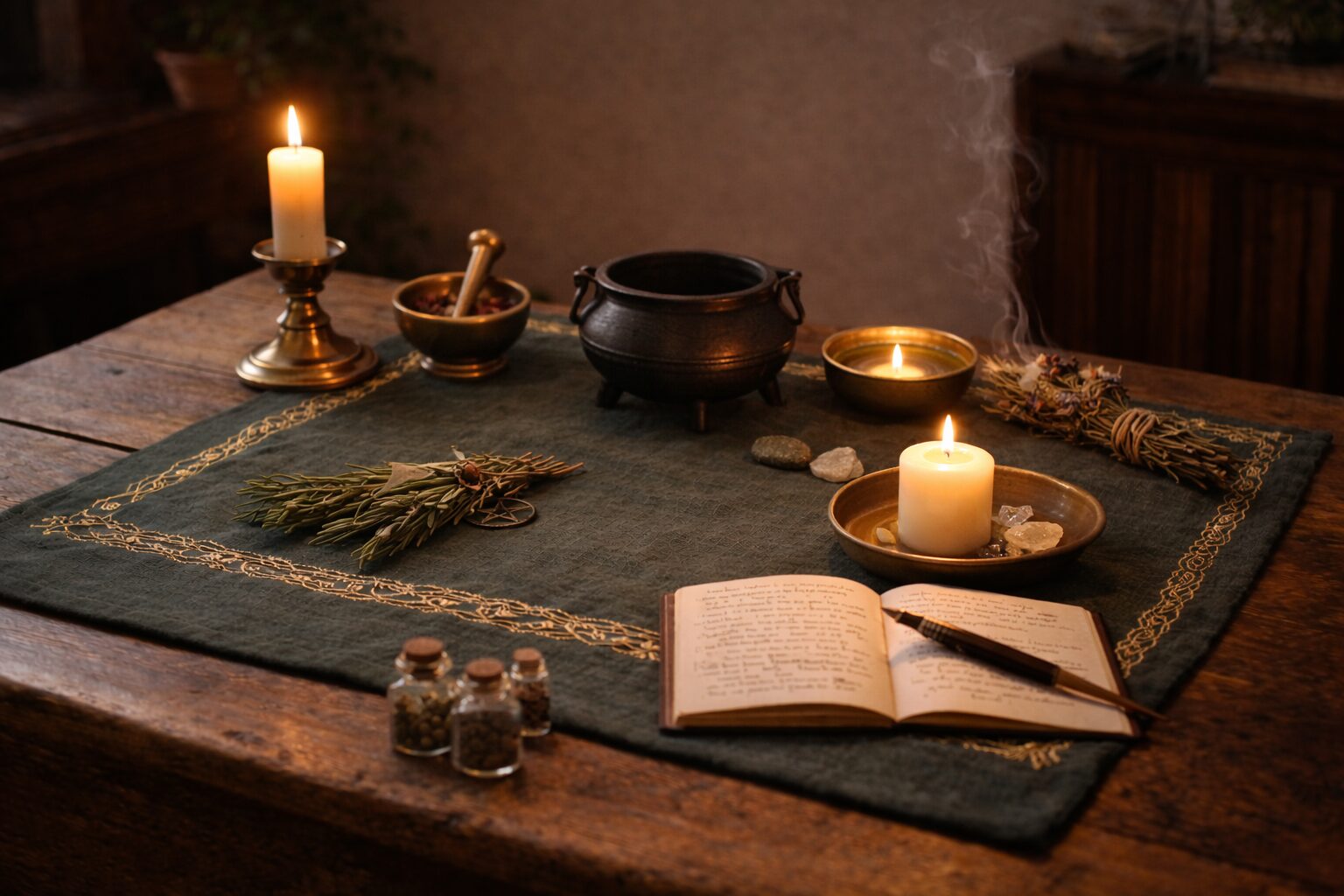
Altars benefit from care beyond active use. Dusting, replacing water, trimming spent candles, and clearing objects that no longer belong are not chores—they are part of maintaining the boundary and the relationship.
Some practitioners keep an altar fixed for years. Others dismantle and rebuild after major workings. Neither is automatically superior. A stable core builds continuity; a reset restores clarity and prevents stagnation.
An altar is not “finished” so much as established—made real through repeated use, care, and return. Start with what you have, build with intention, and let the space become unmistakably yours: a small ecology of symbols, materials, and gestures that teaches your mind (and, in time, your spirits) how to arrive. In many traditions the altar functions as a shared threshold—part personal craft, part relational territory—so treat it less like décor and more like a living site of exchange. Keep it coherent, keep it clean enough to work, and renew it when it grows stale: replace water, clear what has become inert, repair what is worn, and simplify when the space begins to feel crowded or “noisy.” A handmade tool, a carefully chosen cloth, a candle dressed with attention—these acts of crafting are not mere aesthetics; they concentrate meaning through labor, memory, and skill. Build slowly, refine honestly, and remember that the altar’s real power is continuity: it becomes potent because it is cared for, returned to, and kept worthy of the work you ask it to hold.
Continue Exploring
“There is no essential difference between sticking pins into a wax image of an enemy and burning candles in front of a wax image of the Virgin…” — Dion Fortune