Necromancy
The Art of the Dead, the Memory of the Living, and the Threshold Between
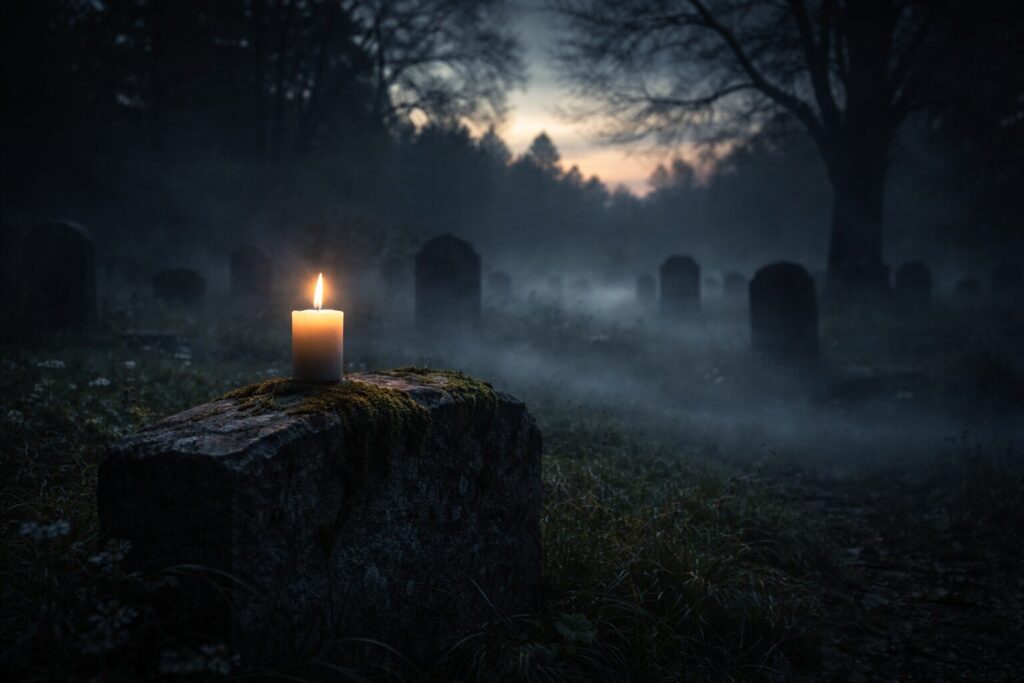
Necromancy is the magical art of engaging with the dead, whether to seek knowledge, guidance, or influence. It may take the form of communion with ancestors, dialogue with wandering spirits, or the ritual evocation of the departed. At its heart lies the recognition that death is not an end but a transformation, and that the dead remain participants in the living world. Yet not all encounters are the same, and not all who answer are what they seem. Necromancy unfolds at a threshold—where memory, spirit, and perception meet.
Across history, necromancy has worn many faces. In the ancient Mediterranean, the shades of heroes were called upon for wisdom at graves and temples. In medieval Europe, it was cast as forbidden sorcery, accused of raising corpses or compelling unwilling spirits to speak. Yet it also lived, in shadowed corners, within a Christian world deeply concerned with death and the afterlife. Some necromancers borrowed the trappings of Christian ritual—prayers, psalms, invocations of saints—not in worship, but as magical tools. They sought to bend the language of the sacred into a channel for dangerous arts, turning ritual into technique. To orthodox eyes, this was a corruption; to the necromancers themselves, it was often a shortcut—a way to reach into mystery not through long discipline or devotion, but by command.
This reliance on shortcuts made necromancy precarious. Unlike the more grounded arts of witchcraft, which draw upon cycles of nature, or the devotional structure of religious practice, necromantic operations have long been known for their instability. The circles drawn may falter, the spirits called may lie or resist, and what appears clear at first may unravel into confusion. The dead are not a single, unified category of being. Some remain coherent and responsive, others fragment or linger in emotion, and some are little more than echoes of memory. To work with them is to step into uncertainty as much as knowledge.
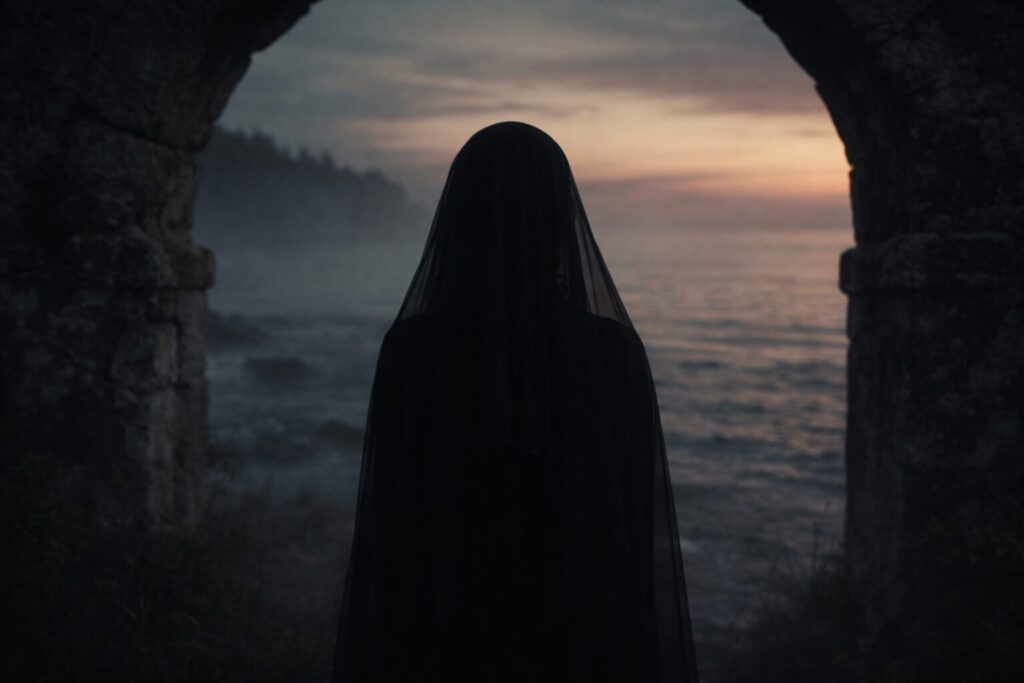
In practice, necromancy sits at the crossroads of many other magical arts. It overlaps with Mediumship, sharing the act of spirit-communication, but differs in its structure and intent. Where mediumship listens, necromancy calls, shapes, and engages. It requires the support of banishing and binding to keep the space secure. Divination and scrying often serve as its tools for receiving messages, while psychopompic rites may be needed to release a restless soul. It may unfold through dreams, ritual, trance, or quiet acts of remembrance. Rather than standing apart, necromancy weaves through many forms of magic, becoming a hinge between the living and the dead.
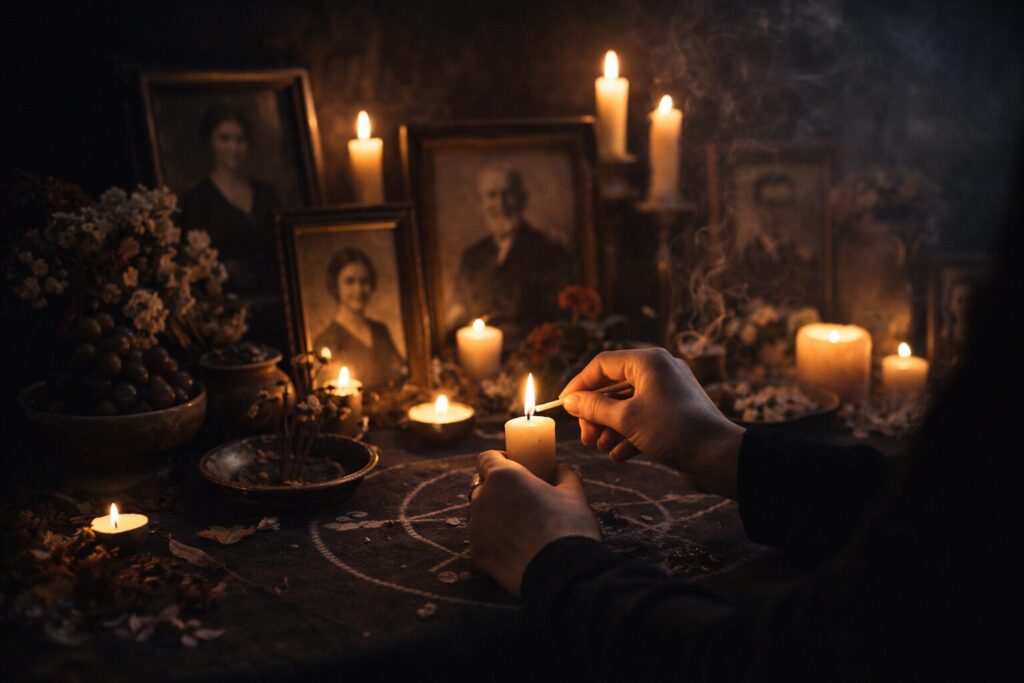
Within the Coven of the Veiled Moon, necromancy is approached with reverence. It is practiced most often as a form of veneration—candles lit for the dead, offerings left at graves, ancestral presence invited into ritual space. Communication may arise through dream, trance, or vision, but it is grounded in relationship rather than control. Even so, structure is essential. Protection, boundary, and closure are not optional, but integral to the work.
Necromancy can be profoundly moving, yet it carries real risk. Spirits may bring wisdom, love, and protection, but they may also carry sorrow, distortion, or deception. It is sometimes pursued as a shortcut to knowledge or power, yet just as often returns confusion instead of clarity. Practitioners are urged to prepare carefully—cleansing, warding, and closing their work with intention—and never to treat the dead as tools. Done with care, necromancy is not only a practice of darkness, but of continuity: the living and the dead sharing the same great circle, each with something to offer the other.
The Many Faces of Necromancy
Necromancy is not a single operation, but a family of related practices. Some forms are devotional and relational, some are receptive and divinatory, and some move toward summoning, constraint, or command.
Ancestral Necromancy
The most stable and relational form of necromancy, centered on communion with ancestors, beloved dead, and lineage spirits. It is sustained through remembrance, offerings, prayer, and ritual welcome rather than force.
Communicative Necromancy
Focused on receiving messages, warnings, or guidance from the dead through dream, trance, divination, mirror work, water scrying, or guided vision. It overlaps with mediumship, but remains necromantic when the contact is intentionally framed as magical engagement with the dead.
Graveyard & Place-Based Necromancy
Rooted in contact with the dead through place: graves, burial grounds, memorial sites, and landscapes thick with memory. Here necromancy is shaped not only by the spirit addressed, but by the land that holds them.
Evocational Necromancy
A more formal and deliberate calling of the dead into ritual presence. This may involve circles, invocations, named petitions, offerings, and structured methods of manifestation or response.
Coercive Necromancy
The most ethically fraught and historically notorious form, built on command, constraint, or forced revelation. It is unstable by nature, spiritually corrosive, and far removed from reverent practice.
Ways of Working with the Dead
Necromancy may take many forms, from quiet acts of remembrance to more formal and carefully structured rites of contact.
Tools, Conditions, and Containers
Necromancy is shaped not only by intention, but by the container in which it is practiced.
Offerings
Bread, wine, water, milk, flowers, incense, candles, coins, and beloved objects may all be offered to the dead depending on the relationship and tradition of the work.
Places of Contact
Necromantic work may be done at a home altar, in a ritual circle, at a grave, beside ancestral photographs, or in places where memory and death are strongly held.
Timing
Night hours, seasonal thresholds, anniversaries of death, dark moons, and sacred times of remembrance may all deepen necromantic work.
Tools of Reception
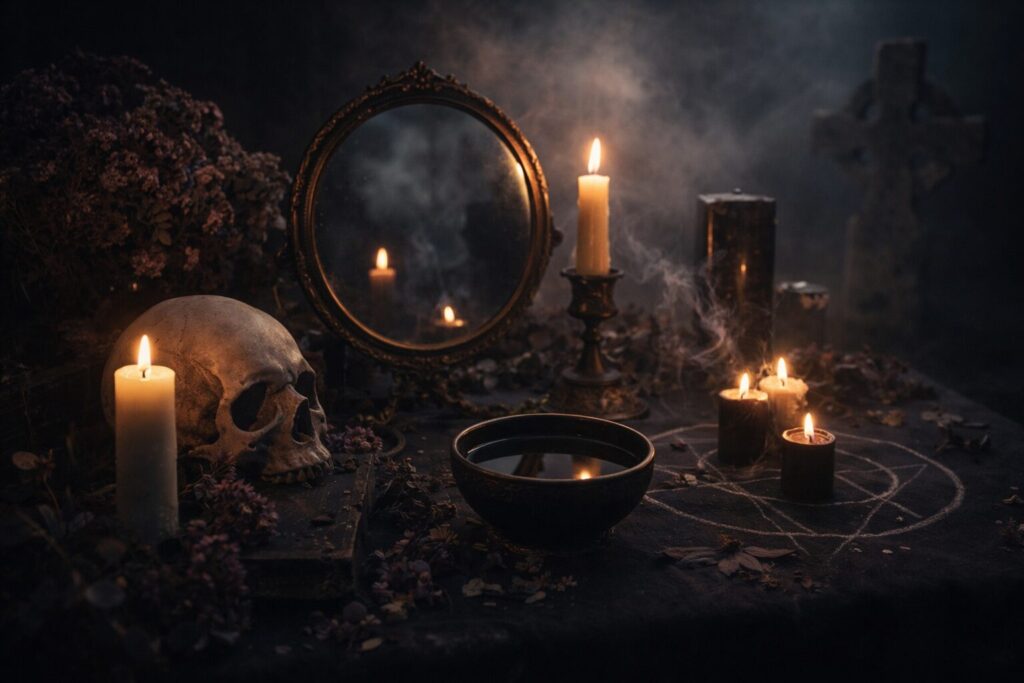
Mirrors, bowls of water, candle flame, bones, photographs, pendulums, cards, automatic writing, and dream journals may all serve as interfaces through which the dead are perceived.
Protective Structure
Banishing, cleansing, warding, circles, spoken boundaries, and clear ritual protocols help define who may enter and how long the contact may remain.
Closure and Release
Every necromantic act should end with intention: thanksgiving, dismissal, extinguishing candles, clearing tools, grounding the body, and closing the ritual space.
Discernment, Risk, and the Nature of the Dead
Necromancy asks not only how to make contact, but how to interpret it, contain it, and remain ethically grounded within it.
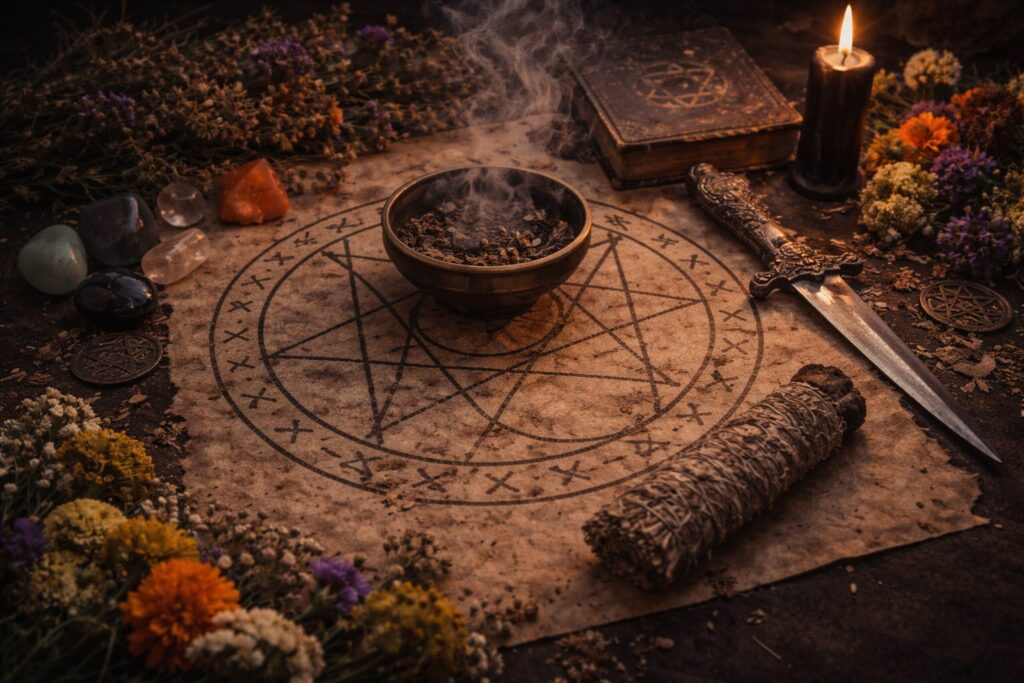
A Responsible Arc of Necromantic Practice
Necromancy is not simply the act of speaking with the dead. It is the willingness to stand at the edge of what is remembered, what is lost, and what may still answer. It asks the practitioner to move carefully between presence and absence, to listen without assumption, and to recognize that not all knowledge comes cleanly, or without cost.
The dead are not separate from the living, but neither are they fully the same. They exist in continuity, but also in change. Some remain close, shaped by love, lineage, and memory. Others drift, fragment, or fade into something less easily named. To engage with them is to enter into relationship with that uncertainty, and to accept that clarity must be earned rather than assumed.
In its most grounded form, necromancy is not about control, but about contact. It is the lighting of a candle for those who came before, the quiet act of listening for what may still be offered, the recognition that the past is not inert. It lives, it moves, and at times, it speaks.
But this work also requires restraint. Not every silence should be broken. Not every presence should be called closer. Wisdom in necromancy is not measured by how much is opened, but by how well one understands when to step forward, and when to remain still.
To practice necromancy is to participate in a larger continuity—to acknowledge that life and death are not opposing forces, but parts of the same unfolding. The living carry memory forward. The dead leave traces behind. Between them is a threshold, and within that threshold, a conversation that must be approached with reverence, clarity, and care.