Oath Magic
Oath magic is the art of binding intention to identity through spoken promise. It is among the oldest forms of magic known to humankind, arising wherever people first understood that words could do more than describe the world — they could shape conduct, summon witness, and place the future under obligation. Before written contracts, before courts, before institutions of law, there was the vow: spoken aloud, remembered by the community, and guarded by honor, fear, or the unseen powers believed to hear it.
Unlike many forms of magic that seek to influence events outwardly, oath magic works first upon the one who speaks. A sworn promise creates a line between who a person has been and who they now declare themselves to be. It calls the will into alignment with action. It asks the future self to answer to the present self. In this way, an oath is not merely a statement of intent, but a deliberate act of self-forging.
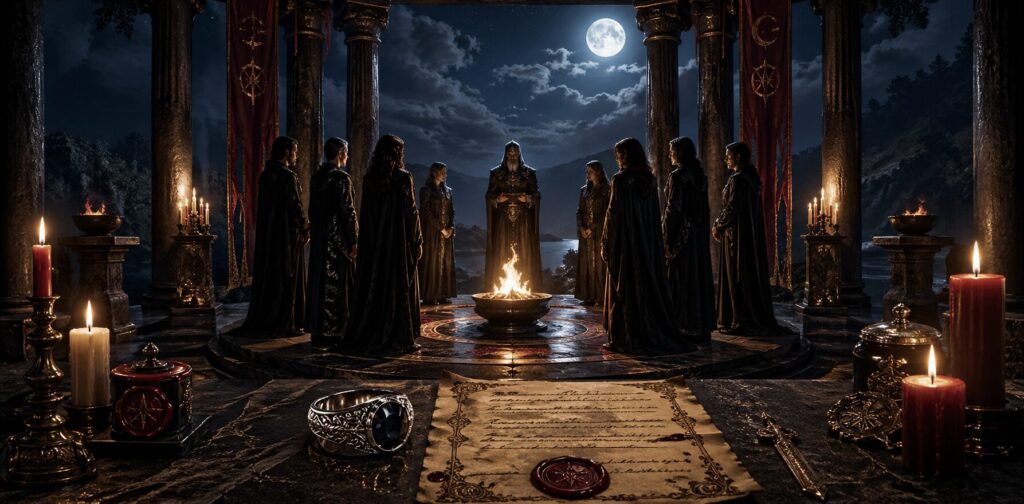
Across cultures, oaths were sworn over blades, rings, altars, fires, rivers, crowns, sacred books, ancestral bones, and stones. Witness mattered. Symbol mattered. Consequence mattered. To swear falsely before what a people considered holy was not only dishonest — it was dangerous. Whether one believed punishment came from gods, fate, spirits, social disgrace, or the slow corrosion of the soul, the principle was the same: words uttered with solemn force do not easily vanish.
In magical practice, oath work remains potent because it joins three powers that are often scattered in ordinary life: speech, commitment, and continuity. Many desire change, but speak weakly. Many speak strongly, but act briefly. Many act sincerely, but without form. The oath gathers these fragments and braids them together. It gives shape to devotion, structure to discipline, and sacred weight to choice.
Within the Coven of the Veiled Moons, oath magic is rare and deliberate. It is not used for vanity, coercion, or theatrical display. It is reserved for thresholds: initiations, vows of stewardship, sworn secrecy, sacred service, and promises made before the circle when ordinary intention is no longer enough. Such workings remind us that true power is not only found in what one can command, but in what one can faithfully uphold.
To swear wisely is to build a bridge between desire and destiny. To swear carelessly is to build a cage.
Word
The spoken vow gives form to intention. Language clarifies what is being bound, named, offered, or undertaken.
Will
An oath without sincere resolve is hollow. The deeper the commitment, the stronger the current it creates.
Witness
People, spirits, ancestors, deities, or the circle itself may serve as witnesses. Presence increases gravity.
Continuity
Unlike a single ritual moment, oath magic lives through time. It gains force through repeated honoring.
Consequence
Every true oath carries weight. Fulfillment strengthens integrity; betrayal can fracture trust, momentum, and self-image.
Seal
Cords, candles, signatures, rings, bloodless offerings, sigils, or sacred objects may anchor the vow into memory and matter.
Practical Forms of Oath Magic
Oath magic appears wherever a promise becomes more than casual speech. It may bind a person to a path, a deity, a role, a discipline, a season of service, or a sacred silence.
Initiation Vows
Initiation oaths mark the crossing of a threshold. They may affirm loyalty to a coven, tradition, mystery school, or spiritual path. Their purpose is not to erase personal freedom, but to name a chosen belonging with seriousness and witness.
Service Oaths
These vows dedicate time, labor, or attention to a sacred responsibility: tending an altar, holding a ritual role, caring for a shrine, teaching beginners, guarding a tradition, or serving the needs of the circle.
Devotional Oaths
A devotional oath is made before a deity, spirit, ancestor, or holy power. It should be entered with particular care, because it draws relationship into obligation. Better to offer a modest vow faithfully kept than a grand promise made from emotion and later abandoned.
Personal Discipline Vows
Not every oath belongs to a group. Some are sworn to the self: to study for a year, keep a magical journal, refrain from harmful speech, complete a cycle of shadow work, or practice a craft with consistency.
Temporary Ritual Oaths
Short-term oaths can be powerful and safer than lifelong vows. A practitioner might swear to keep silence during a rite, maintain a candle vigil for seven nights, fast from gossip for a lunar cycle, or hold a specific magical focus until the work is complete.
Secrecy and Guardian Vows
Some oaths protect what is vulnerable: personal confessions, coven mysteries, private ritual names, initiatory material, or the safety of members. These vows are not about elitism; at their best, they preserve trust.

The Anatomy of a Responsible Oath
A true oath should create clarity, not confusion. The stronger the vow, the more carefully it should be shaped.
| Element | Purpose |
|---|---|
| Clear Language | Name exactly what is being promised. Vagueness breeds loopholes, regret, and unstable results. |
| Voluntary Consent | An oath made under fear, pressure, manipulation, or coercion is spiritually compromised from the start. |
| Witness | Trusted witnesses, the circle, ancestors, spirits, or deities may lend gravity and memory to the vow. |
| Defined Scope | State whether the promise lasts for a rite, a season, a year, or a lifetime. Duration matters. |
| Symbolic Seal | Cords, candles, signatures, rings, offerings, sigils, or sacred objects anchor the oath into matter. |
| Realistic Burden | The oath should challenge growth, not demand the impossible. Unsustainable vows often become broken vows. |
| Renewal or Release | Some vows should be reviewed, renewed, completed, or ritually dissolved when their purpose is fulfilled. |
| Consequence | Understand what failure means: practical, relational, emotional, spiritual, or symbolic. |
The Danger of Broken Promises
The danger of oath magic is not that some invisible force waits eagerly to punish every human imperfection. That is too simple, and often too fear-based. The deeper danger is that an oath binds the speaker to a declared truth. When that truth is abandoned, something in the relationship between word, will, and action is damaged.
A broken oath can fracture integrity. Not because a person failed to be perfect, but because they spoke from a sacred place and then refused to answer to what they had spoken. Over time, this teaches the self that its own words cannot be trusted. For a magical practitioner, that is no small matter. Spellwork depends on alignment. Prayer depends on sincerity. Ritual depends on presence. If the voice becomes careless, the current behind it weakens.
This is why many traditions treat oathbreaking as more than ordinary failure. It is a rupture of witness. The gods were called. The ancestors heard. The circle remembered. The self stood in a threshold moment and claimed a shape for the future. To walk away from that without confession, repair, release, or transformation is to leave a spiritual knot in the cord.
But oath magic should never become a trap for growth. People change. Circumstances change. A vow made in sincerity may become impossible, harmful, or no longer aligned with the truth of the path. In such cases, the answer is not secrecy or shame. The answer is conscious release. A vow can be amended, completed, dissolved, confessed, or ritually retired. What matters is that the oath is treated as real enough to be answered.
The wise practitioner does not swear often. They do not use vows to impress, control, or dramatize devotion. They understand that the power of an oath is not in the beauty of the words, but in the life that follows them. A promise becomes magical when it is carried into action again and again, until the self is reshaped around it.
To break an oath carelessly is to teach the soul that speech is disposable.
To honor an oath faithfully is to teach the soul that word can become world.
Oath Magic in History, Myth, and Sacred Law
Long before modern contracts, communities relied upon vows to hold society together. The oath stood at the meeting place of law, honor, religion, and fate. Norse Ring-Oaths
In Norse tradition, solemn promises could be sworn upon sacred rings kept in temples or assembly spaces. Such vows were linked to honor, reputation, and divine witness. To swear falsely invited disgrace and spiritual danger alike. Greek and Roman Witnesses
Classical societies often invoked gods as guarantors of agreements. Oaths might be sworn before Zeus, Hera, Jupiter, Mars, household spirits, or civic altars. The belief was clear: unseen powers could witness what human eyes could not. Fealty and Sacred Kingship
Medieval oaths of fealty bound lord and vassal through spoken loyalty, ritual gesture, and public witness. Though political in form, they often carried sacred overtones and were treated as morally binding covenants. Marriage and Household Vows
Many cultures treat marriage promises as spiritually potent speech acts. Spoken vows transform status, responsibility, inheritance, and kinship. In magical terms, they are one of the most common living examples of oath power. Monastic and Devotional Vows
Religious communities across the world have used vows of poverty, silence, celibacy, service, pilgrimage, or discipline. Such promises channel life-force through structure and chosen restraint. Initiatory Orders and Mystery Traditions
Esoteric schools, guilds, and magical fraternities often required vows of secrecy, ethical conduct, or devotion to study. These were meant to protect teachings, preserve trust, and mark sincere entry.
Across eras and cultures, one pattern repeats: when something matters deeply, people bind it with words.

Oath Ritual: How to Swear Wisely
Not every vow requires ceremony, yet ceremony helps the mind, body, and spirit understand that something meaningful is being undertaken.
Prepare the Space
Choose a clean and intentional setting: altar, candlelit room, moonlit grove, temple corner, or quiet place where attention can gather.
Name Witnesses
Invite trusted people, the circle, ancestors, spirits, deities, or the sacred silence itself to bear witness.
Speak Clearly
Use simple, direct language. State what is promised, for whom, for how long, and under what conditions.
Seal the Promise
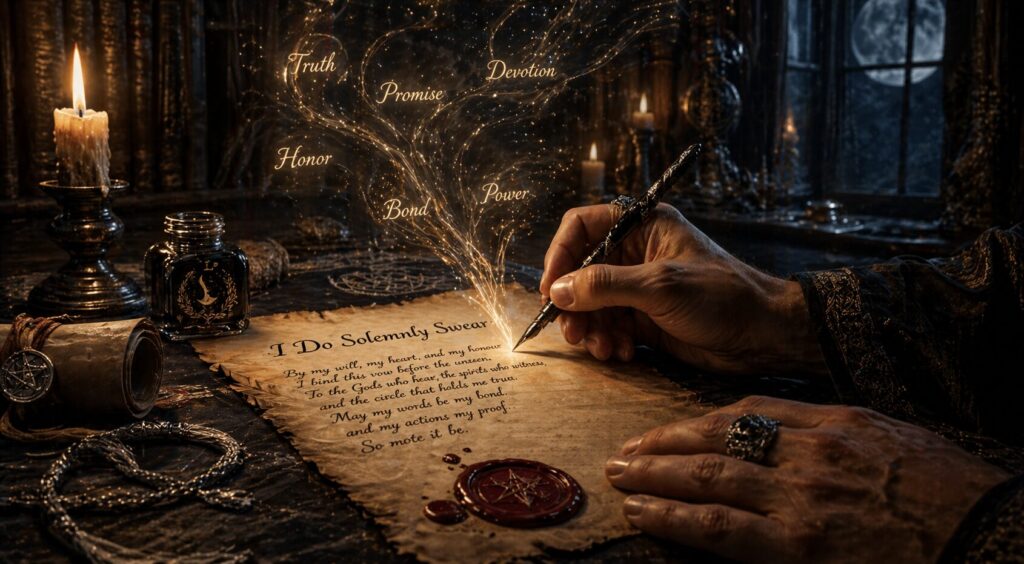
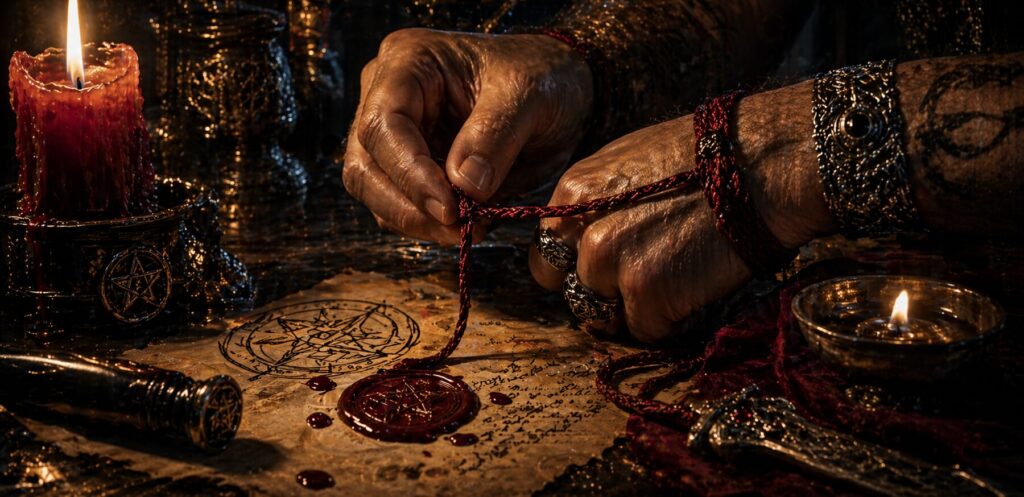
Light a candle, tie a cord, sign a page, ring a bell, touch a sacred object, or place a sigil beneath the hands.
Record the Oath
Write the vow in a journal or grimoire. Memory fades; written witness preserves clarity.
Live It Repeatedly
The ritual begins the work. The true magic occurs each day the vow is honored through action.
Renew or Release
When fulfilled, review the oath. Renew it, complete it with gratitude, or consciously dissolve it with respect.
Within the Coven of the Veiled Moons, oath magic is treated as threshold work. It is not a casual flourish, a dramatic performance, or a way to make ordinary promises sound more mystical. It is reserved for moments when speech must become structure: when someone steps into deeper belonging, accepts sacred responsibility, or agrees to guard what has been entrusted to them.
We do not believe an oath should be used to control another person. A true oath is not a leash. It is a chosen bond, entered freely and with understanding. For that reason, any oath within the coven must be voluntary, clearly spoken, witnessed, and proportionate to the work being undertaken. No one should be rushed into a vow simply because a ritual moment feels emotionally powerful. The soul deserves time to know what the mouth is about to say.
Our oaths may appear in initiations, vows of secrecy, commitments to tend an altar or seasonal rite, promises of service to the coven’s work, or personal vows of magical conduct made before the circle. They are often sealed through symbolic action: the lighting of a candle, the tying of a cord, the placing of hands upon a grimoire, the marking of a sigil, or the quiet recognition of the gathered witnesses.
What matters most is not the theatrical beauty of the rite, but the life that follows it. An oath is kept in the unseen repetitions: showing up when the romance fades, guarding confidence when gossip would be easier, tending the altar when no one is watching, choosing integrity when power tempts the ego. This is where oath magic becomes real. Not in the moment of speaking alone, but in the long obedience of action.
For us, oath magic is sacred because trust is sacred. A coven is not held together merely by shared interest, aesthetic, or belief. It is held together by care, responsibility, memory, and the promises people actually keep.
Examples of Oath Magic
Oaths should be shaped to fit the seriousness of the work. The examples below show how promise, witness, and symbolic action can be brought together without becoming excessive or coercive.
Initiation Vow
Swearing dedication to a coven path, tradition, or mystery current, witnessed by the circle and sealed by lighting a candle kept for future gatherings.
Sacred Service Oath
Committing to tend an altar, lead a seasonal rite, care for ritual tools, or serve the coven’s work for a defined period of time.
Personal Conduct Vow
Promising to use one’s craft with care, restraint, courage, or truthfulness, recorded in a grimoire and reviewed at the turning of the year.
Devotional Vow
Offering a specific act of service, prayer, study, or restraint to a deity, spirit, ancestor, or sacred power for a chosen span of time.
Seasonal Vow
Taking on a temporary promise for one moon cycle, one Sabbat season, or one turn of the wheel, then ritually completing or renewing it.
Release Rite
When an oath has been fulfilled or must be consciously dissolved, the practitioner thanks the witnesses, names the completion, and releases the bond with respect.

Oath magic reminds us that not all power arrives through force, spectacle, or command. Some of the deepest power enters quietly, through the moment a person speaks truthfully about what they are willing to become. A vow, sincerely made, is a form of architecture. It gives shape to desire, direction to effort, and memory to intention.
In an age of disposable words, oath work can feel almost radical. We are surrounded by promises made casually, identities worn lightly, and declarations abandoned as soon as they become inconvenient. Against this current, the true oath stands apart. It asks patience over impulse, steadiness over drama, and action over image.
Yet wisdom also teaches restraint. One need not swear endlessly to live honorably. Many things are better proven slowly than proclaimed loudly. The practitioner who understands oath magic does not seek chains, but alignment. They know that silence can be wiser than premature vows, and modest promises stronger than grand declarations.
To speak only what one is willing to carry is itself a form of magic.
To keep what one has spoken is a greater one still.
Whether before gods, before the circle, before a beloved, or alone beneath the moon, each person eventually faces the same question:
What words are worthy of becoming your future?