Chaos Magic
Adaptive sorcery, disciplined improvisation, and the craft of belief-as-instrument.
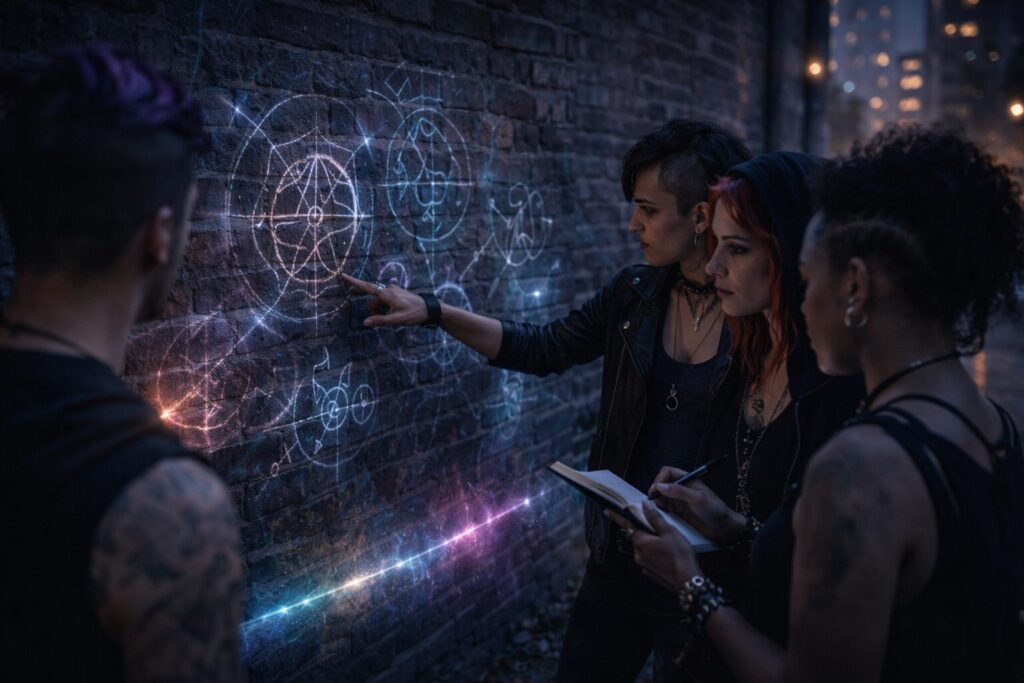
Chaos magic is the art of adaptability—the deliberate bending of form, symbol, and system to the will of the practitioner. Unlike many traditions that root themselves in inherited structure, chaos magic thrives in experimentation. Its core principle is simple but radical: belief itself is a tool. A practitioner may adopt one symbolic framework for a working, discard it afterward, and step into another when the situation demands—so long as the act produces clarity, momentum, and measurable change.
To outsiders, chaos magic can look undisciplined, even anarchic. At its best, it is neither. It is not the absence of structure, but the mastery of improvisation: the ability to reshape the vessel without losing the fire. In this current, ritual is fluid, symbols are chosen for impact, and creativity becomes operational—less concerned with what is “true” in the abstract, and more concerned with what is effective when wielded with skill.
For the Coven of the Veiled Moon, chaos magic is not our foundation, but it is a valued ally. Most of our work rests on well-tested systems—ceremonial precision, elemental balance, divination, ancestral relationship, and the great wheels of stars and seasons. Still, there are moments when tradition leaves gaps: when circumstances shift too quickly, when a problem is oddly specific, or when the working requires an inventive key. In those moments, chaos magic can act as catalyst—refining, redirecting, and amplifying a working without replacing the deeper frame that holds it.
We also recognize chaos magic as a living style within our community. One of our members operates primarily as a chaos magician, and their practice brings genuine ingenuity to the coven’s toolbox—especially in sigil craft, rapid adaptation, and “make-it-work” spell engineering. When approached with discipline, chaos methods can sharpen what is already strong.
But chaos is not a shortcut. It is powerful precisely because it is flexible—and flexibility introduces volatility. Results can misfire more easily when the practitioner is ungrounded, when belief is treated as whim rather than instrument, or when experimentation is used to avoid the patient work of consistency. For this reason, we treat chaos magic the way you treat a scalpel: precise, purpose-driven, and used with steady hands—never as an excuse to neglect preparation, warding, or verification.
In short: tradition builds vessels. Chaos can reshape them in a pinch. Used wisely, it breaks stalemates and opens new pathways. Used carelessly, it creates noise, instability, and preventable fallout—often for the practitioner more than for anyone else.
How Chaos Magic Works
Belief → Focus → Symbol → Shift → Verify
Belief as Instrument (Not a Religion)
Chaos practice treats belief like a switch you can throw on purpose: you adopt a framework strongly enough to operate inside it, then you release it. In our view, belief can shift probability and change outcomes—yet it does not automatically manufacture sovereign beings. Results are real when they are verified, not merely felt.
Paradigm Shifting (Adopt → Operate → Release → Return)
The engine of chaos magic is controlled immersion. You choose a symbolic “operating system,” run the working, then return to baseline. Repeated shifting without grounding can thin your coherence—like speaking too many magical dialects without fluency in any of them.
Constructs vs. Spirits
Constructs (servitors / thoughtforms) are authored tools: temporary, non-sovereign, dependent on the practitioner and designed to dissolve. Spirits are independent intelligences with their own agenda. Confusing the two is where “chaos” becomes avoidable trouble.
Volatility & Lower Buffering
Chaos methods are flexible—and therefore less buffered. They can succeed brilliantly, but they also misfire more easily when the practitioner is ungrounded, emotionally flooded, or chasing a shortcut. The price of improvisation is volatility.
Extra Warding is Non-Negotiable
When symbolic boundaries are loose, opportunistic energies can slip in—hungry, angry, or simply interested. We do not mean “demons” in a Christian sense; we mean intelligences and currents that respond to openings. Strong wards keep chaos from becoming a doorway.

Chaos Magic: Tradition and Method
Chaos magic can be approached in two overlapping ways: as a modern occult tradition, and as a practical method that can be carried into many other forms of witchcraft.
As a tradition, chaos magic emerged in the late twentieth century as a deliberately experimental current—one that questioned inherited authority and treated belief as an adoptable instrument rather than a permanent allegiance. It developed its own communities, vocabulary, and lineages, and many practitioners identify “chaos magician” as a primary path. This is real, coherent, and worthy of respect—especially for the creativity and technical ingenuity it has contributed to modern magic.
As a method, chaos magic is something different: a set of tactics. It is the ability to reframe symbols, compress ritual into minimal operations, improvise responsibly mid-working, and build temporary constructs for sharply defined aims. In this sense, chaos is not a replacement for structure but a kind of adaptive engineering—a way of making the Craft move when rigid forms stall.
For the Coven of the Veiled Moon, this page is about chaos magic as method. We recognize the tradition, and we honor those who practice it well. But in our own work, chaos is most often a strategic insertion: used to sharpen a rite, solve an oddly specific problem, or re-route a working when the moment shifts. It is powerful precisely because it is flexible—and risky precisely because flexibility can thin coherence if it becomes a lifestyle rather than a tool.
If you’re curious about how chaos magic has become its own recognizable stream within modern eclectic practice—often blending with witchcraft identity, aesthetics, and personal gnosis.
Applied Chaos
This is chaos magic at its best: disciplined improvisation. The goal is not to “do anything,” but to adapt a working with precision—while keeping strong boundaries, clear intent, and a plan to close, dissolve, and verify.
Start with Sigils (the safest chaos entry-point)
If you want chaos technique without chaos fallout, begin with sigils. Sigil craft teaches the central skill of the current: encoding will into symbol, charging it, then releasing it—without building a whole metaphysical house around the working.
For many chaos-leaning practitioners, sigils become a personal “spell language.” Over time, a set of repeated marks, shapes, and style choices can evolve into a private alphabet—meaningful, consistent, and more reliable than constant reinvention.
One-Use Constructs (micro-tools, not lifelong companions)
Chaos excels at building temporary tools: a phrase, a mark, a charged object, a rapid sigil-chain for a time-sensitive aim. The power is in the minimalism—fast build, clear purpose, clean release.
Keep one-use constructs narrow. “Help me land this email today” is safer than “Fix my entire life.” The tighter the scope, the cleaner the outcome—and the less unpredictable spillover you invite.
- Define the target in one sentence.
- Choose one symbol system (don’t mix five at once).
- Charge, release, and document results for later review.
Mid-Ritual Adaptation (turning “chance” into guidance)
In structured rites, there are moments when the working shifts: an unexpected omen, a sudden insight, a synchronicity that arrives with force. Chaos technique trains you to adapt without derailing the container—folding the moment into the rite with intention rather than panic.
The discipline here is containment: you acknowledge the signal, adjust one piece of the working, and keep the rest stable. Chaos is a steering correction, not an explosion of improvisation.
- Pause and breathe. Name what changed.
- Adjust one variable (words, offering, gesture, timing).
- Continue—and close properly. Always close properly.
Pop-Culture Archetypes (temporary masks, not theology)
Chaos magic often borrows modern archetypes because they carry strong emotional charge and clear narrative shape. Used responsibly, a pop-culture figure can function as a temporary “mask” for a quality you want to embody—courage, cunning, endurance, charm—without claiming the figure is a deity.
The key is honesty: you are engaging an archetype as a symbolic interface, not declaring a new god. This keeps the work cleaner—and reduces spiritual confusion.
Emergency Precision (chaos as catalyst, not foundation)
Chaos is most useful when you need a surgical adjustment: something time-sensitive, oddly specific, or blocked by rigidity. It can act like a pressure release valve—helping a traditional working move again when it has stalled.
But chaos has lower buffering than more structured systems. When rushed, ungrounded, or used as a shortcut, it misfires more often. The “quick fix” is exactly where chaos becomes unpredictable.
- Use chaos to sharpen the aim, not to replace the entire rite.
- Keep the working short. Keep the target tight.
- Verify results with reality-checks and (if you do divination) a cross-check.
Servitors / Thoughtforms (advanced—build, bound, dissolve)
Servitors can be useful, but they raise the stakes. In MCC terms, a servitor is a non-sovereign construct: authored, bounded, and dependent on its design. It is not “a spirit you made,” and it should never be treated like one.
The safety principle is lifecycle control: you define purpose, limits, feeding mechanism, and termination from the start. The more vague the design, the more unpredictable the behavior—especially if the practitioner is emotionally turbulent.

Extra Safeguards: Warding + Verification
Chaos magic can be brilliantly effective—but it is also less buffered than more structured systems. When you loosen symbolic boundaries, you create openings. That can mean rapid movement and creative breakthroughs. It can also mean preventable spillover.
This is where people sometimes mistake “the chaos of the situation” for guidance. They follow the noise, and then run into opportunistic energies—hungry, angry, curious, or simply self-interested. We do not mean “demons” in a Christian sense. We mean intelligences and currents that respond to openings. If your work is flexible, your wards must be stronger.
Warding Rules (before you improvise)
- Set the perimeter first; don’t “wing it” until the container holds.
- Keep one clean exit: a closing phrase, a banishing, a release plan.
- Limit your variables. Mixing too many systems increases noise.
- Ground your body (food, water, breath) before and after the work.
Verification Rules (after you work)
- Assume nothing is guaranteed—especially in chaos work.
- Look for observable change, not only internal sensation.
- If you divine, cross-check once: “Is this moving correctly?”
- Document outcomes. Chaos becomes safer when it becomes testable.

Chaos and Oath: A Tension of Alignment
Oath magic and chaos magic operate on different structural principles.
An oath binds the practitioner into sustained alignment. It stabilizes identity, anchors will to a current, and deepens relationship through consistency. Oath work assumes that continuity strengthens power—that repetition, devotion, and disciplined return create gravity.
Chaos magic, by contrast, relies on controlled flexibility. It trains the practitioner to adopt and release symbolic frameworks as needed. It values adaptability over continuity. It shifts paradigms strategically.
These two approaches are not enemies—but they do not move at the same rhythm.
Repeated paradigm shifting inside an active oath-bound current can blur alignment. Devotional relationships, especially with sovereign intelligences, thrive on clarity and steadiness. Treating a devotional framework as a temporary mask risks thinning that bond. Gods are not archetypes to be swapped at convenience, and oath-bound currents are not costumes.
This does not mean chaos magic and oath magic can never coexist. A skilled practitioner may apply chaos techniques within a defined boundary—such as crafting a sigil in service of an oath-bound goal. But the container must remain intact. The paradigm does not shift; only the tool does.
For most practitioners, the rule is simple:
If you are oath-bound, do not experiment recklessly inside that bond.
Innovation can strengthen devotion when done respectfully. It can destabilize it when done casually.
Wildcraft and Chaos: Two Very Different Currents
Chaos magic is often mistaken for instinctive magic. It is not.
Wildcraft grows from relationship—land, weather, animal, ancestor, season. It listens first. It responds second. It emerges from animistic awareness and embodied presence. Its authority comes from contact.
Chaos magic grows from symbolic manipulation. It selects, constructs, reframes, and compresses. Its authority comes from will and cognitive flexibility.
Wildcraft says:
What is the land doing? What is the spirit saying?
Chaos says:
What framework will move this fastest? What symbol will cut cleanest?
Both have power. But they are not interchangeable.
Wildcraft is relational and rooted. Chaos is strategic and adaptive. Wildcraft deepens through continuity. Chaos sharpens through experimentation. Wildcraft often stabilizes identity. Chaos, when overused, can fragment it.
This distinction matters.
When practitioners confuse chaos for instinct, they sometimes stop listening. They assume every disruption is meaningful, every synchronicity a signal, every internal impulse guidance. That is not wildcraft. That is volatility.
Chaos magic does not replace relationship with spirit or land. It operates at the level of symbol and probability. Used well, it can support deeper traditions. Used without anchor, it can drift.

Risks, Stability, and Responsible Use
Chaos magic can be effective—but it is also high-volatility, lower-buffering work. The risks here are mostly practical: misfires, spillover, identity-fragmentation, and avoidable spiritual confusion. This is why MCC treats chaos as a tool to be tested and contained.
Common Misconceptions
Reality: Chaos works best with fewer variables, tighter scope, and cleaner closure.
Reality: Sensation is not proof. Verify outcomes in life, and cross-check if you divine.
Reality: Belief can shape probability and perception; it does not grant sovereignty to constructs.
Reality: Randomness is noise. Power is disciplined creativity directed by will.
Reality: Rebellion without skill is just instability. Master basics first.
Reality: Most harm comes from misfires—partial knowledge, poor grounding, and sloppy boundaries.
Identity Fragmentation (when flexibility thins coherence)
Paradigm shifting is powerful—and it is also psychologically and spiritually demanding. If you wear too many frameworks too quickly, you can lose the stable “baseline” that makes your will reliable. In plain terms: you become fluent in fragments, not mastery.
This risk is highest for adolescents and for anyone already prone to dissociation, compulsion, or emotional flooding. In those conditions, chaos can amplify instability instead of producing clean results.
Lower Buffering, Lower Reliability (why chaos misfires)
Chaos magic tends to have a lower success rate in rushed hands because it is less buffered by tradition, repetition, and stable cosmology. A well-built ceremonial rite has redundancy—multiple supports that keep the working coherent even if the practitioner wavers. Chaos relies more directly on the practitioner’s stability in the moment.
That doesn’t make chaos “fake.” It means the technique is more sensitive to noise. Precision improves it: fewer variables, tighter scope, better closure, stronger wards, and honest verification.
- High volatility can break a stalemate—or scatter a working.
- Shortcuts are where chaos becomes unreliable.
- Documentation turns chaos into a testable craft instead of a vibe.
Ego Inflation and Theatrics (rebellion is not mastery)
Chaos attracts inventive minds—and sometimes it attracts people who confuse anti-authority with authority. The temptation is to treat “rule-breaking” as proof of power. But discipline is what makes freedom usable.
A firm rule helps: if your practice cannot produce consistent results, it doesn’t matter how original it is. The Craft is not impressed by your aesthetic. It responds to competence.
Spirits, Openings, and “Listening to the Chaos”
When symbolic boundaries are loose, you may encounter opportunistic energies—hungry, angry, curious, or simply self-interested. This is not “demons” in a Christian sense. It is the basic reality of an animated cosmos: openings get noticed.
A common mistake is mistaking the chaos of a moment for guidance—treating every disruption as a message and every synchronicity as permission. That approach can lead you straight into an intelligence that does not share your goals.
- Wards first. Always.
- Discernment second: “What is this, and what does it want?”
- Verification third: do not confuse intensity with truth.
Devotion and Deity Work (when chaos disrupts alignment)
Deities are not chaotic in the casual sense, and devotional relationships tend to deepen through steadiness. If you treat gods as temporary masks—or swap paradigms constantly—you can thin alignment and muddy the bond.
Chaos does not have to disrupt devotion if done correctly. The guideline is containment: use chaos techniques (like a sigil) in service of a stable devotional goal, rather than shifting the devotional framework itself.
Writing Your Own Magical Language (creative power becomes tradition)
Here is the mature form of chaos magic: not endless reinvention, but the creation of a coherent personal system through testing. Many chaos practitioners begin with improvised sigils, then—through repetition and results—develop a consistent symbolic vocabulary.
This is where creativity becomes tradition. You are not “doing anything.” You are authoring a language and then proving it through outcomes. Over time, your symbols gain stability because you have made them stable.
Construct Safety (why “just enough to be dangerous” shows up here)
Thoughtforms and servitors magnify design flaws. If your boundaries are vague, your purpose is sloppy, or your emotional state is unstable, constructs tend to echo that instability. This is why MCC insists on lifecycle control: define limits, define feeding, define termination—before the working begins.
The goal is never “make a spirit.” The goal is build a bounded tool that dissolves cleanly. If you cannot dissolve it, you are not done.
Deployment Protocol
Chaos magic rewards precision and punishes sloppiness. Treat it as controlled volatility. The following checklist keeps experimentation disciplined rather than reckless.
Before You Work
- Stabilize your emotional baseline.
- Define the goal in one clear sentence.
- Choose one symbolic system only.
- Set wards and a defined closing method.
- Plan how the construct (if any) will dissolve.
During the Working
- Keep scope narrow and precise.
- Do not stack improvisations on improvisations.
- Adjust one variable at a time if needed.
- Maintain containment—do not abandon the container.
After You Close
- Ground physically (food, water, touch).
- Dissolve or release all constructs cleanly.
- Record what was done.
- Look for observable outcome shifts.
- Cross-check with divination if that is your practice.
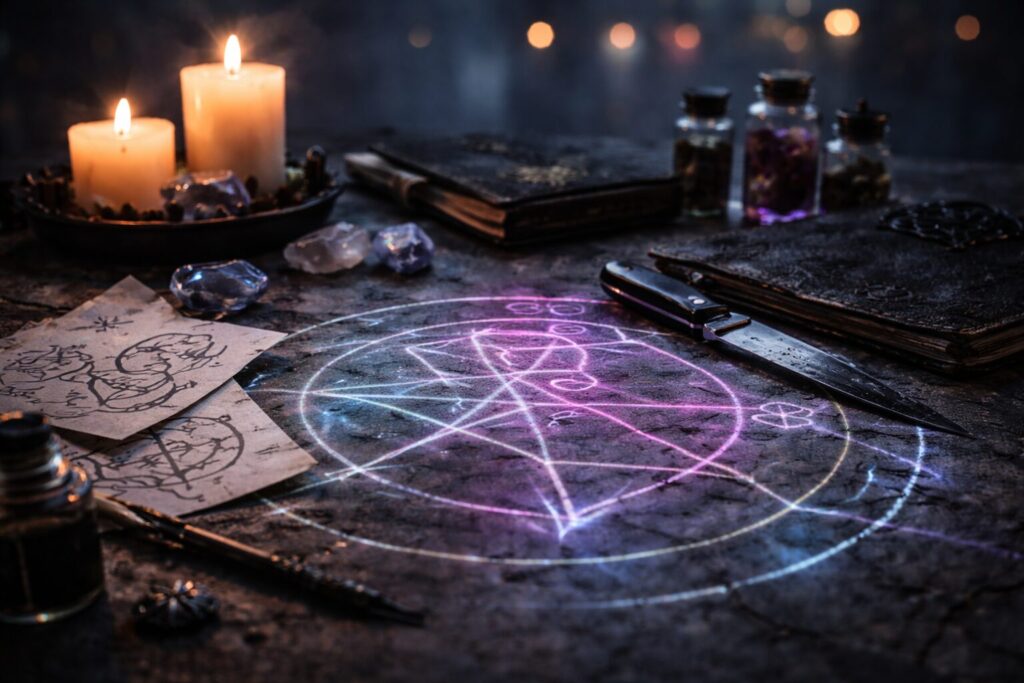
Chaos magic is often described as rebellion. In practice, it is closer to engineering.
Tradition builds architecture. It lays foundation, raises pillars, establishes weight-bearing beams. Devotion deepens it. Repetition strengthens it. Oath anchors it. Over time, that architecture acquires gravity—the kind that holds power steady even when the practitioner falters.
Chaos, at its best, is not demolition. It is adaptive engineering. It is the ability to notice where a structure binds too tightly, where a working has stalled, where a goal requires sharper specificity—and to reshape a component without tearing down the whole.
But engineering without architecture collapses. And architecture without adaptation calcifies.
The mature practitioner learns the difference.
Belief can shift probability. Will can bend outcomes. Symbols can be authored and tested until they become a language that works. Yet nothing in chaos is guaranteed. It is a current of volatility, sensitive to the practitioner’s stability and skill. Used recklessly, it fragments identity and invites noise. Used with discipline, it sharpens intention and opens locked doors.
Creativity is one of the highest forms of magic. But creativity becomes powerful only when it is consistent enough to prove itself. Once tested, repeated, and verified, innovation ceases to be chaos. It becomes tradition.
For the Coven of the Veiled Moon, chaos magic remains a tool—sometimes brilliant, sometimes volatile, always requiring respect. It is not our foundation. It is our scalpel.
And a scalpel, in steady hands, can change everything.