Candle Magic
Fire as Will, Vessel, and Transformation
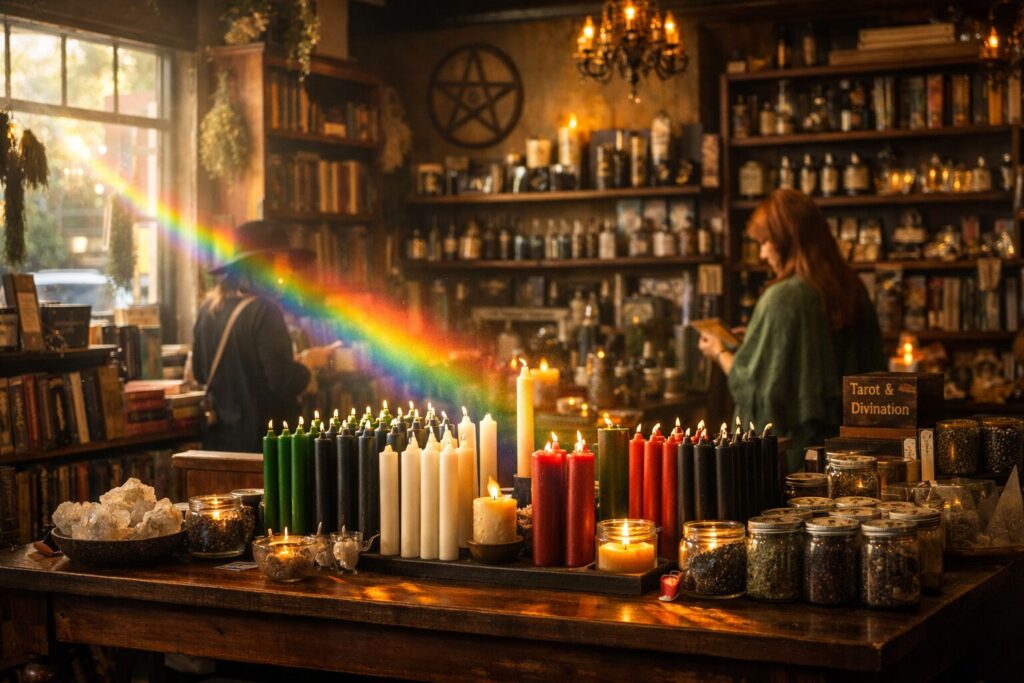
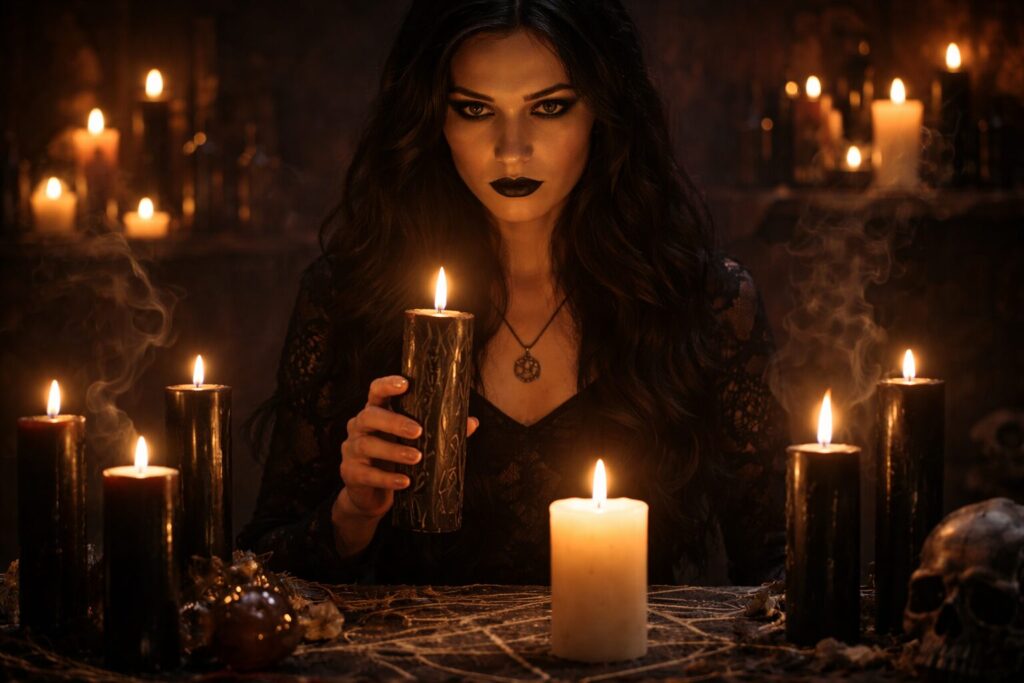
Candle Magic is among the oldest and most universal practices in the Craft — deceptively simple, endlessly adaptable, and foundational to nearly every other magical art. At its core is fire: the element of transformation, illumination, and directed will. A candle is never merely wax and wick. It is a constructed vessel — earth shaped to hold flame — designed to sustain a focused current of intention over time.
When lit with clarity, the flame does not simply burn. It transforms. It consumes material substance and releases it into subtler currents. Wax becomes offering. Smoke becomes carrier. Heat becomes activation. Light becomes presence. In this way, candle magic is both physical and metaphysical: a visible act that enacts invisible change.
Within the Coven of the Veiled Moon, candle work is regarded not as beginner magic but as core magic. It is accessible, yes — anyone can light a flame with focus — yet it scales seamlessly from simple hearth practice to complex ceremonial structure. A single white candle may serve as a universal working for clarity or protection. A coordinated array of inscribed, anointed, and color-aligned candles may anchor planetary rites or elemental invocations. The same flame can serve both low magic and high magic without contradiction.
A candle also contains the full elemental matrix within itself:
- Wax as Earth — form, structure, body.
- Flame as Fire — will, activation, transformation.
- Melted wax as Water — flow, surrender, offering.
- Rising smoke as Air — movement, communication, transmission.
- The radiating light surrounding the flame as Spirit — awareness, presence, animating spark.
For this reason, candles integrate naturally into nearly every magical system. They anchor protection, empower sigils, support banishing, stabilize binding, charge talismans, and accompany divination. They are not supplemental tools — they are spell engines.
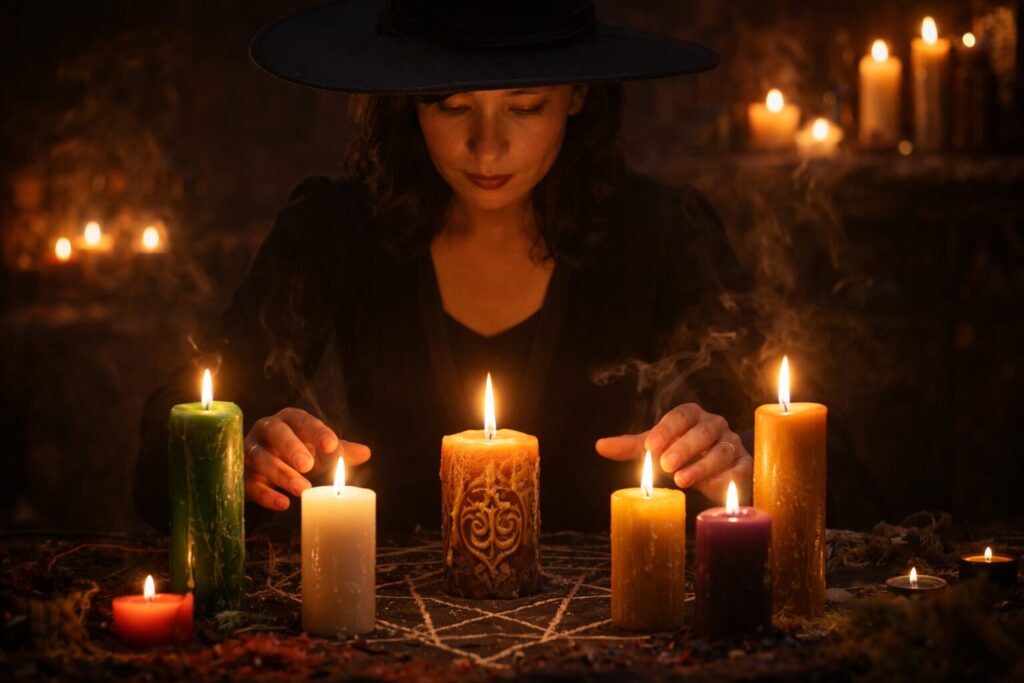
Candle magic is not dramatic. It is steady. It teaches focus. It teaches duration. It teaches that transformation happens not in bursts, but in sustained burn.
To light a candle is to begin a process.
To tend it is to remain in relationship with that process.
And to extinguish it — or allow it to complete its course — is to seal a working with intention rather than impulse.
The Engine of Flame
Candle magic works because it unites focus, duration, and transformation in one visible act. The candle holds your intention steady, the flame converts it into motion, and the burn carries it forward through time—like a spell that breathes until it completes.
Flame as Transformation
Fire does not “store” intention—it changes it. Heat activates, flame consumes, and what is consumed becomes movement in the subtle field. A candle spell succeeds when your intention is clear enough to survive transformation.
activate • transmute • releaseDuration as Spell Architecture
The burn is a built-in timer. Short burns are sharp and immediate; long burns are slow and persistent. In our coven, the “right” burn length is chosen to match the work: what kind of effect you want, how sustained it needs to be, and how much attention you can responsibly give.
timing • rhythm • follow-throughFocus Anchor for the Will
A candle steadies the mind. The visible flame gives your will a place to rest, so intention doesn’t scatter. This is why a simple white candle can be powerful: it concentrates the practitioner long enough for magic to take hold.
attention • steadiness • presenceFeedback Without Superstition
The way a candle burns can offer practical feedback: air currents, wick quality, wax composition—and sometimes the emotional tone you brought into the working. We treat this as information, not omen-fear. (For formal flame and wax reading, see Divination.)
observe • adjust • refineThe Elemental Matrix in One Candle
- Wax as Earth: form, structure, the body of the spell.
- Flame as Fire: activation, will, transformation.
- Melted wax as Water: flow, offering, surrender into process.
- Smoke as Air: movement, communication, transmission.
- Radiant light as Spirit: presence, awareness, the animating field around the flame.

Methods of Candle Magic
Candle work scales from a single flame to full ritual architecture. The method you choose determines how the spell moves: through focus, through correspondence, through timing, or through structure. Keep the intention singular enough to survive the fire.
The Simple Flame: One Candle, One Clear Intention
The simplest candle spell is also one of the strongest: a single flame lit with steady focus. This form trains the will. It is ideal for prayer, clarity, protection, and “setting a direction” when you don’t need complex correspondence.
A white candle is the classic universal choice because it can hold almost any purpose. Color can refine the current—but the foundation is still intention held long enough to matter.
Dressing & Anointing: Oils, Herbs, and the Body of the Spell
Dressing a candle is correspondence made physical. Oils carry scent-memory and symbolic resonance. Herbs add texture, tradition, and material “agreement” with the goal. You are giving the spell a body that the flame can transform.
Less is usually better. Overdressing can clog the burn or muddle the intention. Choose a small number of allies and make your choices deliberate.
Sigil-Carved Wax: Writing the Spell Into the Candle
Carving turns the candle into a spell tablet. Names, symbols, and sigils etched into wax create a standing instruction that the flame “reads” as it burns. This method is especially clean for protection, banishing, binding, and intention that needs firm definition.
Avoid carving contradictory commands into the same candle. If you carve opposing currents, you risk cancellation, confusion, or a working that burns hot without moving anywhere.
Multi-Candle Layouts: Chords of Color and Intention
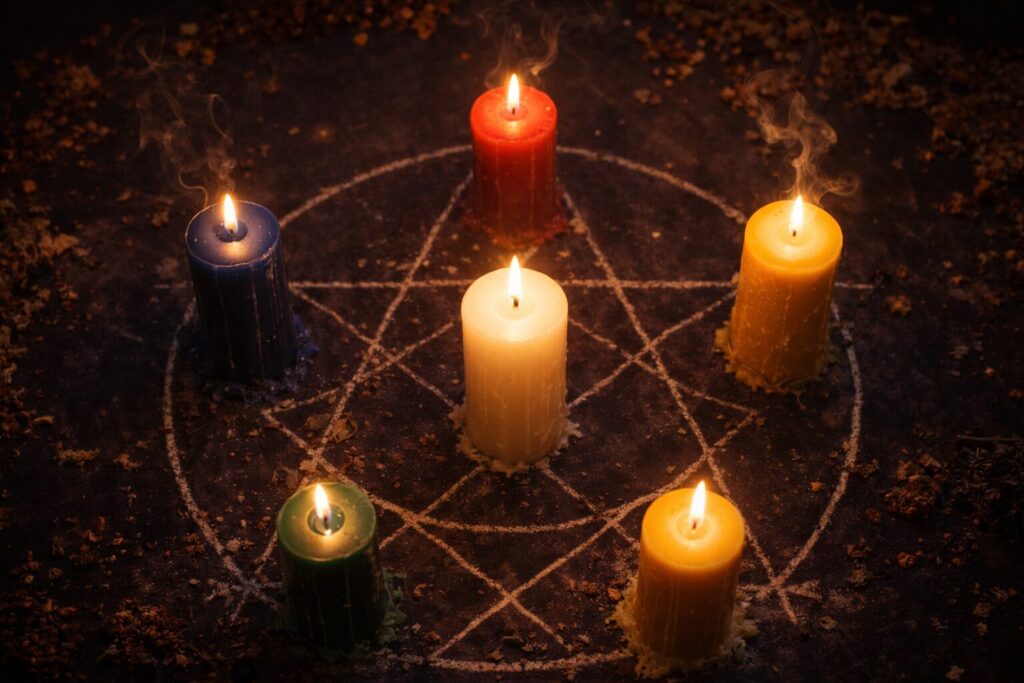
Multiple candles create a structured field. You can assign each flame a role—cleanse, empower, protect, bless— or build a “chord” by blending compatible colors. This is where candle magic becomes architecture rather than a single act.
The key is coherence. Too many purposes at once makes the working noisy. If you need complexity, build it as sequence: one candle clears, another draws, a third seals.
- Black (or white): clear and remove interference.
- Green (or red/pink/blue as needed): draw the desired current.
- White (or gold): bless, stabilize, and seal the result.
Timing: Waxing/Waning, Planetary Days, and “Right Burn” Length
Timing is a way of letting the world help you. Waxing phases support growth and drawing; waning phases support release, cleansing, and reduction. Planetary days and hours can refine that current further—but you do not need complexity to get results.
Burn length is also timing. Tea lights are quick, decisive, and practical. Chime candles are focused mid-range burns. Vigil candles hold a long, steady pressure. In our coven, the candle’s duration is chosen to match the work’s rhythm and your capacity to tend it responsibly.
Directional & Elemental Use: Candles as Circle Anchors
Candles can anchor the circle by representing the quarters, the elements, or the presence of Spirit. This is not only symbolic— it creates a stable map for the working. Each flame becomes a “standing point” in the field that helps hold ritual structure.
This method bridges folk and ceremonial practice. A simple four-candle layout can be humble and hearth-like, or it can become precise ceremonial architecture depending on how you name and tend each point.
Devotional Flame (Brief): Prayer Without Requirement
Candles also serve devotion: a flame offered as presence, gratitude, remembrance, or relationship. This can strengthen a practitioner’s sense of alignment and steadiness—but devotion is not required for magic. Candle spells can be wholly practical.
Whether devotional or spell-focused, the principle remains: the flame is a witness. Treat it with attention, and it will teach you attention in return.
Color as Current
Candle colors are not “required,” but they are time-tested. They help the spell speak in a clearer dialect: intention gives direction, and color gives the working a tuned channel. Used well, colors behave like harmonics— a single note can work, but chords deepen resonance.
White
Clarity, purification, prayer, spiritual connection, all-purpose stabilization.
Black
Banishing, protection, absorption, boundary work, shadow-facing, cutting interference.
Red
Vitality, courage, passion, drive, force, “push” energy—use with disciplined intent.
Pink
Affection, reconciliation, friendship, sweetness, emotional healing, warmth without force.
Orange
Creativity, attraction, confidence, momentum, social opening, joyful ambition.
Yellow
Intellect, communication, learning, clarity of thought, success through focus.
Green
Prosperity, growth, healing, fertility, steady abundance and rooted restoration.
Blue
Peace, truth, calm, devotion, emotional cooling, clarity through stillness.
Purple
Spiritual power, psychic work, influence, deep intuition, visionary intensity.
Gold
Solar strength, success, confidence, prosperity-with-command, blessing and elevation.
Silver
Lunar intuition, dreaming, gentle protection, reflection, inner guidance.
Brown
Home, stability, grounding, practical protection, “keep it real” spellwork.
Mix & Match: Pairings and Triads
Pairing candles is like building a chord: each color contributes a function. A strong pairing is coherent—two currents that reinforce a shared direction. Triads are best when each candle has a role (cleanse → draw → seal) rather than three unrelated goals.
White is a stabilizer and translator. It can blend with almost anything and helps keep the working clean. Black is a remover and boundary-builder. Gold adds command and elevation. Red adds force and momentum. Used together, they can build spells that feel both warm and disciplined.
Reliable Pairings
- White + Black: cleanse and reset; remove interference, then restore clarity.
- White + Green: clean prosperity; abundance without muddle or desperation.
- Green + Gold: prosperity with solar confidence; growth + success.
- Blue + Silver: calm, dreamwork, and gentle protection; cool the field.
- Pink + Orange: warmth + attraction; friendship with joyful momentum.
Simple Triads (Role-Based)
- Black → Green → White: remove blocks, draw prosperity, then bless and stabilize.
- Black → Blue → White: clear heaviness, soothe conflict, seal peace and steadiness.
- White → Red → Gold: clarify intention, add force, then elevate and seal success.
Burn Time & Flame Behavior
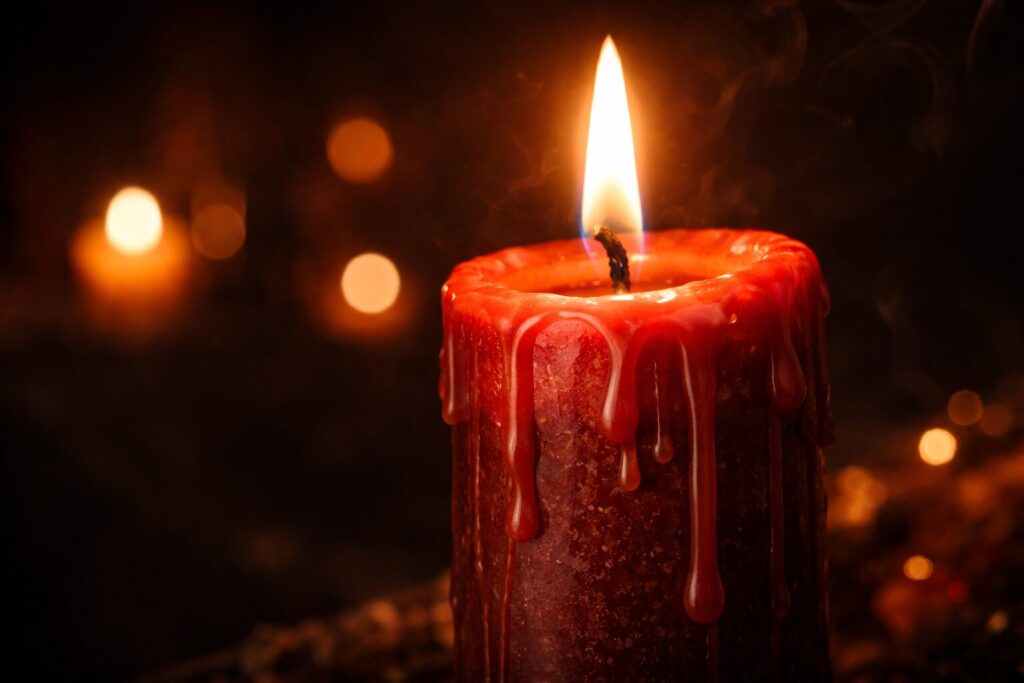
Candle magic is one of the few spell forms where time is physically visible. The burn becomes rhythm: quick work, steady work, long work. And the flame provides feedback—not as superstition, but as information you can use to refine the working.
Choose Burn Length Like You Choose a Spell
In Veiled Moon practice, a candle’s burn length is selected to match the type of effect you want. Short burns are sharp and decisive; long burns are persistent and shaping. The “right” candle is the one whose duration fits both the goal and your capacity to tend it with care.
- Short burn: quick clarity, fast release, immediate protection, “get me through this moment.”
- Mid burn: focused intention work, attraction, confidence, steady emotional repair.
- Long burn: sustained protection, long-form prosperity, ongoing healing, multi-week devotion or vigil.
Multi-Day Work: Relighting Without “Breaking” the Spell
Not everyone can let a candle burn continuously. If a working needs multiple sessions, extinguish with intention and relight with intention. The continuity is not the uninterrupted flame—it is the continued agreement between you, the working, and the goal.
- Before relighting, restate the intention in one sentence.
- Re-center your body (breath, posture, steady gaze) for 30–60 seconds.
- Relight and continue as “the spell resumes,” not “the spell restarts.”
Flame Behavior as Feedback (Not Fear)
Candle behavior is influenced by mundane conditions—airflow, wick quality, wax composition, additives— and also by the emotional intensity you brought into the working. We do not treat every flicker as an omen. We treat it as a diagnostic: what is happening in the room, in the candle, and in me?
- Steady, bright flame: stable focus; the working is coherent.
- Wild flicker / dancing: drafts, unstable attention, or competing currents—simplify and re-center.
- Weak flame / struggling wick: poor candle conditions or a goal that needs clearer definition.
- Heavy soot / smoke: wax or additives, but also a sign to cleanse the space and reduce “noise.”
- Fast, uneven burn: overdressing, misalignment, or too much force—consider a calmer approach.
Emotional State Matters (Fire Amplifies)
Fire magnifies what you bring. If you light a candle in panic, rage, or obsession, the spell can become noisy— not because “spirits are angry,” but because your will is scattered. This is why simple grounding before lighting often improves results more than adding extra herbs.
Safety & Respect (Brief, Realistic)
Candle magic is sacred—and it is also literal fire. Use stable holders, keep flammables away, and don’t leave working candles unattended. Reverence includes responsibility.
Layering, Carving, and Building the Spell Body
Once you understand flame, timing, and correspondence, candle magic becomes architectural. You are no longer simply lighting a candle—you are constructing a vessel that carries layered intention through fire.
Carving Names, Commands, and Sigils
Wax holds instruction. Carving a name, phrase, or symbol into a candle gives the flame a specific directive as it consumes the material. This is particularly useful for protection, binding, banishing, and attraction work where precision matters.
Keep the command focused. Avoid layering contradictory intentions into the same body. If you need both release and drawing, sequence the work instead of forcing opposites into a single candle.
Dressing and Rolling with Herbs
Herbs add texture and resonance to the candle’s physical body. A lightly oiled candle rolled in crushed herbs becomes a layered instrument: wax as structure, oil as carrier, herb as correspondence.
Moderation matters. Excessive herbs can disrupt the burn or overwhelm the focus. Choose herbs that align clearly with the goal rather than piling on symbolic weight.
Hand-Poured & Natural Candles
When you make a candle yourself, you build intention into the wax before the flame ever touches it. Natural materials—beeswax, plant wax, clean essential oils—often feel more responsive because they carry fewer synthetic distractions.
Not everyone has access to handmade candles, and that is not a barrier. Focus and clarity remain primary. But when possible, solid-color, natural candles offer a cleaner energetic baseline.
Drip Sealing and Layered Sessions
Melted wax can be used intentionally to seal petitions, close jars, or mark the end of a phase in a longer working. Some practitioners build layered sessions: lighting, sealing, cooling, then relighting over days or weeks.
Each session should have a defined role. Avoid stacking unresolved emotional intensity into repeated burns. Clean your focus between sessions just as you would cleanse a ritual tool.
Integration with Other Arts
Candle magic does not stand alone. It supports Protection, Binding, Banishing, Ceremonial Work, and Summoning.
In this way, candles are not just one type of magic—they are foundational infrastructure. Most magical systems eventually return to flame.
Candle magic endures not because it is simple, but because it is honest.
A candle does exactly what it is built to do: it burns. It transforms solid matter into light and heat and smoke. It consumes. It releases. It finishes. There is no illusion in that process. When a practitioner works with flame, they are working with something that cannot pretend. The candle will either carry the intention cleanly, or it will reveal confusion in the burn.
This is why candle work is foundational. It trains steadiness. It teaches duration. It forces clarity. A scattered will produces a scattered flame. An overcrowded intention produces a muddled result. But a disciplined focus, applied with restraint and consistency, moves through wax and fire with remarkable reliability.
In the Coven of the Veiled Moon, we do not treat candles as decorative tools. They are spell engines. They are anchors for the circle, allies in protection, companions in binding and banishing, witnesses in devotion, and quiet architects of transformation. Most magical systems—folk, ceremonial, devotional, or pragmatic—eventually return to flame. The candle is not an accessory to magic. It is infrastructure.
It is also responsibility. Fire magnifies. What you bring to it—calm, obsession, clarity, desperation—it will carry forward. For this reason, the work is not only in carving or dressing or choosing colors. The work is in preparing yourself before you ever strike the match.
When the candle burns, your will is in motion.
When it completes, something has shifted—whether in the outer world, in the subtle currents, or within you.
And when you learn to tend flame without fear, without haste, and without excess, you begin to understand something deeper: the outer fire is only a mirror. The real candle is the steady inner flame that does not flicker when the room changes.
To master candle magic is to master continuity of intention.
The hearth of the Craft is not dramatic.
It glows.