Protection Magic
The art of sacred boundaries, sovereign space, and the wards that allow power to rise safely.

The Art of Protection
Protection magic is the art of establishing sacred boundaries between the self and the forces that may harm, disrupt, weaken, or intrude. It is among the oldest forms of magical practice, born from humanity’s earliest awareness that life requires both openness and shelter: the fire that keeps away the dark, the threshold that separates home from wilderness, the prayer spoken before stepping into uncertainty. At its heart, protection is not fear, but sovereignty — the declaration that a person, place, spirit, or working is held within ordered and consecrated space.
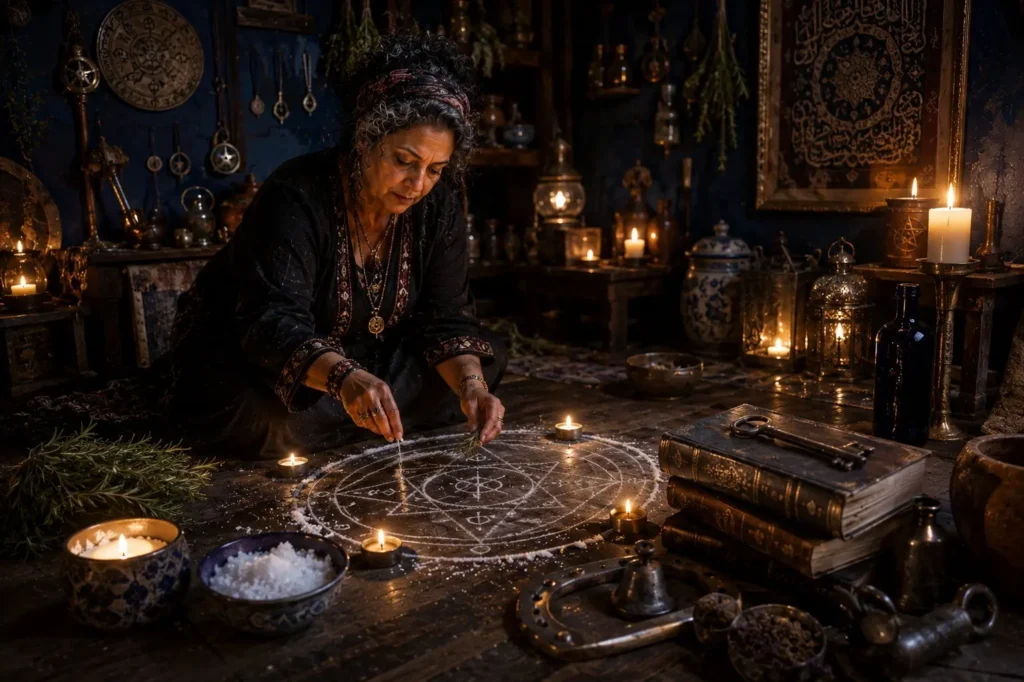
Across cultures and magical traditions, protection has emerged in both humble and exalted forms. In folk practice and low magic, it appears in the everyday rhythms of life: salt scattered across thresholds, iron hung above doorways, rosemary tied in bundles near windows, charms stitched into clothing, blessings whispered over children before sleep. These acts are simple, but simplicity does not diminish power. Such protections are woven into daily life precisely because they arise from intimacy with the world and attentiveness to unseen influence.
In ceremonial and high magic traditions, protection becomes more formalized and architectural. Sacred circles are inscribed with precision. Planetary hours are chosen carefully. Guardians are invoked at the quarters. Divine names are spoken to establish structure within the ritual space. Talismans are charged beneath astrological alignments, and elaborate rites of purification prepare both practitioner and temple before greater workings begin. Though more complex in form, these practices seek the same essential goal as the humble charm above the hearth: the creation of clear and sovereign boundaries through which power may safely move.
Protection magic weaves through nearly every branch of occult practice. Evocation and invocation rely upon it, for no spirit should be welcomed without discernment or structure. Healing magic employs protection to prevent exhaustion, imbalance, or harmful transference. Binding and banishing depend upon protective containment to ensure that what is restrained remains restrained. Even divination often begins with cleansing and grounding rites so that perception remains clear and undistorted. In this way, protection is not merely a category of magic, but one of the foundational disciplines upon which many others quietly rest.
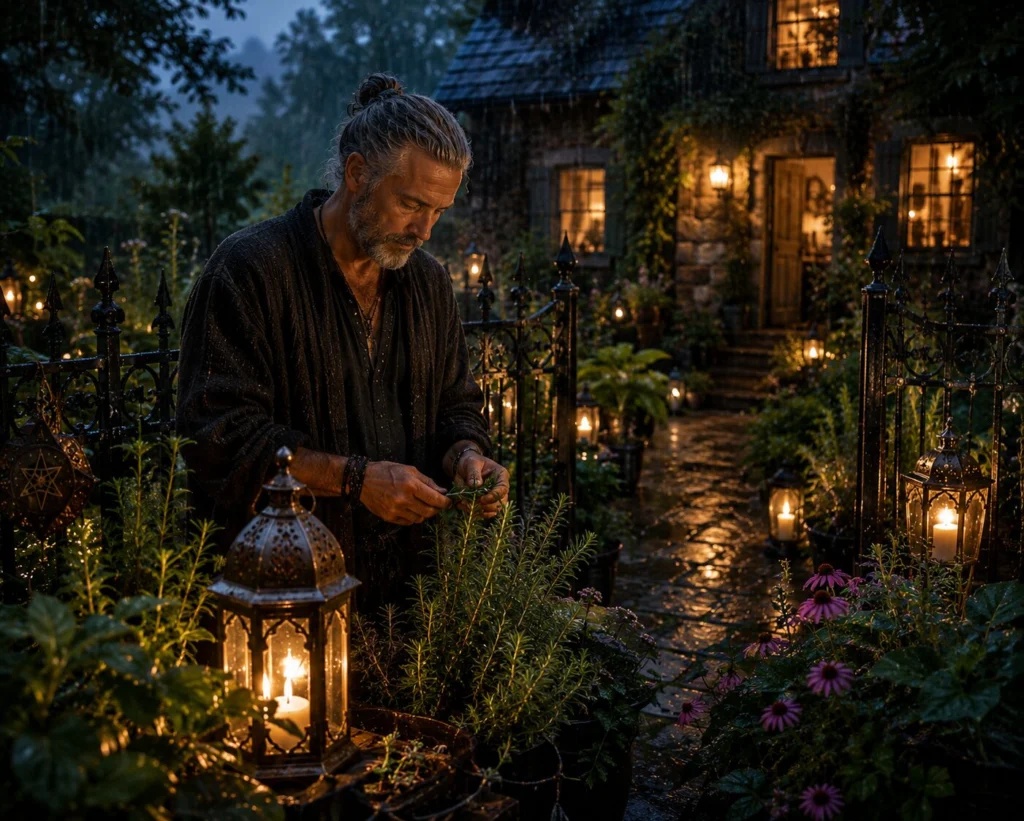
Within the traditions of modern witchcraft and the teachings of My Cousins Coven, protection is approached not as paranoia, but as balance. A healthy ward is not a prison wall built from fear. It is the strong fence around the garden: protective enough to preserve what is sacred, yet open enough to allow growth, beauty, friendship, and wonder to enter. The strongest protections are layered — physical, emotional, spiritual, and practical — and they are maintained not through obsession, but through attentiveness, clarity, and self-knowledge.
To practice protection magic well is ultimately to understand the sacred nature of boundaries themselves. Every doorway, circle, oath, threshold, and invocation asks the same ancient question: what may enter here, and under what terms? Protection magic is the art of answering that question with wisdom.
A Foundational Principle
What Protection Truly Is
Protection magic is sometimes misunderstood as a fear-driven practice—a state of constant vigilance against imagined enemies, curses, hostile spirits, or unseen contamination. Yet in mature magical traditions, protection is not rooted in panic. It is rooted in structure. A ward is not merely a barrier against danger; it is an act of definition. It establishes what belongs within a space, what does not, and under what conditions power may safely move.
The healthiest protections do not isolate the practitioner from life. They create clarity. Just as the walls of a temple define sacred space without imprisoning those within it, magical protections cultivate balance, sovereignty, and discernment. They allow ritual, healing, spirit work, and daily life to unfold within an atmosphere of grounded order rather than chaos.
Protection is therefore deeply connected to self-knowledge. A practitioner who understands their emotional, spiritual, physical, and ethical boundaries will usually build stronger protections than one who gathers charms from anxiety alone. The strongest ward is often not the loudest or most elaborate, but the most stable.
The Structure of Healthy Protection
Sovereignty
Protection begins with recognizing that the self, the home, and the ritual space possess meaningful boundaries. To protect something is to accept responsibility for what may enter, what may remain, and what influence it is permitted to exercise.
Discernment
Mature protection requires judgment more than suspicion. Not every uncomfortable feeling is an attack, and not every unusual presence is hostile. Discernment separates observation from interpretation and grounded awareness from fear-driven projection.
Structure
Magical work benefits from preparation, clear boundaries, cleansing, ritual order, appropriate timing, and a deliberate closing. Protection creates the stable container within which power may gather, move, and resolve without becoming scattered.
Balance
Protection becomes unhealthy when it turns into isolation, obsession, or constant suspicion. A healthy ward refuses intrusion while still permitting beauty, friendship, love, inspiration, blessing, and ordinary life to cross the threshold.
“A ward is not a wall built against the world. It is the quiet declaration that a sacred space exists here, and that all things entering it must do so in balance.”— Kael, MCC

Folk Protections & Everyday Warding
Long before elaborate ceremonial systems emerged, ordinary people practiced protection through the rhythms of daily life. These protections were woven into homes, clothing, kitchens, thresholds, gardens, and prayers. Folk protections endure not because they are dramatic, but because they are lived. They arise from generations of observation, symbolism, intuition, and quiet ritual repeated over time.
Threshold Magic
The threshold has long been understood as one of the most spiritually significant places in the home. Doorways, windows, gates, and crossroads represent liminal spaces — places where energies, spirits, people, and intentions pass between worlds. Because of this, many traditions place protections directly at points of entry.
Salt at the doorway, iron nails near entrances, bells hung upon doors, protective sigils carved into frames, or herbs suspended above thresholds all serve the same symbolic function: they establish the terms under which a space may be entered. Even the simple act of blessing a home before crossing into it reflects ancient protective instinct.
In magical philosophy, the threshold is not merely physical. It represents transition itself — the movement between states of being. To protect the threshold is to protect transformation.
Salt, Iron & Ash
Few protective materials appear as universally in folklore as salt and iron. Salt purifies, preserves, and symbolically resists corruption. Iron grounds, stabilizes, and repels many forms of harmful influence in European magical traditions. Ash, particularly from sacred or household fires, carries associations of transformation, endurance, and continuity.
These materials became common not only because of symbolic value, but because they were physically present in daily life. Folk magic often emerges where practical reality and spiritual meaning overlap.
- Salt lines placed at windows or doors
- Iron charms hung above beds or hearths
- Ash used in protective markings or seasonal rites
- Protective circles created from natural materials
Such acts remind us that magical protection is often built from humble things treated with intention.
Protective Herbs & Plants
Throughout history, certain plants became associated with warding, purification, blessing, and resilience. Rosemary, rue, juniper, cedar, mugwort, garlic, bay, and vervain appear repeatedly across traditions as protective allies. Some were burned, others hung in bundles, brewed into washes, planted near homes, or carried upon the body.
The use of protective herbs reflects an ancient understanding that the natural world participates in spiritual life. Plants were not viewed merely as ingredients, but as living presences possessing virtues, personalities, and relationships with place.
Even today, a carefully tended protective plant near the entrance of a home can serve as both magical symbol and emotional anchor — a living reminder of care and intention.
Charms, Amulets & Talismans
Humans have carried protective objects for thousands of years. Some are religious, others magical, ancestral, cultural, or deeply personal. Protective jewelry, carved stones, saint medals, sigils, knotted cords, animal symbols, lockets, and blessed tokens all operate through layered meaning and repeated association.
In folk practice, the power of a charm often grows through relationship. An object carried daily, blessed repeatedly, or connected to memory becomes spiritually charged through intimacy and attention.
A true talisman is rarely powerful because it is expensive. It becomes powerful because it has been woven into the practitioner’s life and intention over time.
Household Wards & Hearth Protection
The home has always been regarded as more than shelter. In magical traditions, it becomes a spiritual ecosystem shaped by memory, emotion, routine, conflict, celebration, and ritual. Protective household magic seeks to maintain harmony within that ecosystem.
Cleansing floors with intentional washes, blessing the hearth or kitchen, maintaining ancestor spaces, opening windows after conflict, or lighting candles during difficult times are all forms of subtle warding. Protection is often less about dramatic defense and more about maintaining healthy spiritual atmosphere over time.
In many traditions, the best-protected homes are not necessarily the most aggressively warded, but the most loved, maintained, and spiritually attentive.
Travel Protection & Crossing Into Uncertainty
Travel has historically carried spiritual significance because it places a person outside familiar protections. For this reason, travelers across cultures developed blessings, charms, prayers, and rituals intended to guard them while crossing unfamiliar lands or entering uncertain circumstances.
Coins carried for luck, herbs tucked into bags, prayers spoken before departure, protective jewelry worn while traveling, or symbolic gestures before crossing bridges and roads all reflect the ancient understanding that movement itself is liminal.
Even in modern life, small acts of grounding before travel can transform movement from anxious displacement into mindful transition.

The Many Forms of Protection
Protection is not a single technique, but an ecosystem of practices woven through magical life. Some protections are physical and practical, while others are spiritual, emotional, ritualistic, social, or cosmic in nature. Mature practitioners learn that strong boundaries are rarely built from one method alone. The most enduring protections are layered, balanced, and integrated into daily life with intention and awareness.
Working Space
Sacred or magical space protection concerns the creation of environments that are spiritually ordered, consecrated, and intentionally defined. Whether a simple altar corner or an elaborate ritual chamber, sacred space establishes the conditions under which magic may safely and meaningfully unfold. Circles, thresholds, directional alignments, cleansing rites, and ritual atmosphere all contribute to this foundational art.
Threshold Magic
Threshold magic focuses upon liminal spaces: doors, gates, crossroads, windows, pathways, and moments of transition. These spaces have long been regarded as spiritually significant because they exist between worlds and states of being. Protective threshold work seeks to regulate what enters, exits, or lingers at the edge of the home, ritual, or self.
Spiritual Hygiene
Spiritual hygiene refers to the ongoing maintenance of energetic and emotional clarity. Just as physical health depends upon regular care, magical practice benefits from cleansing, grounding, rest, discernment, and balanced routine. Healthy spiritual hygiene helps prevent stagnation, exhaustion, obsession, and imbalance from accumulating over time.
Ritual Architecture
Ritual architecture examines the structural design of magical workings themselves. Protective circles, elemental quarters, consecrated geometry, planetary timing, ritual sequencing, and symbolic orientation all contribute to the integrity and containment of ceremonial practice. Well-designed ritual space functions both as gateway and safeguard.
Psychic Self-Defense & Discernment
Psychic protection is often misunderstood as constant warfare against hostile forces. In reality, healthy psychic self-defense depends primarily upon grounding, emotional stability, discernment, self-awareness, and clear boundaries. Mature practitioners learn to distinguish between genuine spiritual concern, psychological projection, intuition, anxiety, and ordinary human conflict.
Household Magic
Household protections arise from the understanding that homes develop spiritual atmosphere over time. Cleansing routines, hearth blessings, ancestor spaces, kitchen magic, protective plants, intentional decoration, and threshold rites all contribute to creating homes that feel grounded, welcoming, and spiritually resilient.
Planetary Protection
Astrological and planetary protections draw upon the symbolic powers associated with celestial forces. Saturn lends structure, endurance, and boundaries, while Mars offers active defense, courage, and forceful protection. Talismans, timing systems, planetary hours, metals, colors, and ritual correspondences all play roles within these traditions.
Spirit Relations & Boundaries
Spirit work requires balance between openness and discernment. Not every spirit is harmful, nor is every presence benevolent. Protective spirit relations focus upon respectful invitation, clear boundaries, ethical reciprocity, grounded ritual structure, and the cultivation of stable relationships rather than fear-driven hostility toward the unseen.
The Architecture of Sacred Space
Protection magic becomes deeper when we understand that it is not only about keeping harm away. It is about creating order. Every protected space, whether a home, altar, temple, ritual circle, or consecrated room, answers an ancient question: what kind of world is being made here?
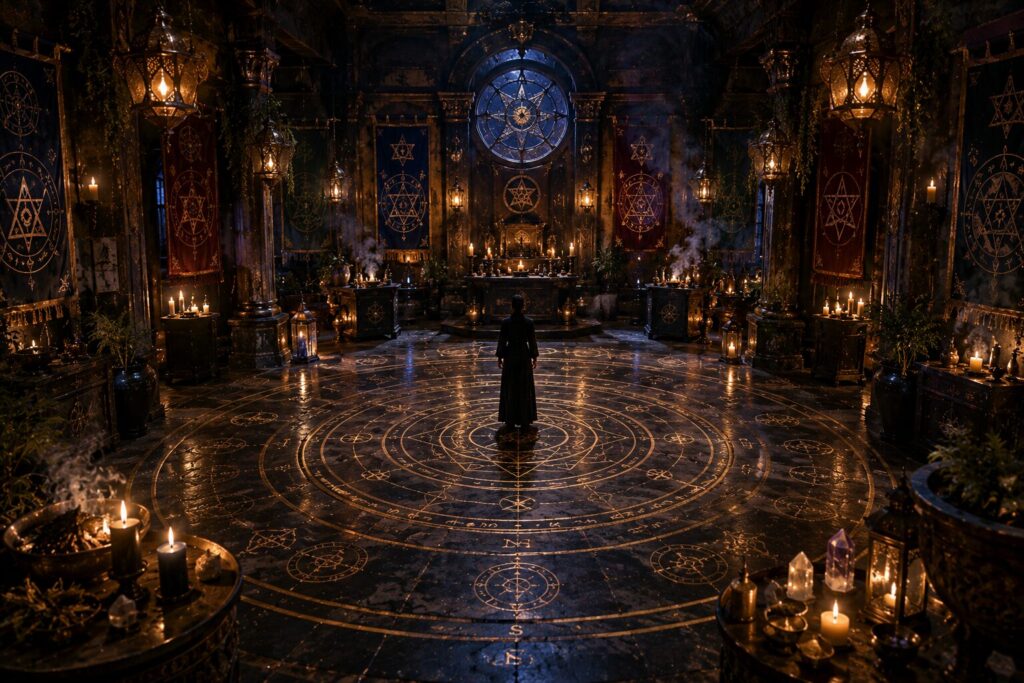
To cast a circle, bless a threshold, cleanse a room, or call guardians to the quarters is to shape space spiritually. The practitioner is not merely decorating a room with symbolic gestures. They are defining an interior cosmos — a place where intention becomes clearer, distraction is reduced, and power can rise without scattering. In this sense, sacred space is magical architecture. It gives structure to the unseen.
This architecture begins with boundaries. A doorway says here and there. A circle says within and without. A gate says passage is possible, but not without recognition. These distinctions matter because magic often works through relationship: between self and spirit, body and energy, home and world, known and unknown. Without boundaries, relationship becomes confusion. With boundaries, relationship becomes meaningful.
Many traditional protective forms reflect this logic. The hearth stands at the center as warmth, nourishment, and continuity. The threshold guards the edge where strangers, spirits, weather, and fortune enter. The four directions organize space into a sacred map. Altars gather attention into a fixed point. Wards form patterns of permission and refusal. Even a simple candle lit with intention can become a spiritual axis, reminding the room what it is meant to hold.
This is why protection is so important before deeper workings such as invocation, evocation, divination, healing, or spellcraft. Power needs a vessel. A ritual without structure may still produce emotion, but emotion alone is not the same as magic. Protection gives the work a shape. It clarifies where the working begins, where it ends, what is invited, what is refused, and how the practitioner will return to ordinary life afterward.
In the home, this principle is especially important. A house is not only a building; it is a living field of habit, memory, conflict, rest, grief, pleasure, and renewal. Household protection does not need to be severe or theatrical. It may be as simple as keeping the doorway clean, refreshing salt or herbs, lighting a candle after an argument, opening windows after illness, blessing the kitchen, or maintaining one small altar where the spirit of the home is remembered. These acts create continuity. They tell the home, again and again, what kind of place it is meant to be.
At its best, sacred space does not feel locked down. It feels held. A well-protected space breathes. It allows friendship, laughter, healing, sensuality, dreaming, prayer, and magic to move freely within it. Its strength does not come from suspicion, but from coherence. Like a well-built house, it shelters without suffocating. Like a well-tended garden, it has both fence and gate.

The Structure of Protected Work
Ritual Architecture & the Fourfold Shield
In ceremonial protection, space is not treated as empty. It is shaped, oriented, named, and held. The ritual circle becomes a miniature cosmos: a protected center surrounded by directional powers, elemental forces, guardians, gates, and boundaries of permission. This architecture does not merely keep harm away. It teaches the practitioner how to stand at the center of their own power with clarity.
The Four Directions as Protective Functions
Body, endurance, boundary, stone, bone, root, material security, and the deep stability that allows the working to remain in form.
Breath, clarity, speech, perception, sacred names, thought, communication, and the discernment needed to understand what is present.
Will, courage, purification, command, vitality, transformation, and the active force required to defend or change a condition.
Emotion, intuition, cleansing, dreams, ancestors, spiritual flow, restoration, and the release of what should no longer remain.
Directional and elemental correspondences vary among traditions. This diagram reflects a common modern Western ceremonial arrangement. Some systems also formally acknowledge above, below, and the center as additional dimensions of the protected space.
“…a Boundary and a Protection… a Guardian and a Protection that shall preserve and contain the Power which we shall raise within.”— Gerald Gardner , Gardnerian Book of Shadows
The Circle Creating the boundary that contains and steadies the work.
The circle marks the distinction between ordinary space and a space being used deliberately. It does not need to be imagined as an impenetrable wall. More often, it functions as a clear ritual boundary: this is where the working is taking place, this is what the working is for, and these are the conditions under which participation is permitted.
Before casting, decide what you are actually containing. You may be gathering power for a spell, establishing a protected place for divination, preparing to invoke a presence, or simply creating enough quiet to hear yourself clearly. Walk the perimeter slowly. Use an athame, wand, hand, incense, water, sound, or focused attention to mark the boundary. What matters most is that the action feels deliberate and repeatable.
Once the circle is established, pause at its center. Notice your breathing, your body, and the emotional atmosphere. A circle should not leave you feeling trapped. It should help you feel gathered. When the space feels coherent rather than scattered, the boundary is doing its work.
“A Circle doth answer to Unity… for Unity is the Center, and circumference of all things.”— Heinrich Cornelius Agrippa , Three Books of Occult Philosophy, Book II
Begin with a small circle around your immediate working area. State its purpose plainly, trace it once with attention, and pause before continuing. Complexity can be added later; clarity should come first.
The Quarters Orienting the rite through direction, element, and relationship.
Calling the quarters turns the circle into a sacred map. Each direction gives the practitioner a way to orient attention and invite a distinct quality into the rite. North may steady the body and strengthen boundaries. East may sharpen language and perception. South may bring courage and active force. West may support intuition, cleansing, and emotional movement.
There is no need to hurry through the directions as though reciting a password. Turn toward each quarter, acknowledge what it represents within your tradition, and ask for the quality the work actually requires. A protection rite may need the steadiness of earth, the discernment of air, the resolve of fire, and the cleansing flow of water—but not every rite needs every correspondence emphasized equally.
The quarters also teach balance. Strong protection is not only hardness. It needs perception to recognize a concern, emotional intelligence to understand it, courage to respond, and stability to hold that response without becoming overwhelmed.
“…the four quarters of the Universe, East, West, North, and South.”— The Key of Solomon
Face each direction and speak one clear sentence naming the power you are inviting. Keep the language direct. For example: “Powers of the North, establish strength and boundary within this place.”
Guardians & Gatekeepers Establishing who or what helps uphold the order of the rite.
Guardians may be understood as deities, spirits, ancestors, angels, elemental beings, land powers, or symbolic forms of protective consciousness. Their purpose is not merely to stand at the edge of the circle like armed sentries. They help define the order of the working, support its boundaries, and clarify the relationship between the practitioner and the unseen.
Work with guardians you know, trust, or have approached respectfully. Do not invite an unfamiliar presence simply because its name appears in a ritual script. A guardian should fit the tradition, purpose, and spiritual relationships of the practitioner. When no specific being is appropriate, the directions, elements, ancestors, or protective authority of the circle itself may be enough.
Be clear about the request. Ask the guardian to witness, protect, filter, guide, or hold the boundary. Avoid vague invitations that appear to grant unrestricted access. Protection becomes stronger when relationship and permission are stated rather than assumed.
Name the guardian, acknowledge the relationship, and describe the role being requested. At closing, thank and release the presence with the same care used when inviting it.
Names, Signs & Seals Giving spiritual intention a recognizable and repeatable form.
Sacred names, signs, sigils, pentacles, seals, and gestures function as ritual language. They make an intention more precise by giving it a form that can be repeated, recognized, and reinforced. A spoken name may establish authority or relationship. A drawn seal may define the purpose of a boundary. A gesture may mark the moment when ordinary action becomes ritual action.
Symbols should not be added merely to make a rite look more ceremonial. Choose forms whose meaning you understand. A personally created sigil may be more useful than a complicated inherited seal used without context. Traditional signs can carry depth and accumulated use, but they also deserve study and respect for the system from which they come.
Repetition builds recognition. Using the same protective sign at the opening of several workings can train the mind and body to understand what follows. Over time, the symbol becomes connected not only to an idea of protection, but to the practiced experience of entering a protected state.
“The efficacy of consecrations is perfected by two things especially… the vertue of the person… and the vertue of the prayer.”— Heinrich Cornelius Agrippa , Three Books of Occult Philosophy, Book III
Select one protective sign or sigil and use it consistently for a period of time. Trace it at the boundary, place it beneath a candle, or visualize it over the working area while stating its purpose aloud.
Containment Keeping raised power and invited presence within workable limits.
Containment is especially important when raising power, invoking a presence, banishing an influence, performing healing work, or engaging emotionally charged material. Without a container, attention can scatter, energy can feel chaotic, and the practitioner may leave the rite overstimulated or uncertain about whether it has actually ended.
A ritual container is built through several overlapping choices: a defined purpose, a clear boundary, appropriate tools, a beginning and ending, and an agreed place for the energy to go. Before beginning, decide whether power will be directed into a candle, charm, talisman, offering, prayer, or specific outcome. Power that has no direction can become unfocused activity.
Containment also means knowing your limits. More intensity does not automatically create a better result. If the work begins to feel confused, flooded, or physically uncomfortable, pause. Ground, breathe, simplify the rite, or close it. Precision is usually more useful than dramatic excess.
“…let there be a Circle framed… as well for the defence of the Invocant, as for the confirmation of the Spirit.”— Fourth Book of Occult Philosophy , traditionally attributed to Agrippa
Before raising power, name its destination: “The power gathered here moves into this charm for protection.” This gives the working a clear route and makes closing easier.
Closing the Gate Releasing the structure and returning fully to ordinary awareness.
Every protected working should know how to end. Closing is not an afterthought added once the important part is finished. It completes the architecture of the rite. Guardians are thanked, quarters are released, the circle is opened, tools are put away, and attention is deliberately returned to the body and ordinary life.
Reverse the opening in a calm and orderly way. Release invited presences rather than simply walking away. State that the work is complete. If power remains, direct it into the earth, a prepared vessel, or the intended object of the spell. Extinguish candles safely, dispose of ritual materials appropriately, and cleanse only when cleansing is actually needed.
Finish by doing something physical: drink water, eat, wash your hands, touch the floor, step outside, or record the experience. These ordinary acts help the body recognize that the ritual state has ended. A strong closing leaves the practitioner clear, grounded, and able to return to daily life.
Develop one dependable closing sequence and use it consistently. Familiar endings reduce uncertainty and make it less likely that a working will feel energetically open or unfinished.
Spirits, Boundaries & Ethical Protection
Protection becomes especially important where the visible and invisible worlds meet. Spirit work, healing, divination, dream work, invocation, and deep ritual all ask the practitioner to remain open without becoming unguarded. The goal is not to fear the unseen, but to meet unusual experiences with clarity, consent, respect, practical judgment, and boundaries strong enough to protect both the practitioner and the relationship.
Discernment Is Not Fear Observe first, compare possibilities, and respond without feeding panic.
One of the first lessons of protection magic is learning the difference between discernment and fear. Discernment asks, “What is actually happening, and what evidence do I have?” Fear often asks, “What is the worst thing this could possibly be?” The mature practitioner does not dismiss every strange impression, but neither do they name every discomfort as a curse, haunting, attack, or omen.
Begin by separating observation from interpretation. Write down what occurred without immediately explaining it: a recurring dream, an unusual feeling in one room, a sudden conflict, repeated exhaustion after a particular practice, or a pattern that seems to follow contact with a person or object. Then compare possibilities. Stress, illness, lack of sleep, grief, anxiety, environmental conditions, interpersonal tension, suggestion, magical residue, spirit contact, and deliberate interference can sometimes produce experiences that feel surprisingly similar.
Checking ordinary causes does not make a magical worldview smaller. It protects the practitioner from escalating the wrong problem. When an experience persists after rest, practical correction, grounding, and calm observation, deeper spiritual investigation may be appropriate. Even then, begin with the least disruptive response: cleanse, reinforce a boundary, pause the practice, consult a trusted person, and look for repeated patterns before making accusations or undertaking aggressive counter-work.
Record what happened, when it happened, what changed beforehand, and what reduced or intensified it. Discernment becomes stronger when memory, emotion, and fear are not carrying the entire investigation alone.
Not Every Presence Is Harmful Meet the unseen with courtesy, classification, and clearly stated terms.
Modern occult spaces sometimes teach practitioners to treat every unseen presence with suspicion. Caution is understandable when people have little training in spiritual boundaries, but hostility toward everything invisible is not discernment. What is perceived as a presence may be an ancestor, a household or land spirit, an invited deity or guide, a passing spirit, an emotional imprint, a memory held by place, or an experience arising partly from the practitioner’s own inner life.
Do not force a name onto the encounter too quickly. First notice its pattern. Does it communicate clearly or only create confusion? Does the atmosphere become steadier or more agitated? Are sleep, health, judgment, children, animals, or other members of the household being disturbed? Does the experience respect a spoken boundary? A presence does not need to be labeled evil before a practitioner may refuse contact. Disruption alone can justify closing the door.
When contact appears neutral or welcome, establish terms before deepening it. State where communication may occur, what forms are acceptable, and what remains prohibited. No touching, frightening, draining, waking the household, entering dreams without permission, or approaching children and animals may all be named plainly. Respectful relationship is not passive openness; it is hospitality governed by a threshold.
Acknowledge the possibility of a presence without promising access: “I recognize that something may be here. You may not disturb this household. Communication is permitted only through calm, respectful signs while I decide whether further contact is welcome.”
Psychic Self-Defense Without Paranoia Build stability so protection restores agency instead of consuming it.
Psychic self-defense is often described as a battlefield, but its strongest foundation is stability. A grounded practitioner is less easily overwhelmed by projection, manipulation, emotional contagion, obsession, spiritual confusion, or the suggestion that every difficult feeling must have been sent by someone else. Boundaries, rest, emotional honesty, skepticism, and self-possession all belong to psychic protection.
This does not require pretending that harmful influence never exists. It means refusing to surrender peace and judgment to the idea of attack. Begin with the body and the immediate environment. Eat, hydrate, sleep, reduce overstimulation, step away from frightening content, clean the room, speak with someone trustworthy, and stop any practice that seems to leave you repeatedly destabilized. These acts are not less magical than shielding; they give shielding something steady to protect.
Protective work should return agency. A useful practice usually leaves the practitioner clearer, calmer, and more capable of ordinary life. A practice that creates constant scanning, repeated emergency cleansings, growing isolation, or dependence upon someone who claims exclusive power to diagnose and remove attacks deserves careful scrutiny. Protection should strengthen the practitioner, not make fear indispensable.
Use a simple sequence before escalating: regulate the body, check the environment, cleanse lightly, reinforce one clear boundary, and then observe. Do not perform several intense remedies at once; doing so makes it harder to know what actually helped.
Layered Wards & Living Boundaries Build protection from several modest layers rather than one anxious wall.
Effective protection is usually layered. A single charm, candle, prayer, or sigil may be meaningful, but the strongest protections are supported by ordinary action, emotional clarity, spiritual practice, and physical care. A locked door, a clean home, a grounded nervous system, trustworthy relationships, clear household expectations, and a maintained ward all belong to the same ecosystem of safety.
Give each layer a purpose. A threshold charm may define who or what may enter. A household blessing may establish what the home is meant to welcome. A protective object may anchor personal resolve. A ritual circle may contain a particular working. Practical measures protect the body and property. These layers cooperate best when they are not all asked to perform the same vague task.
Wards should be maintained rather than forgotten, but maintenance need not become constant vigilance. Refresh them through prayer, sound, salt water, candlelight, breath, spoken intention, or seasonal ritual. Notice whether the home feels calm, dull, tense, porous, crowded, or overly sealed. Then make the smallest useful adjustment. A living boundary responds to the life within it.
Build one physical layer, one household or threshold layer, and one personal spiritual layer. Name what each protects, what it welcomes, what it refuses, and how often it will be checked.
When Wards Become Prisons Protection should preserve a flourishing life, not replace it with vigilance.
Protection becomes imbalanced when it begins to wall the practitioner off from ordinary life. Too many wards, bans, repeated checks, and interpretations of danger can create an atmosphere of contraction. A person may become so focused on preventing harm that they also prevent intimacy, rest, learning, pleasure, appropriate risk, and growth.
Warning signs may include feeling unable to relax unless another ritual is performed, treating every guest or difficult conversation as contamination, repeatedly rebuilding wards without a clear reason, or becoming frightened that normal mistakes have created dangerous openings. None of these experiences should be mocked. They are signals that protection may need simplification and that the practitioner deserves support beyond another layer of defense.
Healthy protection makes life larger. It should help a practitioner feel steadier, freer, and more capable of connection. When a system feels oppressive, reduce it gradually. Keep essential practical safety, retain one dependable spiritual boundary, pause unnecessary diagnostics, clean and bless the home, spend time outside, reconnect with trusted people, and allow the space to feel inhabited rather than guarded.
Ask, “What specific problem is this ward addressing?” If no clear answer remains, retire or simplify that layer. A boundary should have a purpose, not merely survive because removing it feels frightening.
Protection Must Not Become Control Defend boundaries and interrupt harm without disguising domination as care.
Ethical protection guards the self, the home, the ritual, the community, or someone who is genuinely vulnerable. It should not become a disguise for domination. There is a meaningful difference between refusing another person access to your life and attempting to govern their relationships, desires, beliefs, or choices under the claim of keeping them safe.
Whenever possible, direct protective work toward the boundary, behavior, channel, or harmful condition rather than another person’s whole will. A ward may deny harassment entrance to the home. A binding may restrain threatening contact or interrupt a specific act. A severing may close the route through which manipulation continues. Precision helps the practitioner stop harm without turning every conflict into permission for unlimited control.
Situations involving children, incapacitation, immediate danger, or absent consent can be ethically complicated. Protective action may sometimes be taken without prior permission, but it should remain proportionate, focused on safety, and open to review. “For your own good” is not a magical exemption from accountability. Protection is strongest when it preserves sovereignty wherever possible while firmly refusing intrusion, abuse, exploitation, and harm.
Phrase the working around what must stop or what boundary must hold: “Unwanted contact cannot cross this boundary,” rather than, “This person must think, feel, and choose as I command.”
The Inner Boundary
Protection Begins Within
No ward can replace self-knowledge. The fears, wounds, reactions, assumptions, and unexamined patterns we carry can shape what we perceive, what we permit, and how we respond when a boundary is tested. Tend the shadow with honesty and care—not because every danger comes from within, but because knowing ourselves helps us recognize what belongs to us, what may come from outside us, and what still requires patient investigation.
“One does not become enlightened by imagining figures of light, but by making the darkness conscious.”— C. G. Jung , Psychology and Alchemy
Explore & Understand
Seek Support
Psychology can help us understand perception, emotion, memory, stress, and the patterns carried within the self. Parapsychology offers another lens for examining unusual experiences carefully. Neither requires abandoning magical experience; both can strengthen discernment by encouraging investigation before certainty.

The Strong Fence Around the Garden
There is a difference between a sanctuary and a fortress.
A fortress expects endless war. Its walls grow thicker with fear. Its gates remain shut even when no enemy stands outside them. Over time, the people within forget how to welcome, how to trust, and eventually even how to rest. Though built for safety, the fortress slowly imprisons those it was meant to protect.
A sanctuary is different.
A sanctuary also has walls, boundaries, and gates, but these exist not because the world is hated, but because what grows within the space is valued. A garden requires a fence not because the gardener fears the forest, but because life must sometimes be sheltered in order to flourish. Seeds need protected soil before they become strong enough to withstand storms. Sacred things require tending.
This distinction lies at the heart of mature protection magic.
The goal of protection is not to become unreachable, untouchable, or spiritually numb. Nor is it to move through the world convinced that danger hides behind every conversation, every stranger, every shadow, or every spiritual sensation. Such fear eventually poisons the very peace protection was meant to preserve. A practitioner who cannot relax, trust, laugh, grieve, love, or remain vulnerable in appropriate moments has not truly become protected. They have become barricaded.
Healthy protection creates spaciousness rather than contraction. A well-warded home feels calm. A grounded practitioner feels present. A balanced ritual space allows power to move cleanly without becoming chaotic or oppressive. Strong boundaries reduce noise so that meaningful things can be heard more clearly: intuition, prayer, beauty, friendship, inspiration, grief, memory, spirit, and joy.
This is why protection must always remain connected to discernment and self-knowledge. The strongest wards are rarely the loudest or most aggressive. They are often subtle, stable, and deeply integrated into daily life. They appear in ordinary acts of care: maintaining the home, honoring the body, choosing trustworthy company, cleansing after conflict, speaking truth clearly, tending altars, respecting thresholds, and refusing what diminishes the spirit.
Even the oldest magical traditions understood this. The hearth was protected not merely to keep danger out, but to preserve warmth within. Temples were consecrated not because the world beyond them was evil, but because sacred attention required structure. Protective symbols were carved above doors because crossing into a home was understood to matter spiritually. Boundaries were meaningful because relationship itself was meaningful.
At its deepest level, protection magic is the art of stewardship. It asks the practitioner to care consciously for what has been entrusted to them: the body, the spirit, the household, the ritual, the community, and the unseen atmosphere surrounding all of these things. To protect something well is not merely to defend it from harm, but to help it remain alive, balanced, and capable of growth.
A good ward, like a good fence around a flourishing garden, does not exist to isolate life from the world. It exists so that life may continue to bloom within it.

Protective Correspondences & Materials
Correspondences are not rigid recipes. They are symbolic relationships. A protective herb, stone, planet, color, or metal carries meaning because generations of practitioners have worked with it, observed it, prayed over it, and woven it into ritual life. The best correspondence is not simply the one listed in a book, but the one that makes sense within the working, the place, and the practitioner’s own relationship with the material.
Saturnian Protection
Saturn governs boundaries, endurance, time, discipline, structure, and containment. Saturnian protections are excellent for long-term wards, household boundaries, legal matters, ancestral protection, and situations requiring firmness without panic.
Martial Protection
Mars lends courage, action, heat, severing, and active defense. Martial protections are useful when decisive force is needed: cutting ties, ending harassment, strengthening resolve, or protecting oneself during conflict.
Lunar Protection
The Moon governs intuition, dreams, the body, cycles, ancestors, and the hidden life of the home. Lunar protections often feel gentler, more reflective, and especially suited to sleep, family, emotional safety, and psychic sensitivity.
Solar Protection
The Sun clarifies, blesses, strengthens, exposes, and vitalizes. Solar protections are excellent for confidence, visibility, truth, health of spirit, and banishing what thrives in secrecy or confusion.
| Correspondence | Protective Quality | Common Uses | Best Paired With |
|---|---|---|---|
| Saturn | Boundaries, endurance, containment, structure, authority. | Long-term wards, property protection, stabilizing boundaries, ancestral work, legal or formal protections. | Iron, black candles, stone, salt, written seals. |
| Mars | Active defense, courage, severing, force, heat, direct action. | Cutting cords, protection during conflict, repelling harassment, strengthening will. | Red candles, iron, thorns, protective oils, fiery herbs. |
| Moon | Intuition, dreams, emotional safety, ancestral protection, psychic sensitivity. | Sleep protection, dream wards, family care, spiritual sensitivity, cleansing after emotional conflict. | Silver, water, moonstone, white candles, ancestral prayers. |
| Sun | Clarity, blessing, vitality, truth, illumination, confidence. | Removing confusion, strengthening the aura, blessing the home, exposing hidden harm. | Gold, bay, frankincense, yellow candles, spoken blessings. |
| Salt | Purification, preservation, spiritual clarity, boundary-setting. | Threshold lines, floor washes, cleansing bowls, ritual circles, post-conflict clearing. | Water, rosemary, prayer, sweeping, candlelight. |
| Iron | Grounding, repelling, firmness, old-world warding, protective strength. | Doorway charms, bed protection, home wards, grounding after spirit work. | Saturn, Mars, nails, horseshoes, black thread. |
| Rosemary | Cleansing, remembrance, household blessing, spiritual freshness. | Door bundles, bath work, kitchen protection, smoke cleansing, blessing sprays. | Salt, lemon, bay, white candles, hearth rites. |
| Bay | Victory, blessing, clarity, command, protective authority. | Written petitions, charm bags, protective prayers, solar blessing, confidence rites. | Sun, gold, frankincense, spoken intention. |
| Cedar | Purification, endurance, ancestral presence, sacred atmosphere. | Home cleansing, ritual space preparation, ancestor work, seasonal protection. | Smoke, water, door blessings, household altars. |
| Black Tourmaline | Absorption, grounding, energetic steadiness, boundary reinforcement. | Personal protection, altar stones, door/window placement, grounding after intense work. | Salt bowls, smoky quartz, Saturnian wards, cleansing routines. |
| Obsidian | Reflection, shadow awareness, severing, psychic clarity. | Discernment work, cutting illusions, protective scrying, shadow-linked protection. | Grounding practices, black candles, journaling, sober reflection. |
| Bells | Clearing, awakening, boundary announcement, vibrational disruption. | Door wards, room clearing, ending rituals, dispelling stagnant atmosphere. | Threshold magic, prayer, sweeping, candle work. |
A Protective Pathway
Layered Protection in Daily Life
The strongest protections are rarely built from one dramatic act. They develop in layers, beginning with ordinary safety and extending through the body, the household, personal practice, spiritual boundaries, and the atmosphere we choose to cultivate. Each layer supports the others. None is expected to carry the whole burden alone.
-
01
Foundation
Begin with Physical Safety
Magical protection should strengthen practical wisdom rather than replace it. Locks, lighting, privacy, secure windows, clear walkways, emergency plans, safe storage, and awareness of the surrounding environment form the first protective layer. A spiritual boundary works more clearly when ordinary vulnerabilities are not being ignored.
Begin here: Walk through the home and correct one ordinary safety concern before adding another magical protection. -
02
The Living Center
Ground and Protect the Body
The body is the first home and the first boundary. Sleep, hydration, food, movement, medication, rest, and nervous-system care affect how clearly a person perceives and responds. Exhaustion can make ordinary stress feel threatening, while a steadier body is better able to distinguish discomfort from danger.
Make it practical: Before performing a cleansing or warding ritual, pause to eat, drink water, breathe slowly, and notice whether the body is depleted. -
03
Points of Entry
Tend the Threshold
Doorways, windows, gates, and other entrances carry both physical and symbolic importance. Keeping them clean, repairing what is broken, blessing them seasonally, and placing an appropriate charm or sigil nearby turns the entrance into a consciously maintained boundary rather than a forgotten opening.
Establish the terms: Clean the primary doorway, then state aloud what the home welcomes and what may not cross its threshold. -
04
Restoration
Cleanse After Disturbance
Conflict, illness, grief, stressful guests, frightening experiences, and prolonged emotional strain can leave a room feeling unsettled. Cleansing helps mark the transition out of that disturbance. It does not need to become a dramatic battle. Opening windows, sweeping, washing surfaces, ringing bells, lighting a candle, or speaking a blessing may be enough.
Work from the center outward: Restore physical order first, then use one cleansing method and finish by bringing fresh air or gentle light into the space. -
05
Personal Anchor
Carry a Deliberate Reminder
Protective jewelry, a charm in the pocket, a consecrated key, a small stone, or a sigil placed inside a wallet can serve as a personal anchor. The object does not need to become an anxious dependency. Its purpose is to remind the practitioner of their boundaries, judgment, resilience, and right to withdraw from what feels unsafe.
Give the object one purpose: Consecrate a single item for calm, boundary, or discernment rather than expecting it to protect against every possible concern. -
06
Spiritual Structure
Build and Maintain the Ward
A ward gives the protective intention of a space a clear and repeatable form. It may be connected to a prayer, charm, sigil, boundary line, protective spirit, household object, or ritual pattern. Wards benefit from maintenance, but they should not demand constant fear or attention. A healthy ward is dependable rather than exhausting.
Create a rhythm: Refresh the ward monthly, seasonally, or after a major disturbance using the same simple action each time. -
07
Discernment
Listen to the Atmosphere
Protection includes observation. A home may feel calm, heavy, sharp, dull, crowded, brittle, overly sealed, or simply tired. These impressions are invitations to investigate rather than immediate proof of spiritual danger. Consider recent events, physical conditions, emotions, relationships, and patterns before choosing a response.
Ask before acting: What changed, where is the feeling strongest, who notices it, and does rest, cleaning, conversation, or fresh air alter it? -
08
Flourishing
Keep the Gate Open to Good
Protection should include welcome as well as refusal. Blessings, flowers, clean light, laughter, hospitality, nourishing food, music, prayer, art, and affection remind the household why its boundaries exist. A home protected only through prohibition can become spiritually narrow. The purpose of the wall is to shelter the life growing within it.
Complete the protection: After cleansing or warding, deliberately add something that represents peace, beauty, companionship, blessing, or joy.
A Simple Daily Protective Rhythm
Daily protection does not require repeating every layer. A brief sequence can keep the larger structure connected to ordinary life.
- Notice the body and ground.
- Check the physical space.
- Tend the primary threshold.
- Refresh only what needs attention.
- Welcome something nourishing.

Shared Human Responses
Protection Across Cultures
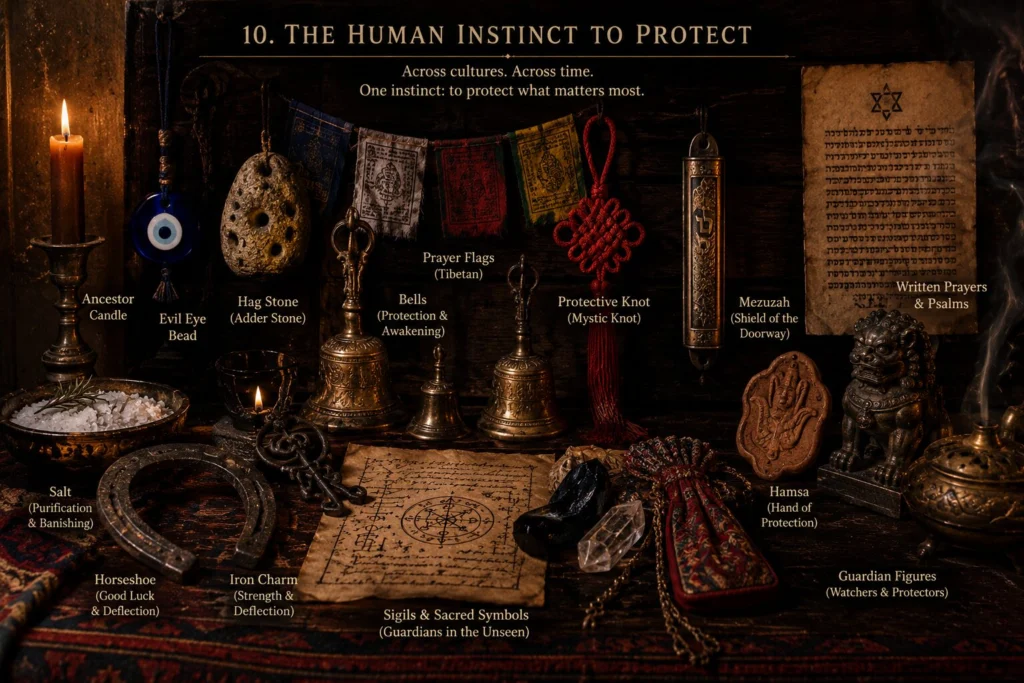
Protective customs are not confined to one religion, magical system, or region. Across the world, people have developed symbols, objects, gestures, prayers, architecture, and household practices intended to guard the body, home, family, spirit, and sacred place. Their meanings are not identical, but together they reveal a recurring human understanding: what is precious must be tended, marked, remembered, and protected.
The Evil Eye
Evil-eye beliefs appear across the Mediterranean, Middle East, North Africa, South Asia, and many neighboring regions. Although customs differ, they commonly address the possibility that envy, malice, or intense unwanted attention may disturb health, fortune, peace, or well-being.
Witch Bottles
Witch bottles are protective folk objects historically used in parts of Britain and later elsewhere to trap, divert, counter, or neutralize harmful influence. Surviving examples have contained pins, nails, hair, fabric, written materials, and other personally or symbolically significant contents.
Horseshoes & Iron
Iron has long carried protective associations in European folklore, including ideas of strength, grounding, endurance, and resistance to harmful beings or influence. The horseshoe above a doorway became one of the most recognizable protective and luck-bearing symbols in European and North American folk culture.
Hag Stones
Hag stones, adder stones, and other naturally perforated stones appear in several strands of European folklore. They have been carried, hung near animals or homes, or looked through in practices connected with protection, unusual sight, and the crossing of visible and invisible boundaries.
Mezuzah
In Jewish religious practice, a mezuzah containing passages from the Torah is affixed to a doorway in fulfillment of a commandment and as an expression of covenant, identity, remembrance, and devotion. Protective meaning may be associated with it, but it should not be reduced to a generic charm detached from Jewish life and law.
Apotropaic Symbols
Apotropaic symbols are signs, figures, images, sounds, gestures, or objects intended to avert danger, evil, misfortune, or unwanted influence. Eyes, faces, knots, masks, grotesques, sacred signs, architectural marks, and protective inscriptions have served this function in many different cultures.
Temple Bells
Bells appear in many religious and ritual traditions, though their purposes vary widely. They may announce worship, mark transitions, call attention, accompany prayer, sanctify a place, signal the presence of the sacred, or clear the atmosphere through sound and deliberate movement.
Prayer Flags
Tibetan prayer flags are connected with religious teachings, sacred text, blessing, compassion, and the movement of wind through the landscape. They are not simply protective decorations. Their meaning belongs within Tibetan Buddhist culture and the specific devotional traditions from which they arise.
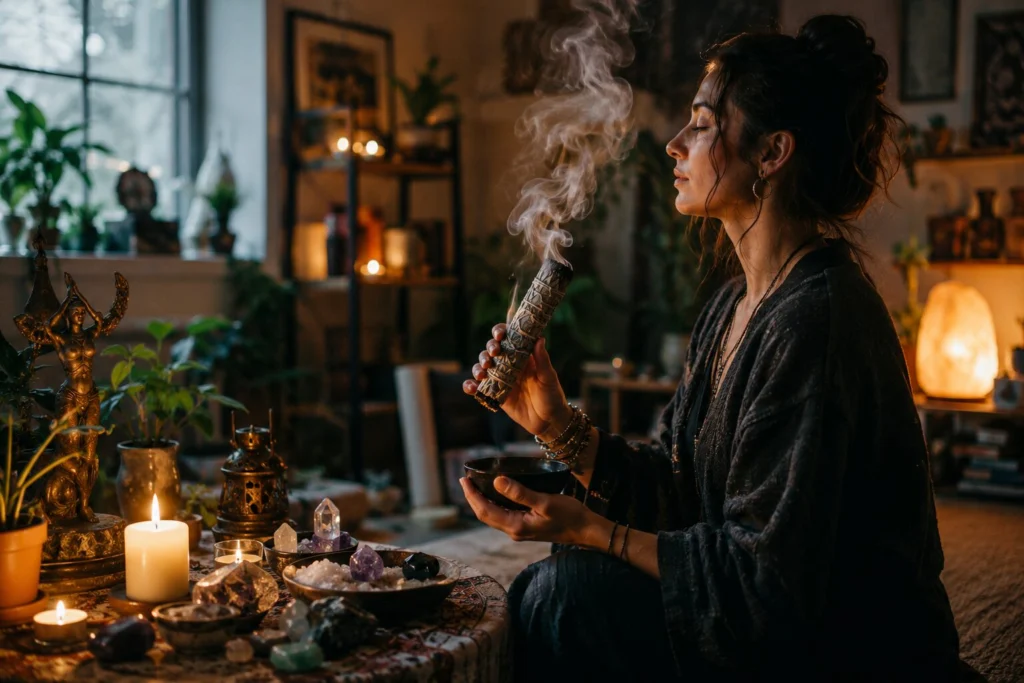
Protection magic endures because vulnerability endures.
Human beings have always stood at thresholds between safety and uncertainty, blessing and danger, welcome and intrusion. Every age develops its own symbols and methods, yet beneath them all lies the same quiet instinct: to preserve what is sacred from what would diminish it. The charm above the doorway, the prayer whispered before sleep, the circle cast before ritual, the candle lit after grief — all arise from the ancient understanding that life flourishes best when it is consciously tended.
Yet mature protection is never merely defensive. A practitioner who only knows how to close doors eventually forgets why the house was built in the first place. Protection exists not so that one may hide from the world, but so that one may engage the world from a place of stability, clarity, and rootedness. It allows rest. It allows trust. It allows sacred work to unfold without unnecessary chaos. At its highest expression, protection creates the conditions under which joy, intimacy, creativity, ritual, healing, and spiritual depth may safely grow.
This is why the deepest protections are often the quietest. They are found not only in formal rites, but in ordinary acts repeated with care: sweeping the floor after conflict, tending the threshold, speaking honestly, maintaining boundaries, blessing the home, resting the body, refusing exploitation, honoring intuition, and remaining connected to trustworthy people and meaningful rhythms. Such things may appear small, yet they form the living foundation beneath stronger magical work.
Protection also teaches an important spiritual truth: boundaries are sacred. The circle matters because relationship matters. Consent matters. Invitation matters. Distinction matters. A home becomes meaningful because not everything belongs within it. A ritual becomes powerful because its space is intentionally shaped. A self becomes sovereign by learning what it will nourish, what it will refuse, and what it will allow to cross its thresholds.
In this way, protection magic is not separate from wisdom. It is wisdom expressed structurally.
The strongest ward is rarely the most aggressive. It is the one built from clarity rather than panic, attentiveness rather than obsession, and balance rather than fear. Like a lantern kept lit through the night, true protection does not merely push darkness away. It preserves the conditions in which life, warmth, beauty, and spirit may continue to endure.
And perhaps that has always been the deeper purpose of protection magic: not to sever ourselves from the world, but to create spaces within it where the soul may safely remain alive.