


Ever wonder why the Winchester brothers used rock salt in their shotguns to fight ghosts?
In Supernatural, Sam and Dean also scattered salt across doorways and windows to keep unwanted spirits out. The shotgun shells were a television innovation, but the principle behind them came from much older beliefs about salt’s ability to repel and protect against spiritual influences.
Witches have used salt for cleansing, protection, absorption, and banishment for generations. It also happens to be one of the more remarkable minerals in the kitchen. It forms crystals, dissolves in water, preserves food, and, under different conditions, can make the ground barren. Its physical and magical qualities make it useful in an impressive variety of workings.
From ancient ritual preparations to protective household customs, salt has earned a permanent place in the craft. And while the Winchesters preferred shotguns, most of us find a bowl of salt or a little saltwater considerably more practical.
More Than a Seasoning
Salt is a crystal, although we rarely give it the same attention as quartz or amethyst. Under suitable conditions, common salt forms cubic crystals. Drop them into water and they dissolve, dispersing throughout the liquid. Allow the water to evaporate and the crystals can form again. The salt hasn’t vanished. Its components remained present in the water, even when the familiar grains were no longer visible.
For witches, this ability to change form is particularly interesting. Salt can be worked with as a solid crystal, dissolved into a cleansing wash, or incorporated into preparations with other ingredients. Its physical nature makes it especially versatile, and its magical qualities lend themselves to several different purposes. Preparation matters because the way we employ a material helps determine how its properties are directed.
Salt also has a contradictory nature. For centuries, people relied upon it to preserve meat, fish, and other foods. By reducing the water available to microorganisms, it slows many forms of spoilage. Yet concentrated salt can also damage plants, alter the soil, and create conditions in which certain living things cannot thrive. It can preserve what we value and make an environment inhospitable to what we don’t.
This is one reason salt has such a broad range of applications in magic. Its qualities are useful in workings intended to preserve or protect, but also in those meant to cleanse, banish, or prevent something from taking hold. Those purposes aren’t interchangeable. Salt may be versatile, but knowing which of its qualities we’re employing is part of constructing an effective working.
The Roman naturalist Pliny the Elder devoted considerable attention to salt in Book 31 of his Natural History. He discussed its production, medicinal applications, use in food, and importance in Roman religious life. He even associated salt with wit and humor, reflecting the Latin use of sales for clever or amusing remarks. The connection between salt and a lively conversation is rather old, even if being called salty has taken on a few additional meanings since Pliny’s time.

Salt at the Ancient Altar
Salt’s place in ritual practice extends well beyond modern witchcraft. Among the ancient Romans, the Vestal Virgins prepared mola salsa, a mixture of specially prepared grain and salt used in religious offerings. Its preparation was a sacred duty, and the mixture played an important role in consecrating sacrificial offerings. Salt wasn’t included merely because it happened to be available. It had a recognized function within the ritual.
Ancient Greek religious practices also placed considerable importance on purification before approaching the gods. Water, including seawater, was used in certain cleansing rites. Although the methods differed from Roman observances and contemporary witchcraft, these traditions demonstrate the long relationship between purification, natural substances, and preparation for sacred work. Our modern methods have their own histories, but the underlying concerns are familiar to practicing witches.
Salt also appears in ancient magical rites associated with Hekate and Hermes, two deities particularly concerned with thresholds, boundaries, and movement between worlds. Hekate governs crossroads, magic, and the restless dead, while Hermes carries information between realms and guides departed souls. An ancient Greek ritual associated with Hekate included salt, laurel, and torchlight, while the Greek Magical Papyri describe a working involving rock salt intended to seek prophetic dreams from Hermes. These are different magical operations, but both place salt within practices concerned with purification, communication, and spiritual boundaries.
Salt’s association with death also survived in later European customs. In parts of Britain, dishes of salt were placed upon the bodies of the deceased, partly as a protective measure. Which brings us back to the Winchester brothers and their rock-salt shotguns. They were onto something. Salt has a long history of protecting the living from unwanted spirits. The brothers simply found a rather more forceful way of putting that old magic to work.
Something worth noticing is that salt wasn’t used only to drive away unwanted influences. It also helped prepare materials and offerings for sacred purposes. This distinction is sometimes overlooked when we discuss salt primarily as a defensive ingredient. It can cleanse an object before consecration, help maintain the condition of a protected space, or support the preservation of something established through a working.
Within C.VM., we regard salt as possessing magical qualities of its own. Preparation, consecration, and intention help us direct those qualities toward a particular purpose. We aren’t simply assigning arbitrary meanings to ordinary objects. The materials we select contribute to the working, and understanding their nature is an important part of practicing magic.
This becomes especially useful with an ingredient as versatile as salt. Its presence in a working should serve a particular purpose rather than be added out of habit. A pinch of salt may be exactly what is needed, but it helps to know why.
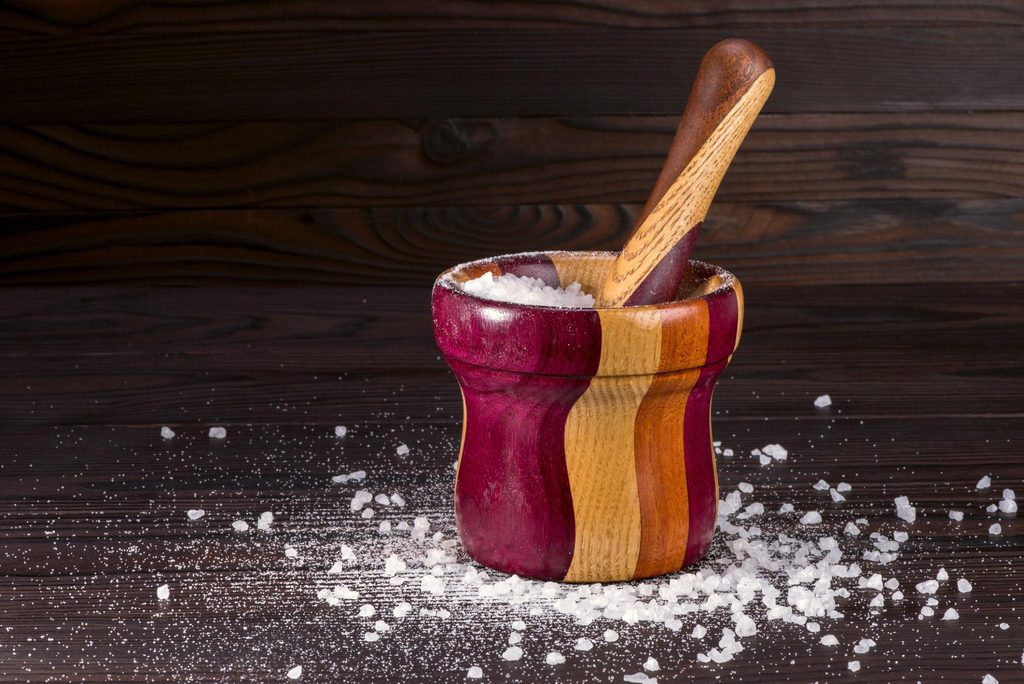
What Are We Actually Asking Salt to Do?
Consider three familiar practices: placing a bowl of salt in a room, cleansing a ritual tool with saltwater, and laying a protective line across a threshold. All three use salt, but they accomplish different things. One is intended to absorb unwanted influences, another cleanses, and the third establishes a protective boundary. These functions can overlap, but they deserve to be understood separately because they affect how we prepare, maintain, and eventually retire the material.
Three Ways Witches Work with Salt
Absorption, cleansing, and protection serve different purposes.
Absorption Drawing in and containing unwanted influences
Absorption is among salt’s most useful magical qualities. Witches place bowls of salt in rooms, beside ritual objects, near entrances, or in spaces where unwanted influences seem to accumulate. The salt is intended to draw in and contain those influences, helping clear the surrounding area. Its crystalline nature and relationship with moisture make it particularly suited to such work, although its magical activity involves more than simply taking up water from the air. Through preparation, placement, and intention, we put the material’s receptive and containing qualities to work.
A consideration that sometimes gets overlooked is what happens afterward. If salt has been set out to collect unwanted influences, why would we leave it there indefinitely? Once it has served its purpose, the collected material should generally be retired rather than reused. How long that takes depends upon the working and the conditions involved. Some witches choose a lunar rhythm for refreshing their preparations, perhaps retiring the salt during the waning or dark Moon. The important thing is to complete the operation. If we have asked salt to collect something undesirable, removing the spent material is part of the cleansing.
Cleansing Clearing and preparing tools, objects, and spaces
Cleansing works somewhat differently. Saltwater is a familiar preparation for cleansing ritual spaces and removing accumulated influences from objects before consecration. Here, salt’s purifying qualities are combined with water’s ability to carry away what has been loosened or removed. It is a simple and useful preparation, although not appropriate for every object. Some stones, metals, and finishes are damaged by salt or moisture, so a little practical knowledge is important. We want to cleanse the tool, not destroy it in the process.
Protection Establishing and maintaining magical boundaries
Protection introduces another use. A line of salt across a doorway, around a ritual space, or along the boundary of a working establishes a barrier intended to exclude unwanted influences. Here, we aren’t necessarily asking the salt to absorb anything. We are using its protective qualities to establish and maintain a separation between what belongs within a space and what should remain outside.
The Winchester brothers made considerable use of this principle in Supernatural, although their salt circles tended to be tested rather more dramatically than most household protections. The idea of establishing boundaries against unwanted spirits through natural materials is much older than the series. Salt remains useful in protective workings because it can both reinforce boundaries and help keep undesirable influences from taking hold.
The distinction matters when constructing a working. Salt intended for absorption performs a different task from salt maintaining a protective boundary. Saltwater cleansing involves removal, while a protective preparation may be intended to remain in place. Understanding these differences helps us select the appropriate method and recognize when a working has fulfilled its purpose.
The same principle applies to more elaborate preparations. Sea salt, rock salt, and traditional black salt mixtures may be chosen for different purposes, and the ingredients added to a preparation can alter its character considerably. Salt is not a universal ingredient that automatically makes every spell protective or cleansing. Its qualities must suit the work being performed.
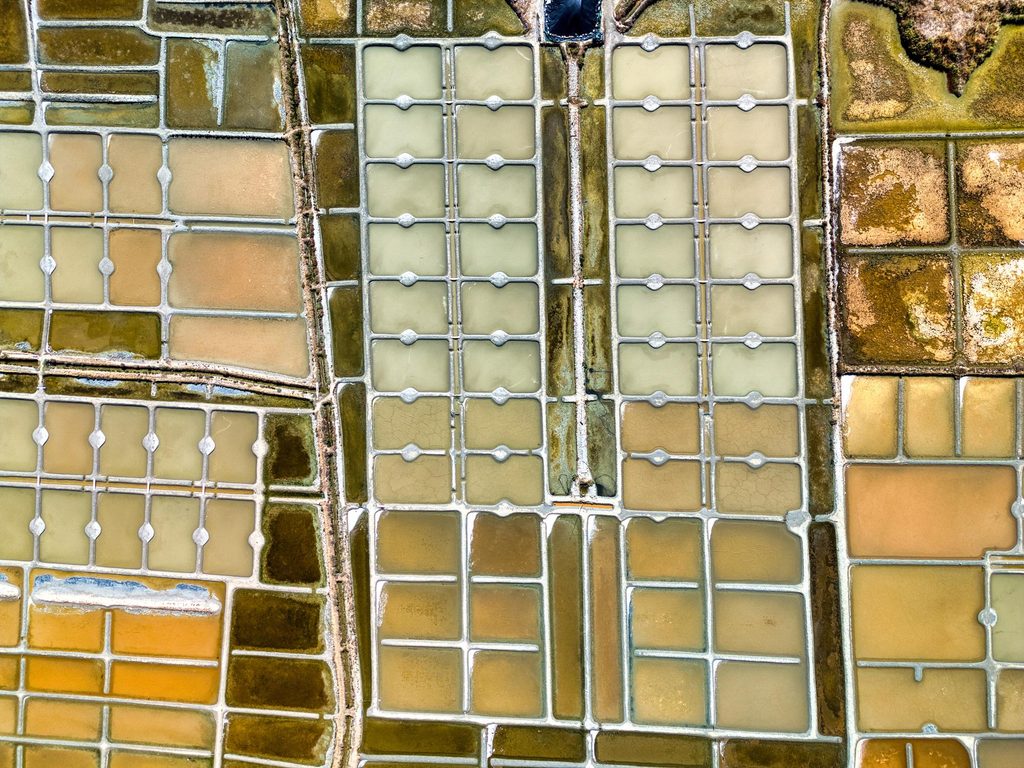
Salt, Superstition, and Some Very Old Lore
Salt has accumulated an extraordinary amount of household lore, much of it concerned with protection, luck, and preventing misfortune. One of the most familiar customs is throwing spilled salt over the left shoulder. Versions of this practice were common in Britain and Ireland and became part of American household traditions as well. Although salt’s historical value certainly made wasting it undesirable, the remedies associated with spilling it went beyond ordinary thrift.
In Current Superstitions, published in 1896, the American folklorist Fanny D. Bergen recorded several regional variations. In northern Ohio, spilling salt could be remedied by throwing some over the left shoulder or burning a pinch. In Virginia, burning the salt was another response. A Pennsylvania variation required throwing some over the shoulder and then crawling beneath the table. Apparently, spilling the saltcellar could turn dinner into a rather involved affair.
The details varied, but the purpose was consistent. An unfortunate incident called for a corrective action, and salt itself was part of the remedy. These small household customs are closely related to the thinking behind protective charms and other forms of practical magic. They attempt to prevent or reverse an undesirable influence through a deliberate action using a material already understood to possess useful properties.
Fans of Practical Magic may remember Sally Owens advising people to throw spilled salt over the left shoulder, along with keeping rosemary by the garden gate and planting lavender for luck. The film presents these customs as part of the ordinary knowledge passed through a family of witches. That detail works particularly well because the customs weren’t invented for the movie. They belong to a much older body of household lore, some of which survives among people who would never think of themselves as practicing magic.

Salt also appears in traditional stories, sometimes in ways that have little to do with protection. An English tale called Cap o’ Rushes, collected by Joseph Jacobs in English Fairy Tales in 1890, concerns a father who asks his daughters how much they love him. The youngest replies that she loves him as fresh meat loves salt. He takes this as an insult and sends her away, unable to understand why something so ordinary should be used to describe affection.
Later, she arranges a feast for him in which none of the food contains salt. When he discovers how unpleasant the meal is without it, he finally understands her answer. She had compared her love to something necessary and sustaining rather than something extravagant or decorative. It’s a clever old story, and it captures how deeply salt’s importance was understood in everyday life.
These traditions remind us that much of what we now call folk magic developed alongside ordinary household activities. The kitchen was a place of preservation, preparation, remedies, charms, and protective customs. People might not have described every act as witchcraft, but the methods and concerns are familiar. Protecting the home, averting misfortune, preserving what matters, and removing what doesn’t belong remain central concerns in magical practice.
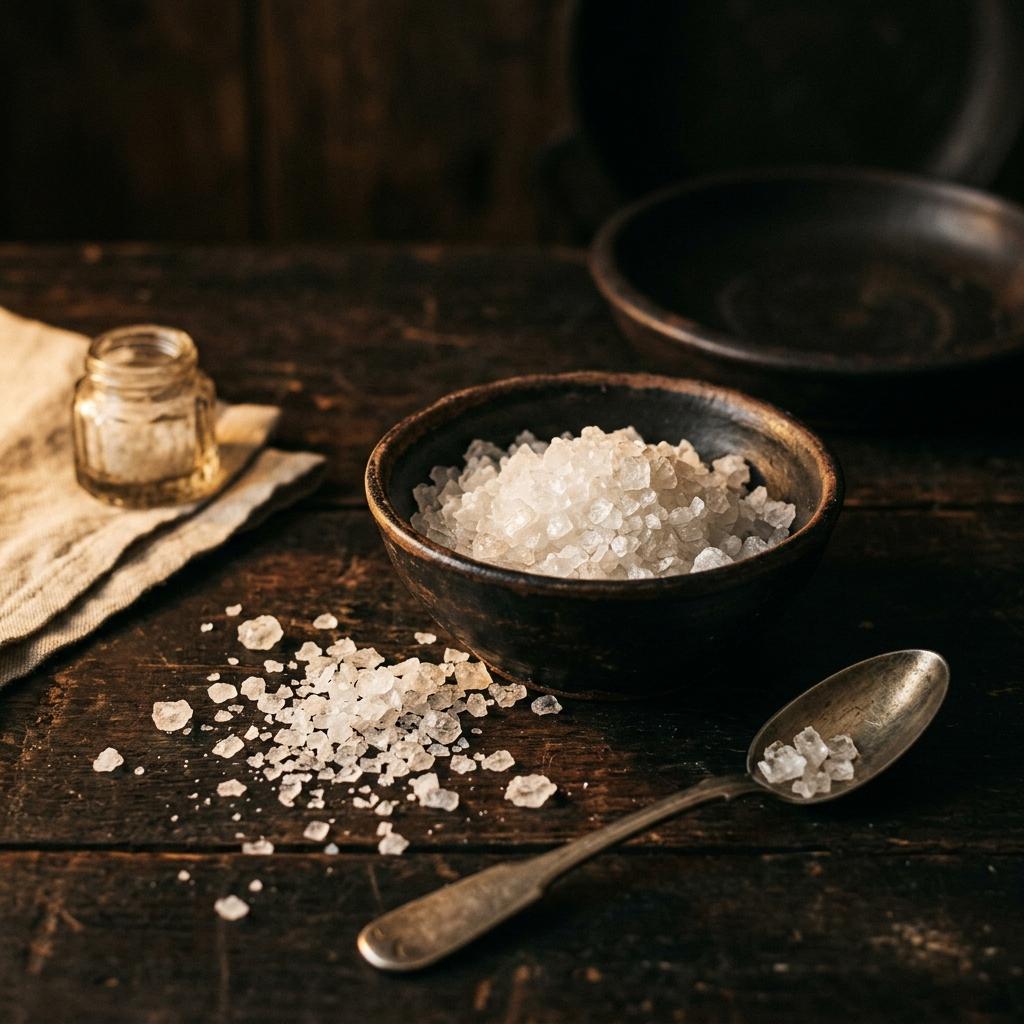
The Other Side of Salt
For all its reputation as a cleansing and protective material, salt isn’t exclusively gentle. Its ability to preserve and protect exists alongside its capacity to dry, exclude, inhibit, and destroy. Those qualities make it useful in banishing and certain forms of binding or adversarial magic, although the purpose and preparation may differ considerably from a cleansing working.
A protective working establishes a boundary against something unwanted. A banishing working seeks to remove that influence altogether. In some workings, salt can be used to help prevent a condition from taking hold or returning. These purposes are related, but they aren’t identical, and the methods used to accomplish them may vary.
This is why I find the habit of labeling magical ingredients as simply good or bad rather unhelpful. Salt can preserve something we value, but it can also be directed toward ending or excluding something. Neither quality cancels the other. Its suitability depends upon the purpose of the working, the conditions involved, and the judgment of the practitioner.
Consider the difference between a salt boundary placed around a home and salt employed in a banishing working. The first establishes a protected area and excludes influences that don’t belong there. The second may draw upon salt’s more forceful qualities to remove an influence or prevent its return. Both may be entirely appropriate, but one shouldn’t be mistaken for the other.
Salt’s contrasting qualities are also a reminder that magical ingredients have physical consequences. Scattering large amounts of salt outdoors can damage plants, alter soil conditions, and affect nearby water. This matters when working in gardens, wooded areas, or places where ritual materials might accumulate. A small contained preparation is often sufficient, and there is little sense in protecting one’s home while damaging the land around it.
Understanding the more forceful uses of salt doesn’t mean every witch needs to employ them. It simply gives us a fuller understanding of the material. A practitioner who knows only salt’s cleansing associations may overlook useful applications, just as someone who regards every protective ingredient as harmless may fail to consider its consequences.
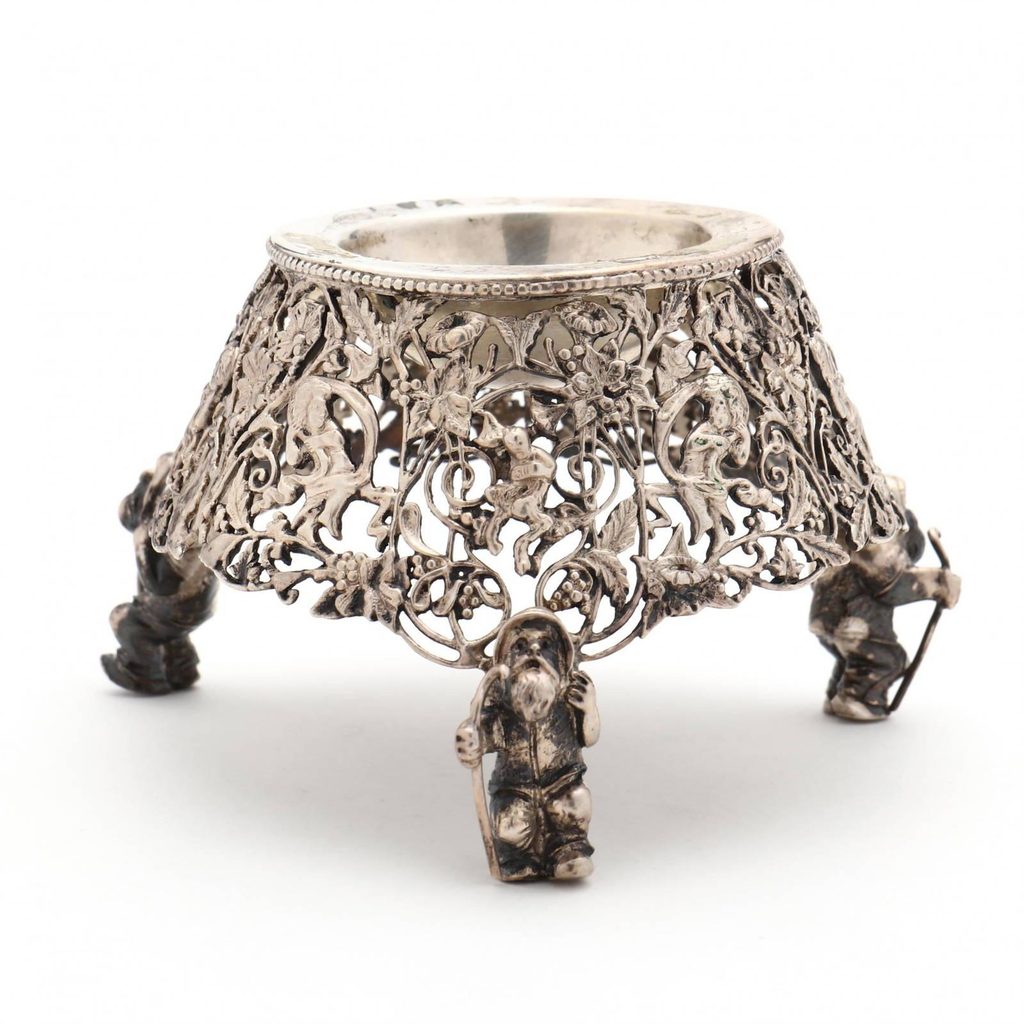
The Witch’s Cupboard
Visit a modern metaphysical shop and you’ll probably find several varieties of ritual salt. There may be protective blends, black salt preparations, mixtures consecrated for particular deities or planetary influences, and salts intended for almost every conceivable magical purpose. Some are thoughtfully prepared and quite useful. Different blends can possess distinct qualities, and there are good reasons to choose one over another.
Ordinary salt, however, deserves more credit than it sometimes receives. Its magical qualities don’t begin when someone adds an herb, a label, or an attractive jar. Preparation and consecration can refine its purpose, but a witch who understands the material can accomplish a great deal with plain kitchen salt.
This isn’t an argument against specialized ingredients. They have their place, and I appreciate a well-prepared ritual blend as much as anyone. It’s an argument for understanding what we’re using and why. Sometimes a particular preparation is appropriate, and sometimes ordinary salt will do the job perfectly well. Adding more ingredients doesn’t necessarily improve a working, particularly when their purposes are poorly understood or conflict with one another.
Salt is also a reminder that magical materials are physical things. They possess properties, limitations, and relationships with the world around them. Their magical qualities are part of that larger nature, and the better we understand our materials, the more deliberately we can employ them. A witch should be able to explain why a particular ingredient belongs in a working rather than relying entirely upon a list of correspondences.
Salt has remained part of magical practice for centuries because it continues to be useful. Its properties lend themselves to purification, absorption, protection, preservation, and banishment. Its history stretches from ancient offerings to household charms, regional lore, and contemporary witchcraft. Along the way, people have developed an enormous variety of ways to prepare and employ it.
What I appreciate about salt is that it rewards understanding more than extravagance. It can be used in an elaborate ritual or a straightforward household working, and neither approach is automatically superior. The material brings its own qualities. The practitioner brings knowledge, preparation, and purpose.
We can study ancient rites, collect rare ingredients, and develop increasingly sophisticated methods, yet one of the most useful materials in the craft remains something nearly everyone keeps in the kitchen. Perhaps that’s one reason it has endured. Salt is accessible, adaptable, and far more interesting than its everyday familiarity might suggest.
And unlike many specialized magical supplies, it is unlikely to disappear from the grocery shelves anytime soon.
Continue Exploring
For a closer look at different kinds of salt, their magical correspondences, cleansing and protective uses, consecration, and practical preparations, visit Salt in Practice at My Cousin’s Coven.
— Kael, C.VM.

Leave a Reply