Working Space Protection
Preparing the Space Where Magic Happens

Every magical practice happens somewhere.
Whether that place is a dedicated altar room, a corner of a bedroom, a kitchen table, a backyard, or a temporary space assembled for a single working, the environment can influence how the work unfolds. Many practitioners discover that preparation begins long before a candle is lit, a card is drawn, or a spell is cast.
Sacred space protection is the practice of intentionally preparing and maintaining a working space for magical, spiritual, or ritual activity. Some practitioners use the term sacred space, while others prefer magical space, ritual space, shrine space, or simply “the place where I work.” The language may differ, but the principle remains the same: creating an environment that supports focus, clarity, purpose, and safety.
A well-prepared working space helps reduce distractions, establish boundaries, encourage grounding, and create conditions where magical practice can unfold more effectively. This preparation may involve physical cleaning, energetic cleansing, prayer, protective symbols, candles, herbs, or simply taking a few moments to settle and become fully present.
At My Cousin’s Coven, we view sacred space protection as one of the most practical and foundational forms of protection magic. Before the spell, before the spirit, before the prayer, there is the space. How that space is prepared often shapes everything that follows.
What Makes a Space Magical?
A magical space is not defined only by expensive tools, elaborate altars, or permanent ritual rooms. It is defined by intention, preparation, and purpose. Even a small corner of a room can become a working space when it is treated with care and attention.
“Before the spell, before the spirit, before the prayer, there is the space.”
Ordinary space becomes magical space when it is consciously set apart for a specific kind of work. This may happen through cleaning, lighting a candle, setting out tools, casting a circle, saying a prayer, drawing a sigil, grounding, or simply pausing long enough to shift from everyday attention into magical focus.
The act of preparing a space creates a boundary between ordinary activity and magical practice. That boundary does not need to be dramatic. It may be as simple as clearing a table, turning off distractions, placing a candle in the center, and deciding that for this moment, this place has a purpose.
Protection begins here because a prepared space is harder to disrupt. It is easier to focus within it, easier to notice what feels out of place, and easier to close the work when the practice is complete. A magical space protects by creating order, attention, and containment.
Circles, Boundaries & Containers
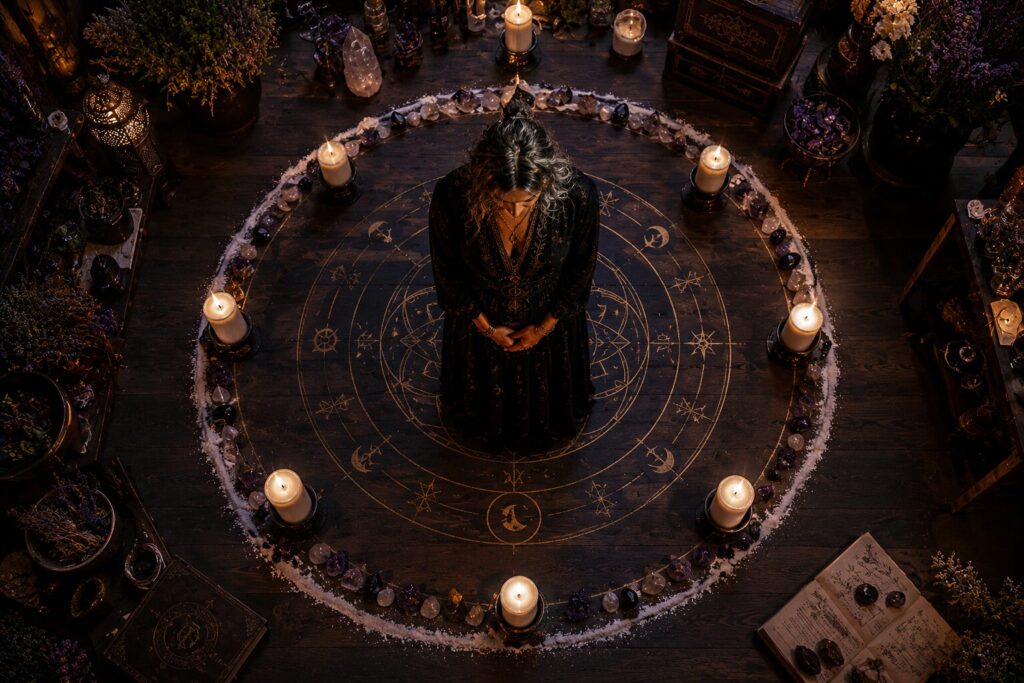
One of the oldest ideas in magical practice is that a working space should be defined before the work begins. Across traditions, practitioners have marked boundaries, established ritual areas, created circles, designated sacred corners, and otherwise set apart a place for magical activity.
The circle is perhaps the most widely recognized example. In some traditions it serves as a protective boundary. In others it functions as a container for magical energy, a meeting place between worlds, or simply a way of signaling that ordinary activity has ended and magical work has begun. While circles are common, they are far from universal.
Many practitioners create magical space without ever casting a formal circle. A room may be blessed through prayer. An altar may establish the center of a working area. A set of candles, a ritual cloth, boundary stones, protective symbols, or even the arrangement of furniture can help define where the work takes place.
What matters is not the shape itself but the intention behind it. A boundary helps separate the working space from the distractions and demands of everyday life. It gives the mind a place to focus and the practitioner a place to work.
Some magical spaces are temporary and exist only for a single ritual. Others become permanent features of a home through dedicated altars, shrines, meditation spaces, or working rooms. Both approaches can be effective. The purpose is not to create a perfect environment but to create a clear one.
In many ways, the boundary is itself a form of protection. It establishes where the work begins, where it unfolds, and where it ends. Whether marked by a formal circle or a simple candle placed with intention, a defined space helps contain attention, energy, and purpose within the work being performed.
The Layers of Space Protection
Protection is rarely a single action. Most well-prepared working spaces are protected on multiple levels at once. Some are physical. Some are symbolic. Some are spiritual. Together they create an environment that supports safe, focused, and effective practice.
🏠 Physical Layer
🌊 Energetic Layer
🕯 Symbolic Layer
✨ Spiritual Layer
🛠 Practical Layer
Traditional Practices
Long before modern witchcraft books and online communities existed, practitioners developed ways to prepare magical and sacred space. While the details differ between traditions, many methods share a common purpose: cleansing, focusing, blessing, and defining the environment where the work will take place.
💧 Water & Purification
Water has long been associated with cleansing, blessing, and preparation. Across magical and religious traditions, practitioners have used water to purify spaces, mark boundaries, and prepare for ritual work.
Practices may include sprinkling moon water, holy water, consecrated water, blessed water, or specially prepared floor washes. Some traditions wash thresholds and altars before important workings, while others anoint tools, doorways, or ritual spaces with water that has been intentionally blessed.
Regardless of the source, water often symbolizes renewal and the removal of distractions before the work begins.
🌬 Smoke, Scent & Air
Smoke and fragrance are among the oldest methods of preparing space. Incense, resins, herbs, oils, and other aromatic materials are often used to shift the atmosphere of a room and signal the transition from ordinary activity into magical practice.
Different traditions use different materials, but the intention is often similar: purification, blessing, focus, or the creation of a particular mood. The scent itself can become part of the ritual environment, helping practitioners enter a more intentional state of mind.
🔔 Sound & Vibration
Many traditions use sound to prepare and define magical space. Bells, chimes, singing bowls, rattles, drums, chanting, and even rhythmic clapping have all been used to mark transitions and focus attention.
Sound can signal the opening of a ritual, help clear distractions, gather participants into a shared rhythm, or simply announce that the work is beginning. Even a single bell rung with intention can serve as a boundary between everyday life and magical practice.
🗣 Words, Prayer & Chant
Some practitioners prepare space primarily through words. Prayers, blessings, invocations, chants, sacred names, spoken intentions, and ritual greetings can all be used to establish the purpose of a working space.
Words help define what the practitioner is attempting to create. They may welcome helpful influences, honor spirits or deities, dedicate the space to a particular purpose, or simply help focus the mind on the task at hand.
In many traditions, the spoken word itself is considered a form of magic.
🧹 Cleansing & Preparation
One of the most universal magical practices is surprisingly simple: cleaning.
Sweeping floors, removing clutter, washing surfaces, opening windows, organizing tools, and preparing the working area are all traditional methods of creating order before magical work begins.
Many practitioners find that physical cleaning naturally supports mental clarity and magical focus. A tidy space often becomes easier to work within, easier to maintain, and easier to protect.
🕯 Light & Flame
Candles, lanterns, hearth fires, vigil lights, and ritual flames have long been used to transform ordinary space into intentional space.
Light can symbolize awareness, presence, guidance, purification, hospitality, and protection. A single candle may become a focal point for meditation, prayer, spellwork, or ritual practice.
For many practitioners, lighting a flame marks the official beginning of the work.
🛡 Symbols & Markers
Symbols help define and reinforce the purpose of a magical space. Sigils, protective marks, altar cloths, ritual tools, statues, stones, charms, and boundary markers can all contribute to how a space is experienced.
These objects act as reminders of intention. They communicate purpose, establish identity, and help transform an ordinary environment into one that supports magical practice.
The object itself may matter less than the meaning and attention invested in it.
Fun Fact: Many historical temples, shrines, churches, and ritual spaces required some form of purification before entry. The idea that magical or sacred work should begin with preparation appears across cultures, religions, and magical traditions around the world.
A Simple Preparation Process
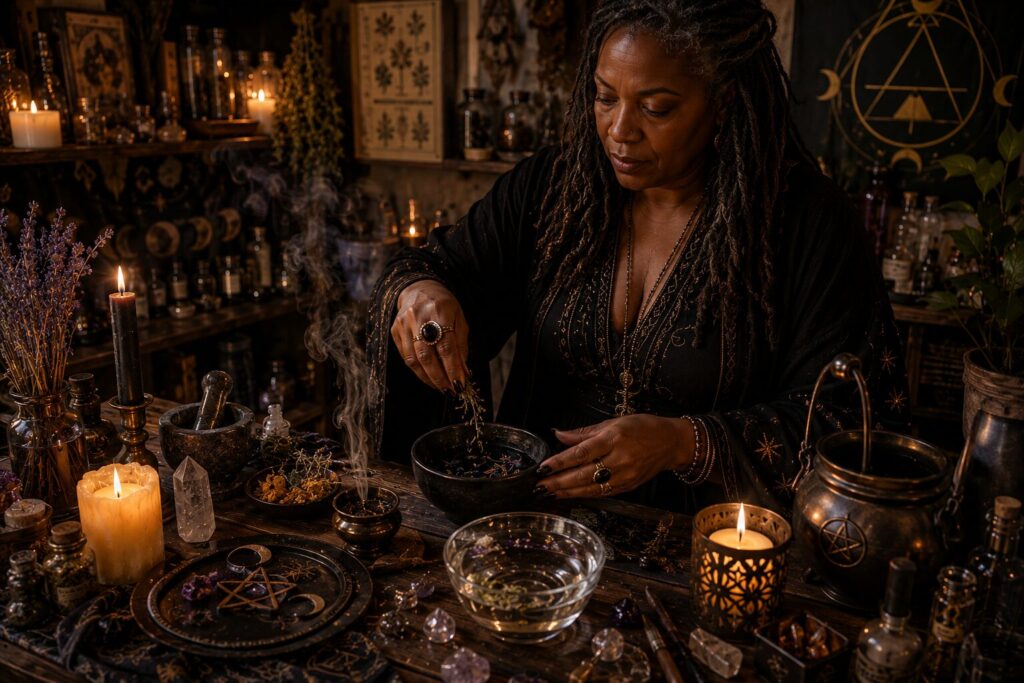
There is no single required way to prepare a magical space. Different traditions use different methods, and every practitioner develops their own rhythm over time. This simple process offers a practical starting point for creating a clear, protected working space.
1. Clear the Area
Remove clutter, stabilize candles, make room for tools, and make sure the space is physically safe.
2. Decide the Purpose
Name what the space is being prepared for: divination, spellwork, meditation, spirit work, prayer, cleansing, or another practice.
3. Mark the Boundary
This may be a circle, altar cloth, candles, salt, stones, a sigil, a spoken statement, or simply a clear mental boundary.
4. Settle the Atmosphere
Use grounding, breath, water, sound, smoke, scent, prayer, or silence to shift the room into a more focused state.
5. Arrange the Tools
Place candles, cards, herbs, oils, offerings, symbols, or other items where they can support the work rather than distract from it.
6. Ground & Center
Take a moment to arrive fully. A prepared space works best when the practitioner is also present and steady.
7. Begin the Work
Once the space feels ready, begin the spell, reading, prayer, meditation, ritual, or practice with clear intention.
8. Close & Restore
Thank what was invited, release the boundary, extinguish candles safely, clean up materials, and return the room to ordinary use.
A magical space does not need to be elaborate. It needs to be clear, intentional, and cared for.
Spellwork EssentialsCommon Mistakes & Corrections
Space protection is meant to support the work, not complicate it. Most problems come from either skipping the basics or making the process so elaborate that the practitioner becomes distracted from the purpose of the working.
Mistake: Starting from Fear
Correction: Begin with clarity instead. Protection works best when it is rooted in preparation, discernment, and confidence—not panic.
Mistake: Skipping Grounding
Correction: Ground before and after the work. A protected space is easier to maintain when the practitioner is steady.
Mistake: Overcrowding the Space
Correction: Use what supports the work and remove what distracts from it. More tools do not always mean more power.
Mistake: Ignoring Physical Safety
Correction: Stabilize candles, ventilate smoke, keep flammable items clear, and make sure pets, children, and people are safe.
Mistake: Forgetting to Close
Correction: End intentionally. Thank, release, clean up, extinguish flames safely, and return the space to ordinary use.
Mistake: Relying Only on Tools
Correction: Tools help focus the work, but awareness remains central. The practitioner is part of the protection.
The goal is not to create a perfect space. The goal is to create a clear, safe, intentional space where the work can unfold.
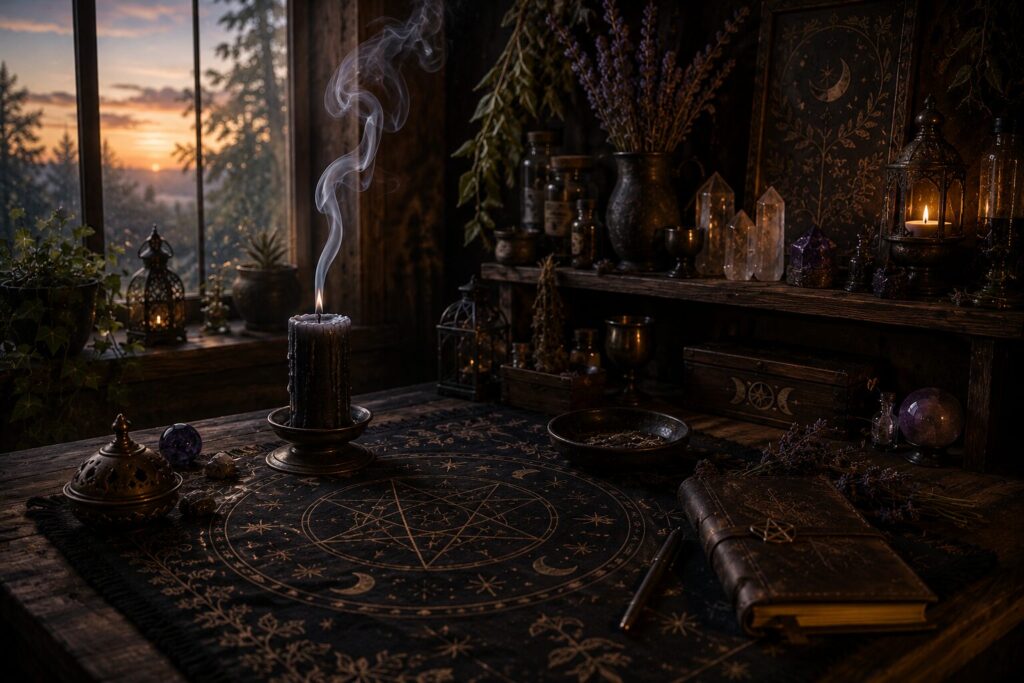
Every working begins before the visible work begins.
Before the candle is lit, before the cards are drawn, before the prayer is spoken, before the spirit is called, there is the space. That space shapes the mind, steadies the body, supports the intention, and helps define what kind of work is about to unfold.
Sacred space protection is not about making every room feel grand or ceremonial. It is about creating a working area that is clear enough to support the practice being done. Sometimes that means a fully prepared ritual room. Sometimes it means a clean table, a candle, a glass of water, and a few moments of focused attention.
The space does not have to be perfect. It has to be tended.
This is one of the simplest and most overlooked forms of protection magic. A prepared space helps the practitioner notice what belongs, what distracts, what supports the work, and what needs to be removed before beginning.
A well-tended magical space becomes a container. It holds the work while the work is happening, and it helps release the work when it is complete.
The first protection is not always the ward.
Sometimes, the first protection is the space itself.
Related Paths
Creating and protecting magical space connects to many aspects of practice, from ritual design and spiritual hygiene to prayer, symbols, and the preparation of tools. Explore the related paths below.