Embrace the Magic
Magic is understood by many practitioners as both the oldest and most intimate language we can speak — the conversation between will and world, spirit and matter, self and the vast, unseen forces that move through all things. It is not a superstition clung to in ignorance, nor a parlor trick meant to fool the eye, but a lived discipline: a way of training perception, focusing intent, and shaping experience in subtle and sometimes profound ways.
At My Cousin’s Coven, we understand magic as participation in a living, responsive universe. The world is not a mute mechanism, but an ensouled field of relationship, where stone, stream, wind, flame, and living beings each carry their own patterns of presence. To practice magic is to engage those patterns consciously — to enter into dialogue with the seen and unseen, and to recognize that our thoughts, emotions, actions, and symbols all participate in shaping the currents we move within.
Magic arises in the meeting place between what we do and who we are. Across cultures and centuries — from the Hermetic schools of the Mediterranean world to the cunning folk of rural Europe, from village healers to ceremonial mages — there has been a shared recognition that magical practice is not separate from character, awareness, or responsibility. The work is not only in the circle or at the altar; it is also in the shaping of perception, the refinement of will, and the cultivation of relationship with forces larger than the individual self.
To embrace magic is to acknowledge that we are not passive observers of reality, but active participants in its unfolding. We set intention. We raise and direct energy. We work with symbols, spirits, timing, and tradition. We listen for subtle responses. And in doing so, we step into an ancient and ongoing conversation — one that does not promise control over all things, but does invite influence, alignment, and meaningful participation in the weave of the world.
This path is not about fantasy or spectacle. It is about attention, discipline, and relationship. It is about learning how inner states and outer circumstances echo one another, and how conscious practice can bring those echoes into greater harmony — or, when necessary, into deliberate and focused change. Magic, in this sense, is both an art and a craft: shaped by intuition, supported by technique, and guided by the ethical weight of power used with awareness.
What follows on this page is not a single definition, but a map — a way of understanding how magic has been approached, practiced, and lived within the broad currents of Western and contemporary witchcraft traditions. Whether you are new to the path or deeply seasoned, this is an invitation to look beneath the surface forms and consider the deeper structure of the art itself.
To embrace magic is to step into relationship with a living world — and to accept the responsibility, wonder, and transformation that relationship brings.
What Magic Is
Magic is not merely spellwork, symbolism, or ritual performance. It is a current within creation itself — a subtle field of pattern, influence, and possibility through which consciousness may perceive, align, and act. In this sense, magic is neither fantasy nor superstition, but a real mode of relationship with the deeper structure of the world.
Magic as Current
Magic may be understood as a current moving through creation: a hidden order carrying pattern, tendency, and information. It is not exactly conscious in the way gods, spirits, or humans are conscious, yet it can be accessed, interpreted, and worked with by beings who possess awareness.
Magic and Consciousness
Consciousness does not create magic from nothing. Rather, it encounters and engages a current already present within the world. Through attention, intention, symbol, rite, and relationship, the practitioner learns how to touch what is already there and work in harmony with it.
Magic and Creation
Magic belongs to the living fabric of existence. It is one of the ways creation remains dynamic, responsive, and full of hidden depth. To study magic is therefore not merely to learn techniques, but to begin recognizing that the world is structured by more than what appears on the surface.
Finger of LightMagic is not separate from the world. It is one of the deeper ways the world is woven.
Will, Energy, and Technique
At its most fundamental level, magic operates through the meeting of will, energy, and form. These are not abstract ideas alone, but lived realities within practice. Will is the capacity to choose, to direct attention, and to commit to a desired outcome. Energy is the living current that animates all things — the subtle vitality that moves through body, land, spirit, and symbol. Technique is the set of learned patterns, skills, and structures that give shape to will and guide energy toward a specific aim.
Will, in magical practice, is not mere wanting. It is trained intention. It is the ability to hold a vision steadily, to act in alignment with that vision, and to remain present with the process even when results are not immediate. A scattered will produces scattered effects; a refined will creates coherence. Over time, practitioners learn that cultivating will is as much an inner discipline as any outward ritual — shaped through meditation, self-knowledge, emotional awareness, and repeated, intentional practice.
Energy, as understood in magical traditions, is not limited to what modern science measures, though it is not in opposition to it either. It refers to the subtle currents of vitality, awareness, and presence that flow through living systems and conscious beings. Practitioners learn to raise, circulate, and direct this energy through breath, movement, sound, visualization, focused stillness, and ritual action. Chanting, drumming, dance, prayer, and silence all serve, in different ways, to alter state and increase the availability of this current for deliberate work.
Technique provides the structure that allows will and energy to become effective rather than diffuse. This includes timing work with lunar or planetary cycles, selecting herbs, stones, colors, and symbols based on traditional correspondences, constructing ritual space to support altered states of awareness, and using established forms that have been tested through generations of practice. Technique is not meant to replace intuition; it gives intuition a vessel. It offers a grammar for the language of magic, allowing personal insight to be expressed in forms that reliably shape experience.
True practice arises in the braid of these three. Will without energy remains an idea. Energy without will becomes unfocused or overwhelming. Technique without either becomes empty performance. When all three are present, the practitioner is able to act as a conscious conduit — aligning inner state with outer form so that intention is carried into the fabric of events.
Within this framework, intuition and structure are not opposites but partners. Intuition allows the practitioner to sense timing, resonance, and subtle shifts — the feeling that a working should be delayed, altered, or redirected. Structure provides stability and continuity, ensuring that personal impressions are grounded within a larger tradition of knowledge and practice. Over time, a seasoned practitioner learns when to follow established form closely and when to allow the work to evolve in response to what arises in the moment.
This is why magical training has always involved both study and experience. Books, teachers, and traditions transmit technique and cosmology. Practice, reflection, and lived results refine will and sharpen perception. Magic is not mastered by theory alone, nor by instinct alone, but through the steady integration of both. Each working becomes both an act of craft and a lesson in awareness.
At My Cousin’s Coven, we view this interplay as essential. Magic is not a shortcut to bypass effort or responsibility. It is a disciplined art that develops the practitioner as much as it shapes circumstances. The more clearly one understands how will, energy, and technique interact, the more intentionally — and ethically — one is able to work within the living currents of the world.
Magic Is Pattern
Magic works because reality is not random. Creation is structured by repeating forms, correspondences, rhythms, and relationships. What appears in one place often echoes in another; what unfolds in the great movements of the world may be mirrored in symbol, ritual, gesture, season, and soul.
The practitioner does not invent these patterns out of nothing. Rather, they learn to recognize them, align with them, and work through them. In this sense, magic is not the denial of order, but the art of entering into deeper order consciously.
Macroforms and Microforms
Magic unfolds across different scales. Some patterns are immense and civilizational, cosmic, or seasonal; others are small enough to fit in a breath, a gesture, a sigil, or a single spoken phrase. Yet the small may mirror the great. What appears in the larger form of the world can often be approached through a smaller and more intentional form within ritual life.
Macroforms
Macroforms are the larger structures through which magic is expressed in creation. They are not single spells or private acts, but the great patterns that shape the conditions of life and meaning.
- seasonal cycles and the turning year
- planetary and celestial rhythms
- divine currents and archetypal structures
- elements, sacred landscapes, and living ecologies
- cultural, ancestral, and communal magical forms
Microforms
Microforms are the smaller, deliberate expressions through which practitioners enter into relationship with those larger patterns. They are the compact shapes through which meaning is focused and magic becomes workable.
- ritual gestures, words, and breath
- sigils, symbols, and altar forms
- candles, herbs, oils, and material correspondences
- small rites timed to greater cycles
- personal acts of alignment, invocation, and intention
The lesser form does not replace the greater one. It gives the practitioner a way to touch it.
Deepening the Mechanism
Relationship with Spirits, Forces, and Intelligences
Sources of Magical Power: A Living Cosmology
How Magic Works
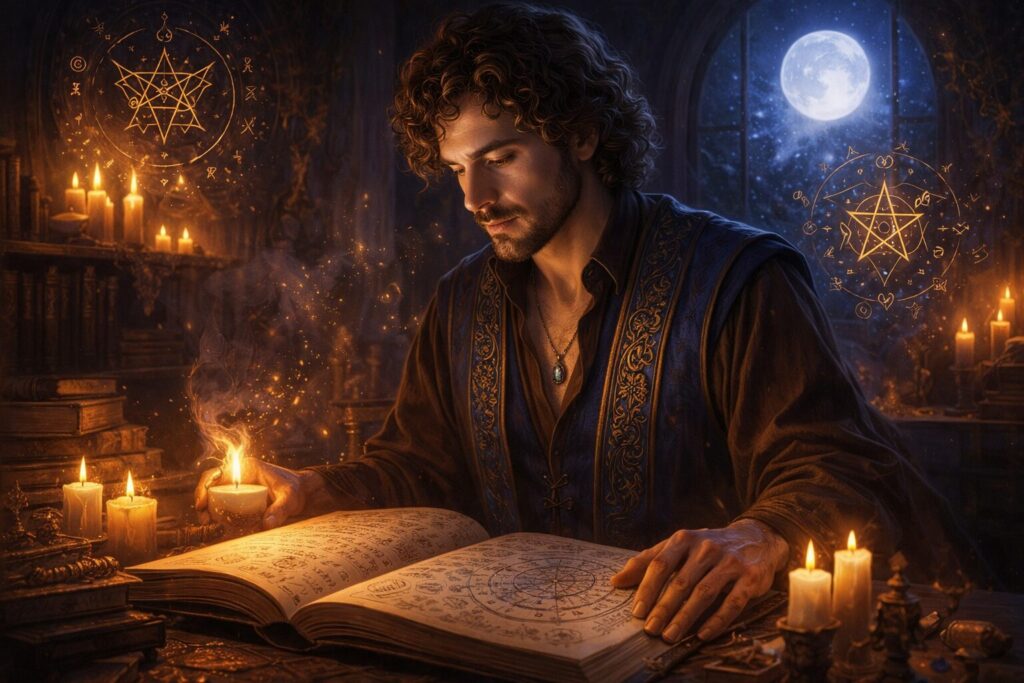
Magic does not work because a person wishes hard enough, nor because belief alone invents results. It works because magic is already present within creation as a real and universal constant — a current of pattern and influence that can be perceived, aligned with, and directed through skill, timing, relationship, and form.
Magic Does Not Depend on Belief
Belief is not the engine of magic. A person does not need to believe in gravity for gravity to act upon them, and in much the same way magic does not wait for human approval in order to exist. It operates whether or not it is named, understood, or accepted.
This is important because it means magic can affect the world, the practitioner, and others regardless of skepticism. Belief may strengthen confidence or sharpen perception, but it is not the source of the current itself.
Belief Can Help Focus and Relationship
Though belief is not required, it can still be useful. Belief may help concentrate intention, steady the mind, support devotional practice, and deepen connection when working with spirits, gods, or sacred presences. In this sense belief can refine access, but it does not create the thing being accessed.
Magic works most deeply through alignment: through timing, form, pattern, attention, correspondence, and right relationship with the forces involved.
Finger of LightMagic is not made real by belief. Belief can sharpen contact, but the current exists whether one acknowledges it or not.
Power, Domination, and Responsibility
Magic is power. To work magic is to engage forces that can influence minds, emotions, circumstances, and unseen currents of cause and effect. Across cultures and historical systems, practitioners have recognized this plainly: magic is not only a gentle art of blessing and alignment, but also a means of protection, binding, banishing, compelling, and, at times, deliberate confrontation with harmful forces.
To deny this is to misunderstand the full scope of the craft. There are moments when domination is employed — when a boundary must be enforced, a hostile influence restrained, or a destructive pattern interrupted. In such cases, magic has long included rites of binding, warding, commanding, and constraint. These workings are part of the historical record of both folk and ceremonial traditions, and they reflect a sober recognition that not all forces encountered are benign or cooperative.
Yet the presence of power demands discernment. Domination is never neutral. To compel is to take responsibility for the act of coercion and for the ripples it creates. Power used without reflection can distort the practitioner as much as it alters the situation. Over time, unexamined use of force can harden perception, blur ethical boundaries, and erode the very sensitivity that makes skilled magic possible. For this reason, experienced practitioners place as much emphasis on moral awareness and self-knowledge as on technique.
At My Cousin’s Coven, we do not pretend that all magic is harmless, nor do we encourage reckless use of force. We recognize that protection, justice work, and the containment of harm may require firm and deliberate action. At the same time, we emphasize that such workings should be approached with clarity of purpose, proportional response, and honest examination of motive. The question is not only can this be done, but should it be done, and at what cost.
Many traditions articulate this responsibility through ethical frameworks such as the Wiccan Rede, the principle of return, or the understanding that energy sent outward eventually finds its way back to the sender in altered form. Not all practitioners interpret these teachings literally or uniformly, but most seasoned workers agree on a central truth: every act of magic leaves an imprint. It shapes the practitioner as well as the situation addressed. To work power is to be changed by it.
For this reason, moral responsibility in magic is not imposed from outside; it is cultivated from within. It grows through experience, reflection, and the willingness to take accountability for outcomes — both intended and unintended. True mastery is not found in the ability to dominate at will, but in knowing when force is necessary, when restraint is wiser, and when a situation calls for healing, release, or redirection instead of control.
Magic, at its deepest level, reveals not only what we can change, but who we become through the act of changing it. Power is a teacher as much as a tool. Those who walk this path with awareness learn that strength and wisdom must grow together, or both will be distorted. To embrace magic, then, is to embrace responsibility — not as a burden, but as a sign of maturity within a living and potent art.
Channels of Access
Magic is one current, but human beings do not all approach it in the same way. Different practices, disciplines, and sensibilities open different paths into the same deeper reality. These are not separate universes of magic so much as distinct channels through which the practitioner learns to perceive, receive, and shape what is already present.
Will and Personal Force
Some practitioners access magic most directly through attention, intention, focus, and cultivated inner power. Here the self becomes an active point of contact with the larger current.
Gods, Spirits, and Living Presences
Others come to magic through relationship — through devotion, spirit work, ancestors, land presences, or divine beings whose currents reshape how magic is known and practiced.
Symbols, Matter, and Correspondence
Candles, herbs, sigils, stones, oils, timings, and sacred places all serve as material gateways. These are not props, but structured points of contact between smaller forms and greater ones.
The paths differ, but the current beneath them is one.
Grounding the Craft
Tools, Correspondences, and Material Anchors
History, Persecution, and Misunderstanding
Living the Magical Life
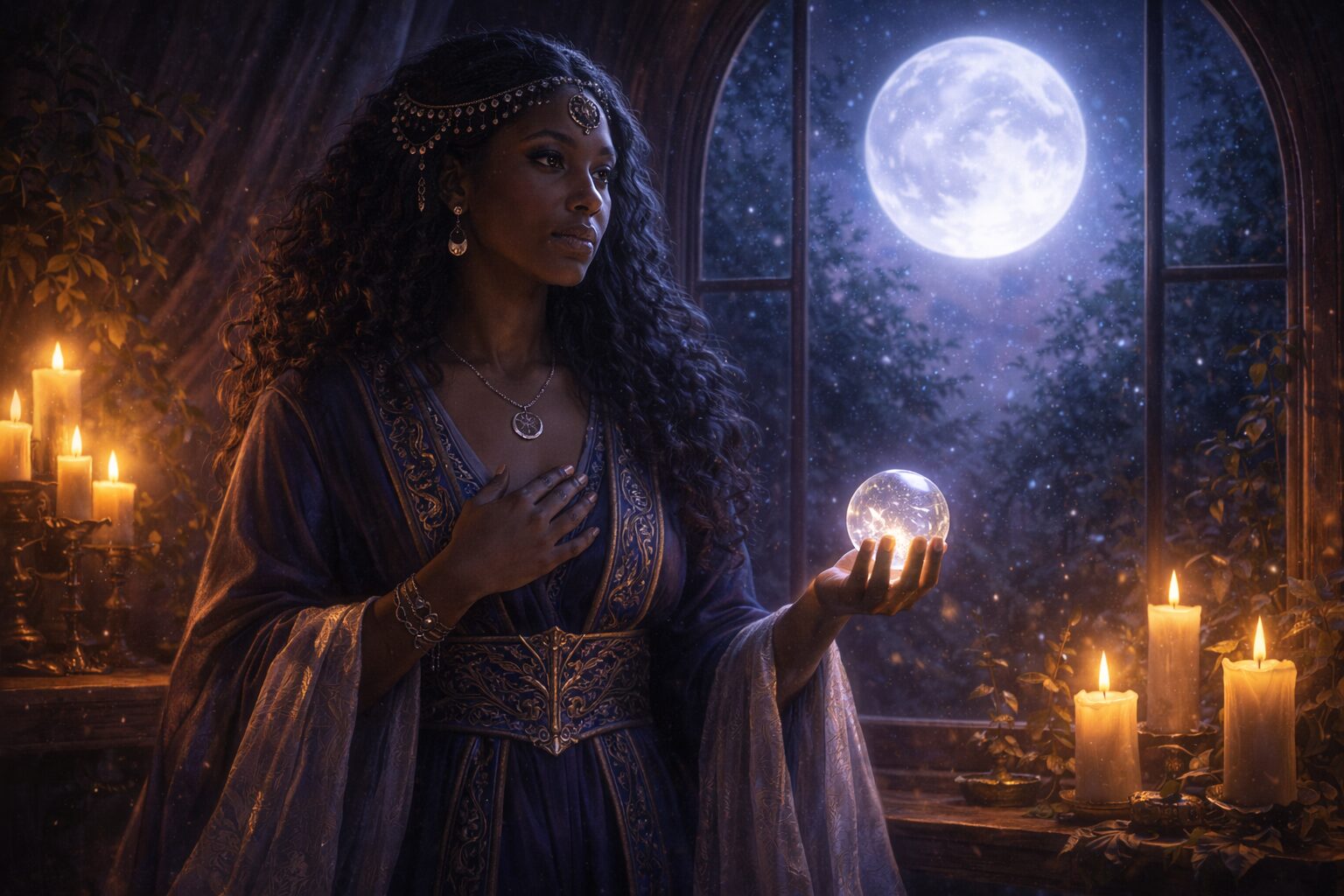
Magic is not confined to ritual moments or sacred spaces alone. It is a way of inhabiting the world — a mode of attentiveness that recognizes patterns, responds to subtle shifts, and understands that inner and outer landscapes continually shape one another. To live magically is to notice the threads that connect thought, emotion, action, and circumstance, and to move within those threads with greater awareness and intention.
Across many traditions, this understanding is expressed through the principle that the microcosm reflects the macrocosm. The movements of the heavens, the rhythms of the seasons, and the cycles of growth and decay are mirrored within the human psyche and body. In learning to observe these patterns within ourselves, we gain insight into the larger currents that move through the world. In shaping our inner state, we participate — in small but meaningful ways — in shaping the outer field of experience.
This does not mean that all events are willed into being, nor that the practitioner stands at the center of the universe as its sole architect. Mystery remains. Chance, necessity, and forces beyond personal control continue to operate. Living magically is not about eliminating uncertainty, but about engaging it with presence and skill. It is the difference between drifting with the winds and learning how to read them, trim the sails, and choose a course with care.
Attentiveness is one of the most powerful tools of the magical life. It is cultivated through meditation, divination, dreamwork, journaling, time in nature, and honest self-reflection. Over time, the practitioner learns to recognize subtle signals — the sense of timing, the feeling of resonance or resistance, the quiet knowing that a door is opening or closing. These perceptions are not infallible, but they grow more refined through practice and humility.
Living magically also means accepting that the work changes the worker. Every ritual, every act of focused will, every moment of deep attention leaves its imprint. Patterns of thought soften or harden. Sensitivities increase. Old habits fall away; new ways of seeing emerge. This is part of the initiation of the path. The craft is not only something one does — it is something one becomes.
At My Cousin’s Coven, we understand magic as both a discipline and a devotion: a craft learned through study and repetition, and a relationship deepened through presence and care. The magical life is not about perfection, nor about constant intensity. It is about continuity — returning to the work, listening again, adjusting again, and allowing understanding to mature over time.
To live magically is to walk in conversation with a living world. It is to recognize that stones, streams, ancestors, stars, and symbols are not silent backdrops, but participants in a shared field of meaning. It is to accept that the unseen and the seen interweave, and that by stepping into that weave with awareness, we take part in an ancient and ongoing art.
In this way, magic becomes less a set of techniques and more a posture of being. It teaches patience, responsibility, wonder, and discernment. It invites us to become better listeners — to ourselves, to one another, and to the deeper rhythms that move beneath the surface of ordinary life. To embrace magic, ultimately, is to embrace a lifelong path of learning, relationship, and transformation.
Manifesting, Magical Living, and Magical Thinking
Not every modern conversation about manifestation or “magical thinking” is wrong, but many of them blur together ideas that should be carefully distinguished. These differences matter if one wants to approach magic with clarity rather than confusion.
Modern manifest culture is not wholly false. It often senses something real: that consciousness, attention, and directed intention matter. In that sense it can be a first step toward understanding will, focus, and the shaping power of directed awareness.
Yet manifest culture is often incomplete. It tends to reduce magic to personal desire, positive thinking, or wishful projection, as though wanting intensely were enough to move reality. Real magic is more structured than that. It involves current, pattern, timing, relationship, material conditions, and often forces far larger than the individual self.
So while manifesting may contain a fragment of truth, it is often only the shallow edge of a much older and deeper magical worldview.
New Age BeliefLiving magically means orienting yourself toward the world as alive, meaningful, and patterned — recognizing correspondences, honoring symbol, and participating consciously in the deeper currents of existence. It is a worldview rooted in relationship, reverence, and disciplined perception.
Magical thinking, in psychological language, usually means something different: the mistaken belief that unrelated events are directly caused by one’s thoughts, fears, or fantasies in a way detached from reality. In other words, it points toward confusion, distortion, or delusion rather than mature spiritual practice.
These should not be conflated. A person may live magically without losing contact with reality, and in fact the healthiest magical traditions depend upon exactly that distinction.
Psychology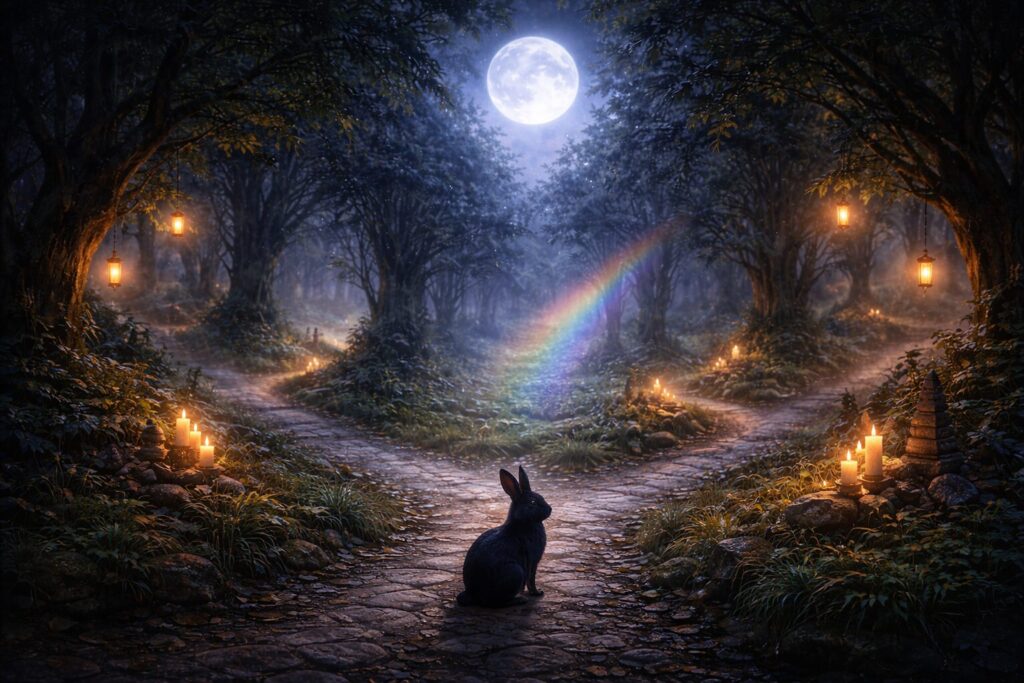
Walking the Paths of Practice
Philosophy becomes living art through practice. The currents described on this page are not meant to remain abstract ideas, but to be explored, tested, and embodied in many different forms. Each practitioner finds their way of working with magic through experience — through ritual, study, inner work, divination, and relationship with tradition and community.
At My Cousin’s Coven, we offer multiple doorways into this living craft. Whether you are drawn to structured ritual, ancestral and cultural traditions, deep inner transformation, or the language of symbols and omens, each path represents a different way of engaging with the same underlying currents. You are invited to explore these paths at your own pace, allowing curiosity, resonance, and lived experience to guide you.
Magic is not a single road, but a network of winding paths. Some lead outward into ceremony and community. Some lead inward into shadow and self-knowledge. Some move through symbols, stories, and signs. Each path offers its own lessons, challenges, and forms of insight. Together, they form a living map — one that continues to grow as you walk it.
Choose the doorway that calls to you. Let it lead you deeper into the work.
Embrace the magic. Let it change you. Let it show you that you are part of the great, ongoing work — and that the work is part of you.
“The world is full of magic things, patiently waiting for our senses to grow sharper.”
— W.B. Yeats