The Returning Light
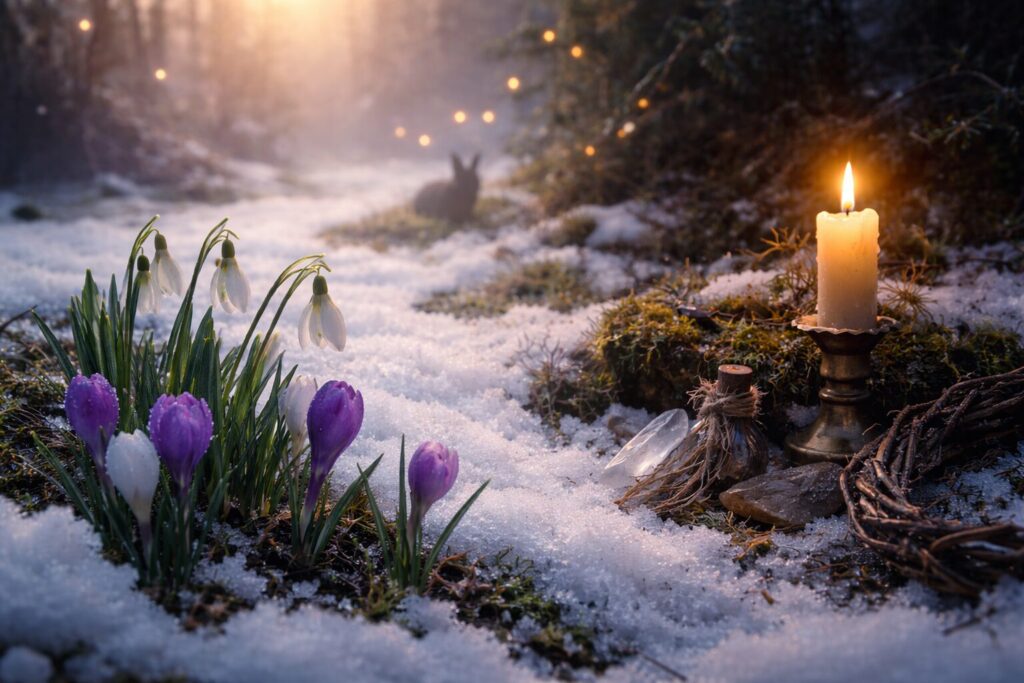
Imbolc marks the first true stirring of light within the dark half of the year.
Though winter still holds the land, something has shifted beneath the surface. The days are growing longer, seeds are swelling unseen, and the promise of return is quietly taking root.
Traditionally observed in early February, Imbolc is a festival of fire, purification, and renewal. It is a threshold moment — not yet spring, but no longer the deep sleep of winter. This is the season of candles in windows, hearth fires tended with intention, and the careful work of clearing what no longer serves so that new life can enter cleanly.
Across many Pagan, folk, and devotional traditions, Imbolc is associated with Brigid and other hearth, fire, and inspiration figures, as well as with milk, lambing, and the fragile beginnings of the agricultural year. It is a time when hope is practical rather than abstract — expressed through small acts of preparation, blessing, and tending.
Within the MCC framework, Imbolc is honored as a season of inner fire and outer readiness. It is a time to cleanse, to bless, to tend the hearth of the self, and to listen for what is quietly asking to be born in your life. The work of Imbolc is gentle but real: preparing space, strengthening foundations, and protecting the spark so it can grow.
Fire, Light & the Returning Sun
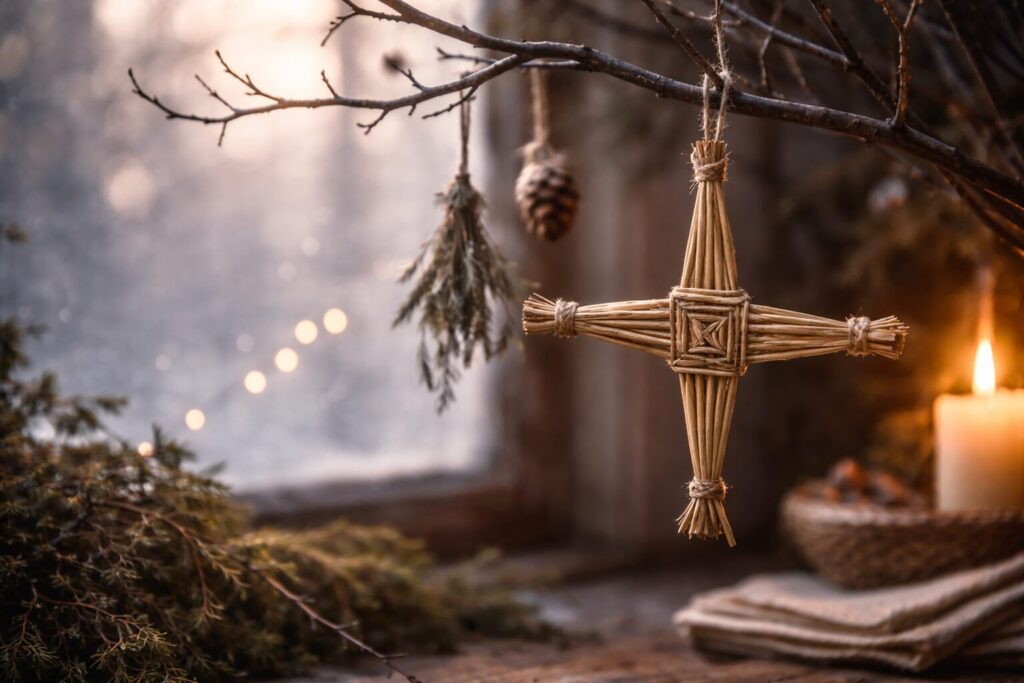
Imbolc is the first stirring of light within the dark half of the year. Winter is not over, but the balance has begun to shift. This is why the season favors steady flame—candles, hearth fires, and small lights tended with care.
The spiritual lesson is consistent: tend what is small so it can become strong.
Purification, Cleansing & Spiritual Hygiene
Imbolc is widely held as a time of clearing and purification—not perfectionism, but removing stagnation so the next season has room to breathe.
- Home cleansing: sweep floors, wash thresholds, refresh linens, open windows briefly.
- Energetic clearing: smoke, sound, salt, or blessed water—whatever your practice uses with good boundaries.
- Altar refresh: clear out old offerings respectfully, clean tools, replace candles, reset intentions.
The aim is clarity: if something is trying to be born in your life, it shouldn’t have to fight through clutter.
Readiness, Preparation & Foundation Work
Imbolc is the foundation. This is where you prepare tools, strengthen boundaries, and choose the few intentions you can realistically carry into spring.
- Small goal-setting (specific, grounded, repeatable)
- Boundary repair (where energy leaks, where time gets stolen)
- Protection upkeep (home wards, personal shielding, spiritual hygiene routines)
- Resource readiness (sleep, pantry, budgeting—the unglamorous magic)
Hope, Inspiration & the Spark of New Life
Imbolc beginnings are often quiet: an idea that arrives softly, a shift in direction, a discipline that finally feels possible.
- Reduce noise long enough to hear what’s emerging.
- Protect the fragile (don’t over-share new dreams before they’re strong).
- Feed it steadily with small consistent acts.
Imbolc doesn’t ask you to bloom yet. It asks you to keep the flame alive until the season can hold it.
| Tradition / Path | What They Call It | How They Honor It | Core Spiritual Focus |
|---|---|---|---|
| Wiccan (MCC-leaning core) Gardnerian • Alexandrian • Eclectic Wicca • Reclaiming-influenced • Solitary | Imbolc Candlemas; first stirrings of spring | Sabbat rite with candle lighting, cleansing, rededication, and blessings for home and craft. | Purification and renewal; returning light; setting vows and intentions that can actually be carried through the year. |
| Eclectic / Neo-Pagan (MCC-leaning practice) | Imbolc Brigid’s Day • Candle Season | Blended observance — home cleansing, journaling, “fresh start” spellwork, and small candle rites. | Spiritual reset; hope without denial; clearing space for what’s next; gentle momentum after winter heaviness. |
| Traditional Witchcraft | Candlemas / Imbolc Names vary by region and line | Cleansing + threshold work — house-washing, ward refresh, hearth offerings, and practical charm-making. | Resetting boundaries; restoring luck and protection; “clean start” magic that strengthens the home and spirit. |
| Druidry / Green Craft | Imbolc Often tied to Brigid/Bríg in modern devotion | Land rite — prayers for returning life, water/river blessings, and honoring early signs of spring. | The first stirring; renewal in the land; patience and attention; tending what is small but alive. |
| Heathen-Adjacent Devotional Eclectic practice (not reconstructionist) | Candle Season House observance; timing varies | Hearth rites — candle blessings, protection refresh, and offerings for household well-being. | Household protection; resilience through late winter; keeping the inner fire steady until the world fully turns. |
| Heathen / Ásatrú Reconstructionist / revivalist streams | Disablót / Dísir observances Some place these near late winter; local calendars vary | Blót + household rite — offerings/toasts for protective powers, ancestors, and the luck of the home. | Protection and continuity; ancestral luck; honoring the household’s unseen guardians as winter begins to loosen. |
| Hellenic-Adjacent Devotional Eclectic practice (not reconstructionist) | Purification Season Late-winter cleansing and renewal themes | Lustration rites — cleansing baths, incense, libations, and simple vows for clarity and integrity. | Clean hands, clean heart; clarity before action; preparing mind and home for the “new year” of growth ahead. |
| Hearth & Kitchen Witch | Imbolc Candle blessing • Hearth reset | Hearth magic — deep cleaning, bread/dairy blessings, simmer pots, and refreshing protection at doors. | The home as sanctuary; warmth against the last cold stretch; nourishment as devotion; a fresh start in small steps. |
| Animist / Spirit Worker | First Stirring Late-winter threshold | Relationship-work — offerings to land and house spirits, shrine tending, and water rites for renewal. | Reawakening; listening for subtle change; reciprocity with place; tending relationships that keep life moving. |
| Hedge Witch / Journey Work | The Spark Light returning in the inner world | Trance + dedication — guided journeys for renewal, cord-clearing, and rekindling personal power. | Rekindling; finding the next true step; gentle courage; restoring energy after darkness without forcing it. |
| Folk Catholic / Syncretic Candlemas • Brigid traditions • regional folk observances | Candlemas Feb 2 themes: blessing of candles, home, and protection | Home devotion — blessed candles, prayers, cleansing, and protection rites carried through the year. | Light as protection; purification; devotion as relationship; bringing blessing into the daily life of the household. |
| Dianic / Goddess-Centered | Brigid’s Day / Imbolc Fire, poetry, healing, sovereignty | Goddess devotion — candle-lit prayers, creativity rites, healing blessings, and reclaiming inner authority. | Sacred flame; women’s wisdom and creativity; healing; renewal of personal sovereignty and purpose. |
| Spiritualist / Mediumistic | Candle Sitting Quiet season for prayer and clarity | Communication + healing rites — prayer, candle vigils, cleansing, and careful closing/grounding. | Discernment; gentle guidance; spiritual hygiene; strengthening boundaries and hope as the year begins to open. |
Lore, History & Deepening Practice
Where the season came from, why it matters, and how different paths work with Imbolc’s returning flame.
Brigid, Sacred Fire & the Hearth as Shrine
Imbolc is closely associated with Brigid in Irish tradition—linked to hearth fire, healing, poetry, and skilled craft. Modern practitioners approach Brigid in different ways: goddess, saint, symbol, or devotional presence held with respectful boundaries.
Regardless of theology, the function is similar: Imbolc honors the hearth as continuity—the fire that stays alive when the world is cold.
Candlemas, Folk Customs & Seasonal Markers
Imbolc overlaps with late-winter customs such as Candlemas and Saint Brigid’s Day. Many regions marked this season with candle blessings, home purification, and signs of weather change hinting at spring’s approach.
Even in modern practice, these roots keep Imbolc grounded: it’s not only symbolic—it’s seasonal preparation wisdom.
The Threshold Season: “Not Yet Spring” Magic
Imbolc is liminal—winter still dominates, but change has begun. That “in-between” quality makes it excellent for transition work: release, recommitment, boundary repair, and gentle gestation of what’s new.
Imbolc is not about forcing spring. It’s about creating conditions where spring can arrive cleanly.
Modern Pagan Interpretations & Common Variations
Different paths emphasize different aspects of Imbolc: Brigid devotion, purification, inspiration, household protection, or land-listening. Climate matters too—Imbolc can feel like “deep winter with a hint of light” or like early spring depending on where you live.
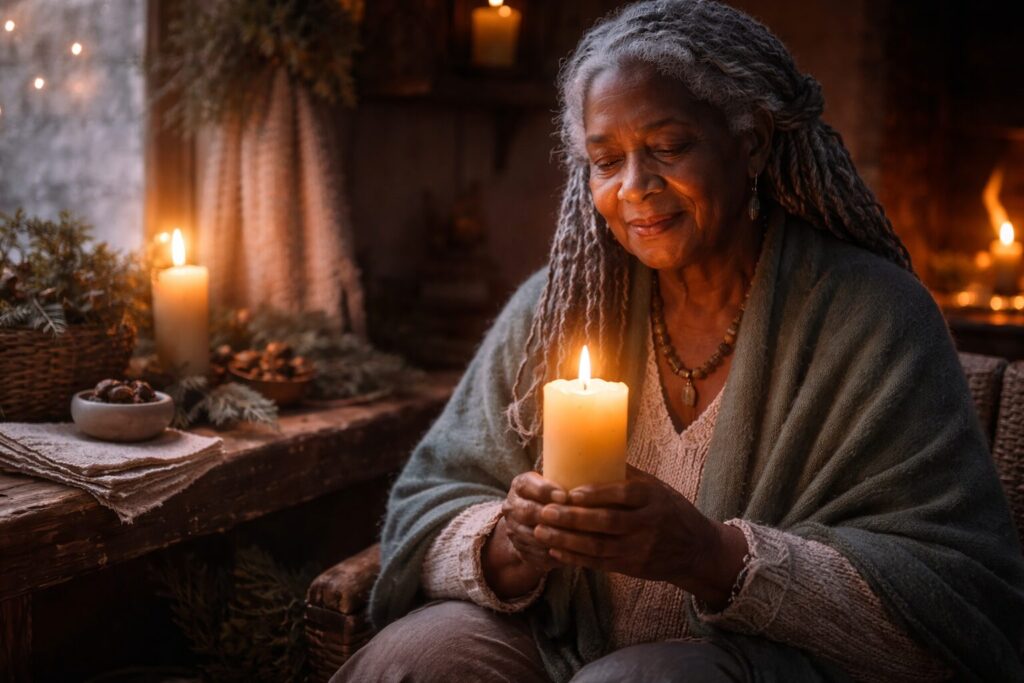
Imbolc does not arrive with fanfare. It comes quietly — in the tending of a single candle, in the clearing of a small space, in the decision to keep something alive even when the world still feels cold. It is a season that teaches patience with beginnings and respect for what is still fragile.
This is not yet the time of outward bloom. It is the time of inner readiness — of preparing the ground, strengthening the hearth, and choosing what you will carry forward into the growing light. The work of Imbolc is subtle, but it is foundational. What you tend now becomes what you stand upon later.
Whether you honor Imbolc through Brigid, through candle rites, through household blessing, or through quiet personal recommitment, the current remains the same: keep the flame. Protect what is small. Nourish what is true. Make room for what is asking to be born.
In this way, Imbolc reminds us that hope is not a feeling — it is a practice. A light that is chosen again and again, even before the sun is fully returned.
“Imbolc is not the triumph of spring, but its first breath — the quiet assurance that life is already stirring beneath the frost.” -Kael