The Long Night and the Turning of the Light
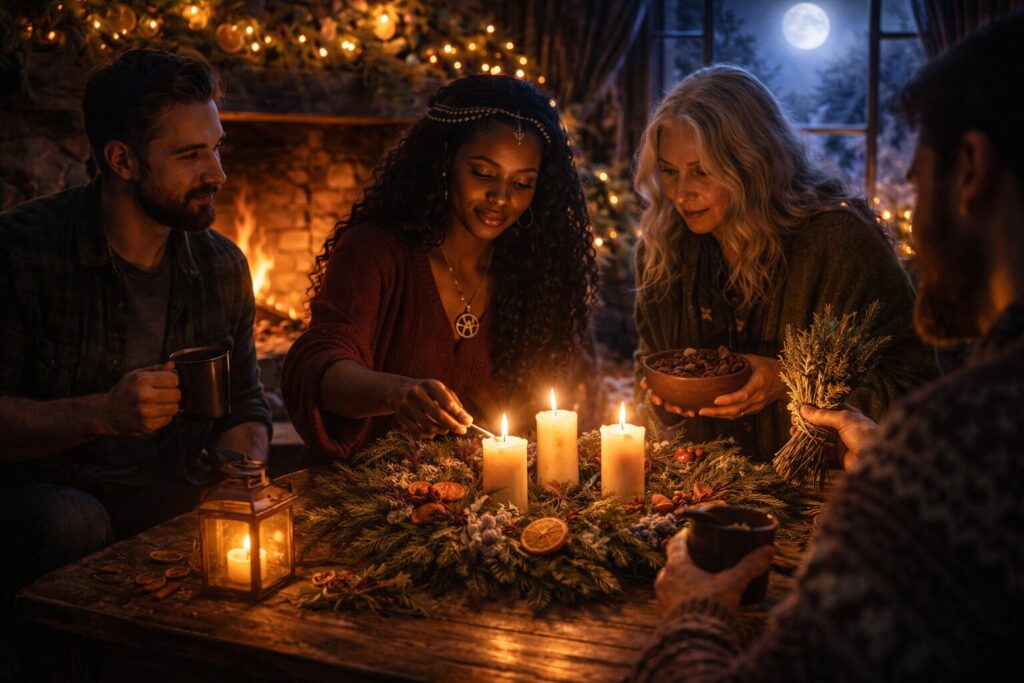
Yule marks the deepest point of the dark season — the longest night of the year — and the quiet turning that follows it. In many modern Pagan and witchcraft traditions, Yule is recognized as the winter solstice: a moment when the Sun reaches its lowest arc and, from that still point, begins its slow return. It is a threshold in time, where darkness and light meet, and where endurance, rest, and renewal share the same hearth.
At My Cousin’s Coven, we understand Yule not as a single ancient festival frozen in history, but as a living seasonal observance shaped by land, climate, and tradition. Across Northern Europe and beyond, midwinter was marked in many ways — through feasting, oath-making, fire rites, and communal gathering — all centered on one shared reality: surviving the dark, protecting what matters, and honoring the return of the light. Modern Yule draws from these threads while also standing as a contemporary practice, adapted to the lives we live now.
Yule is not only about light returning; it is about learning how to live well in the dark. The long night teaches endurance, patience, and the value of warmth — not only from fire and candle, but from community, shared work, and intentional rest. This is a season of the hearth: of tending what sustains us, of strengthening boundaries, and of holding space for quiet growth beneath the surface.
In the turning of the year, Yule reminds us that renewal does not arrive all at once. The light returns slowly, almost imperceptibly at first. In this way, Yule carries a lesson in trust — trust in cycles, trust in gradual change, and trust that even in the deepest winter, life is still gathering itself for what comes next.
As with all seasonal practice at My Cousin’s Coven, we encourage you to adapt Yule observances to your land, climate, and personal path. Whether you mark the solstice with fire, candle, prayer, feast, ritual, or simple reflection, the heart of Yule remains the same: to honor endurance, to protect what is sacred, and to welcome the slow, steady return of the light.
“They called this time Yule, from the day when the Sun turns back and begins to increase.” — Bede
The Hearth Season
Yule is a season of shelter and strength. It is a time to tend the inner and outer hearth — the spaces, relationships, and practices that keep us grounded through the cold and dark. Protective workings, home blessings, quiet divination, and restorative ritual all find natural place here. Where Samhain opens the gates of endings and thinning veils, Yule teaches us how to remain, how to endure, and how to carry light forward through the long night.
This is a season for small flames and long patience. The work of Yule is not dramatic. It is steady. It is the kind of magic that keeps candles burning, homes warded, and spirits resilient. In honoring Yule, we honor the strength it takes to continue — and the quiet promise that even now, the light is on its way back.
Lore, History & Deepening Practice
History & Syncretism
The Yule Log
Evergreens & Winter Plant Lore
Divination in the Dark Half
Oaths, Vows & Quiet Intentions
| Category | Correspondences | Meaning / Best Use |
|---|---|---|
| Core Themes The spiritual “why” of Yule |
|
Excellent for restorative work, rebuilding strength, and setting steady intentions without forcing speed. |
| Colors |
|
Use red for warmth and courage, green for protection and continuity, white for clarity and blessing, gold for solar return. |
| Symbols |
|
Symbols at Yule are “keep-the-flame” tools—great for ward renewals, home blessings, and guiding the spirit through darkness. |
| Herbs & Plants |
|
Think: cleanse the home, bless thresholds, and “seal in” safety and steadiness for the winter stretch. |
| Scents |
|
Use scent as a “mood anchor” for calm focus—especially for night rites, quiet prayer, and devotional work. |
| Stones |
|
Best for protective layering: ground the body, shield the space, then amplify a single clean intention. |
| Foods & Offerings |
|
Offerings at Yule are often “thanks for getting us through.” Keep them humble, heartfelt, and land-appropriate. |
| Best-Fit Workings |
|
Yule magic shines when it’s practical: secure the home, mend the spirit, and invite slow, reliable improvement. |
| Timing “Solstice window” not a single moment |
|
If you’re exhausted, do the smallest possible rite well: one candle, one breath, one clear sentence of intention. |
Lore, Hearth & Deepening Practice
A deeper layer for the dark half of the year — hearth customs, mythic threads, and the quiet arts that carry light through winter.
The Returning Sun in Myth & Mystery
Yule is not “instant daylight.” It is the first spark — fragile, newly kindled, and carried forward by patience. Across many traditions, the season speaks in the language of a solar child, a promised return, and a light born within the dark.
- Oak & Holly cycles and the turning of sacred time
- Solar rebirth motifs across Germanic, Celtic, Roman, and folk streams
- Light that does not erase darkness — it learns to live with it
- Subtle MCC lens: the “seed-spark” of inner light (kept gentle, not sermon-y)
The Yule Log & Sacred Fire Traditions
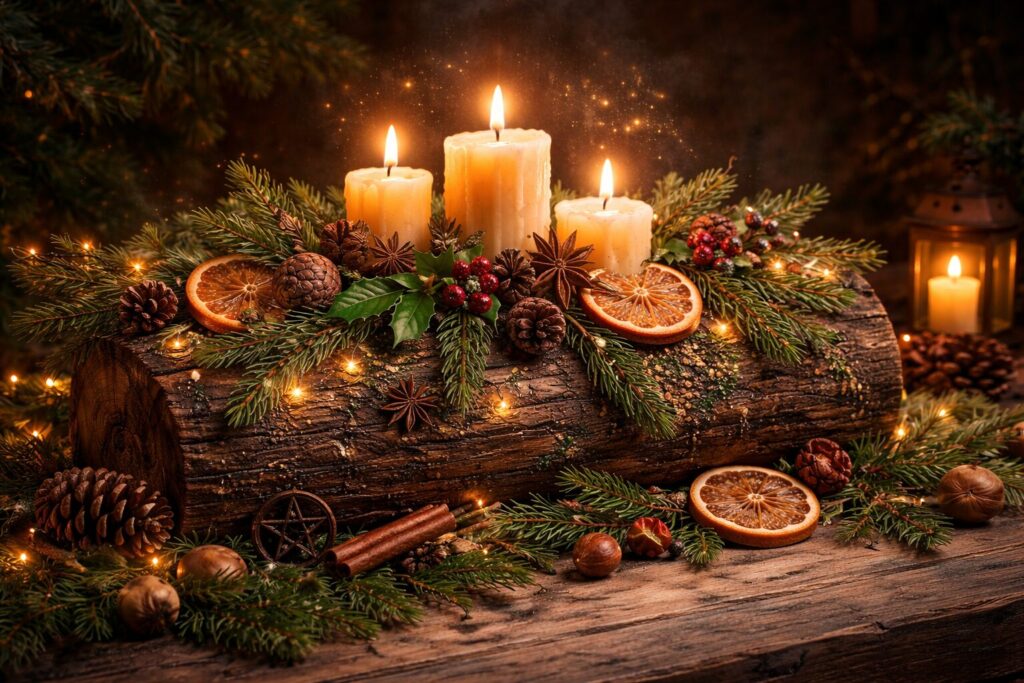
The Yule log is an enduring hearth custom: fire as continuity, blessing, and the warm center of winter life. A common folk motif is carrying a piece of the old log forward to kindle the new — the year’s promise lit from last year’s embers.
- Hearth fire as spiritual anchor (home as winter temple)
- Ember-keeping as continuity and protection
- Simple home rite: one candle, one breath, one clean intention
- Offerings to the house — gratitude for shelter and warmth
Evergreens, Holly & Winter Plant Lore
Evergreens carry the simplest winter lesson: some life does not retreat. Pine, fir, holly, ivy, and mistletoe have long been used for protection, blessing, and the “green thread” of vitality running through the dark season.
- Threshold magic: doors, windows, and hearth edges
- Protection correspondences: evergreen boughs, holly, and iron
- Folk survival: household charms that persist through changing eras
- Life-in-death symbolism (green against snow)
Heathen & Ásatrú Yule
In Heathen and Ásatrú practice, Yule (Jól) is a major holy tide — traditionally multi-day — shaped by offerings, oath-making, ancestor honoring, and communal feasting. It is deeply social as well as sacred: kinship, hospitality, and reciprocity are part of the magic.
- Blót / offering and the ethics of reciprocity
- Ancestors, household spirits, and keeping the hall warm
- Winter lore threads (including the Wild Hunt in some streams)
- Fate and wyrd: choosing words carefully; keeping oaths clean
Pagan, Heathen & Christian Interactions
Yule sits in a layered cultural landscape. Germanic and northern European winter customs influenced later Christmas practices, and Christian calendars reshaped older folk traditions. Modern Pagan communities often meet across paths — Heathen, Wiccan, Druid, eclectic — sharing timing, sometimes sharing symbols, and still holding different meanings.
- Shared season ≠ shared theology
- Syncretism, survival, and respectful distinction
- Interfaith households: how to keep your practice intact without conflict
- Choosing language that honors roots and avoids flattening traditions
Christian Overlay & Folk Survival
Many familiar “Christmas” features — evergreens, wreaths, candles, feasting, caroling, gift-giving — also live in older winter folk layers. Some practitioners experience this as replacement; others experience it as folk survival: customs carried forward under new names.
- How to “de-Christianize” a symbol without becoming hostile
- Keeping the season meaningful inside a dominant culture
- Honoring family traditions while preserving Pagan intent
- Practical tip: set one clearly Pagan anchor (hearth candle, offering bowl, or winter altar)
Divination in the Dark Half
The long night is not only absence — it’s a veil that can reveal. Yule divination tends to be quiet, slow, and honest: less “prediction,” more listening for what is already turning beneath the surface.
- Candle scrying (flame + shadow work)
- Dream incubation and “winter oracle” journaling
- Runes / oracle cards during the solstice window
- Year-ahead visioning without forcing outcomes
Ancestral Hearth & Winter Spirits
Winter has long been associated with ancestors drawing close. At Yule, many traditions honor the dead at the hearth — not with fear, but with warmth, remembrance, and good boundaries.
- Simple offerings: bread, cider, tea, a portion of the meal
- Remembrance without romanticizing spirits
- MCC boundary ethic: call the worthy and aligned; filter the rest
- Closing the rite: gratitude, dismissal, and cleansing the space
Protection, Thresholds & Winter Warding
Yule is prime time for winter warding: blessing the home, sealing thresholds, and reinforcing the idea that your space is held — warm, safe, and spiritually sheltered.
- Door & window blessings (salt + breath + intent)
- Evergreen bundles, iron nails/keys, protective sigils
- Hearth candle ward: a small flame as ongoing guardian
- “Keep the cold out” as both physical and spiritual practice
Gentle Renewal & the Slow Turning
Yule is the start of return, not the finish line. This is renewal in seed form — intention held quietly, growth happening out of sight. It’s the season of sacred patience.
- Rest as a magical act (not “doing nothing”)
- Hold one clear intention; don’t force the whole year at once
- Small daily practices beat grand one-night gestures
- Let light arrive gradually — like dawn
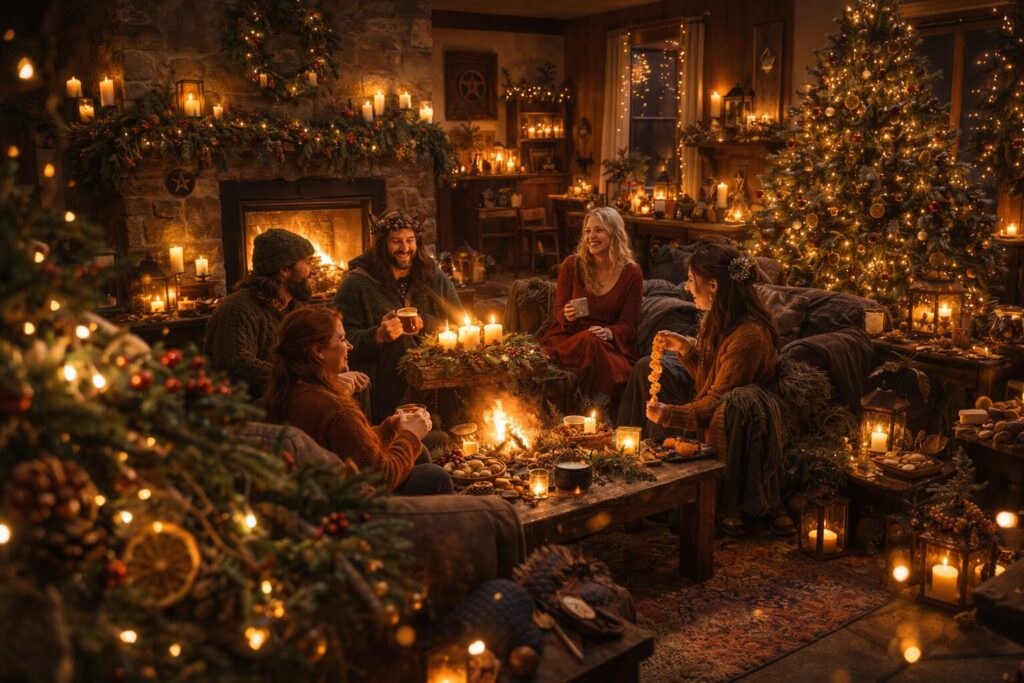
Carrying the Light Through the Long Night
Yule teaches that not all renewal arrives in brightness. Much of the year’s most important work happens quietly, beneath the surface, in the shelter of hearth and home. The longest night is not an ending, but a turning — a reminder that endurance itself is a form of magic.
In tending flame, candle, and threshold, we affirm that what we protect now becomes the foundation for what will grow later. Yule’s magic is steady rather than dramatic. It is the kind of power that keeps the light burning when the world is cold, that strengthens bonds, and that carries hope forward one small spark at a time.
However you observe this season — with ritual or reflection, feast or fire, quiet prayer or simple rest — Yule invites you to honor the work of endurance. To hold what is sacred close. To trust that even now, in the depth of winter, the turning has already begun.
The light does not rush back. It returns because it must. In walking the path of Yule, we learn to walk with it — patiently, faithfully, and with the quiet strength that carries us through the long night and into what comes next.
“We do not banish the darkness at Yule — we light the way through it.” – Kael