Ancestors & Seasonal Gates
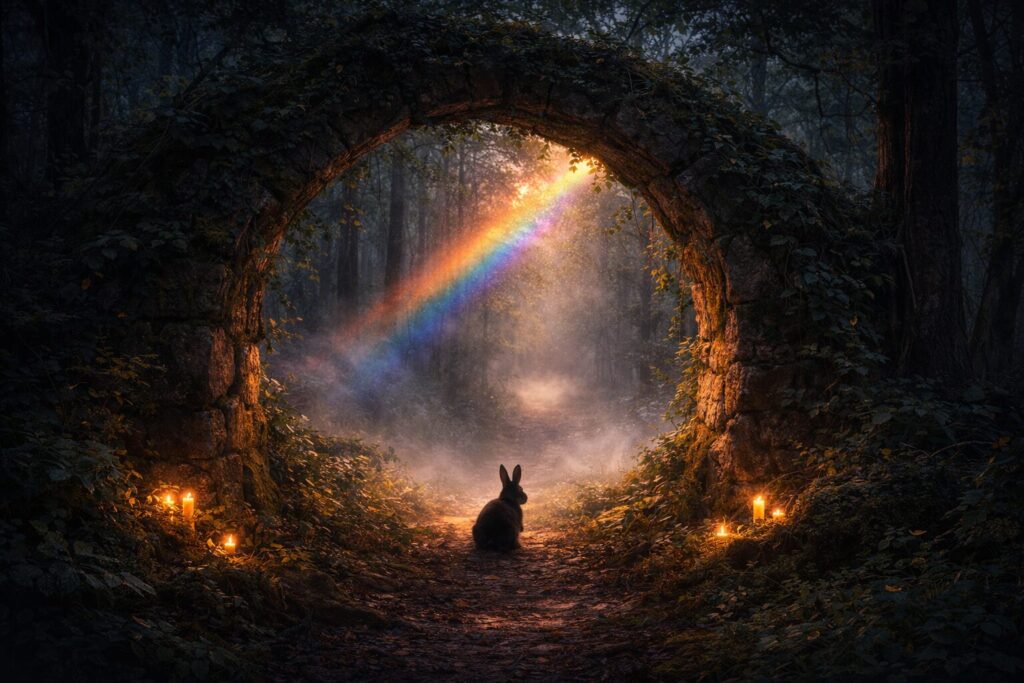
Across many Pagan and earth-centered traditions, certain seasons are understood as gates — times when the boundaries between worlds, times, and states of being grow thin. These are moments when memory feels closer, when grief and love surface more easily, and when the presence of those who came before is more readily felt.
Ancestor work is not only about honoring the dead. It is about relationship: with lineage, with history, with inheritance, and with the stories that continue to shape the living. For some, this relationship is supportive and rooted in gratitude. For others, it is complicated — marked by silence, harm, or unfinished reckoning. Honest spiritual practice makes room for both.
At My Cousins Coven, seasonal gates are understood as liminal periods — thresholds where remembrance, healing, discernment, and continuity come into sharper focus. These seasons do not ask us to romanticize the past. They invite us to meet it with truth, care, and the right to choose how we carry our ancestors forward.
In folklore and Pagan tradition, these threshold times are also associated with otherworld beings — spirits of place, land, and between-spaces, often described as the fae or fairy folk. These beings are not ancestors, but they belong to the wider ecology of liminality. Their presence in seasonal lore reflects a shared understanding: that during certain times of year, the world itself becomes more porous, and more than one kind of presence may be felt.
Seasonal gates remind us that the dead, the living, and the unseen are not held in separate compartments of time. They meet at the thresholds. What we bring through those gates — memory, boundary, grief, gratitude, or release — shapes not only how we honor the past, but how we live in the present.
Seasonal Gates and Liminal Time
Across cultures, certain times of year are recognized as gates — moments when the boundaries between states of being grow thin. These are not merely poetic ideas. Anthropologically, ritual calendars are structured around crossings: between light and dark, growth and rest, life and death, presence and absence.
The sabbats function as temporal thresholds. They do not only mark agricultural or solar change; they ritualize transition itself. In this way, sacred time becomes layered. The present moment holds more than one world at once.
“For religious humanity, time is neither homogeneous nor continuous. There are intervals of sacred time, periodically recoverable, during which the world is renewed.”
Mircea EliadeSeasonal gates are therefore not imagined openings alone. They are socially, ritually, and spiritually reinforced crossings — shaped by memory, repetition, and collective attention. Over generations, these thresholds become charged with meaning and presence.
Ancestors as Relationship (Not Idealization)

Ancestor work is not simply about honoring the dead. It is about relationship — with lineage, inheritance, memory, and the living consequences of the past. This relationship can be supportive, complicated, or deeply painful. Honest practice makes room for all of these realities.
At My Cousins Coven, ancestor relationship includes discernment. Not all ancestors are safe. Not all deserve veneration. Some lineages carry harm, silence, or unfinished reckoning. Spiritual maturity includes the right to name this truth.
Ancestors may be biological, cultural, spiritual, or chosen — but relationship always implies agency. Honoring is a choice. Boundary is a sacred act. Memory does not require romanticization.
Samhain and the Ancestor Season
In many Pagan traditions, Samhain is named as the primary ancestor festival. Yet the ancestral season is larger than a single night. The dark half of the year — autumn into winter — has long been associated cross-culturally with remembrance, descent, and the presence of the dead.
As the land turns inward, so does attention. Food, warmth, memory, and story become central. The dead are not treated as distant history, but as part of the living cycle — present through inheritance, memory, and the shaping of identity.
Samhain marks a gate, but the season itself carries the work. Remembrance unfolds over weeks and months, allowing grief, gratitude, and reckoning to take their proper time.
Seasonal Gates, Spirit Lore, and Threshold Beings
It is not accidental that many people report heightened spirit awareness, dreams, or liminal experiences around sabbats and seasonal thresholds. Ritualized transition draws attention from both sides of the gate — from the living who remember, and from the unseen who are remembered.
Classical and Pagan traditions personify liminality through archetypal figures. Hekate, guardian of crossroads and night, presides over thresholds between worlds. Hermes, psychopomp and boundary-crosser, guides souls and messages between realms. These are not merely myths, but cultural languages for the reality of passage.
The presence of The Crone — keeper of endings, deep time, and wisdom through loss — further marks the dark seasons as sacred descent. The Crone reminds us that death, release, and memory are not failures of life, but necessary phases within it.
In folklore, liminal seasons are also associated with otherworld beings — spirits of land and threshold often described as the fae or fairy folk. These beings are not ancestors. They belong to the wider ecology of liminality, reminding us that the thin places are shared spaces.
Shadow, Reckoning, and Healing Lineage
Seasonal gate work is not only about communion. It is also about truth. Ancestor work that avoids shadow becomes spiritual bypassing. Healing lineage requires naming what was passed down — including patterns of harm, silence, and unfinished grief.
In this sense, shadow work is a form of ancestor work. To face inherited patterns is to stand at the gate consciously — choosing what is carried forward and what is laid down. The work of the living reshapes the legacy of the dead.
Boundary, release, and ethical discernment are not rejections of ancestry. They are acts of spiritual sovereignty. They ensure that the gate remains sacred rather than overwhelming.
Seasonal gates do not close behind us. They continue to echo — in memory, in lineage, and in the quiet ways the unseen leans into the visible. To work with ancestors and thresholds is not to live in what has been, but to recognize how what has been and what is beyond still shape what is becoming.
At the gate, we do not listen only for the dead. We listen for the voice of the Other — for deities, spirits, land-beings, and presences that move across the same thresholds of time and space. These voices do not belong to the past alone. They belong to the larger ecology of the sacred, where human memory and otherworld presence meet.
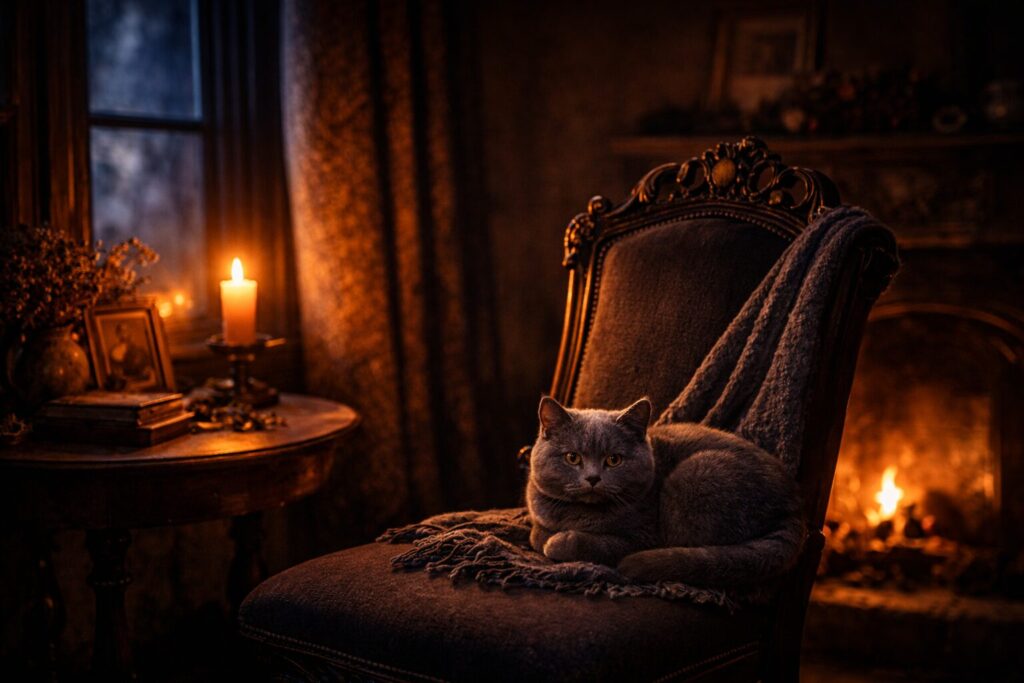
The chair may be empty, yet the room is not. The threshold may appear quiet, yet it is alive with passage. In these spaces, we are invited into relationship — not only with ancestors, but with the wider spiritual community that surrounds, witnesses, and sometimes guides the living.
To stand at the gate is to accept layered reality: that bloodline, chosen lineage, divine presence, and unseen allies all shape the moment we stand in. Some presences come to teach. Some to witness. Some to challenge. Discernment remains the sacred art that allows relationship without surrendering sovereignty.
To tend the gate is sacred work.
To choose what crosses with us is power.
To listen — with grounding, boundary, and care — is living magic.
What moves at the gate of the world also moves at the gate of the self. The thresholds of the year mirror the thresholds within us — between grief and gratitude, memory and release, descent and return. In this way, the outer turning of the seasons and the inner turning of the soul reflect one another.