Modern Expressions, Ancient Lineages
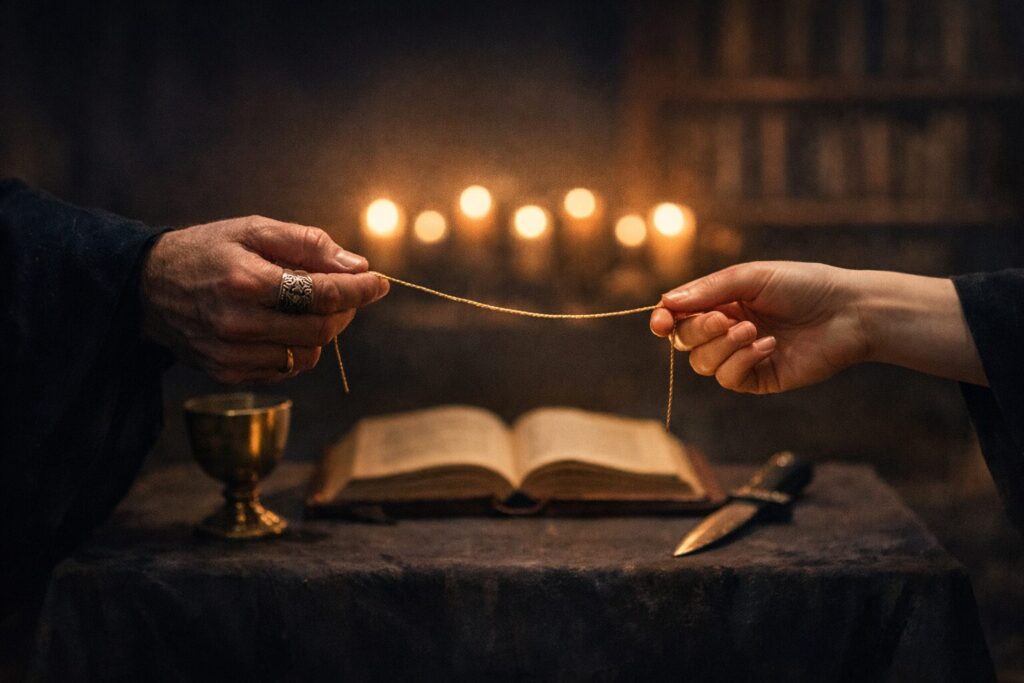
Initiatory traditions within modern Paganism are defined not by aesthetic preference or solitary invention, but by structured transmission. They are systems in which ritual knowledge is preserved through lineage, apprenticeship, and face-to-face initiation. While many contemporary paths emphasize personal exploration, initiatory currents operate on a different premise: that sacred language survives through disciplined continuity. Within these traditions, initiation is not symbolic membership alone. It is a pedagogical act — an entry into a framework designed to carry ritual grammar, ethical responsibility, and cosmological structure across generations.
Initiatory Wicca is the most visible expression of this model in the modern West, but it does not exist in isolation. It belongs to a broader family of oath-bound traditions in which knowledge is transmitted through structured progression rather than casual adoption. Ceremonial magical orders such as the Hermetic Order of the Golden Dawn, initiatory currents within Thelemic lineages, and certain traditional witchcraft covens all operate on related principles: guarded transmission, degree systems, and apprenticeship models that preserve symbolic language through lived practice. What distinguishes Wicca is not the existence of initiation itself, but the particular ritual syntax and devotional polarity through which initiation is expressed — a sacred dualism of Goddess and God that frames its cosmology and informs its ethical life.
Historian Ronald Hutton writes in The Triumph of the Moon that modern witchcraft emerged not as an untouched survival of antiquity, but as a deliberate synthesis — a ritual technology consciously shaped to carry mythic patterns into the present. This insight clarifies a persistent misunderstanding. Public portrayals of Wicca often blur into generalized occult imagery or are absorbed into broader currents of New Age belief, flattening a structured initiatory system into aesthetic shorthand. Yet initiatory Wicca persists precisely because it is architectural. It is a system of training, ethics, and relational cosmology — dimensions explored in MCC’s broader treatment of Wicca as a religious framework rather than a decorative identity.
Within initiatory contexts, degrees function as stages of apprenticeship. Coven structure acts as a container of shared ritual memory. Oath-bound transmission protects continuity without freezing the tradition into museum display. Writers such as Vivianne Crowley, in Wicca: The Old Religion in the New Age, and scholar Chas Clifton emphasize that initiatory systems survive by balancing preservation with adaptation: the forms evolve, but the ritual grammar remains intelligible across time. This tension between inheritance and change is not a flaw — it is the engine of continuity.
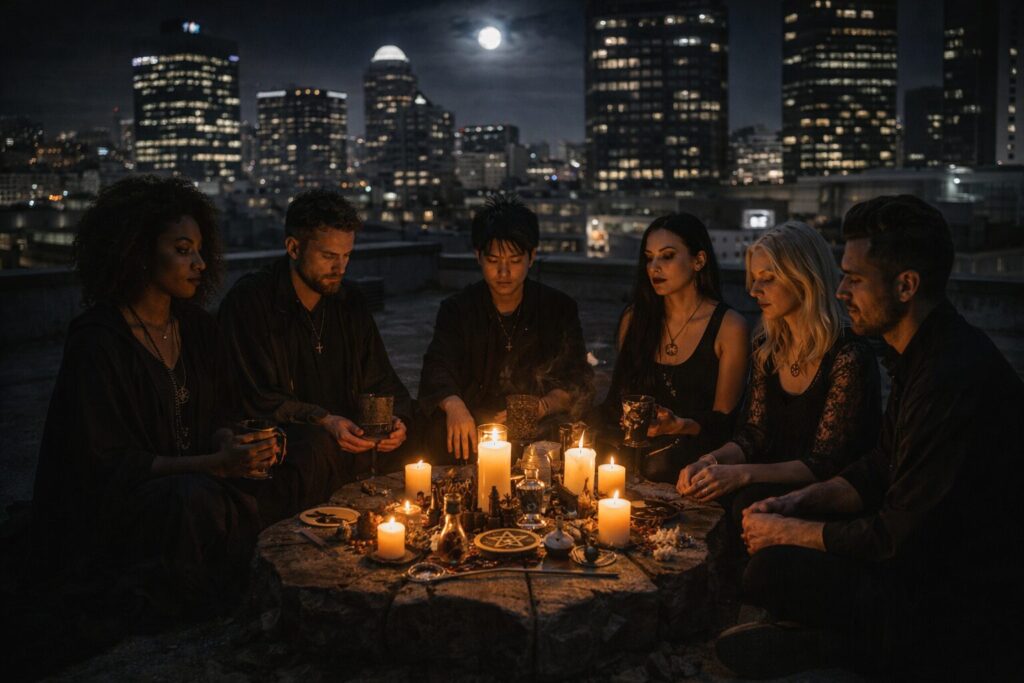
At Coven of the Veiled Moon, initiatory structure is approached as a practical discipline rather than a nostalgic gesture. The coven form preserves ritual language while allowing living interpretation; lineage provides grounding without halting growth. Initiation is understood as responsibility as much as revelation — a commitment to ethical accountability, relational practice, and the maintenance of shared mystery. It is a threshold entered not to escape the modern world, but to engage it with structure.
From this foundation we can examine how major initiatory lineages developed, what principles unite them, and how they continue to function in contemporary practice. The sections that follow trace their historical emergence, the architecture of covens and degrees, the ritual language that sustains them, and the obligations initiation entails. Each lineage brings its own cadence to shared structures, illuminating what it means to join a living current: not as ownership of the Craft, but as its ongoing renewal.
Lineage & Transmission
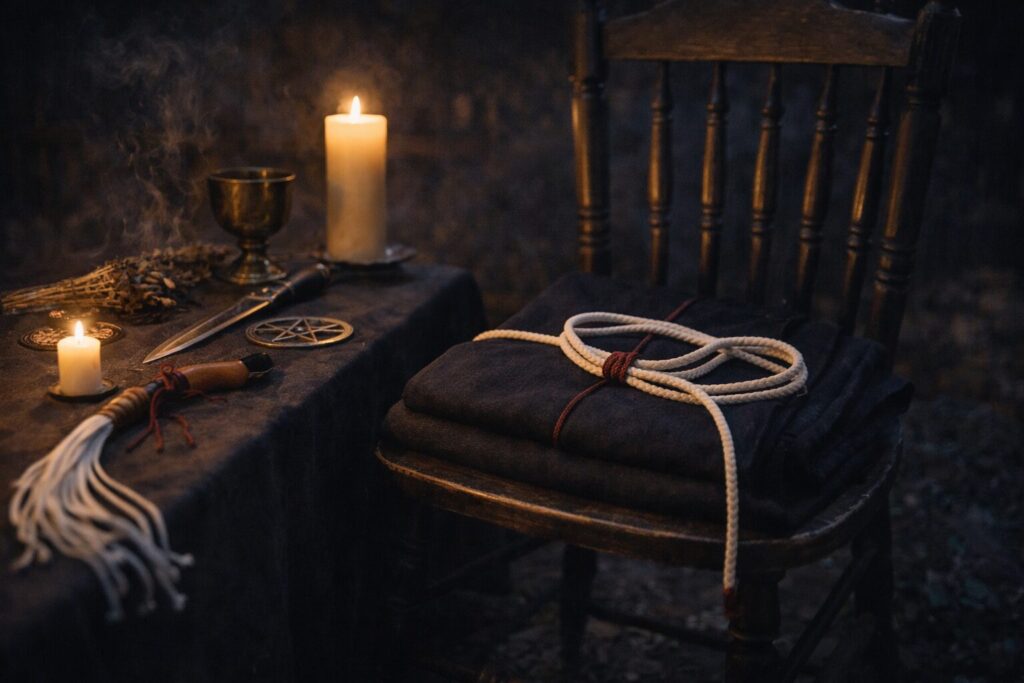
Initiatory traditions preserve ritual language through direct transmission. Knowledge is not consumed but inherited. Lineage functions as memory — a human archive carried through bodies, voices, and disciplined repetition.
Coven as Container
The coven is not merely social structure but ritual architecture. It holds shared responsibility, protects oath-bound knowledge, and provides the living environment in which initiation has meaning.
Degrees as Apprenticeship
Degree systems mark stages of embodied learning. They are pedagogical tools that structure growth, ensuring depth emerges through practice rather than accumulation.
Ritual Grammar
Initiatory rites operate through repeatable symbolic syntax — circle casting, elemental invocation, polarity, seasonal rhythm. This grammar allows continuity without rigidity.
Responsibility & Oath
Initiation carries obligation: ethical accountability, guardianship of knowledge, and stewardship of community. Mystery is preserved through trust.
Continuity Through Change
Traditions endure not by resisting modernity, but by metabolizing it. Structure allows evolution without loss of identity.
The structural principles of initiation become most visible when examined through the traditions that embody them. While initiatory systems share a common architecture — lineage, apprenticeship, oath, and ritual grammar — each lineage expresses these principles through its own history, symbolism, and devotional emphasis. The traditions below are not interchangeable styles but distinct ritual ecosystems, shaped by founders, communities, and decades of lived practice. To study them is not simply to catalog differences, but to observe how initiation operates in real cultural form: how a ritual language is preserved, how authority is negotiated, and how mystery survives adaptation without dissolving into improvisation.
What follows is not a hierarchy of paths, nor a claim that any single lineage represents the entirety of the Craft. Rather, these traditions illustrate the range of initiatory expression within modern Paganism. Each stands as an example of how structured transmission functions in practice — how the abstract principles of lineage become embodied in covens, rites, and lived responsibility. Seen together, they form a map of initiatory culture: multiple doors opening into a shared architecture of discipline, devotion, and continuity.
Initiatory Lineage Deep Dives
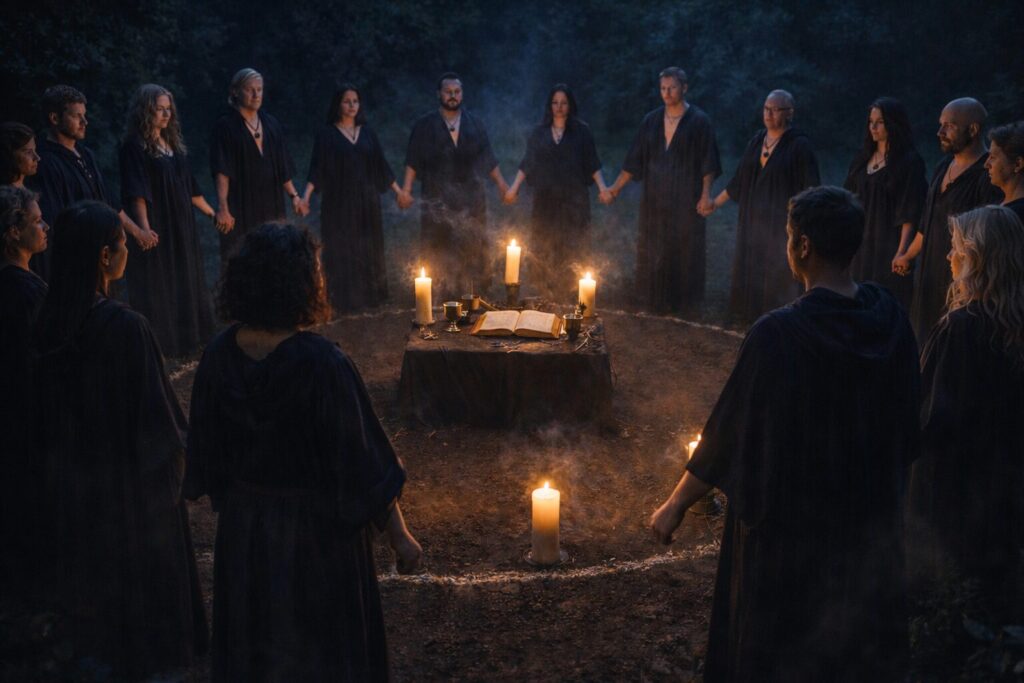
The sections below explore major initiatory currents as living ritual ecosystems—how lineage is transmitted, how training is structured, and how tradition adapts without dissolving. (MCC: Coven of the Veiled Moon.)
Gardnerian Wicca
Gardnerian Wicca is among the best-documented initiatory forms of modern Wicca, emerging publicly in the 1950s through Gerald Gardner. It is historically modern, yet intentionally structured to preserve a stable ritual grammar: a cast circle, quarter invocations, an altar of working tools, and the devotional polarity of Goddess and God—an expression of sacred dualism that many Wiccan covens treat as theological orientation rather than aesthetic theme (see MCC’s broader lens on Wicca).
What makes Gardnerian practice “initiatory” is not simply that it has ceremonies, but that the tradition is transmitted through coven relationship and degree progression. The three-degree system functions as an apprenticeship model: training is staged, responsibility increases, and the ritual language is learned through repeated performance and guided correction. In this sense, initiation is a method of preservation—an embodied way of keeping ritual intelligible over time without requiring it to be frozen.
Gardnerian covens are frequently associated with sky-clad practice, not as spectacle, but as a symbolic leveling inside the circle: status and social costume are meant to fall away so that the rite can operate on its own terms. Ritual tools tend to follow the classic Wiccan set—athame, chalice, pentacle, and wand—organized within the circle’s elemental logic. Sabbats and esbats situate the coven within cyclical time: seasonal rites for the Wheel of the Year, and lunar workings that deepen the relationship between magical technique and devotional rhythm.
Scholarly framing helps correct a common misunderstanding: Wicca is often treated in public discourse as “lightweight” because it is sometimes conflated with generalized occult consumerism or with loosely defined spirituality. Yet historians of modern Paganism show that Gardnerian Wicca is better understood as a deliberate ritual synthesis with a disciplined training culture. Ronald Hutton provides the most influential academic account in The Triumph of the Moon, while Philip Heselton explores Gardner’s biography and context in Witchfather. For internal movement history and liturgical shaping, Doreen Valiente is essential, especially in The Rebirth of Witchcraft.
For seekers, the key distinction is this: Gardnerian Wicca is not primarily a set of ideas to agree with, but a ritual current entered through relationship and responsibility. The coven is the container; the degrees are the pedagogy; the rites are the language. If you’re mapping where you fit in the broader initiatory landscape, you may also find MCC’s guidance on finding a coven useful, especially as a reality-check for what healthy training culture looks like in practice.
Alexandrian Wicca
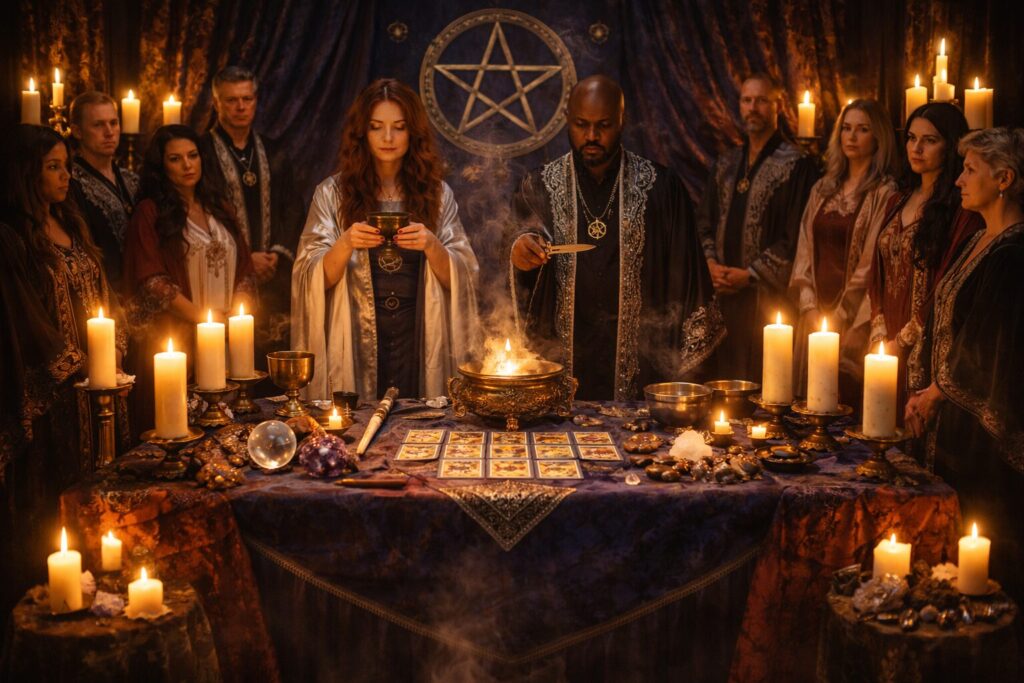
Emerging in the 1960s through the work of Alex Sanders and Maxine Sanders, Alexandrian Wicca developed in conversation with Gardnerian structure while cultivating a more overtly ceremonial and theatrical ritual style. Like its Gardnerian sibling, it operates through a three-degree initiatory system and coven-based transmission. The difference lies less in doctrine than in aesthetic and magical emphasis: Alexandrian practice often foregrounds ceremonial symbolism, elaborate altar construction, and a consciously artistic approach to liturgy.
Observers sometimes frame Alexandrian Wicca as “Gardnerian plus ceremonial magic,” but this shorthand obscures its internal coherence. Alexandrian covens preserve the same initiatory architecture — oath-bound training, degree progression, and ritual grammar — while incorporating additional symbolic frameworks drawn from tarot archetypes, Qabalistic correspondences, and high ceremonial technique. These elements are not ornamental additions; they represent an expansion of ritual vocabulary. The tradition demonstrates how initiatory systems evolve without abandoning lineage: the grammar remains legible even as the language gains new inflections.
Ritual presentation in Alexandrian contexts frequently emphasizes visual and sensory intensity. Robes, jewelry, candle arrays, and sculptural altar design are not treated as decoration but as magical instrumentation. The atmosphere of the rite becomes part of the teaching method. Through repetition and sensory immersion, initiates internalize symbolism as lived experience rather than abstract concept. Scholars of contemporary Pagan ritual often point to Alexandrian practice as evidence that modern initiatory traditions are capable of sophisticated ceremonial synthesis rather than simple revivalism.
This synthesis is one reason Alexandrian Wicca remains influential in cross-traditional coven networks. Its willingness to dialogue with broader occult currents situates it within the larger initiatory ecosystem described earlier — a culture in which ritual systems borrow, refine, and transmit without collapsing into eclectic incoherence. Writers such as Vivianne Crowley note that initiatory traditions survive precisely because they permit artistic interpretation within disciplined boundaries. Alexandrian Wicca stands as a clear illustration of that principle in motion.
For practitioners, the Alexandrian path emphasizes magical literacy: fluency in symbolism, toolcraft, divination, and ceremonial structure. Training is often rigorous, with expectation of technical competence alongside devotional depth. This orientation aligns with MCC’s broader emphasis on responsible magical education and initiatory ethics, explored in discussions of Wiccan ethics and ritual accountability. Initiation here is not a badge of identity; it is entry into a discipline that demands sustained engagement.
Dianic Witchcraft
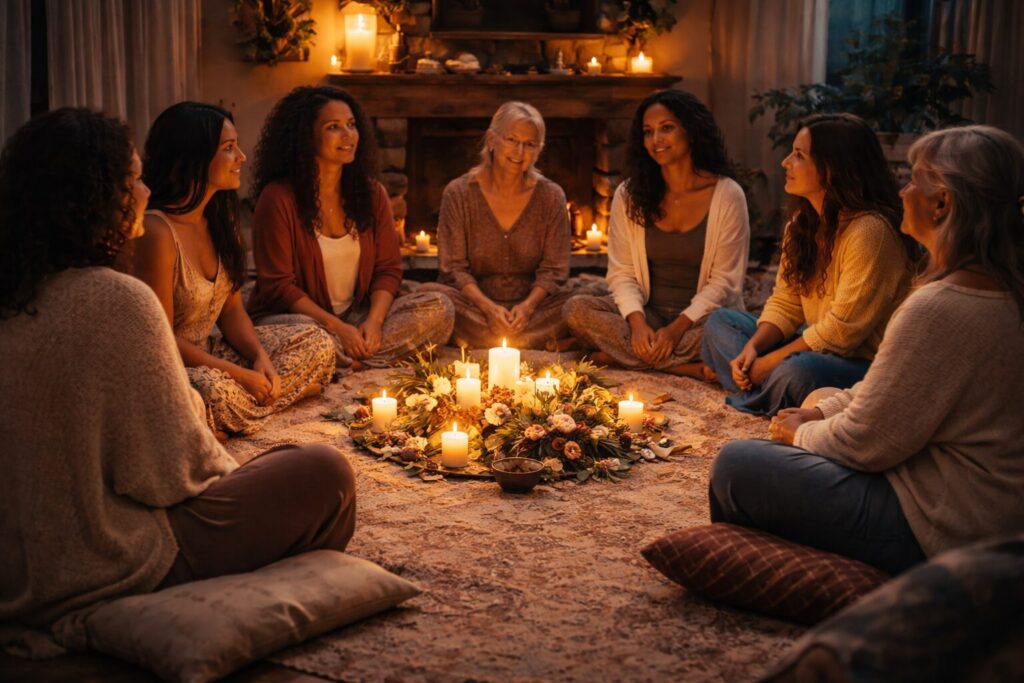
Dianic Witchcraft—particularly as shaped in the 1970s by Zsuzsanna Budapest—represents both continuity with, and critique of, the broader Wiccan initiatory milieu. It retains familiar ritual technologies (circle casting, seasonal observance, altar work), yet reorients their theological center: the Goddess is approached as the primary axis of devotion, and many Dianic lines explicitly remove the balancing God-polarity that is central to most initiatory Wicca. In this sense, Dianic practice demonstrates a key principle of initiatory culture: ritual grammar may remain recognizable even when cosmology shifts.
Because “Dianic” is used across multiple communities, it is important to speak with precision. Some Dianic covens are explicitly initiatory, structured around a coven container, transmission of rites, and staged formation through training. Others are devotional or community-based without formal degree architecture. The most visible Dianic expressions historically emphasized women-only space and women’s mysteries, placing the lived realities of embodiment, trauma, sexuality, and social power within the ritual sphere. In these contexts, initiation is not merely entry into a tradition; it is entry into a deliberately constructed spiritual and social sanctuary.
Dianic rites frequently reframe classic tools and symbols through a feminist devotional lens. The cauldron becomes an explicit emblem of creation and transformation; the altar becomes a site of reclamation and blessing. Seasonal rites may follow the Wheel of the Year, but sabbats and esbats often concentrate on healing, empowerment, and collective resilience. This is one reason Dianic Witchcraft is sometimes read as “political” in a way other Wiccan lineages are not: ritual is treated not only as mystical devotion, but as a technology of restoration and resistance. The initiatory container here preserves a different kind of continuity—one rooted in shared experience and communal meaning-making.
From a scholarly perspective, Dianic traditions illustrate how modern Pagan initiatory systems can function as both spiritual path and cultural response. They show that “tradition” does not necessarily mean conserving inherited forms unchanged; it can also mean building new forms that answer historical conditions. This is not dilution of the initiatory model, but an example of its elasticity: a coven can preserve ritual literacy and disciplined training while redirecting its theological center. Understanding this helps readers avoid flattening Dianic Witchcraft into either “just Wicca” or “not real Wicca.” It is better understood as a distinct initiatory current, sometimes adjacent to Wicca, sometimes deliberately divergent.
For MCC readers, the most useful takeaway is structural rather than polemical. Dianic Witchcraft highlights how initiatory paths define themselves through devotional orientation, ethical commitments, and the social shape of their coven containers. Whether one resonates with its boundaries or not, it stands as a major modern example of initiation used as a method of preservation: the preservation of ritual space, sacred story, and communal responsibility. If you are exploring how traditions differentiate themselves theologically, MCC’s broader discussion of deity relationship and devotional structure may be helpful via Finding Gods.
Seax-Wica / Saxon Witchcraft
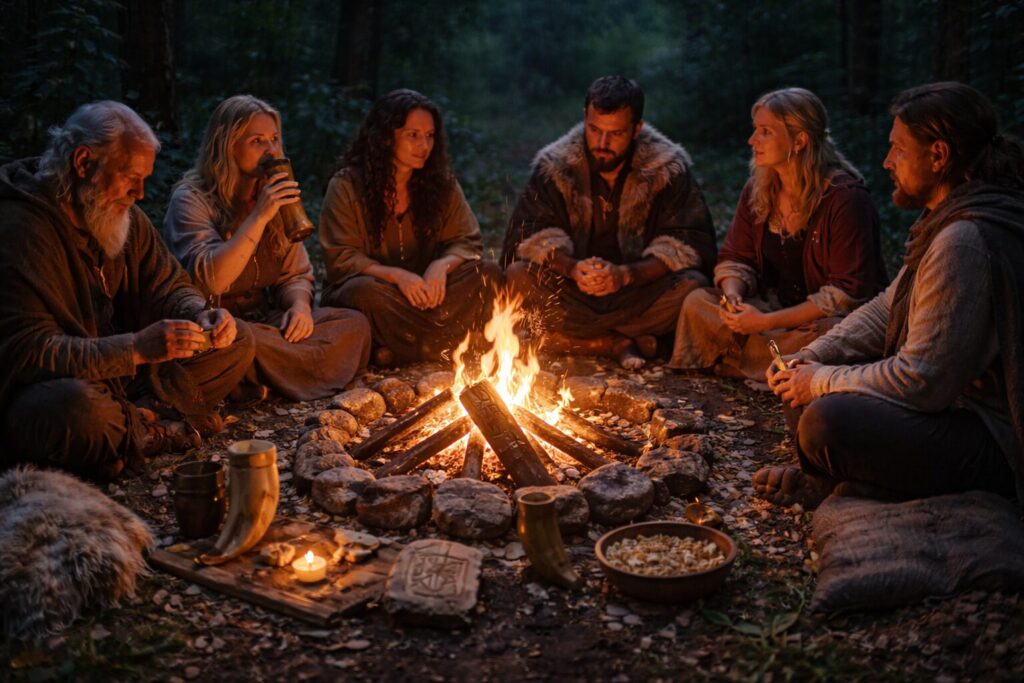
Founded in 1973 by Raymond Buckland, Seax-Wica—often called Saxon Witchcraft—represents one of the most explicit experiments in adapting initiatory structure to modern accessibility. Buckland, himself trained within Gardnerian Wicca, deliberately constructed a tradition inspired by Anglo-Saxon symbolism and mythology while rejecting claims of historical reconstruction. Seax-Wica is openly modern in origin. Its authority derives not from antiquity, but from coherent design.
The most distinctive feature of Seax-Wica is its openness. Unlike oath-bound Gardnerian or Alexandrian lines, Seax-Wica permits self-dedication and solitary initiation alongside coven training. This choice does not abolish structure; it redistributes authority. Covens operate with elected leadership—Priest, Priestess, Thegn, Scribe—rotating roles that emphasize shared responsibility over hierarchical permanence. In this model, initiation becomes less about guarded secrecy and more about participatory belonging. The ritual current remains, but its gatekeeping mechanisms are intentionally relaxed.
Ritual tools and symbolism reflect its Germanic aesthetic: the seax dagger replaces the athame and wand as primary implement, while runic imagery, horns, and spear symbolism frame the altar. The deities Woden and Freya anchor devotional practice, though interpreted through modern Pagan theology rather than strict reconstructionism. Seasonal rites align with the familiar Wheel of the Year, demonstrating how initiatory grammar can migrate across mythic vocabularies without losing structural coherence.
Scholars often cite Seax-Wica as an example of how initiatory systems respond to cultural pressure. By the 1970s, demand for Wiccan training exceeded the capacity of oath-bound covens to receive newcomers. Buckland’s solution was architectural: design a system that preserved ritual literacy while removing bottlenecks of access. In this sense, Seax-Wica illustrates a core theme of initiatory culture—the tension between preservation and permeability. It asks a difficult but necessary question: how does a lineage remain alive without collapsing under its own exclusivity?
For readers at Coven of the Veiled Moon, Seax-Wica provides a useful comparative lens. It demonstrates that initiatory integrity does not always require rigid secrecy; what matters is whether a system preserves disciplined transmission, ethical accountability, and coherent ritual grammar. MCC’s own blended initiatory model occupies a similar conversation: structure without stagnation, accessibility without dilution. Those exploring how covens adapt to modern realities may find this lineage particularly instructive.
Other Initiatory Lineages
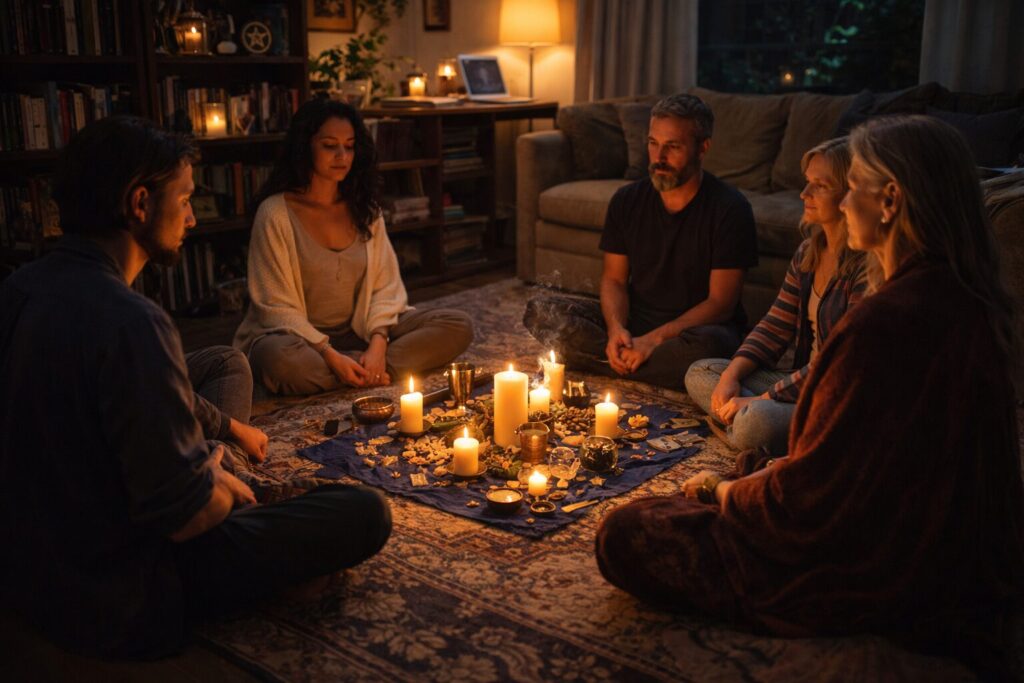
Beyond the well-known Gardnerian, Alexandrian, Dianic, and Seax-Wican lines exists a wide landscape of quieter initiatory traditions. Many operate without public branding, preserved within regional coven networks or hybrid lineages shaped by cross-initiation. These traditions rarely announce themselves as movements; they function as living communities. Central Valley Wicca, Algard lineages, and numerous cross-traditional covens maintain initiatory frameworks that blend inherited forms with localized interpretation. Their existence reminds us that initiatory culture is not confined to named schools. It is a distributed phenomenon sustained by relationships rather than institutions.
Some of these lineages lean toward traditional witchcraft rather than Wiccan theology, preserving oath-bound initiation while rejecting the formal polarity or liturgical structure associated with Wicca. Others operate as priesthood traditions centered on deity service, ecstatic practice, or temple-style ritual. Still others function as mystery schools in miniature: covens that prioritize internal training, visionary work, and initiatory testing over public identity. What unites them is structural rather than doctrinal. Each preserves a method of transmission that protects ritual literacy through lived apprenticeship.
From a scholarly perspective, these smaller currents complicate any attempt to map modern Paganism as a handful of named traditions. Researchers such as Sabina Magliocco and Margot Adler observed that the vitality of contemporary witchcraft lies in its networked ecology: countless small lineages exchanging ideas while maintaining internal boundaries. Initiation, in this context, acts as a stabilizing technology. It allows innovation without erasing lineage memory.
At Coven of the Veiled Moon, this broader ecology is treated as a strength rather than a threat. A coven may be rooted in Wiccan structure while acknowledging that initiatory culture extends beyond Wicca’s borders. Respect for adjacent traditions does not dilute identity; it clarifies it. MCC’s approach recognizes that modern witchcraft is a family of ritual technologies, not a single orthodoxy. Initiation is the shared language through which these differences remain intelligible to one another.
For seekers, the lesson here is subtle but important: the presence of many initiatory paths does not imply fragmentation. It reflects a healthy ecosystem. Just as regional dialects enrich a language, multiple lineages demonstrate that structured transmission can adapt to diverse communities without dissolving into chaos. The question is not which lineage is “correct,” but whether a given tradition preserves continuity, ethical accountability, and disciplined practice. Those criteria, more than labels, define initiatory legitimacy.
Modern Initiatory Culture
Initiatory traditions now operate in a world their founders could not have imagined: urban covens meeting in apartments, seekers encountering witchcraft first through screens, and ritual knowledge circulating at unprecedented speed. It would be easy to assume that such conditions dissolve lineage. Yet the persistence of initiatory culture suggests the opposite. When information becomes abundant, structure becomes more—not less—valuable. Initiation remains a technology for slowing knowledge down so that it can be embodied rather than merely consumed.
Contemporary covens increasingly balance privacy with visibility. Training may include digital correspondence, reading groups, or remote mentorship, but the initiatory act itself still depends on physical presence and relational trust. This distinction is crucial. Initiation is not a downloadable file; it is a transformation enacted within a community container. Even in hybrid formats, the core logic remains intact: ritual language is transmitted person to person, oath to oath, generation to generation.
The internet era has also intensified a long-standing tension inside witchcraft: the difference between aesthetic identity and disciplined practice. Initiatory traditions respond not by rejecting modernity, but by clarifying their boundaries. They do not compete with open-access spirituality; they offer an alternative mode of engagement. For some practitioners, solitary exploration remains sufficient. For others, the pull toward structure is unmistakable. Initiatory covens exist for those who recognize that pull and accept the responsibilities attached to it.
At Coven of the Veiled Moon, this balance is treated as a living experiment rather than a fixed formula. The coven acknowledges the realities of modern life while preserving the initiatory container as a site of accountability and shared memory. Prospective members are encouraged to understand initiation not as status acquisition, but as apprenticeship. Resources such as MCC’s guidance on finding a coven and the application process exist to clarify expectations: initiation is mutual recognition, not recruitment.
Seen from a wider perspective, modern initiatory culture demonstrates remarkable resilience. The forms shift—meeting spaces change, training methods adapt, communities hybridize—but the underlying architecture endures. Initiation survives because it answers a perennial human need: the desire for structured entry into mystery. It is a reminder that traditions do not persist by accident. They persist because people choose, repeatedly and deliberately, to carry them forward.

Initiatory traditions endure because they answer a question that never disappears: how does a human being enter mystery responsibly? Not as spectacle, not as aesthetic posture, but as disciplined participation in something larger than the self. Lineage exists to carry memory; covens exist to hold that memory in living form. Initiation is the moment a seeker steps from observation into obligation, accepting that spiritual depth is not merely discovered — it is cultivated.
Modern culture often treats spirituality as a private preference, endlessly customizable and free of external structure. Initiatory witchcraft offers a different model. It proposes that transformation requires container, that knowledge gains weight when transmitted through relationship, and that mystery survives only when communities choose to protect it. These claims are not nostalgic. They are practical. They describe a method that has allowed ritual traditions to persist across upheaval, migration, and reinvention.
Coven of the Veiled Moon stands within that continuum. Its work is not to replicate the past unchanged, nor to dissolve into novelty, but to maintain a living bridge between inheritance and adaptation. Initiation here is neither escape nor ornament. It is a commitment to shared practice, ethical accountability, and the preservation of ritual language for those who will come after. Some readers will recognize this path immediately; others will simply observe it from a distance. Both responses are valid. Initiatory culture has never required universal participation to remain meaningful.
What matters is that the current continues. Somewhere, a circle is being cast. A lineage is being spoken aloud. A teacher is correcting a gesture that was corrected for them years before. These acts are small and quiet, but they accumulate into continuity. For those who feel called toward that continuity, the threshold remains where it has always been: not hidden, not advertised, but waiting to be crossed with intention.