Pagan Currents

Modern Paganism is not a single doctrine but a landscape of interacting streams. These streams — philosophical, devotional, ritual, and ethical — form what we call the mystical currents of Pagan thought. They are not schools competing for dominance, nor rigid categories that divide practitioners. They are lenses through which reality is interpreted, experienced, and lived.
From within the tradition, these currents are not abstractions. They describe real orientations toward the sacred: how the world is understood, how the gods are approached, how the body participates in ritual, how myth shapes meaning, and how spiritual life meets society. A practitioner may lean more strongly into one current at a given time, yet all flow through the same watershed.
This page is a map, not a boundary. It names the major streams that shape contemporary Pagan philosophy so that readers can see how they interrelate. The goal is orientation — to understand the terrain without reducing its richness. Paganism remains plural, but it is not chaotic. These currents reveal a structure within that plurality.
Pagan Mystical Currents
A philosophical atlas of the streams shaping modern Pagan thought
Modern Paganism is a landscape of interacting currents—worldview, devotion, ritual, and ethics—each offering a lens on the sacred. These are not factions. They overlap, reinforce, and challenge one another, forming an ecosystem rather than a single doctrine.
Animism & Sacred Ecology
Spirit — the world alive.
Reality is not inert matter but living presence. Rivers, stones, forests, and weather carry their own agencies and voices. This current trains attention toward relationship, reciprocity, and ecological reverence.
Polytheist Theologies
Relationship — the sacred in many forms.
Creation does not sing with one voice. Gods are distinct, interrelated presences encountered through devotion, myth, and lived experience. This current explores plurality without collapsing into chaos.
Syncretic Pagan Humanism
Mind — the mirror of divinity.
Reverence and reason can coexist without fracture. The divine is honored through human dignity, discernment, and ethical intelligence— a sacred partnership rather than a surrender of thought.
Ritual & Embodied
Body — the altar of enactment.
Paganism is not only believed; it is done. Gesture, breath, rhythm, seasonal rite, and crafted practice turn philosophy into lived devotion. This current centers the body as a sacred instrument.
Devotional & Relational
Devotion — reciprocity, not abstraction.
Beyond belief is relationship: offerings, prayer, shrine-craft, and sacred etiquette. This current explores how gods and spirits become present through ongoing, mutual attention.
Mythic & Narrative
Story — the sacred made intelligible.
Myths are layered: revelation, poetry, memory, and archetype. This current treats narrative as spiritual technology—how the psyche learns the grammar of transformation.
Ethical & Civic
Responsibility — the sacred meets the world.
Spirituality has consequences. This current explores community, consent, stewardship, and justice—how Pagan values shape life in society without collapsing into dogma.
These currents are not alternatives to be chosen like factions. They are interacting dimensions of a living tradition. A ritual practitioner is rarely without myth; a humanist Pagan is rarely without devotion; an animist worldview almost always carries ethical consequences. The currents overlap, reinforce, and challenge one another. Their tensions are not flaws but generative forces. Paganism thrives not by erasing difference, but by allowing multiple orientations to coexist within a shared sacred grammar.
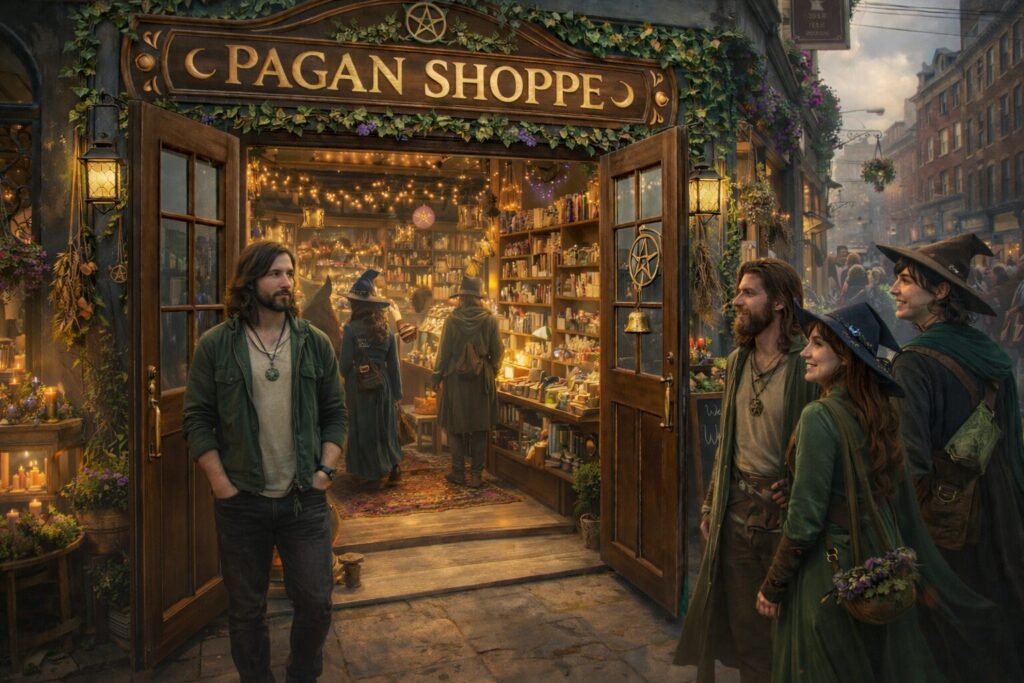
Taken together, these currents describe Paganism not as a fixed system but as a living ecosystem. Each stream shapes the others. Animism grounds devotion in the world; myth gives ritual narrative depth; ethical engagement carries spiritual insight into society. The result is not a single voice but a chorus.
To stand within Pagan tradition is to participate in that chorus knowingly. One does not need to inhabit every current equally, but understanding their interplay clarifies how modern Pagan thought holds unity without uniformity. This plurality is not fragmentation. It is structure — an ecosystem capable of growth.
The currents continue to evolve because the people who live them evolve. Paganism is not preserved by freezing it in time, but by allowing its streams to flow forward while remembering their sources. This is the strength of a living tradition: it changes, and yet remains recognizable.