
Place & Environmental Currents
Magic rooted in land, element, and listening
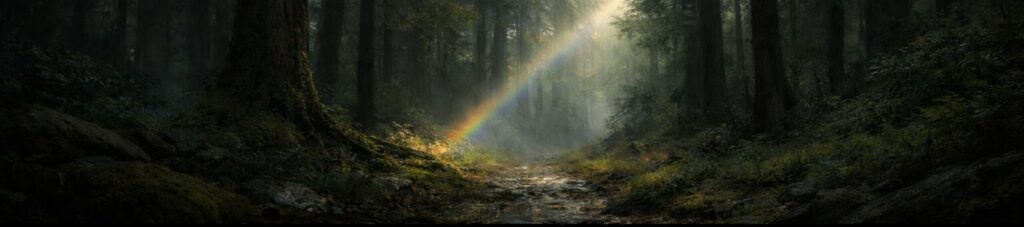
Place is not a neutral backdrop. It is a participant.
Most modern people are trained to experience environment as scenery: terrain to cross, resources to extract, property to manage. Animist practice reverses that assumption. A place is not empty until human meaning fills it. It is already dense with its own patterns, histories, intelligences, and temperaments. To work environmental magic is not to impose power onto land — it is to enter into a field of relationships that was active long before you arrived.
Every location carries a signature. Some places feel open and buoyant; others heavy, guarded, or watchful. These impressions are not superstition in the childish sense. They are perceptual skills that cultures once trained deliberately: the ability to read atmosphere, to notice how sound travels, how animals behave, how weather settles, how the body responds when standing in a particular clearing versus a particular street corner. Environmental magic begins with attention. Before tools, before ritual, before intention — there is listening.
The practitioner does not dominate a landscape. They apprentice to it. Over time, repetition creates familiarity. Walking the same path at different hours reveals how a place shifts its face. Making small offerings teaches the rhythm of reciprocity. Cleaning a neglected threshold or tending a patch of soil is not symbolic; it is relational maintenance. These gestures accumulate into recognition. The land begins to register you not as a passerby, but as a participant.
From that recognition, currents become accessible. Protection may emerge as a feeling of being accompanied. Timing may align with weather or season in ways that feel conversational rather than accidental. Certain sites become reliable anchors for grounding, clarity, or release. None of this requires belief in a cartoon pantheon of nature spirits. It requires acknowledging that environment is alive in the broad sense: dynamic, responsive, and capable of relationship.
Environmental work is slow power. It resists spectacle. It rewards patience. The deepest transformations occur not through dramatic rites but through sustained presence. To be in alliance with place is to accept that magic is braided into ecology — into cycles of growth and decay, into boundaries that should not be crossed, into permissions that must be felt rather than assumed.
The sections that follow are not techniques to exploit land. They are ways of learning how to stand inside it without being a stranger.
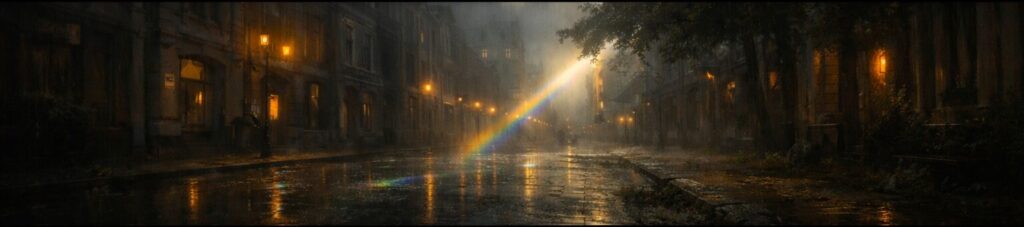
Thresholds & Crossings
Doorways, borders, crossroads, trailheads. Points where currents shift. Learn to feel permission, resistance, and invitation in the landscape.
Land Spirits
Not mythic caricatures but the living temperament of place. Hills, rivers, cities, forests — each carries a personality that can be known.
Elemental Weather
Wind, rain, heat, frost, tide. Environmental magic listens to pattern rather than fighting it.
Reciprocity
Offerings, tending, cleanup, presence. Relationship is sustained by giving as much as receiving.
Anchoring Sites
Locations that hold clarity, grounding, or release. Personal sanctuaries formed through repetition.
Integration
Carrying place-awareness into daily life. Streets, rooms, and routines become part of the ecology.
Deepening: Listening Practices
Listening is the primary technology of environmental magic. Walk the same path repeatedly. Stand still long enough for sound to reorganize. Notice how your body reacts before your thoughts form language.
Environmental perception sharpens through consistency. A place reveals itself in layers. Weather is not interruption; it is part of the message.
Deepening: Boundaries with Place
Not every location welcomes engagement. Some spaces ask distance. Respecting a “no” from a place strengthens rather than weakens alliance.
Environmental magic matures when curiosity is balanced with restraint. Relationship is built on consent — felt, not assumed.

Environmental alliance is proven quietly. It does not announce itself with spectacle. Its evidence appears in small recalibrations: a sharper sense of when to move and when to wait, a familiarity with certain corners of the world that feels like mutual recognition, a reduction in the restless urge to dominate what you stand inside. The practitioner becomes less interested in bending environment to will and more interested in aligning with currents already in motion.
Over time, place reshapes perception. You begin to notice that no action occurs in isolation. Weather, season, soil, and structure all participate in the outcome of a working. A spell cast beside a river is not the same spell cast in a sealed room. A promise made under open sky carries a different gravity than one spoken indoors. Environmental magic teaches that context is not decoration — it is substance. Power emerges from relationship, not from extraction.
This relationship matures through repetition. Returning to the same sites reveals continuity. A clearing visited across years becomes a record of your own changes as much as the land’s. You witness erosion, regrowth, human intervention, and subtle shifts in atmosphere that mirror your internal landscape. In that mirroring, practice becomes less about control and more about participation in a larger cycle that does not revolve around you.
The result is not escape from human life, but deeper inhabitation of it. Streets, buildings, and domestic spaces reveal themselves as layered environments rather than dead zones between “natural” sites. The animist lens expands outward: place is everywhere. Environmental alliance is not a retreat into wilderness. It is a discipline of noticing that the world you already occupy is alive enough to answer when addressed with respect.
What endures from this work is steadiness. A practitioner grounded in place carries a portable sense of orientation. Even in unfamiliar territory, they know how to listen. And listening, more than any technique, is what keeps the current open.