The Liminal Arts
A Guide to Study, Practice & Resources
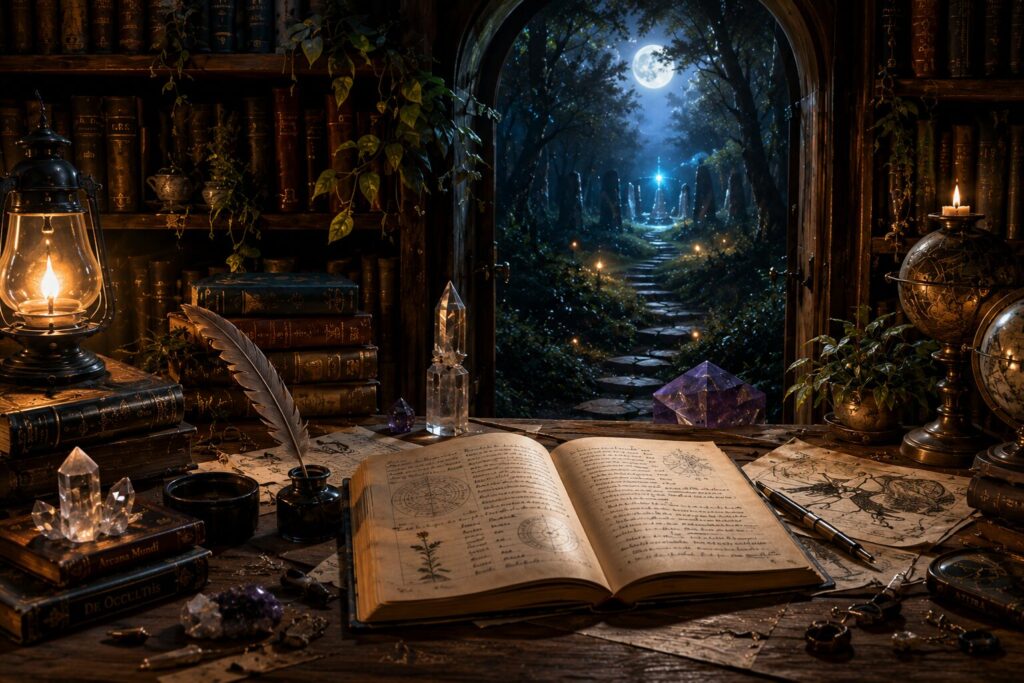
Witchcraft, magic, Paganism, parapsychology, and the many arts that surround them are living fields of study and practice. They have been shaped across centuries by ritual, scholarship, experiment, storytelling, devotion, direct experience, and the many ways human beings have attempted to understand mystery. They continue to change as practitioners preserve older knowledge, test inherited methods, adapt to new circumstances, and learn from one another.
No single tradition, author, teacher, historical text, or form of media can speak for the whole of this territory. A practical guide may teach useful methods while simplifying history. An old source may be foundational or influential without being accessible, complete, or reliable as modern instruction. A poem, painting, novel, or film may reveal symbolic truths while taking liberties with fact. Each kind of source offers something different, and each must be approached according to what it is.
This is especially important for solitary practitioners, who may not have a coven, mentor, family tradition, or established community available to provide context and correction. Many forms of witchcraft have traditionally been learned through direct teaching, apprenticeship, initiation, family transmission, or participation in practices that are not entirely open to outsiders. Books and online resources cannot reproduce every part of those relationships, but careful study can help solitary practitioners recognize the limits of what they know, avoid repeating misinformation, and build a more informed personal practice.
Research does not need to be formal or academic to be valid. It may begin with a library book, a conversation, a museum collection, a lecture, a trusted website, a community discussion, or a question that refuses to go away. Joining thoughtful groups and speaking with experienced practitioners can expose us to perspectives outside our usual lane. Keeping notes through crafting a grimoire or Book of Shadows can help turn scattered reading, personal experiences, ritual records, and changing conclusions into a living body of knowledge.
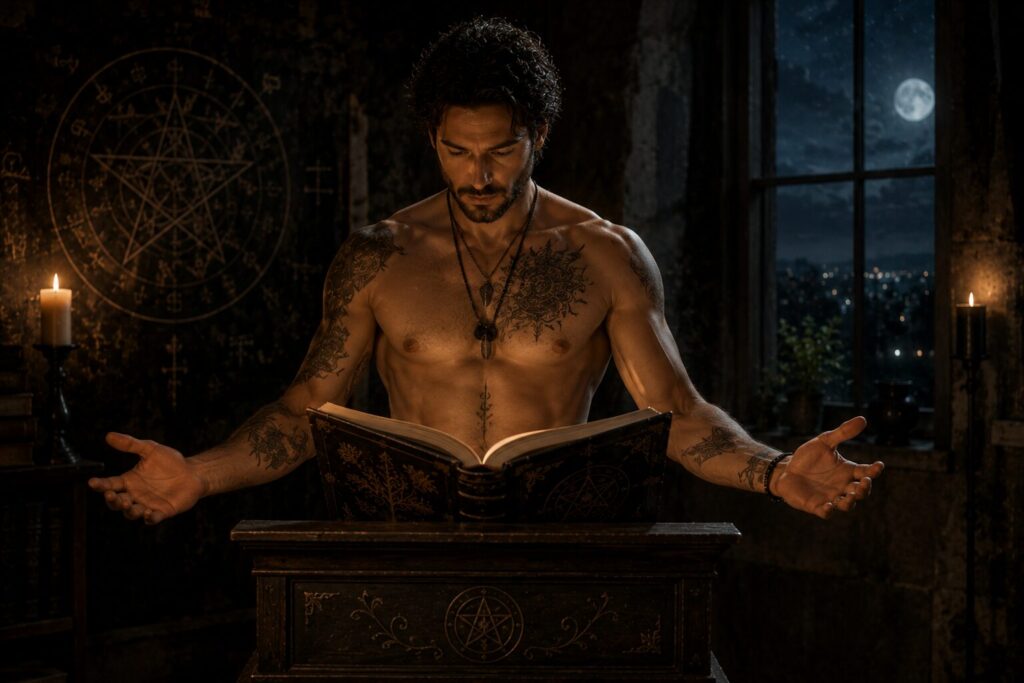
Theoretical knowledge and practical knowledge are related, but they are not identical. Reading can explain the history of a method, introduce its structure, warn us about common mistakes, and show how others have understood it. Practice teaches through attention, repetition, adjustment, and consequence. Human beings learn this way every day: we may read a recipe, but we still learn to cook by entering the kitchen, tasting, observing, changing the heat, and trying again.
Failure is part of that process. A working that produces no clear result, a method that does not suit us, or an interpretation that later proves incomplete is not necessarily wasted effort. What matters is whether we observe honestly and learn from what occurred. Reading can shorten some of that road by allowing us to benefit from the discoveries and mistakes of others, just as formal education can provide structure that learning on the job may not. Yet neither replaces the other completely.
You do not have to be heavily read, academically trained, or surrounded by shelves of occult books to practice witchcraft meaningfully. Some people learn best through doing, observation, oral teaching, devotion, community, art, or relationship with the natural and spiritual worlds. Reading simply gives us additional tools: language for our experiences, context for inherited claims, access to unfamiliar perspectives, and a better chance of recognizing when an idea has been distorted through repetition.
The Liminal Arts is designed as both an entrance and a crossroads. It is for dedicated readers, practical learners, solitary practitioners, members of established traditions, and curious people willing to look beyond their usual subjects. Newer seekers can begin with carefully chosen modern guidance and strong secondary sources rather than being dropped without context into difficult ancient material. More experienced readers can compare scholarship, revisit foundations, explore creative works, and follow specialized lines of research.
Approach what follows with wonder, but also with care. Read widely when you can. Ask where claims come from. Compare what people say with what they do and what the available evidence supports. Notice what a source does well, where it falls short, and what questions or controversies surround it. Learn from mentors without treating them as infallible, and value personal experience without turning it automatically into universal truth.
The purpose of this guide is not to tell you what you must believe or to declare that there is only one proper way to learn. It is here to help you study more clearly, practice more attentively, and choose your next path with intention.
Choose the path that best matches what you are trying to learn.
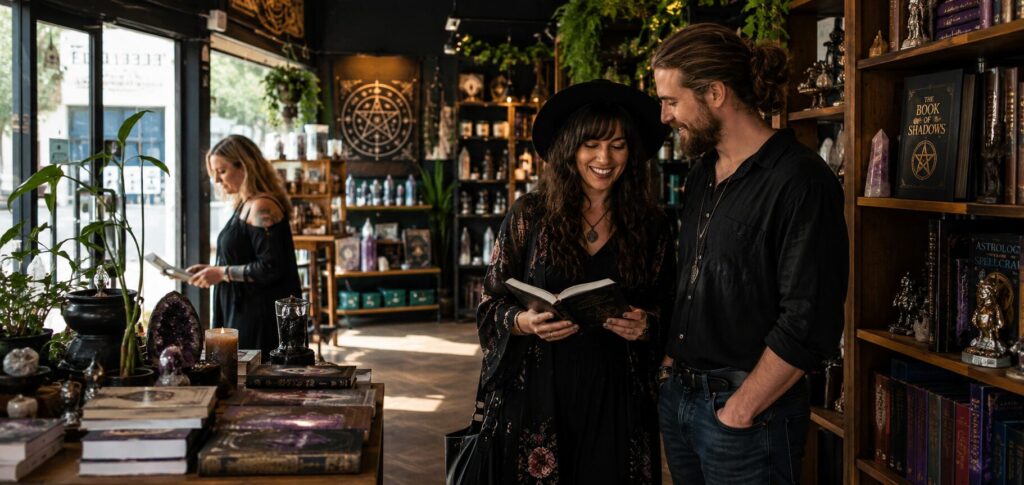
Explore the Resource Paths
Magical study rarely follows a single straight road. Some readers are looking for practical guidance, while others need historical context, stronger research skills, or a deeper understanding of art, symbolism, and tradition. These paths are meant to overlap, so begin with the question that brought you here and move between them as your study grows.
How to Study Witchcraft & Magic
Learn how to compare sources, recognize different kinds of knowledge, work thoughtfully with gnosis, identify misinformation, and turn reading and experience into a disciplined research practice.
Learn How to StudyBeginner Reading Path
Begin with a deliberately curated sequence of approachable modern guides, sound secondary sources, historical context, and useful next steps rather than an overwhelming pile of disconnected books.
Begin the Reading PathWitchcraft & Pagan Research Library
Explore respected modern thinkers, practical guides, scholarship, reference works, journals, digital archives, and specialist resources arranged by subject, level, strengths, and limitations.
Enter the Research LibraryHistorical & Occult Source Texts
Approach ancient writings, grimoires, early occult works, translations, and influential primary sources with modern companion studies, historical context, difficulty notes, and critical assessment.
Explore Historical SourcesArt, Story & Media for Magical Study
Study visual art, poetry, fiction, film, television, documentaries, lectures, podcasts, and digital media for their symbolism, influence, historical value, practical insight, and limitations.
Explore Art, Story & MediaHow We Choose and Evaluate Sources
Not every popular book is reliable, and not every controversial work is without value. Older sources may be historically important without serving as practical guides, while newer works may be accessible but incomplete, overly simplified, or poorly supported. MCC evaluates each source according to what it is trying to do, how well it does it, who it may help, and what limitations or controversies readers should understand before relying on it.
What It Offers
What the source teaches, documents, interprets, preserves, or contributes to magical study.
Strengths
What it does especially well and why readers, scholars, or practitioners continue to value it.
Limitations
What it omits, simplifies, assumes, dates poorly, or cannot reasonably be expected to provide.
Controversies & Context
Important disputes involving its evidence, claims, cultural treatment, author, historical framing, or reception.
Best For
Whether it is most useful to beginners, experienced practitioners, researchers, specialists, or readers studying historical influence.
New to Magical Study? Begin Here
Beginning well does not mean learning everything at once. It means choosing sources that provide enough structure, context, and practical grounding to help you understand what you are reading and doing. New practitioners are usually better served by reliable modern introductions and respected secondary scholarship before moving into difficult primary texts, old grimoires, or highly specialized traditions.
Begin with Orientation
Learn the basic language, ethical questions, forms of practice, and differences between traditions before trying to master every system at once.
Add Historical Context
Use reliable modern historians and secondary sources to understand how older ideas developed, changed, and entered contemporary practice.
Practice and Record
Build experience through simple, repeatable work. Record what you do, what you notice, and what changes before drawing large conclusions.
Specialize Gradually
Once the foundations are clear, follow the direction that genuinely holds your attention: ritual, history, divination, Pagan religion, folklore, spirit work, or another path.
The Beginner Reading Path offers a curated sequence rather than an overwhelming shelf. It emphasizes well-regarded modern guidance, useful scholarship, and books that help readers build judgment as well as knowledge.
Art, Story & the Enchanted Imagination
Magical knowledge is not carried through nonfiction and historical records alone. Paintings, poetry, myth, fiction, film, performance, and other creative works can preserve symbols, shape spiritual imagination, reveal cultural attitudes, and give form to experiences that ordinary explanation cannot always contain. These works still require discernment: something may be symbolically profound without being historically accurate, influential without being reliable instruction, or beautifully made while repeating harmful ideas.
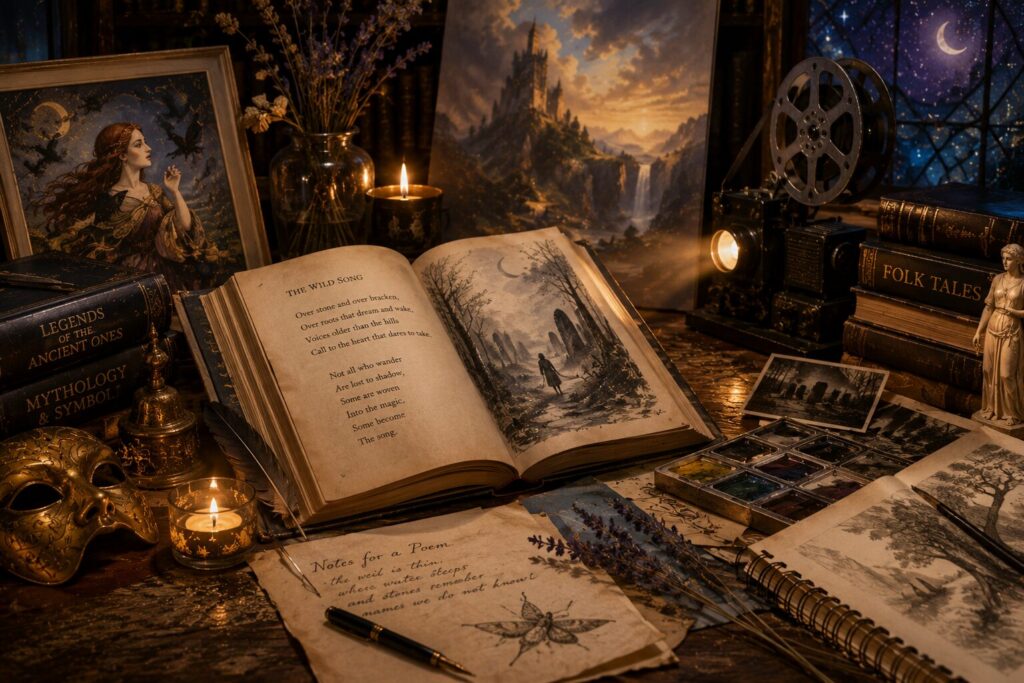
Visual Art
Paintings, prints, sculpture, photography, and visionary art can communicate cosmology, spiritual encounter, symbolism, and changing cultural ideas about witches, spirits, gods, and the unseen.
Poetry & Visionary Writing
Poets such as William Blake and W. B. Yeats used image, myth, revelation, folklore, and esoteric thought to create works that reward both literary and magical reading.
Fiction & Drama
Stories can explore initiation, transformation, sacred landscape, moral responsibility, ritual structure, and the relationship between ordinary life and the otherworld.
Film & Television
Screen portrayals can be studied for historical detail, practice-informed representation, symbolism, atmosphere, cultural influence, and the stereotypes they preserve or challenge.
Documentaries & Lectures
Museum programs, university talks, practitioner interviews, conference recordings, and carefully produced documentaries can make strong scholarship and lived knowledge more accessible.
Podcasts & Digital Media
Podcasts, websites, online archives, video essays, and educational channels can support study when authorship, sourcing, expertise, date, and purpose are made clear.
Follow the Stories and Symbols
Some forms of magical knowledge are carried less through direct instruction than through story, symbol, inherited memory, and sacred language. These pages explore how myth gives shape to relationships between gods and worlds, how lore gathers around the figure of the witch, how folklore preserves patterns across generations, and how alphabets and signs can turn language itself into ritual form.
Encountering Myth
Explore myth as a living language of gods, origins, relationships, sacred powers, cultural memory, and the structures people use to understand the world.
Encounter MythLore of the Witch
Follow the witch through history, accusation, folklore, symbolism, fear, cultural memory, and the modern reclamation of the witch as identity and threshold figure.
Explore Witch LoreTales & Folklore
Enter fairy tales, folk narratives, legends, and inherited stories that preserve warnings, values, magical patterns, local beliefs, and encounters with the otherworld.
Explore the TalesMagical Alphabets
Examine sacred language, ritual scripts, letters, sounds, symbols, ciphers, and the ways written words can become vessels for memory, intention, secrecy, and power.
Read the Living WordA Living Research Practice
Research does not end when a book is closed. Magical study can also involve museum collections, academic journals, historical archives, lectures, interviews, carefully sourced digital media, conversations with experienced practitioners, and the records we keep of our own repeated work. Each source answers different questions, and the strongest understanding often emerges when several kinds of evidence are considered together.
Journals & Scholarship
Academic articles, university publications, conference papers, and specialist studies can provide evidence, methodology, disagreement, and historical context that general introductions often cannot.
Museums & Archives
Manuscripts, ritual objects, correspondence, artwork, oral histories, and material collections allow readers to encounter the surviving evidence behind later interpretations.
Lectures & Interviews
Scholars, artists, clergy, and experienced practitioners can explain how knowledge is interpreted, taught, debated, and lived within particular communities.
Digital Research
Online libraries, databases, educational channels, podcasts, and carefully maintained websites can widen access, but should still be checked for authorship, evidence, date, and purpose.
Practice Records
Journals, ritual notes, divination records, observations, and repeated experiments help separate what was expected from what was actually experienced over time.
Comparison & Discernment
Strong research compares claims across different sources, distinguishes evidence from interpretation, and remains willing to revise conclusions when better information appears.
No single source needs to carry the full weight of a conclusion. Scholarship, tradition, creative interpretation, community knowledge, and personal experience become more useful when their different roles are understood rather than treated as interchangeable.
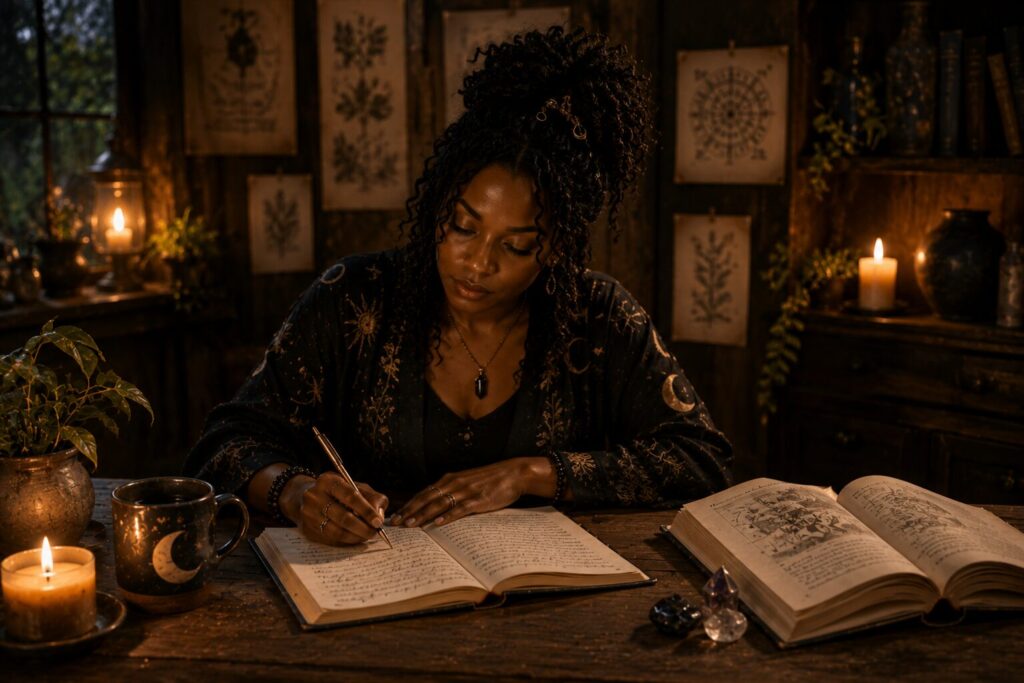
Reading matters because it places our own experiences inside a much larger conversation. It introduces us to language we may not yet have, shows how practices and beliefs developed, reveals disagreements that simplified accounts leave out, and helps us recognize when a modern claim is genuinely traditional, recently invented, or somewhere in between. It also allows us to learn from people, places, and periods we could never encounter directly.
Nothing in magical study should be accepted as entirely literal, universal, or beyond examination—not an ancient manuscript, a popular author, an academic argument, a teacher’s instruction, a personal vision, or something found on this website. Sources should be read according to what they are, what they were created to accomplish, and what evidence supports their claims. A source can be meaningful without being factual in every detail, and it can be historically accurate without containing the whole truth of a religious or magical experience.
Older does not automatically mean better. Historical texts can be foundational because they preserve early ideas, rituals, symbols, and lines of influence, but they also reflect the assumptions, prejudices, limitations, and purposes of their own time. They may survive through incomplete manuscripts, uncertain authorship, translation choices, later editing, or selective transmission. Age gives a work history; it does not make the work infallible.
Modern scholarship is essential, particularly when establishing dates, provenance, cultural setting, textual development, and what the surviving evidence can reasonably support. Historians and other academic specialists are often deliberately cautious about claims involving gods, spirits, revelation, magic, and personal belief because those questions cannot always be tested through historical methods. That caution is valuable, but it is one lens rather than the entirety of magical understanding. History can tell us when a ritual appears in the record and how it changed; it cannot always tell us what the ritual feels like, why a community finds it sacred, or what meaning practitioners encounter through performing it.
For that reason, strong study draws from more than one kind of authority. Scholarship, theology, folklore, art, literature, oral tradition, community practice, carefully documented personal experience, and repeated ritual observation may each contribute something different. They should not be treated as interchangeable, but neither should one automatically silence all the others. Feeling and belief are meaningful parts of religious and magical life, though they should not be presented as historical proof or universal fact.
Mentors and teachers can shorten the road, preserve living knowledge, correct mistakes, and help a student recognize what cannot be learned from books alone. They are also human and therefore fallible. A trustworthy mentor permits questions, distinguishes tradition from personal preference, acknowledges uncertainty, and does not require a student to surrender judgment. Respect and critical thought can exist together.
A few additional principles are worth including in how MCC approaches study:
- Separate what is known, what is likely, what is traditionally believed, and what is personally experienced.
- Look for the original source of a repeated claim rather than counting how many websites repeat it.
- Notice whose voice is missing, especially when outsiders describe a living culture or tradition.
- Compare editions and translations when wording materially changes the meaning.
- Allow conclusions to remain provisional. Changing your mind in response to better evidence is growth, not failure.
- Do not mistake confidence, credentials, popularity, age, or spiritual authority for automatic correctness.
Research is not merely the work required before the interesting part begins. Very often, the research is the interesting part. A footnote opens into an older text, an image leads to a forgotten myth, two authors disagree, a translation changes the character of a ritual, or a familiar symbol reveals a history far stranger than the version commonly repeated online.
Not every question needs to be resolved quickly. Some subjects are worth living with, revisiting, and approaching from several directions. Magical study becomes richer when curiosity is allowed to remain active—when reading leads to observation, observation leads to practice, and practice sends us back to the books with better questions.
The purpose of The Liminal Arts is not to produce one approved shelf, one final interpretation, or one unquestionable authority. It is to help readers develop the knowledge and judgment to move through a complicated field with discernment, humility, imagination, and pleasure.
Read widely. Question carefully. Listen respectfully. Practice attentively. Keep what proves useful, revise what does not, and leave room for both evidence and wonder. The path is not diminished because every mystery cannot be settled; sometimes the search itself is part of the magic.

Continue Exploring
The Liminal Arts is one doorway into a much wider landscape. Continue into the foundations of witchcraft and magical practice, explore the histories and stories surrounding the witch, or bring a question directly to MCC. Each path approaches the work from a different direction, but all are part of the same continuing search for knowledge, experience, and meaningful practice.
Knowledge opens the threshold. Experience teaches us how to cross it.