A History of the Craft
Witchcraft
Witchcraft is older than the religions that later condemned it.
Its history reaches through ritual, folk practice, sacred relationship, learned magic, persecution, survival and revival. The names have changed. The cultures have changed. The Craft changed with them.
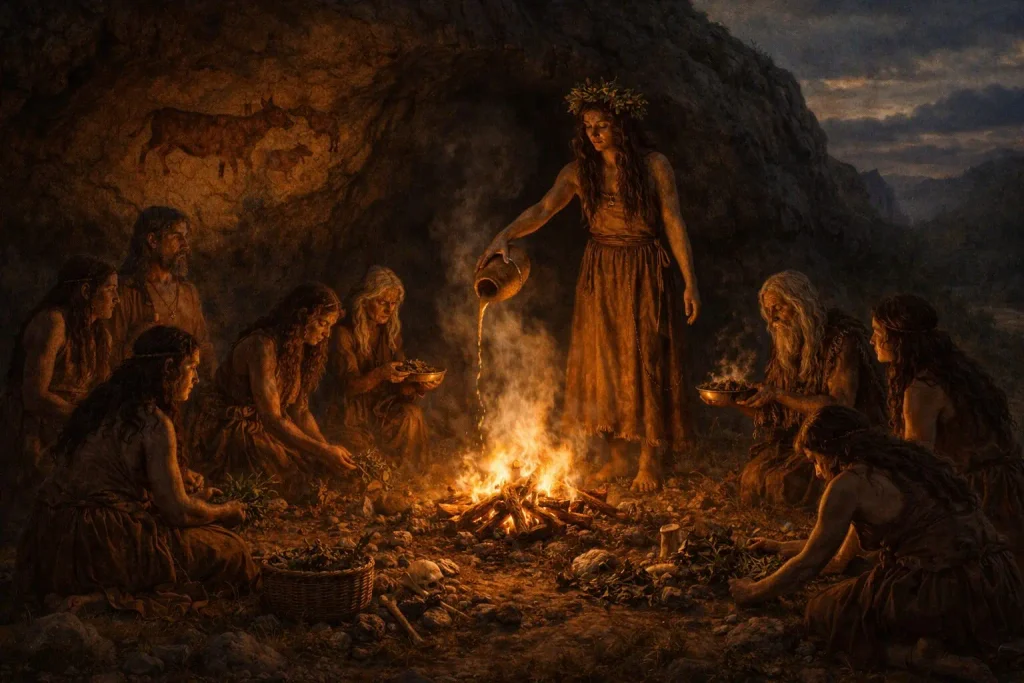
The history of witchcraft is not the history of a single religion, institution or uninterrupted tradition. It is the history of many streams of human experience that met, separated, disappeared from view, changed their names and surfaced again.
Long before anyone left us a word that translates neatly as witch, people were burying their dead with care, reading signs in the world around them, making offerings, protecting homes, seeking healing, speaking with gods and spirits, marking the seasons and attempting to influence forces they could not entirely control. Later cultures gave these practices different names and understood them through different cosmologies. Some belonged to temples. Some belonged to households. Some were learned from books. Others were remembered because someone showed another person what to do.
Not everything survived. What did survive did not always survive unchanged.
That matters.
History is easiest to see where someone wrote something down, built something durable or left an object behind. Much of ordinary magical life happened elsewhere: around hearths and bedsides, in fields and kitchens, through stories, remedies, prayers, charms, customs and memory. Oral cultures did not depend upon written records in the way we do today, and household knowledge rarely announces itself to future historians.
For that reason, we approach this history with both respect for evidence and room for interpretation. We distinguish between what can be documented, what the surviving record reasonably suggests, and what we believe the larger pattern may tell us.
We do not believe every magical practitioner of the ancient world was secretly a modern witch. They were people of their own cultures and should be understood that way. But neither do we believe modern witchcraft appeared from nowhere.
We inherited a landscape already filled with magic.
Some of its roads can be followed almost step by step. Others disappear into forest and emerge somewhere else bearing a different name. Some were preserved deliberately. Some survived because a grandmother taught a daughter, because a healer remembered a charm, because a manuscript was copied, because a local custom became folklore, or because people continued doing something long after they had forgotten where it began.
Modern witchcraft stands downstream from all of it.
The story begins before the witch had a name.
Before the Witch Had a Name
Long before there were witches in the historical record, there were people doing things that later witches would recognize.
They buried their dead with care and placed objects beside them. They marked particular places as different from ordinary ground. They watched animals, weather, stars and seasons for meaning. They used plants for healing and for altered states. They made offerings, carried protective objects, sought favorable outcomes and attempted to understand forces they could not see.
We should be careful about giving those people names they never used for themselves. A ritual specialist living thousands of years before the English word witch existed was not secretly waiting for us to identify them correctly. Their beliefs belonged to their own families, communities and cultures.
But this is where our history begins.
The earliest evidence of human spiritual life is incomplete because much of what people did left nothing durable behind. A spoken charm disappears with the voice that carried it. A plant offering decays. A gesture leaves no archaeological record. Memory, story and instruction can move through generations without ever becoming a written text.
What survives gives us fragments: deliberate burials, pigments and decorated objects, unusual deposits, repeated attention to particular caves, springs, animals, celestial movements and landscapes. We cannot reconstruct every belief from these remains, but together they reveal human beings who were doing far more than simply surviving their physical environment. They were creating relationships with death, place, danger, fertility, healing, luck and whatever they believed existed beyond ordinary sight.
For us, that matters.
At its deepest level, witchcraft still begins with many of those relationships.
The dead remain important. Place remains important. The movement of the heavens matters to many witches. Plants, stones, fire, water, animals and weather continue to participate in magical practice. Divination still asks whether the world can speak back. Protection still assumes that intention can be carried into an object, gesture or boundary. Offerings still create relationship through exchange.
These are not proofs of one prehistoric religion stretching intact into the present. They are older streams of human religious and magical behavior that later cultures would inherit, reshape and sometimes rediscover.
One of the most important of those streams is what we would now describe as an animistic way of encountering the world: the understanding that human beings are not the only beings who matter, and that landscape, animals, ancestors, spirits and other presences may possess agency or relationship of their own. That idea appears in many forms across human cultures and remains deeply recognizable within modern witchcraft. Animism & Sacred Ecology explores that relationship more fully.
As societies became larger and more complex, these practices did not simply disappear. Some moved into organized religion. Some remained with families and local specialists. Some became professions. Some eventually became forbidden. Others changed so thoroughly that their older forms are difficult to see beneath what came later.
This is one of the patterns we will encounter again and again.
Witchcraft changes to survive, but so do the streams from which witchcraft draws.
Before there was a witch, there was already a magical world.
Before the name
Older Streams of the Craft
The Ancient Magical World
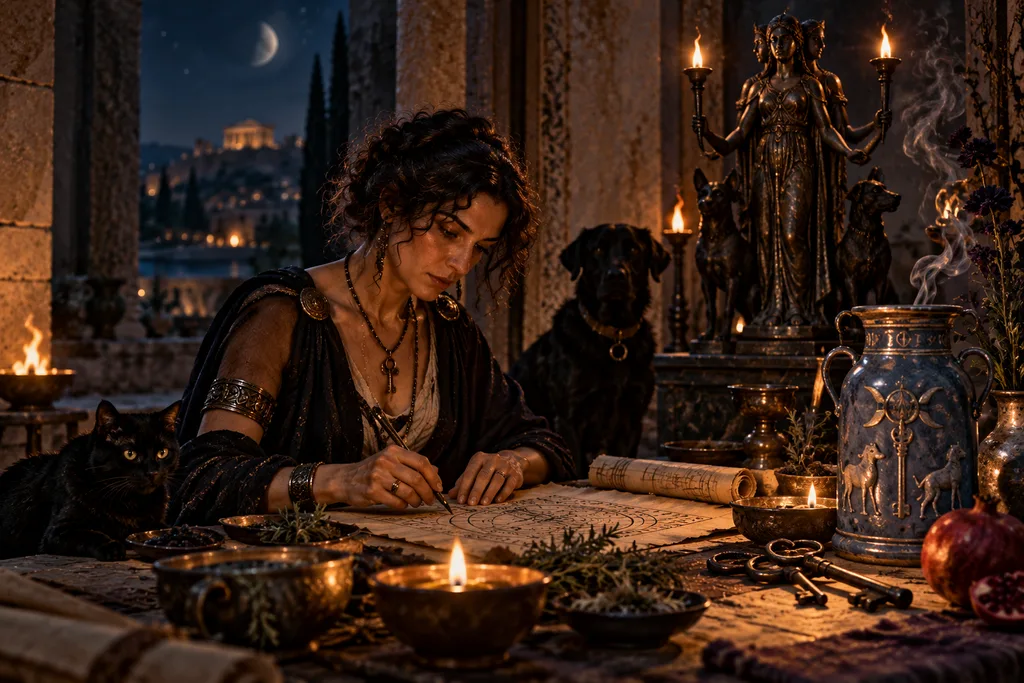
As cities, writing systems and organized religions developed, the magical world becomes much easier for us to see. Across Mesopotamia, Egypt, the Levant, Anatolia, Greece and Rome, people left behind prayers, incantations, amulets, curse tablets, divinatory records, ritual instructions and objects intended to protect, heal, influence or communicate with powers beyond ordinary human reach.
These practices did not belong to one system, and ancient people did not necessarily draw the same firm boundary between religion and magic that later societies would. A person might petition a god, wear a protective amulet, consult an astrologer, leave an offering, seek a dream, perform a household rite and visit a temple without experiencing those actions as contradictions.
In ancient Mesopotamia, ritual specialists worked with incantations, purification, divination and protection against harmful forces. Celestial observation became extraordinarily sophisticated, helping lay foundations for the astrology that would later travel through the Mediterranean and beyond. Illness, misfortune and unusual events could be understood through a world populated by gods, spirits, omens and unseen influences.
Egypt developed another enormously influential magical culture. The Egyptian concept of heka treated magical power as part of the structure of creation itself rather than simply as an illicit practice outside religion. Protective spells, healing rites, funerary texts, amulets and spoken formulae moved through both temple and everyday life. Words, names and images could carry power because they participated in the reality they represented.
As Egyptian, Greek, Jewish, Mesopotamian and other traditions met through trade, conquest and migration, their magical ideas also met. The Mediterranean became a vast zone of exchange. Gods acquired new titles and associations. Ritual languages mixed. Astrological systems traveled. Foreign divine names were adopted because antiquity and distance themselves could suggest potency.
The surviving texts we call the Greek Magical Papyri offer an especially vivid glimpse into this world. Compiled from material spanning several centuries in Roman Egypt, they contain spells for protection, divination, healing, attraction, dreams, success and spirit contact alongside hymns and ritual instructions drawing upon Egyptian, Greek, Jewish and other religious vocabularies. What looks neatly separated to us today was often thoroughly entangled in practice.
The gods later important to Western witchcraft also belong to this wider world of exchange. Hekate develops across Greek religion as a complex deity associated with boundaries, crossroads, night, spirits and other liminal spaces. Hermes, god of movement, messages, boundaries and cunning intelligence, would later lend his name to the much broader Hermetic current. Neither deity belongs exclusively to witchcraft, but both become deeply important within later magical traditions.
Ordinary people practiced magic as well. Archaeologists have recovered curse tablets asking divine or underworld powers to restrain rivals, lovers, thieves and opponents. Homes and bodies carried protective objects. People sought dreams, omens and diviners when ordinary knowledge failed them. Magic could be intimate and practical because the problems it addressed were intimate and practical: illness, love, childbirth, competition, uncertainty, death and fear.
This matters to the history of witchcraft because many techniques, assumptions and relationships that later become familiar within the Craft are already visible here. The idea that words can carry force, that objects can be charged with purpose, that celestial movements correspond with events below, that spirits may be approached, that boundaries matter, and that unseen powers can be petitioned or redirected all have very old histories.
But the ancient magical practitioner is still not automatically the witch.
Magic Was Already Written Down
Ancient magical texts preserve instructions for protection, healing, divination, attraction, cursing, dreams and encounters with divine or spiritual powers. By the Mediterranean world of late antiquity, magical practice was already drawing from several cultures at once.
This mixing of inherited traditions will become a recurring feature of Western magic—and eventually of modern witchcraft.
When the Witch Becomes the Witch
For much of the story so far, we have been following practices rather than witches.
Ancient people certainly knew dangerous magic, illicit ritual, curse-workers, diviners and specialists whose abilities inspired both respect and fear. But the English word witch belongs to a later world. By the early medieval period, forms such as the Old English wicca and wicce appear in the written record, referring respectively to male and female practitioners of magic. From the same linguistic family comes wiccecræft—witchcraft. The deeper origin of the word remains uncertain, which is appropriate for a name that would eventually gather so many different meanings around itself.
Other cultures had their own words and categories. Greek, Roman, Germanic, Celtic, Slavic and later Christian societies did not all mean the same thing when they described a sorcerer, diviner, poisoner, enchantress, night-walker or worker of harmful magic. We should resist translating every one of them simply as witch. Even when the practices overlap, the cultural meanings could be very different.
Still, something recognizable was taking shape.
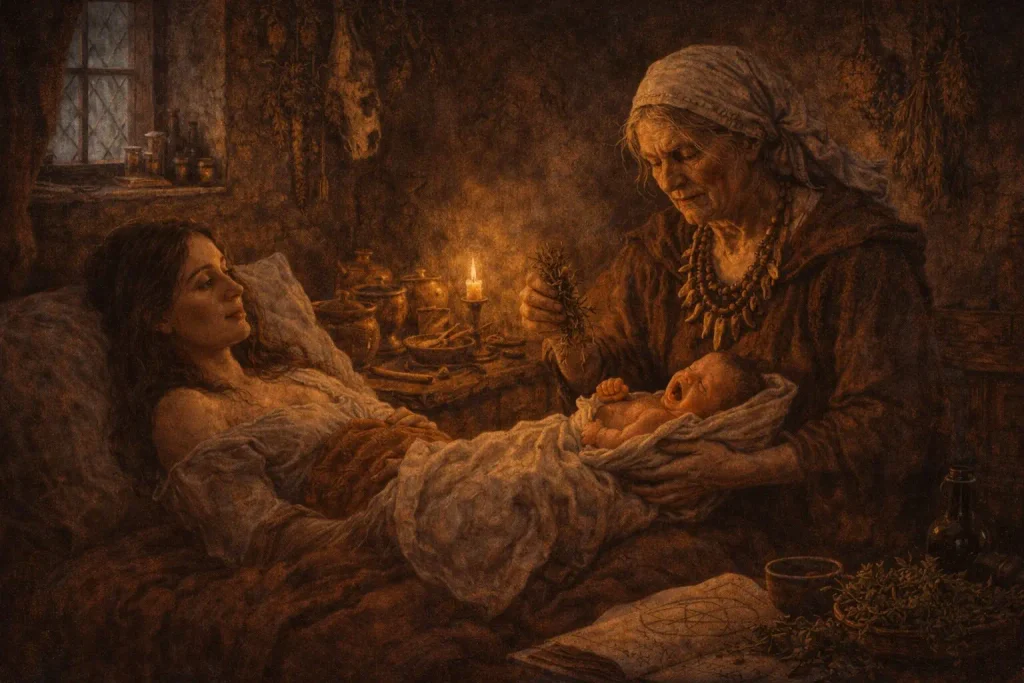
The witch increasingly became a person imagined to possess unusual access to hidden power. Sometimes that power was sought out. Sometimes it was feared. A person might be approached for healing, divination, protection or help with a problem that ordinary institutions had failed to solve, while at the same time being regarded with suspicion because their knowledge placed them slightly outside the normal order of things.
That contradiction will follow the witch for centuries.
The historical witch also begins to merge with older folklore. Stories of night-flying women, dangerous spirits, shape-shifters, enchantresses, beings who harmed children or livestock, and people capable of sending illness or misfortune existed in different forms long before later European witch trials. Over time, authorities, storytellers and communities increasingly folded some of these older fears into the human figure of the witch.
This is one reason the word becomes difficult. It can describe a practitioner. It can describe an accusation. It can describe a figure from folklore. Eventually it will also become a theological category constructed by religious authorities, and much later still a name deliberately reclaimed by modern people for themselves.
Those meanings are related, but they are not identical.
A person accused of witchcraft may never have practiced magic at all. Another person may have used charms, divination or spirit work without considering themselves a witch. Someone else may have occupied a recognized local role as healer, cunning person or magical specialist while carefully avoiding the more dangerous label. The name itself could depend as much upon who was speaking as upon what the person actually did.
That distinction becomes increasingly important as Christianity reshapes the religious landscape of Europe. Practices that had once existed within local religion, household custom or accepted ritual could be reclassified. Some were absorbed. Some were tolerated. Some were renamed. Others became signs of superstition, forbidden magic or eventually heresy.
By the later medieval period, several once-separate ideas were beginning to converge: the worker of harmful magic, the feared outsider, the folkloric night figure, the religious deviant and the person accused of illicit supernatural power. The fully developed witch of the great European persecutions had not yet arrived, but the cultural materials from which that figure would be built were already gathering.
This is the point in our history where the witch stops being only something we recognize in retrospect and begins appearing under a name much closer to the one we still carry.
The figure also grew through story, fear, accusation and cultural memory.
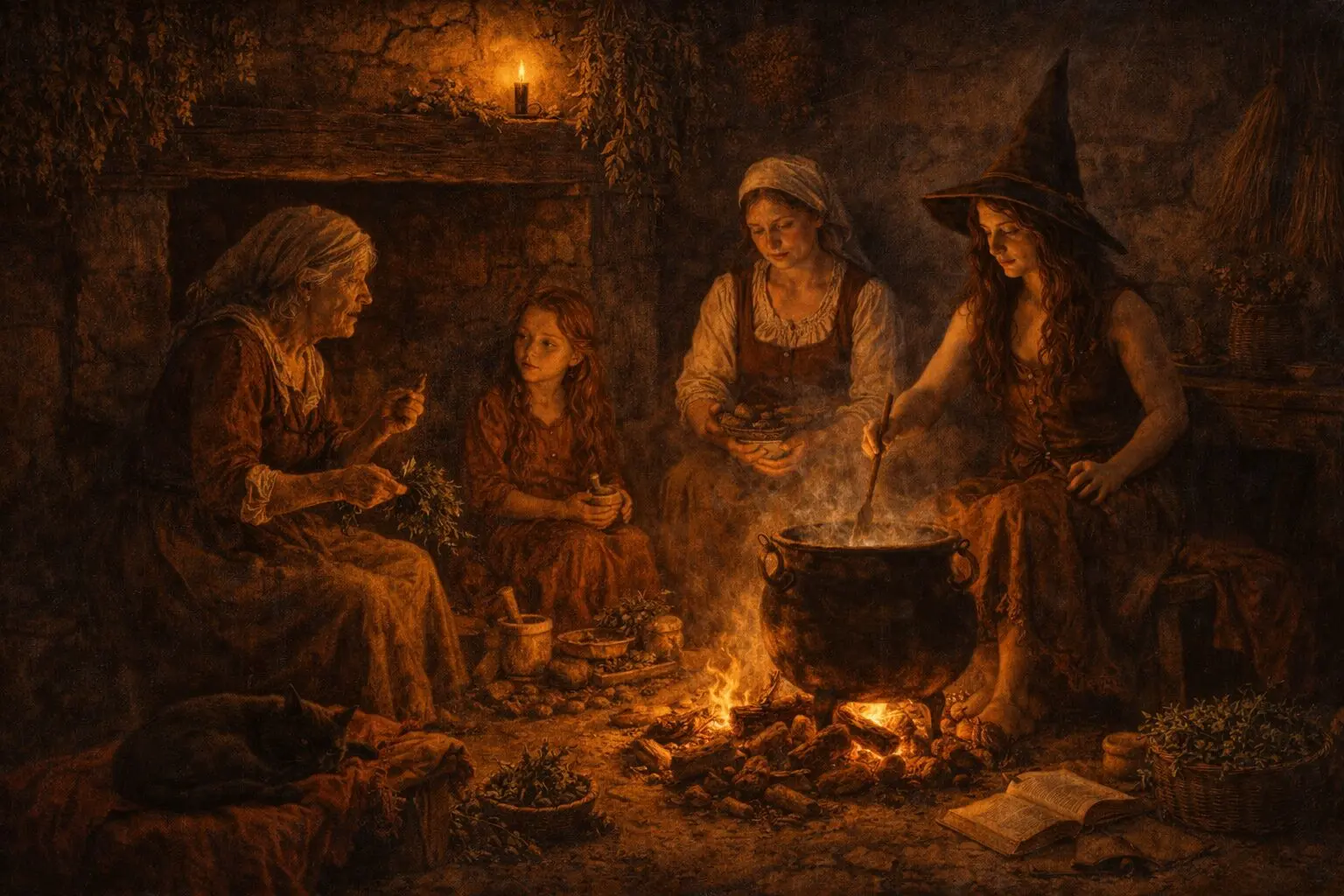
Conversion, Adaptation & the Changing Sacred World
The spread of Christianity across Europe did not produce an immediate break between an old magical world and a new Christian one. Conversion happened unevenly, sometimes over centuries, and people carried older customs with them into the religion that replaced or absorbed earlier systems.
Sacred places remained sacred even when their stories changed. Springs, wells, trees, stones and seasonal gatherings could acquire saints, feast days or Christian explanations. Household protections continued. Healing formulas changed their language. A charm that once invoked one power might later invoke Christ, Mary, a saint or a Psalm. The form survived because people still needed protection, healing, fertility, luck and answers to uncertainty.
This kind of change is important to the history of witchcraft because survival does not always look like resistance. Sometimes a practice survives by becoming ordinary enough that no one thinks to destroy it. Sometimes it accepts a new religious vocabulary. Sometimes people remember what to do long after the older explanation has been forgotten.
Christian institutions themselves also occupied a more complicated place in this history than a simple division between religion and magic suggests. Monasteries and clerical centers preserved classical learning, medical knowledge, astrology and texts inherited from the ancient world. Literate clergy copied manuscripts in societies where relatively few people could read. Learned magical and astrological materials sometimes traveled through the same intellectual networks that preserved theology and philosophy.
At the same time, Christianity increasingly claimed authority over which supernatural practices were legitimate. Blessing, exorcism, relics, sacred objects, holy water, visions, miracles and appeals to spiritual beings could belong comfortably within Christian religious life when performed under accepted authority. Similar attempts to heal, protect, divine or influence events outside that authority could be condemned as superstition, sorcery or forbidden magic.
The boundary was never perfectly stable.
A village healer might use a Christian prayer alongside an older charm. A learned magician might insist that his work operated through divine or natural principles rather than forbidden spirits. A priest might condemn one form of divination while participating in a culture filled with signs, relics, blessings and supernatural intervention. Ordinary people were often less interested in maintaining clean theological categories than in finding something that worked.
This is where questions of authority become increasingly important. The conflict was not simply between people who believed in supernatural power and people who did not. Nearly everyone involved inhabited a world in which invisible forces were taken seriously. The argument was often about who could approach those forces, which methods were permitted, whose explanations were accepted, and who had the power to decide.
For local magical specialists, that could create an uneasy position. A person known for healing, finding lost property, breaking a curse or reading signs might be valued by neighbors precisely because they offered help outside ordinary institutions. The same independence that made such a person useful could also make them vulnerable when fear, illness, religious tension or social conflict demanded someone to blame.
Older practices therefore did not simply disappear beneath Christianity. They were sorted, renamed, absorbed, condemned, preserved and transformed. Some entered Christian folk practice so thoroughly that separating the strands centuries later becomes difficult. Others remained more obviously outside official religion. Still others moved into books and learned magical traditions that would eventually reconnect with folk practice in later forms of Western magic.
MCC is not a Christian tradition, and we do not minimize the harm Christian institutions would later participate in when the witch became a target of systematic persecution. But understanding this earlier period requires recognizing the contradiction: Christianity could suppress older religious and magical practices while also becoming one of the vessels through which fragments of earlier knowledge continued to travel.
That contradiction will matter enormously when the religious outsider, the magical practitioner and the imagined enemy begin to collapse into a single figure.
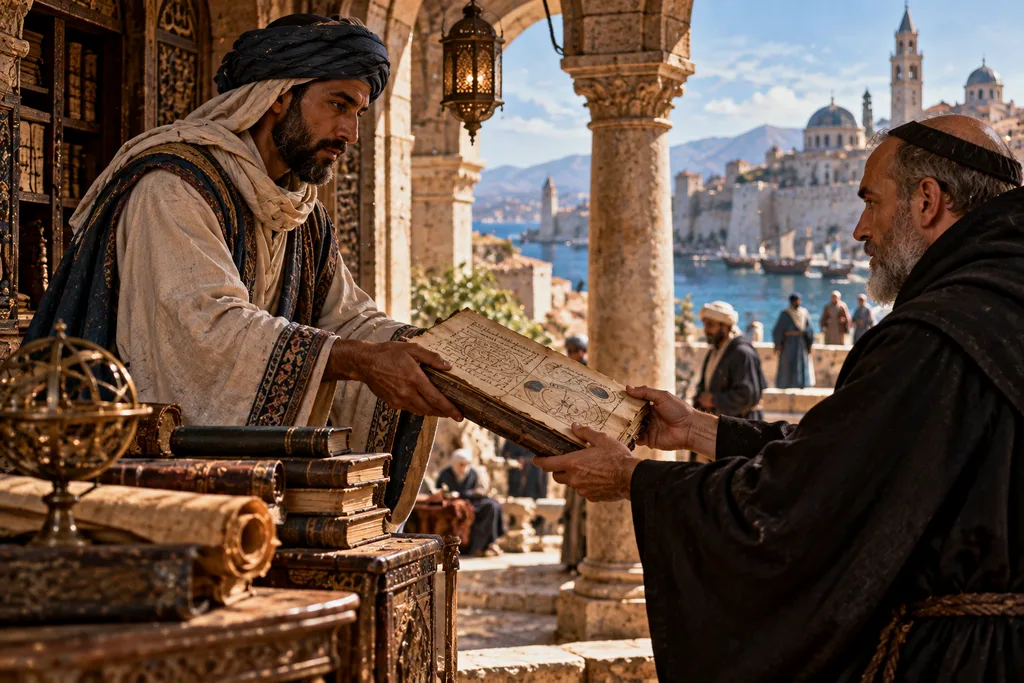
Learned Magic, Books & the Other Line of Transmission
While magical knowledge continued through households, local specialists and oral tradition, another current was moving through books.
This was the world of learned magic: astrology, alchemy, philosophy, talismanic practice, ritual texts and increasingly elaborate attempts to explain how the visible and invisible worlds fit together. Some of this material descended from the ancient Mediterranean. Some reached Europe through the Arabic-speaking intellectual world, where Greek, Egyptian, Persian, Jewish and other bodies of knowledge had been translated, preserved, debated and further developed. Astronomy, astrology, medicine, mathematics and philosophy traveled along many of the same routes.
That movement matters because Western magic was never created inside a sealed European room. Ideas crossed the Mediterranean repeatedly. Texts moved through North Africa, the Levant, the Iberian Peninsula, Byzantium, Italy and other centers of exchange. A work could be translated more than once, acquire new commentary, lose part of its original context and still influence readers centuries later.
By the later Middle Ages and Renaissance, educated Europeans were increasingly encountering magical and philosophical materials associated with antiquity. Astrology could be practiced at courts and universities. Talismans might be discussed through theories of celestial influence. Alchemy joined practical experimentation with spiritual and philosophical speculation. Grimoires circulated instructions for ritual operations, protective figures, divine names and encounters with spirits.
The boundaries around these practices were negotiated carefully. Learned practitioners often distinguished what they called natural magic from condemned sorcery. If hidden properties had been placed within nature by God, they argued, then discovering and using them could be an investigation of creation rather than rebellion against it. Other forms of magic were considerably harder to defend, especially when they involved spirits, divination or ritual methods church authorities considered forbidden.
That distinction also carried social power. A literate man discussing astrology, philosophy or the hidden properties of nature could sometimes describe his work in terms unavailable to the village practitioner performing a charm for a neighbor. Education, class, language and institutional connections affected whether unusual knowledge appeared learned, superstitious or dangerous.
During the Renaissance, figures such as Marsilio Ficino, Giovanni Pico della Mirandola and later Heinrich Cornelius Agrippa helped assemble a particularly influential Western esoteric synthesis. Neoplatonism, astrology, Hermetic writings, Christian theology, Jewish Kabbalistic material and older magical ideas were read beside one another and treated as parts of a universe bound together through correspondence.
The assumption underneath much of this work would become enormously important to later magic: the universe is connected. Planets, plants, stones, numbers, divine powers, elements and human beings could correspond with one another. Understanding those relationships offered a means of working within them.
Modern witches would eventually inherit a great deal from this learned stream. Planetary correspondences, elemental structures, ritual circles, divine names, magical alphabets, ceremonial tools and elaborate systems of symbolic association did not simply descend from village folk practice. Many entered modern witchcraft through ceremonial and esoteric traditions that had spent centuries reading, translating and rearranging older material.
That does not make learned magic the origin of witchcraft any more than folk magic is its single origin. They are different currents, and for long periods their practitioners would not necessarily have recognized themselves as members of the same tradition. What matters is that the currents eventually meet.
For a deeper look at that intellectual and ceremonial lineage, see Western Esoteric Traditions.
Magic also survived through texts. Manuscripts carried astrology, talismanic practice, ritual theory, philosophy and older magical material across languages, religions and centuries.
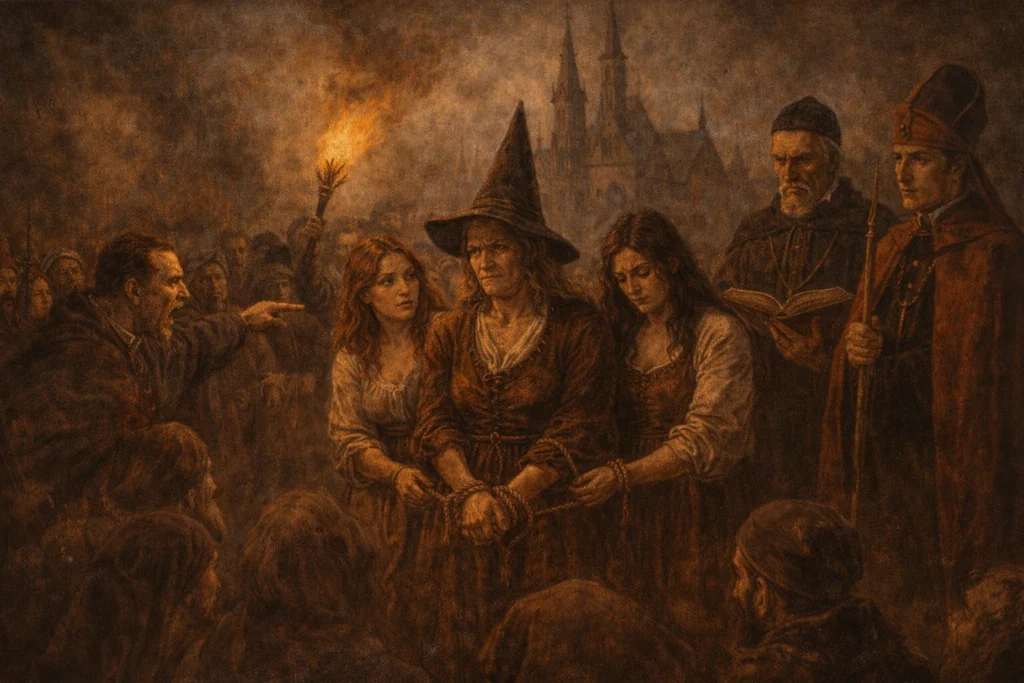
The Witch Becomes an Enemy
“The witch-hunt was not just about witches; it was about the control of women.”
By the later Middle Ages, the meaning of witch was changing again. Earlier societies had feared harmful magic, and Christian authorities had long condemned forms of divination and sorcery, but several ideas were now beginning to fuse into something more dangerous: the magical practitioner, the religious deviant, the servant of forbidden powers and the enemy hidden inside an ordinary community.
That fusion did not happen everywhere at once. Europe was never one uniform culture, and witch persecution varied enormously by place and period. Some regions saw relatively few prosecutions. Others experienced waves of accusation that consumed entire communities. Local courts, political instability, religious conflict, economic pressure and existing folklore all helped determine what the witch became in a particular place.
The development of demonology intensified the danger. Learned theologians and legal writers increasingly described witchcraft not merely as harmful magic but as participation in an organized conspiracy against Christian order. Older stories about night travel, dangerous spirits, secret gatherings and supernatural harm were drawn into a theological framework involving the Devil, apostasy and the deliberate inversion of Christianity.
One of the most notorious expressions of this thinking was the Malleus Maleficarum, published in 1487 and associated especially with the Dominican inquisitor Heinrich Kramer. It was not a universally accepted rulebook for all Christian authorities, and some contemporaries rejected Kramer’s methods, but the work helped circulate a particularly misogynistic and demonological image of witchcraft during the expanding age of print.
The printing press mattered. Ideas that once traveled slowly through manuscripts and local preaching could now spread far more widely. Demonological theories, sensational trial accounts and arguments about witches became part of an international conversation. The imagined witch became more standardized even while actual prosecutions continued to vary from region to region.
Gender is impossible to separate from this history. Women made up the majority of those accused in much of Europe, though the proportions differed significantly by region and men were sometimes accused in substantial numbers. The stereotype of the witch drew upon existing anxieties about femininity: women’s speech, sexuality, anger, age, poverty, healing knowledge, independence and perceived failure to remain within expected social roles could all become meaningful when suspicion began to gather.
This does not mean that every accused woman was a healer or that the witch hunts were simply an organized campaign against midwives. The reality was more complicated and, in some ways, more revealing. A quarrel between neighbors, an illness, a dead child, spoiled food, failed livestock, unwanted sexuality or a reputation for being difficult could become dangerous when interpreted through a culture already prepared to imagine witchcraft.
Men were part of this history as well. In some regions they formed a considerable proportion of the accused, and ideas about unacceptable masculinity, social marginality and sexual or religious deviance could intersect with witchcraft accusations too. The witch was strongly feminized in European imagination, but never exclusively female.
The accusations also tell us something important about actual magical practice. It would be a mistake to assume that everyone brought before a court was secretly practicing witchcraft. Most were almost certainly not practitioners in anything resembling the accusations made against them. Yet it would be equally misleading to conclude that magic existed only in the imagination of persecutors.
People did use charms. They sought diviners. They consulted cunning people, healers and local specialists. They attempted counter-magic, protection and sometimes harmful magic. Communities that condemned witchcraft could still visit someone known for magical ability when a child was sick, an object was lost or ordinary remedies failed.
That contradiction is crucial.
The magical specialist could occupy a position of informal authority outside the structures of church, medicine or government. People went to them because they were believed to know something others did not. That usefulness could create respect, but it could also create resentment and fear. When communities experienced crisis, the same reputation that once brought someone customers might suddenly make them vulnerable.
Christian institutions played a central role in constructing and policing these categories, although Catholic and Protestant regions did not behave identically and secular courts often carried out prosecutions themselves. What mattered was a growing religious and legal framework in which unauthorized supernatural power could be interpreted not simply as error but as evidence of dangerous allegiance.
The inequality is difficult to miss. Official religion could bless water, invoke spiritual beings, perform exorcisms, preserve relics and declare miracles. Local people performing their own protective or divinatory rites did not possess the same institutional protection. The question was rarely whether supernatural power existed. The deeper question was who had the authority to approach it and whose practices could be declared legitimate.
By the height of the European witch persecutions, accusation had moved far beyond the actual behavior of magical practitioners. Confessions could be shaped by interrogation, torture, leading questions and the expectations of interrogators. Fantasies of sabbats, impossible flights, monstrous conspiracies and sexual encounters with the Devil could become part of the official record because authorities already knew what they expected a witch to confess.
Real people disappeared beneath the mythology created around them.
And yet the mythology endured.
The witch that emerges from this period—the dangerous woman, the secret practitioner, the heretic, the sexual outsider, the person who gathers beyond acceptable authority—would remain embedded in Western culture long after the great trials declined. Modern witches would eventually inherit that image, reject parts of it and deliberately reclaim others.
The persecutions therefore belong to our history even though most of their victims were probably not witches in the modern sense. They shaped the name we carry, the secrecy that followed it and the cultural memory surrounding people who practiced outside approved boundaries.
The Persecution of Witchcraft
The trials deserve more room than one chapter can give them. Explore the religious, legal, social and gendered forces behind the persecutions, along with the people and regions most affected.
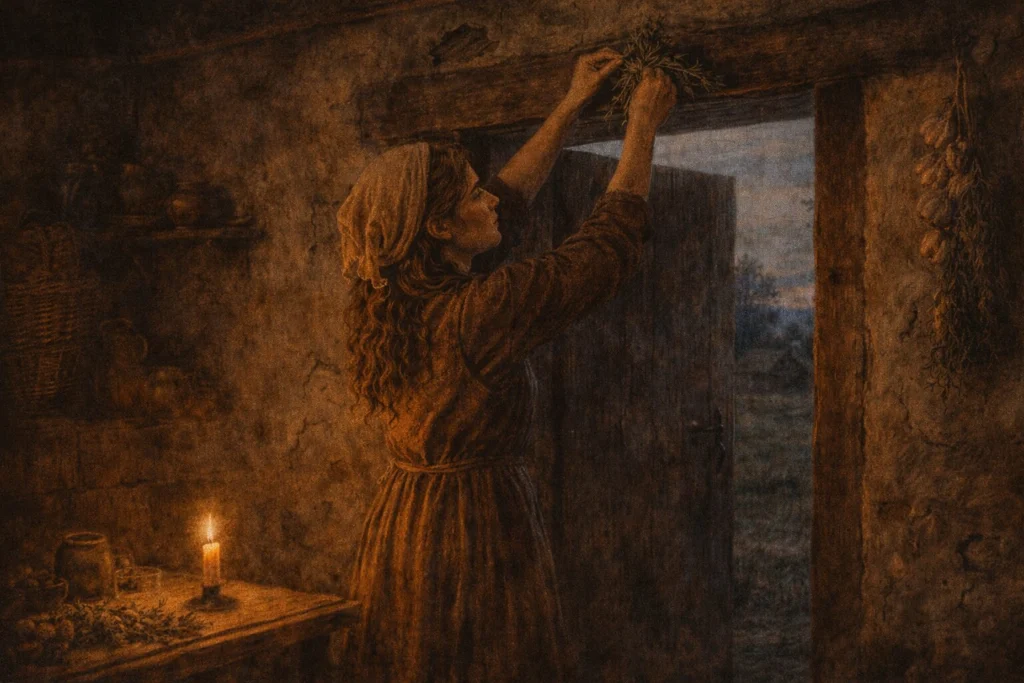
How the Craft Survived
Persecution changed witchcraft, but it did not erase the older magical world.
Part of the reason is simple: much of that world did not live in institutions that could be closed or books that could be burned. It lived in households, occupations, local custom and memory. A protection placed near a doorway could be repeated by the next family to live there. A remedy could pass from one healer to another. A story could carry an old belief long after the people telling it had forgotten where it began.
This kind of survival can be difficult to see because ordinary people rarely leave the same historical record as courts, churches and scholars. A trial produces pages of testimony. A woman teaching her daughter when to gather a particular plant may produce nothing at all.
That does not make the second form of knowledge less real.
Earlier societies also depended far more heavily on memory than most of us do now. Songs, prayers, stories, recipes, seasonal customs and repeated actions could preserve complicated information without written instructions. Knowledge held in a household could move through generations simply because someone watched, listened and eventually became the person who knew what to do.
Some of that knowledge remained associated with recognizable magical specialists. Across Europe, people we now group loosely under names such as cunning folk, wise women and men, charmers, diviners and healers continued offering services to their communities. They might identify stolen property, treat illness, break a suspected curse, provide protection, interpret signs or prepare charms. Their precise titles and methods varied greatly by place, but their existence reminds us that popular magical practice continued alongside official condemnations of witchcraft.
These people occupied an interesting boundary. They might oppose the very witchcraft their clients feared, yet use methods a modern witch would immediately recognize as magical. A cunning person could be asked to undo a curse without understanding their work as witchcraft at all. The historical categories were rarely as tidy as the ones we apply afterward.
Much more survived without specialists.
Iron might be placed near an entrance for protection. Particular plants could be gathered or hung for reasons that mixed medicine, custom and magic. Objects were concealed inside buildings. Omens were observed. Dreams mattered. Divination persisted in domestic forms. Seasonal customs preserved older relationships with agricultural cycles and the changing year. Stories remembered spirits, dangerous places, unusual animals and people with strange abilities.
Christianity became part of this survival as well. A charm might contain a Psalm. A saint could inherit a place once associated with an older sacred figure. Holy water, church candles, crosses, written prayers and Christian names might enter practices whose magical logic was older or broader than the theology used to explain them. For the people performing such acts, there did not always need to be a contradiction.
This is one reason we should be cautious when trying to separate “pagan,” “Christian,” “folk” and “magical” practice too cleanly in the historical record. Human beings are very good at carrying several layers of tradition at once.
Books provided another refuge. Grimoires and collections of charms continued to circulate. Folklorists later recorded customs that might otherwise have disappeared. Antiquarians preserved strange local stories because they found them interesting, sometimes without realizing that future practitioners would eventually read those collections very differently.
And sometimes things really were lost.
We should not romanticize survival into completeness. Traditions disappear. Languages die. Meanings are forgotten. Rituals become fragments. A custom may remain after its original explanation has vanished, leaving later generations to interpret what they have inherited. Modern witchcraft contains reconstruction for exactly this reason.
But reconstruction is not the same as fabrication.
A living tradition does not survive by remaining frozen. It survives because people adapt what can still speak to them. Modern witches can compare folklore with archaeology, manuscripts with oral traditions, local custom with ancient texts and one region’s practice with another. We can recover connections that a village practitioner centuries ago may never have had the opportunity to see.
That gives modern witchcraft an unusual relationship with its past. We honor those who carried knowledge forward, but we do not assume they possessed a purer or more complete Craft than we do. They knew things we have forgotten; we know things they could not. Some old practices deserve restoration. Others deserve study rather than repetition, especially when they relied on dangerous substances, mistaken medicine or assumptions we now understand differently.
The inheritance is not a set of instructions we are obligated to obey. It is material we are responsible for understanding.
Our own Folk / Low Magic tradition sits close to this part of the story because so much magical knowledge survived through exactly these ordinary channels: home, land, habit, story and practice rather than formal institution.
This is what we mean when we say that witchcraft changes to survive. The line does not need to be perfectly straight to be real. Sometimes it is visible in a manuscript. Sometimes in a family custom. Sometimes in folklore, architecture or an object hidden inside a wall. Sometimes it disappears for generations and returns because someone recognizes something useful in what remains.
Modern witches did not inherit an untouched ancient Craft. We inherited fragments, continuities, recoveries, inventions and possibilities, and from them the Craft continues to grow.
How Witchcraft Survived
Household practice, cunning folk, oral memory, folklore, Christianized charms, hidden objects and surviving texts carried magical knowledge through periods when openly claiming the witch could be dangerous.
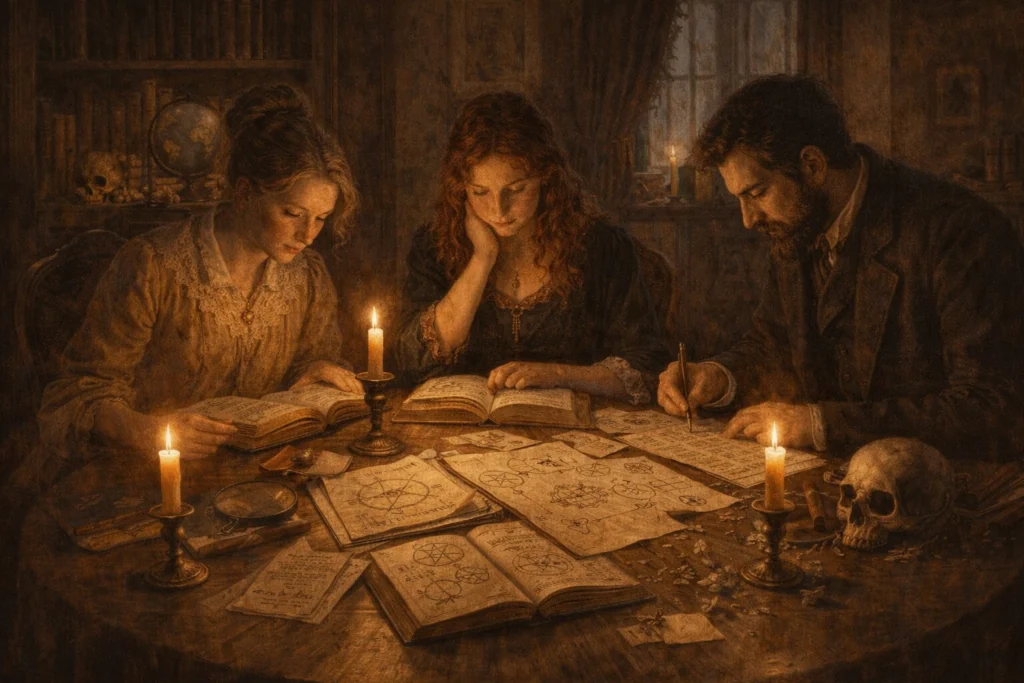
Rediscovery, Folklore & the Occult Revival
By the eighteenth and nineteenth centuries, Europe was changing again. The great witch persecutions had largely receded, literacy was expanding, printing was cheaper, and material once confined to private libraries or specialist circles could reach a much wider audience. At the same time, scholars, antiquarians and collectors were becoming increasingly interested in the customs, stories and beliefs of ordinary people.
What had once been dismissed as superstition became something worth recording.
Folklorists collected charms, seasonal customs, fairy beliefs, ghost stories, healing practices, divination methods and accounts of cunning people. Some approached this material sympathetically; others treated it as the fading remains of a less educated age. Either way, practices that might otherwise have vanished began entering books.
Romanticism added another layer. Industrialization and rapidly growing cities created a longing in some Europeans for an older relationship with land, myth and pre-Christian religion. Ancient ruins, folk songs, medieval legends and surviving rural customs became sources of fascination. The past was no longer only something humanity had escaped. It could also be imagined as something modern life had lost.
Not everything recovered during this period was recovered accurately.
Folklore collectors sometimes altered what they recorded. Antiquarians interpreted fragments through the assumptions of their own time. Writers combined genuine traditions with speculation, literary invention and wishful reconstruction. Yet even imperfect preservation could keep a fragment alive long enough for later generations to examine it again.
The occult revival was unfolding alongside this fascination with folklore. Ceremonial magic, astrology, alchemy, Kabbalah, Hermetic philosophy and newly translated ancient texts were being studied with renewed intensity. Organizations such as the Hermetic Order of the Golden Dawn attempted to organize these materials into elaborate systems of ritual and correspondence. Their work would later influence modern witchcraft profoundly, even though their members generally understood themselves as occultists or ceremonial magicians rather than witches.
Another current came through Spiritualism. Beginning publicly in the nineteenth century, Spiritualism made communication with the dead a subject of widespread religious practice and public debate. Mediumship moved into parlors, halls and churches. Séances attracted believers, skeptics and investigators alike. Women in particular could sometimes exercise forms of spiritual authority within Spiritualism that were much harder to obtain in conventional religious institutions.
These movements did something earlier practitioners rarely had the opportunity to do: they began deliberately assembling material from very different times and places.
A Renaissance magical text might now be read beside a newly translated Egyptian source. A collector’s account of rural custom might sit beside a book on ceremonial ritual. Classical mythology, folklore, astrology, comparative religion and archaeology could all enter the same library.
The expanding British Empire and European colonial scholarship also brought enormous quantities of religious and cultural material into Western circulation, often through unequal and exploitative circumstances. Modern occultism borrowed freely, and sometimes carelessly, from traditions its practitioners only partially understood. That inheritance remains something modern witches need to examine rather than simply repeat.
The emerging study of folklore also encouraged people to ask whether European folk traditions preserved traces of older religion. Charles Godfrey Leland, for example, published Aradia, or the Gospel of the Witches in 1899, presenting material he said reflected a surviving Italian witch tradition. The origins and reliability of that material remain debated, but Aradia became enormously influential because it offered something many later practitioners were searching for: a witch who was not merely the monster described by her persecutors.
Then came Margaret Murray.
In the early twentieth century, Murray argued that the European witch trials had preserved distorted evidence of a surviving pre-Christian fertility religion. Historians would ultimately reject the idea of a single organized underground witch cult surviving intact through medieval and early modern Europe. Murray selected evidence too freely and treated trial testimony far more literally than later scholarship could support.
Her historical argument failed, but her cultural influence was extraordinary.
Murray helped make it imaginable that the accused witch might represent something older than Christian demonology. She gave readers a story in which witchcraft possessed history, ritual and religious meaning of its own. That story reached well beyond academic circles and helped prepare the cultural ground upon which modern religious witchcraft would emerge.
This period therefore matters not because every recovery was correct, but because scattered currents were becoming visible to one another.
Folklore preserved household practice. Archaeology uncovered older religious worlds. Scholars translated ancient texts. Ceremonial magicians rebuilt systems from manuscripts. Spiritualists reopened public conversation about spirits and the dead. Writers reconstructed, romanticized and sometimes invented. For perhaps the first time, people could begin standing among several of these currents at once and consciously ask what belonged together.
Modern witchcraft would grow from that possibility.
Survival becomes rediscovery. Folklore, archaeology, occult publishing and comparative study begin bringing once-separated magical currents into conversation.
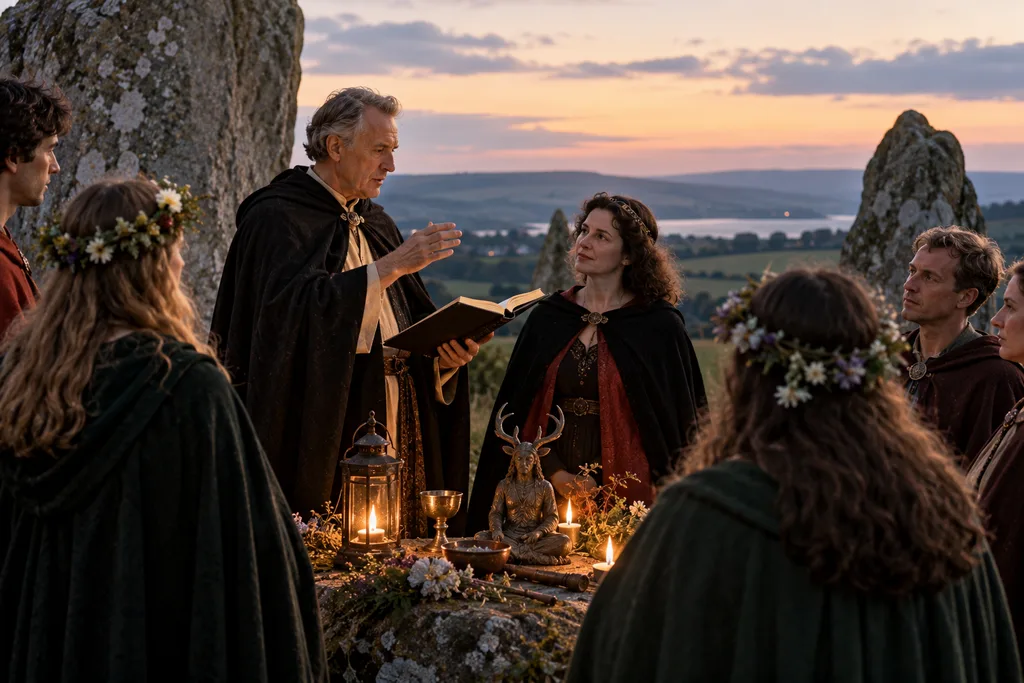
Modern Witchcraft Takes a Name
By the middle of the twentieth century, the scattered currents of folklore, ceremonial magic, Pagan revival, occult philosophy and older magical practice were beginning to form something new: people openly claiming the identity of witch for themselves.
That shift matters. For centuries, witch had most often been a word applied from the outside—as accusation, warning, insult or figure of folklore. Modern witches increasingly turned the word around and used it deliberately.
Gerald Gardner became one of the most influential figures in that transformation. In the years following the repeal of Britain’s old Witchcraft Act, Gardner began writing publicly about what he described as a surviving witch religion. His historical claims reflected the ideas of Margaret Murray and would later be heavily questioned, but the religion that emerged around Gardner was not imaginary simply because parts of its proposed history were mistaken.
It became Wicca, and Wicca became one of the most important developments in the history of modern witchcraft.
Gardner and those around him drew from several streams already moving through British occult culture: ceremonial magic, folklore, Freemasonry, classical Paganism, romantic ideas about older European religion and practices Gardner said came through an initiatory witch tradition. The result was not simply a reconstruction of the ancient past. It was a living synthesis shaped by both inheritance and its own time.
Doreen Valiente was crucial to what that tradition became. Her writing and ritual work helped give early Wicca a voice distinct from some of the ceremonial material that had influenced Gardner, and her role is difficult to overstate. Wicca would continue developing through Gardnerian, Alexandrian and many later traditions, eventually spreading far beyond Britain.
We explore that development much more fully in Wicca Emerges. Here, what matters most is what its emergence changed for witchcraft as a whole.
Wicca made it increasingly possible for a person to say, publicly and affirmatively, I am a witch.
That did not mean Wicca became synonymous with witchcraft. It never was. Folk practitioners continued working in their own ways. Ceremonial and esoteric currents continued alongside it. Other forms of traditional, regional and hereditary practice existed before, during and after Wicca’s emergence, although claims of ancient family lineage need to be considered individually rather than assumed simply because they are old-sounding.
Nor did every modern witch become religious. Some witches worked primarily through folk practice, spirit work, magic, divination or occult study. Others practiced within broader Pagan religions. Some belonged to covens; others worked alone. The twentieth century did not produce one modern witchcraft. It produced an expanding field of witchcrafts that increasingly knew about one another.
Publishing accelerated that process. Books once available only through initiatory groups or specialist occult circles began reaching ordinary readers. By the 1960s, 1970s and 1980s, people could encounter witchcraft in bookstores, mail-order catalogs, Pagan newsletters and eventually dedicated shops. Techniques and ideas that had once remained local or private traveled much farther.
This increased access also changed the relationship between initiation and knowledge. Earlier coven traditions often assumed that substantial teaching would happen person to person. Printed witchcraft allowed readers with no local coven at all to begin studying ritual, correspondence, mythology and magical technique. Solitary practice became increasingly visible and eventually commonplace.
Modern witchcraft also began separating itself from the frightening figure created during the persecutions. The Devil was not secretly hiding beneath Wiccan ritual. The sabbat of demonological imagination was not the same thing as the seasonal Sabbat celebrated by modern witches. The old accusations had created a fictional religion for witches; modern witches were now developing actual religions and practices under the name.
That distinction was liberating, but the older image never disappeared completely. Modern witches inherited both the magical streams that preceded them and the cultural shadow of the persecuted witch. The broom, the familiar, the night journey, the pointed hat and even the word coven carried histories shaped as much by outsiders as practitioners. Some modern witches rejected those associations, while others reclaimed them.
And that reclamation was only beginning.
Wicca Emerges
Gardner, Valiente and the early covens helped transform the witch from an accusation into a publicly claimed religious identity. Follow that story in greater depth without confusing Wicca with witchcraft as a whole.
The Witch Steps Into Public
By the second half of the twentieth century, witchcraft was no longer developing only inside small covens, occult circles and private homes. It was becoming visible.
Books played an enormous role. Publishers discovered an audience interested in witchcraft, Pagan religion, folklore, divination and practical magic. Material that had once required initiation, personal connections or access to specialist libraries increasingly appeared on ordinary bookshelves. Readers could encounter witchcraft privately, often long before they ever met another witch.
That changed who could enter the Craft.
A person living far from an established coven could study alone. Someone raised within a religion that condemned witchcraft could quietly discover that witches themselves described their beliefs very differently. People could compare traditions, question inherited assumptions and eventually find others who shared their interests. Solitary witchcraft was not invented by the book trade, but publishing made solitary practice far easier to sustain and helped give it a recognizable place within modern witch culture.
The growing Pagan movement overlapped heavily with this expansion, although Pagan and witch have never meant exactly the same thing. Wiccans, reconstructionist Pagans, Druids, Goddess worshippers, ceremonial practitioners, folk witches and people creating newer forms of practice increasingly encountered one another at festivals, shops, conferences and through small publications. Our broader discussion of that religious landscape continues on Paganism.
The feminist movements of the later twentieth century also changed the meaning of the witch.
For centuries, Western culture had used the witch as a warning about women who were dangerous, unruly, sexually suspect, angry, independent, old, knowledgeable or unwilling to remain within expected roles. Modern women began asking what happened if that accusation was refused rather than feared.
The answer was reclamation.
The witch could become a symbol of female authority rather than female corruption. Knowledge that had once been portrayed as threatening could be reconsidered as independence. The old image of the woman outside acceptable religious authority could be turned around: perhaps the problem was not that she stood outside it, but that she did not require it.
This did not mean every feminist became a witch or every witch became a feminist. Nor did all feminist witchcraft resemble Wicca. But writers and practitioners such as Starhawk helped connect witchcraft with Goddess spirituality, ecology, ritual community and feminist understandings of power. These currents permanently widened the modern Craft.
They also encouraged witches to reconsider the history discussed earlier on this page. The persecuted witch became more than a victim. She became an ancestor of imagination: not necessarily a literal initiated predecessor, but a reminder of what can happen when religious, political or social authorities decide that certain forms of knowledge and independence are dangerous.
Men continued to belong within witchcraft as well, and the increasingly public Craft created space for people who had often felt uncomfortable within conventional religious structures. Gay and lesbian practitioners, gender-nonconforming people and others accustomed to being treated as outsiders could encounter religious communities in which inherited rules about gender, sexuality and spiritual authority were not always taken for granted.
That did not make witchcraft automatically inclusive. Coven culture could reproduce the same prejudices found elsewhere, and some traditions maintained rigid ideas about gender and sexuality. But the expanding Craft also gave practitioners the ability to build something different.
Witchcraft shops became another important part of this public world. They were more than places to buy candles or incense. In many communities they served as informal meeting places, bulletin boards, classrooms and gateways into local Pagan and magical networks. A person who had previously encountered witchcraft only through a book could walk into a physical place and discover that practitioners actually existed nearby.
Public festivals and open rituals did something similar. So did newsletters, correspondence networks and mail-order catalogs. Information moved faster, regional communities became easier to find, and traditions that might previously have developed in isolation began influencing one another.
The image of the witch in popular culture was changing at the same time. Film, television, music and literature continued producing frightening witches, but they also produced sympathetic, glamorous, rebellious and eventually ordinary ones. The cultural witch and the practicing witch remained different figures, yet each increasingly affected how the other was understood.
This growing visibility brought new problems as well. Once witchcraft became marketable, it could be packaged. Traditions could be simplified for mass audiences. Practices removed from their historical or cultural setting could be sold as universally ancient. A romantic story often traveled farther than a complicated one.
Still, something fundamental had changed.
For centuries, being known as a witch could place a person in danger. By the late twentieth century, increasing numbers of people were purchasing books about witchcraft openly, entering shops dedicated to it, gathering publicly, forming organizations and placing the word witch on themselves intentionally.
The broom closet did not disappear, and it still has not. Family, employment, community and religious hostility can make privacy necessary even now. But secrecy was no longer the only imaginable condition of the Craft.
The witch had stepped into public.
And just as that happened, a new technology arrived that would transform the transmission of witchcraft more dramatically than anything since the printing press.
The Digital Witch
If printing allowed witchcraft to leave the private library, the internet allowed it to leave geography behind.
By the late twentieth and early twenty-first centuries, witches who might never have found one another locally could meet through message boards, email lists, forums, personal websites and online communities. A solitary practitioner in a small town could talk with coven members in another country, locate an obscure historical text, compare traditions and discover that practices they had encountered only in books were still being used by living people.
The effect on witchcraft was enormous.
Knowledge that had once moved through initiation, personal teaching, specialist bookstores or difficult-to-find publications became increasingly searchable. Digitized manuscripts and academic research opened historical sources to ordinary practitioners. Museums placed collections online. Old books entered public archives. Teachers could speak to students across continents, while practitioners from different traditions could compare methods in ways that earlier generations rarely could.
For modern witchcraft, this created something historically unusual: access to many streams of magical knowledge at once.
A practitioner could study Mediterranean religion, British folk custom, ceremonial magic, astrology, folklore and modern Wiccan ritual without traveling farther than a library or computer. That access has allowed modern witches to question inherited claims, rediscover forgotten material and recognize connections that were difficult to see when traditions developed in relative isolation.
It has also created problems.
The internet tends to flatten distinctions. A practice from one place can be detached from its original culture, renamed and presented as universally ancient. A modern invention can acquire an impressive imaginary lineage after being repeated often enough. Personal experience can circulate as historical fact. Complicated traditions can be reduced to lists, graphics and short explanations designed to travel quickly rather than teach deeply.
Social media intensified that effect. Witchcraft became more visible than at any earlier point in its history, but visibility increasingly operated through algorithms that favor novelty, beauty, certainty and constant production. A striking claim may travel much farther than a careful explanation. A visually appealing ritual may appear more authoritative than a quiet practice refined over decades.
This does not mean online witchcraft is shallow. Some of the best teaching, scholarship and community available to witches now exists online. The same networks that spread misinformation also allow misinformation to be challenged almost immediately. Practitioners can compare translations, locate primary sources, hear from people inside traditions rather than only reading outsiders, and correct historical claims that once circulated for generations.
The internet has also made witchcraft easier to enter without asking anyone’s permission.
That has weakened some forms of gatekeeping that once controlled access to magical knowledge. A person no longer needs to live near an occult shop, know the right people or convince a coven to teach them before beginning serious study. For people whose families or communities remain hostile to witchcraft, online spaces can provide the first evidence that they are not alone.
At the same time, access is not the same thing as understanding. Ten thousand fragments do not automatically become a tradition. A searchable archive cannot replace judgment, context or experience, and an algorithm cannot tell a practitioner which source deserves trust.
This is one reason MCC places so much emphasis on discernment and study. Our Nature of the Craft discussion looks more closely at what happens when witchcraft is shaped by trends, instant information and the pressure to turn practice into content.
Visibility also remains uneven. Some witches speak publicly under their own names. Others maintain separate identities, keep practice within trusted circles or remain entirely private because family, employment, religion or community would make disclosure costly. The modern Broom Closet looks different from the secrecy of earlier centuries, but the need for it has not vanished.
The digital age therefore continues the pattern that has followed witchcraft throughout this history. New conditions create new possibilities, and the Craft adapts to them. Some older forms disappear. Others become more accessible than ever before. New traditions emerge beside reconstructed ones, and people separated by language, nation and lineage increasingly influence one another.
For perhaps the first time in its history, witchcraft can see so much of itself at once.
The challenge now is deciding what to do with everything we can see.
Archives, teachers, communities and traditions once difficult to reach are now widely available.
Practitioners can place texts, folklore, traditions and historical claims beside one another.
Misinformation, decontextualized practice and invented history can spread as quickly as good scholarship.
The Craft Is Not Finished
Modern witchcraft inherits an extraordinary amount of material from the past, but inheritance is not the same thing as obedience.
Older does not automatically mean wiser, safer or more effective. Historical practitioners worked with the knowledge available to them. They also made mistakes, misunderstood illness, used dangerous substances and explained natural events through models we no longer need to accept simply because they are old.
Flying ointments are an obvious example. Historical accounts and later recipes sometimes involve plants such as belladonna, henbane and other highly toxic substances capable of producing delirium, hallucination, severe poisoning and death. They are historically fascinating. That does not make recreating them a mark of greater authenticity.
We can honor an old practice without repeating it.
The same principle applies more broadly. Modern witches have access to archaeology, history, chemistry, medicine, psychology, linguistics, comparative religion and enormous collections of primary texts that earlier practitioners could never have assembled in one place. We can compare translations, identify plants accurately, recognize later additions to supposedly ancient traditions and distinguish a nineteenth-century interpretation from the culture it claimed to describe.
That knowledge does not diminish magic. It gives us better tools with which to approach it.
Modern witchcraft has also become more self-aware about the ways traditions meet. Earlier practitioners sometimes borrowed from neighboring cultures without knowing much about where a practice came from. Today we have greater opportunity—and therefore greater responsibility—to ask who developed something, what it originally meant, whether it belongs to a living community and what changes when we move it into another system.
At the same time, we should be careful not to turn historical purity into another kind of superstition. Traditions have always borrowed, translated, adapted and responded to one another. The Mediterranean world did it. Medieval magical texts did it. Renaissance occultists did it. Folk practitioners did it. Wicca did it. Modern witches continue doing it.
The important questions are not simply Is this old? or Is this traditional? They are also: Where did it come from? What are we changing? Why are we using it? Does it still make sense? Are we treating its source responsibly? And does it actually belong in the work we are trying to do?
This is one reason we do not imagine the past as a lost golden age of witchcraft.
Our predecessors possessed knowledge worth preserving, but they also lived within narrower worlds. A village healer might know the plants of her region intimately while knowing almost nothing about practices a few hundred miles away. A ceremonial magician might own precious manuscripts while lacking access to texts now available to anyone with an internet connection. A nineteenth-century folklorist could save a local custom from disappearing while misunderstanding the people who practiced it.
We have advantages they did not.
They had advantages we do not.
The task is not to decide which generation was more authentic. It is to learn from both.
Modern witches can place folk custom beside ancient ritual, ceremonial theory beside living practice, historical scholarship beside personal experience. We can recover techniques that deserve another look, discard things that cause harm and create methods suited to conditions our predecessors never faced. In that sense, the Craft has not merely survived into the modern world. It has become capable of seeing more of its own history than perhaps ever before.
That brings its own responsibility.
More information does not guarantee better witchcraft. A person can collect hundreds of correspondences without developing judgment. We can reproduce a historical ritual perfectly and still misunderstand what made it meaningful. We can mistake complexity for depth or novelty for discovery.
The Craft still requires discernment.
For MCC, tradition is a conversation rather than a command. The past gives us teachers, warnings, fragments, tools, stories and questions. We listen carefully, but we do not surrender our judgment to it. A living practice should be capable of learning.
This is perhaps the most important form of survival of all. Witchcraft does not endure because it remains unchanged. It endures because each generation receives something, examines it and decides what should be carried forward.
We are doing that now.
The past is an inheritance, not an instruction manual. A living Craft remembers, tests, adapts and continues.
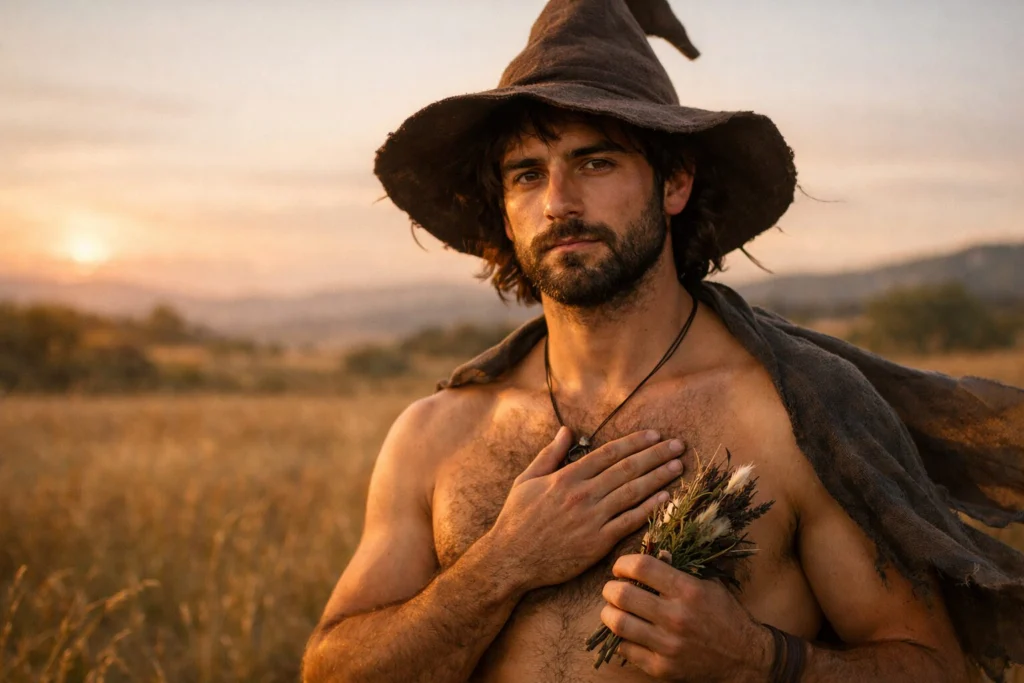
So What Is a Witch?
After all of this history, the answer is both simpler and more complicated than it first appears.
A witch is not defined only by persecution, folklore, religion, ancestry or technique. Each of those has helped shape the word, but none of them owns it.
Historically, witch has been used for several different figures at once. It has named people accused of harmful magic, local practitioners whose knowledge sat outside accepted authority, characters shaped by folklore, and eventually people who deliberately reclaimed the word as a religious or magical identity. Those histories overlap, but they should not be collapsed into one another.
For modern practitioners, the word is usually chosen rather than imposed.
A witch enters into deliberate relationship with magic.
That relationship may include spirits, gods, ancestors, land, divination, spellcraft, ritual, folk practice, ceremonial methods or other forms of magical work. Some witches approach those things religiously. Others do not. Some belong to initiatory traditions, while others work alone. Some inherit practices through family or community; others begin through study and gradually build a practice of their own.
There is no single technique that turns someone into a witch.
The deeper continuity lies in the willingness to engage the world as something more than passive matter: to recognize relationship, pattern, unseen influence and the possibility that human intention can participate in change. The forms used to express that understanding have shifted repeatedly because witchcraft has always lived inside particular cultures and particular times.
This is why history matters.
Knowing where practices came from helps us recognize what we have inherited, what has been reconstructed, what was borrowed, what was misunderstood and what is genuinely new. It also reminds us that modern witches are neither disconnected from the past nor obligated to imitate it.
We stand inside a long human history of magical practice, but we practice from the present.
That distinction gives us freedom and responsibility at the same time.
Freedom means that witchcraft is still capable of development. We can learn from traditions without pretending every tradition belongs to us. We can recover older practices without romanticizing them. We can create new work without inventing an ancient pedigree to justify it.
Responsibility means being willing to know the difference.
For MCC, this is part of what makes witchcraft a Craft rather than merely an aesthetic or collection of interesting techniques. It asks for study, judgment, practice and some awareness of the currents from which our methods emerged. The history does not need to be perfectly continuous for those currents to matter.
The witch has never been one thing.
The name has carried fear, accusation, mystery, rebellion, religion, folklore and practice across centuries. Modern witches inherit all of that, whether we embrace every part of it or not.
What we do with the inheritance is ours.
For a closer look at how MCC understands the identity itself—practice, accusation, archetype and modern use of the word—continue to The Work We Share.
The history brought us here. The next question is where the Craft goes now.
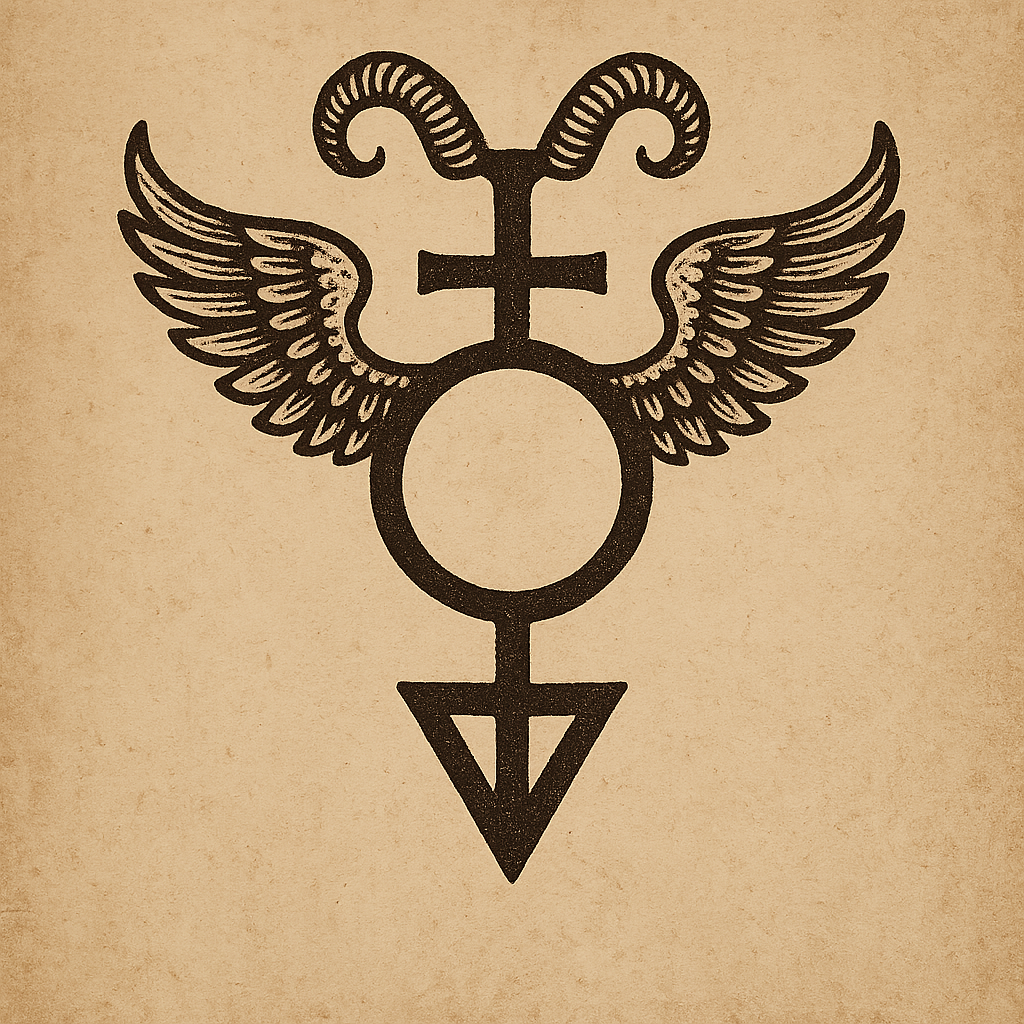
“Before it was feared, it was lived. Before it was named, it was known.”
What follows is not a single story—but many threads woven through time.
✦ Historical Timeline of Witchcraft and Its Modern Re-emergence
This is a dense but non-exhaustive chronology of witchcraft’s older roots, persecutions, survivals, revivals, and modern developments. It gathers major currents and turning points rather than claiming to include every region, tradition, or event.
What is Witchcraft?c. 12,000–1,000 BCE Prehistory & Proto-Ritual trance, tending, thresholds
-
12,000–6,000
Ritual specialists
Grave goods and cave light hint at healers who spoke with animals and ancestors. The first warders of the fire.
Folklore/Practice -
6,500–3,000
Marks at the threshold
Charmed doorways, blessed wells. Hearths become altars; daily offerings become a grammar of care.
Folklore/Practice -
4,000–2,000
Bonfires and boundary walks
Communities ring themselves in light and song. The year learns its steps.
Folklore/Practice
c. 3000–500 BCE Ancient Near East & Egypt names, bindings, protection
-
c. 2600 BCE
Incantation tablets
Sumerian lines that steady breath and body—spell as medicine, name as remedy.
Text/Work -
2000–1500
Execration rites
Figurines bound and made harmless: an ethic of turning harm aside rather than letting it roam.
Folklore/Practice -
2nd–1st mil.
Household amulets
Eyes and scarabs, gods and vowels—pocket wards for ordinary courage.
Deck/Tool
500 BCE – 300 CE Classical & Hellenistic Worlds crossroads, oracles, star-craft
-
6th–4th c. BCE
Hekate at the crossroads
Keys and torches at night, dogs at heel, offerings at the three-ways. Guardian of liminal work. Background
Deity Current -
5th–4th c. BCE
Hermes as guide of roads and messages
Pillar-herms mark crossings; the messenger becomes central to travel, exchange, and threshold magic. Background
Deity Current -
c. 415 BCE
The Mutilation of the Herms
A city panics when its guardians are defaced—proof of how much the crossroads matters. Background
Trial/Event -
1st–4th c. CE
Hekate and Hermes in magical texts
In the Greek Magical Papyri, liminal and messenger powers are braided into ritual craft.
Deity Current -
4th–1st c. BCE
Astrology systematized
Planetary dignities and hours give language to timing—the witch’s oldest ally.
Text/Work
300–600 Late Antique & Early Christian theurgy, hermetica, survivals
-
2nd–3rd c.
Hekate and Hermes in theurgy
Chaldean and Hermetic currents preserve ritual ascent, mediation, and spirit-wayfinding.
Deity Current -
506+
Canons against “superstitions”
Edicts scold the folk; doorways still wear quiet charms.
Law
600–1100 Early Medieval Folk Faith saints & wells, night-flight doubted
-
700–900
Blessing hearth and field
Charms for cows and children; prayer stitched to practice—little magics that keep life whole.
Folklore/Practice -
906
Canon Episcopi
Officials call night-flight “illusion,” yet the folk keep dreaming with the wind. Background
Law
1100–1500 Doctrine & Grimoires crossroads lore, learned magic
-
1200s–1400s
Hekate at the three-ways
Classical “Trivia” remembered; doors still take salt, iron, and whispered thanks.
Deity Current -
1300s–1400s
Hermes Trismegistus in circulation
Latin Hermetica circulate: the messenger becomes a teacher of ascent and insight. Background
Deity Current -
1280–1350
Picatrix & Solomonic cycles
Star-craft marries spirit-craft; talismans learn their hours. Background
Text/Work
1450–1750 The Witch Hunts panic, policy, harm
-
1428–44
Valais persecutions
Early large-scale killings—fear dressed as law. Background
Trial/Event -
1542 → 1604
English Witchcraft Acts
Criminalization expands; suspicion weaponized against the poor and the strange. Background
Law -
1590–91
North Berwick
Storms blamed on witches—politics in a demon’s mask. Background
Trial/Event -
1692–93
Salem
Spectral “evidence,” real grief. Communities later confess their wrong. Background
Trial/Event -
1735–36
Reframing the statute
From felony to fraud policing; the killing winds ease. Background
Law
1700–1830 Enlightenment & Folk Survivals cunning craft, powwow
-
1700s
Cunning folk
Healers and finders stand in the gap—practical magic for ordinary lives. Background
Folklore/Practice -
Late 1700s
Powwow / braucherei
Bible verses braided with signatures and salves: culture as craft. Background
Folklore/Practice
1837–1901 Victorian Currents Spiritualism, occult orders, folklore boom
-
1848
Fox Sisters & the raps
Séances open parlors to the dead—and to women’s authority in the circle. Background
Trial/Event -
1887–88
Golden Dawn
Ritual frameworks that later witches remix with flair. Background
Movement/Org
1901–1939 Edwardian & Interwar Seeds RWS tarot, theses, modernists
-
1909
Rider–Waite–Smith Tarot
Pamela Colman Smith’s images teach a century to read. Background
Deck/Tool
1940s–1960s Wicca Emerges repeal, covens, voices
-
1944
Helen Duncan’s case
A final spasm of the old statute—proof that fear lingers after truth is known. Background
Trial/Event -
1951
Witchcraft Act repealed
Space opens for craft to breathe in daylight. Background
Law -
1954–59
Gardner’s books
Public words for private rites; a lantern raised for seekers. Wicca @ MCC
Text/Work -
1963
Raymond Buckland to the U.S.
Gardnerian line established; museum and teaching. Works
Person -
1964
Alexandrian Wicca
A ceremonial-leaning sister to Gardnerian practice. Background
Movement/Org
1970s Feminist, Ecological & Public Witchcraft Dianic, Reclaiming, visibility
-
1968–70s
Dianic currents
Women’s mysteries step forward; sovereignty named and kept. Background
Movement/Org -
1979
The Spiral Dance
Ritual meets activism; the circle widens. Works
Text/Work
1980s–1990s Recognition & Community rights, handbooks, festivals
-
1986
Dettmer v. Landon (United States)
A federal court recognizes Wicca as religion—legal air under the craft’s wings. Background
Law -
1988–93
Scott Cunningham’s guides
A door opened for solitaries—kind, accessible, steady teaching. Works
Text/Work
2000s Early Internet Witchcraft forums, websites, broader access
-
2005
Cutter v. Wilkinson (United States)
Minority religious practice, including Wicca, receives stronger protection. Background
Law -
2007
Pentacle approved for VA headstones
Parity for the fallen—recognition carved in stone. Background
Law
2010s–2020s Platforms & Public Return social media, digital communities, visibility
-
2010s–2020s
The threshold multiplies
Witchcraft becomes newly visible through digital communities, education, aesthetics, and public ritual language.
Culture/Media
Present MCC in the Present public teaching, practice, archive
-
2025
My Cousin’s Coven grows as a public-facing archive and teaching space
A contemporary continuation of study, practice, and shared magical language. About MCC Visit Site
Movement/Org