Threshold Magic
The Places Between, the Times Between, and the Power of Liminal Space
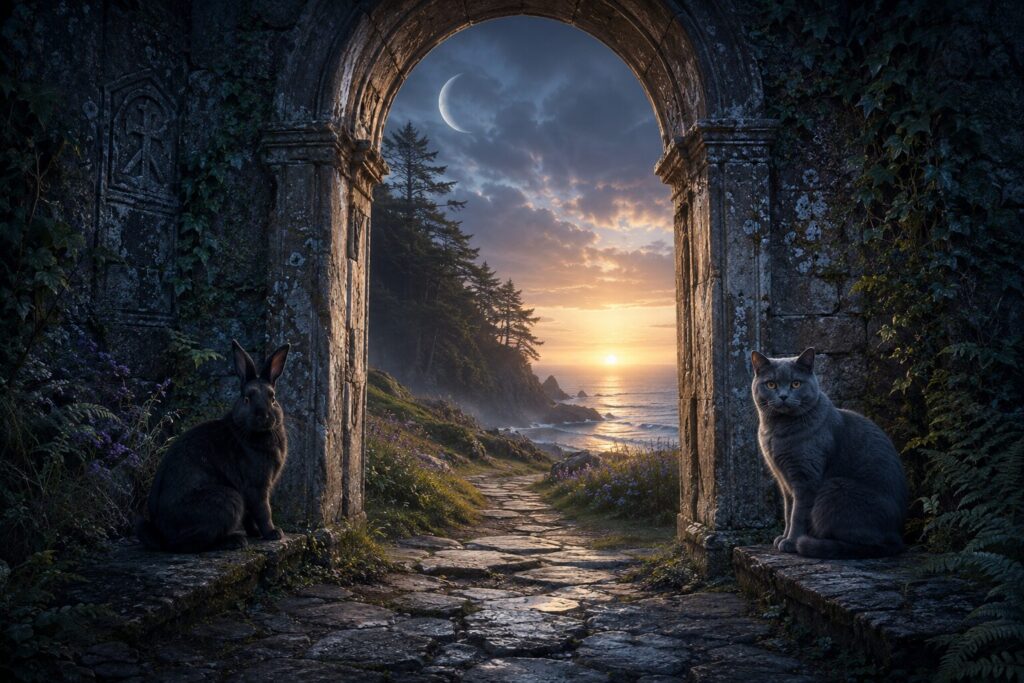
Threshold magic concerns itself with the places, moments, and states that exist between what was and what will be. It is the magic of doorways and shorelines, crossroads and bridges, dawn and dusk, departure and arrival. Wherever one thing becomes another, a threshold is present.
Nearly every spiritual, magical, and religious tradition recognizes these in-between places. Folklore warns us to be cautious at crossroads after dark. Temples mark the passage from ordinary space into sacred space. Pilgrims travel long roads seeking transformation. Mystics retreat into wilderness, caves, deserts, and forests where familiar boundaries begin to loosen.
The power of a threshold does not come from the location alone. It arises from transition. A doorway matters because it connects two rooms. A bridge matters because it joins separated lands. Dawn matters because night is becoming day. Thresholds remind us that change is not an event but a process.
For many practitioners, liminal spaces feel different. Some describe a heightened awareness. Others report a sense of presence, possibility, mystery, or spiritual significance. Whether understood through folklore, psychology, sacred geography, personal experience, or magical practice, thresholds have occupied a special place in human imagination for thousands of years.
Threshold magic is the study of these places between places, these moments between moments, and the transformations that occur while crossing them. It invites us to look not only at where we are going, but at the sacred space that exists while we are becoming.
The Shape of the In-Between
What Is a Threshold?
A threshold is any place, moment, or state where one condition gives way to another. It may be physical, temporal, emotional, spiritual, or symbolic. What matters is not simply where the threshold stands, but what it allows to change.
A Place Between
Doorways, gates, bridges, shorelines, crossroads, and forest edges are not only locations. They are passages between conditions, where one world yields to another.
A Time Between
Dawn, dusk, midnight, seasonal turnings, eclipses, anniversaries, and rites of passage reveal that time itself has doors, hinges, and crossings.
A State Between
Grief, awakening, recovery, initiation, transformation, and uncertainty can make a person into a threshold: no longer who they were, not yet who they are becoming.
In threshold magic, these moments of passage are not interruptions in the journey. They are the journey.
A threshold is not a destination.
It is the moment when one world loosens its hold and another has not yet fully arrived.
Liminal Spaces
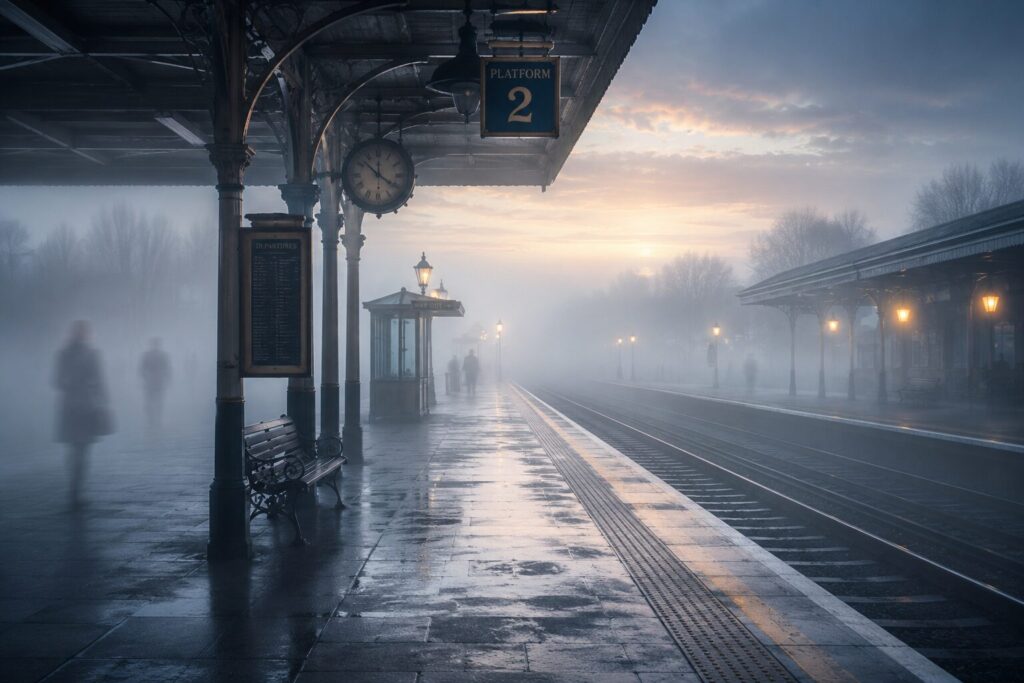
The word liminal comes from the Latin limen, meaning threshold. A liminal space exists between categories. It is neither fully one thing nor fully another. A doorway is neither inside nor outside. Dawn is neither night nor day. A shoreline is neither land nor sea.
Many practitioners believe these in-between places possess a unique quality. They feel different. Attention sharpens. Ordinary assumptions loosen. Possibilities seem closer than they do elsewhere. Throughout folklore, religion, magic, and spiritual practice, liminal spaces repeatedly appear as locations of transformation, revelation, danger, mystery, and change.
Some liminal spaces are physical. Others are temporal. Some exist only because of the meaning we attach to them. A hospital room may become liminal because it stands between illness and recovery, life and death, fear and hope. A temple threshold becomes liminal because it separates ordinary life from sacred space. A crossroads becomes liminal because multiple futures meet in a single place.
Not every practitioner agrees on why liminal spaces matter. Some view them as energetic gathering points. Others understand them through symbolism, psychology, folklore, sacred geography, or spiritual experience. Whatever explanation one prefers, the pattern remains remarkably consistent: human beings have long regarded the spaces between as places where transformation becomes possible.
Where the Veil Feels Thin
Common Liminal Spaces
Some thresholds are open and easily felt. Others are guarded, consecrated, personal, seasonal, or accessible only through practice, invitation, or permission.
Doorways & Gates
The most familiar thresholds. They mark entry, exit, invitation, boundary, protection, and the moment one space becomes another.
Shorelines
Land and water meet at the shore, making it a powerful place for release, transition, cleansing, offerings, grief work, and reflection.
Crossroads
Crossroads gather choice, direction, fate, and uncertainty. They are among the most enduring magical thresholds.
Crossroads MagicForest Edges
The edge of the woods marks the meeting of the known and the wild. Many traditions treat this boundary with caution and reverence.
Temples & Shrines
Sacred spaces are often bound by intention, devotion, tradition, and permission. Crossing into them is an act of spiritual attention.
Hospitals & Hospices
Modern liminal spaces where birth, healing, fear, waiting, recovery, grief, and death may all stand close together.
Sacred Geography
Ley lines, holy wells, standing stones, pilgrimage routes, cave mouths, springs, and old sacred sites often function as thresholds in magical thought.
The Veins of the Earth’s MagicThe Home
Doorways, windows, hearths, chimneys, stairs, attics, cellars, and thresholds of rooms may all carry protective, ancestral, or spiritual meaning.
Some thresholds are open to all who notice them. Others ask for relationship, preparation, permission, or practice before they reveal what they hold.
The Times Between
Thresholds are not only places. They are moments.
Some times of day, seasons of the year, and turning points in human life have long been treated as spiritually significant because they mark passage. They do not belong entirely to what came before or what comes after. They are hinges in the rhythm of existence.
Dawn is not quite night and not yet day. Dusk is not fully day and not fully night. The equinox stands between light and dark. The solstice marks the turning of the sun. An initiation, birthday, wedding, funeral, graduation, recovery milestone, or coming-of-age moment may become a threshold because it changes how a person understands themselves.
In threshold magic, timing matters because transition has its own current. The practitioner learns to notice when the world is turning, when the light is changing, and when a life has entered the space between chapters.

Threshold Timing
When the World Turns
Thresholds are not only found in places. They are found in moments. Some hours, days, seasons, and personal milestones carry the feeling of passage because they mark movement from one state into another.
Daily Thresholds
Dawn, dusk, noon, and midnight are hinges in the rhythm of the day. They mark emergence, descent, balance, and turning.
Lunar Thresholds
New moons, full moons, eclipses, and rare lunar events mark visible cycles of beginning, culmination, shadow, and return.
Lunar PracticeSolar & Seasonal Thresholds
Solstices, equinoxes, and seasonal festivals mark the turning of light, darkness, growth, harvest, rest, and return.
Sacred Hours
The Witching Hour and other deep hours of night are often treated as especially liminal: suited for dreams, divination, spirit awareness, and careful attention.
Calendar Thresholds
New Year’s Day, birthdays, anniversaries, first days, last days, and yearly returns invite reflection, release, intention, and renewal.
Birth Moments
Date, hour, season, moon phase, and astrological conditions at birth are often treated as meaningful because birth is the first great threshold every person crosses.
Some traditions teach that the smallest threshold is the pause itself: the breath between inhaling and exhaling, the silence between notes, the stillness before a choice is made.
The wise practitioner learns to recognize not only sacred places, but sacred moments.
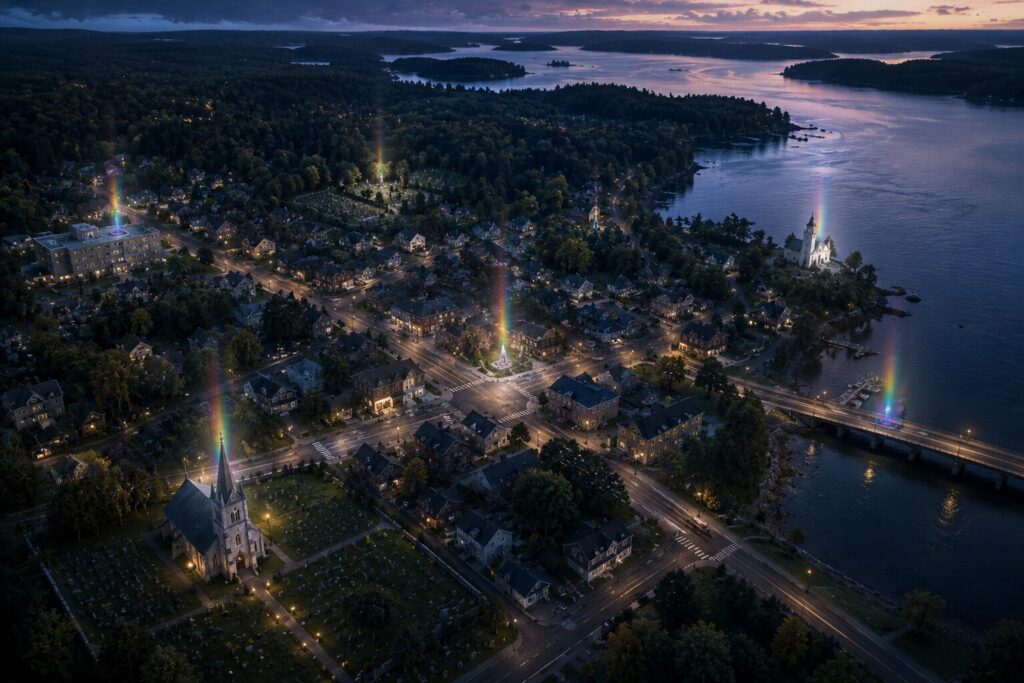
Living in Liminality
Not every threshold is found in a place. Some thresholds are lived.
Most people encounter liminality many times throughout their lives, often without recognizing it. The period after a loss, the months before a move, recovery from illness, spiritual awakening, retirement, graduation, divorce, becoming a parent, coming out, changing careers, or beginning a new chapter can all create a sense of existing between identities. The old story has loosened its hold, yet the new story has not fully arrived.
These seasons can feel uncomfortable because human beings naturally seek certainty. We want to know where we stand. Liminal periods often deny us that comfort. They ask us to remain present while the future is still forming.
Many magical traditions recognize these moments as spiritually significant. The person standing between chapters may be more reflective, more attentive, more emotionally vulnerable, and more open to transformation than they are during ordinary times. While these periods can feel uncertain, they can also become profound opportunities for growth, healing, self-discovery, and renewal.
Threshold magic reminds us that being “between” is not a failure to arrive. It is a sacred condition of becoming.
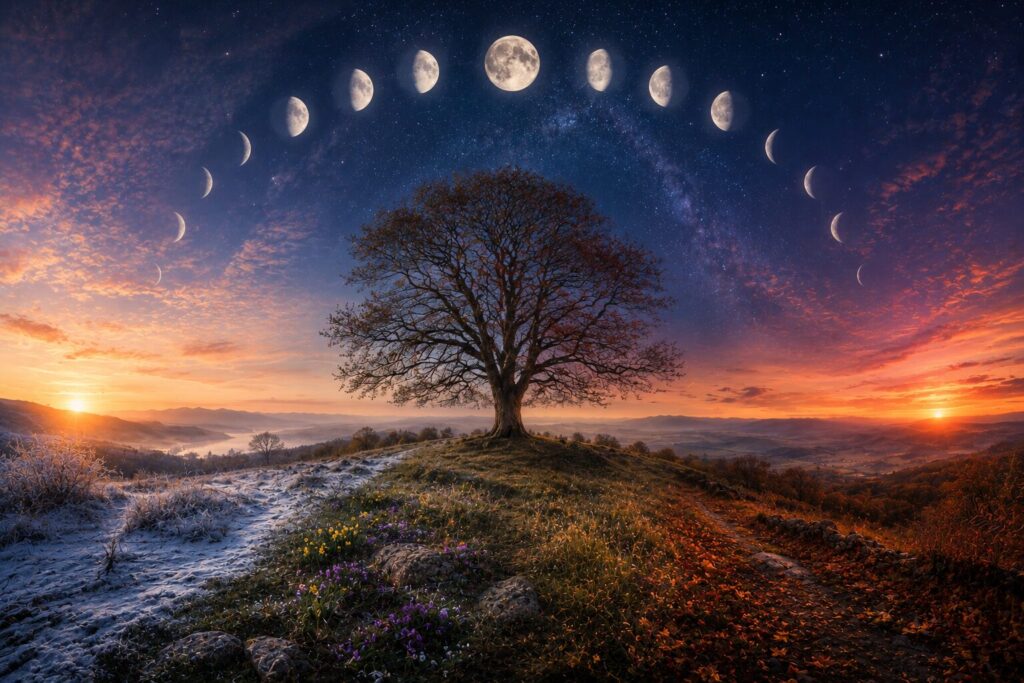
Recognizing the Crossing
Signs You May Be Living in a Threshold Season
Not every threshold announces itself. Sometimes we only recognize a crossing after we have already stepped onto the road.
The Old Life No Longer Fits
Familiar routines, identities, relationships, or goals begin to feel too small, restrictive, or disconnected from who you are becoming.
The New Life Has Not Yet Arrived
You know something is changing, but you cannot yet see the final shape of what comes next.
Certainty Feels Elusive
Questions outnumber answers. Plans shift. What once felt obvious may suddenly require reflection and patience.
Synchronicities Feel More Noticeable
Meaningful coincidences, recurring symbols, dreams, or unexpected connections may seem more present as your attention turns toward change.
You Feel Called Toward Change
Even if the destination remains unclear, something within continues to point toward movement, growth, or transformation.
You Feel Between Identities
You may no longer identify with who you were, yet not fully recognize the person you are becoming.
Threshold seasons rarely feel comfortable while we are living through them. Their purpose is not certainty. Their purpose is transformation.
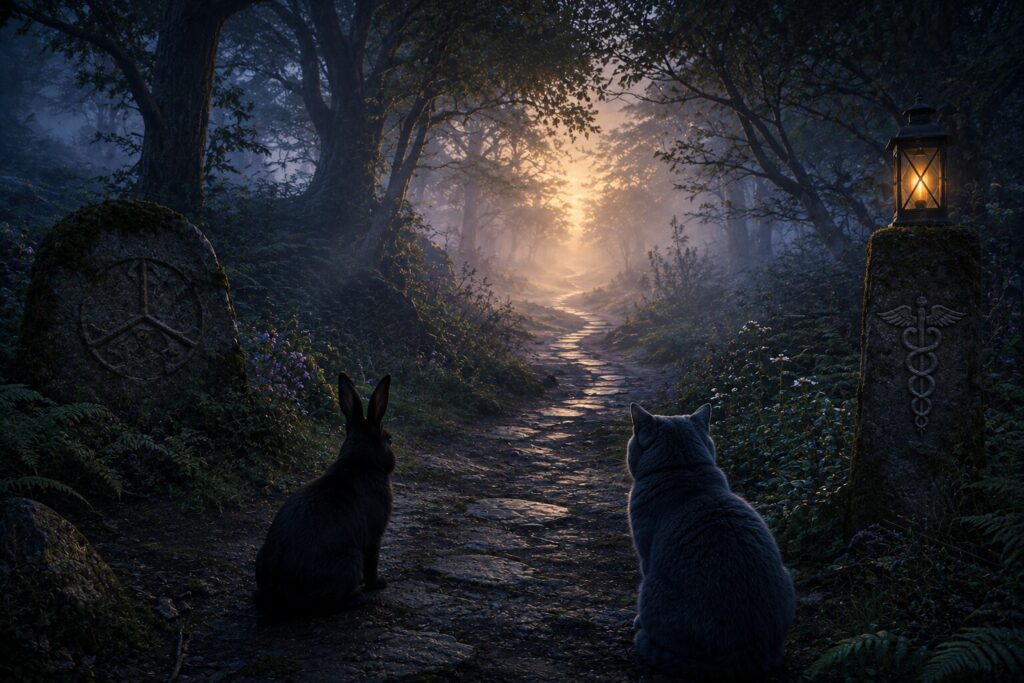
Why Magic Gathers Here
Across cultures, centuries, and spiritual traditions, people have repeatedly associated thresholds with mystery, transformation, and encounters that seem to transcend ordinary experience. Doorways appear in folklore. Crossroads appear in magical traditions. Bridges, shorelines, forest edges, caves, sacred wells, temple gates, and twilight hours all emerge again and again as places where something unusual may occur.
Why?
No single answer satisfies everyone.
Some view thresholds symbolically. Human beings naturally recognize moments of transition as meaningful because change demands attention. When one thing becomes another, we instinctively pause. A doorway reminds us we are entering somewhere new. Dawn reminds us that darkness is ending. A life transition reminds us that identity itself is not fixed.
Others approach thresholds through psychology and anthropology. Long before modern practitioners spoke of liminal spaces, folklorists and scholars noticed that people across cultures repeatedly treated periods of transition as sacred.
One of the most influential figures in this conversation was Arnold van Gennep, whose groundbreaking work The Rites of Passage observed that major life transitions often followed a common pattern. Individuals first separated from an old condition, entered a transitional period between identities, and were eventually incorporated into a new role or state of being.
Van Gennep recognized that the crossing itself was meaningful. Transformation did not occur only at the beginning or the end. It occurred in the space between.
Later, Victor Turner expanded upon these ideas and focused particular attention on this middle stage, which became known as liminality. Turner described liminal periods as times when ordinary structures, expectations, and identities loosen their hold. In these spaces, change becomes possible because the old order no longer fully applies while the new one has not yet fully formed.
As Victor Turner wrote:
“Liminality may perhaps be regarded as the Nay to all positive structural assertions.”
For many practitioners, this observation feels remarkably familiar. Whether encountered through initiation, pilgrimage, grief, spiritual awakening, magical practice, or personal transformation, thresholds often carry a sense of suspension. They exist outside ordinary certainty. They ask us to remain present while something new is emerging.
Many practitioners, however, approach thresholds through a spiritual lens. They believe liminal places are not merely symbolic. They are locations where realities touch, overlap, or become easier to perceive. Because thresholds already connect worlds, they are often viewed as places where communication across those boundaries becomes more accessible.
This belief appears in countless traditions. Ancestors may be honored at thresholds. Spirits may be encountered there. Deities may be invoked there. Ghost stories frequently occur near crossroads, bridges, shorelines, cemeteries, forests, and abandoned places. Folklore places fair folk, wandering spirits, psychopomp beings, and extraordinary entities at the edges of the known world rather than its center.
Some practitioners describe these locations as energetic gathering points. Others speak of sacred geography, spirit roads, thin places, ley lines, or openings between worlds. Still others view these experiences as psychological, symbolic, or archetypal. Threshold magic does not require certainty regarding the mechanism. What matters is the remarkable consistency with which human beings continue to recognize these places as spiritually significant.
Yet not every threshold is open.
Some are public and easily approached. Others appear guarded, hidden, dormant, consecrated, seasonal, initiatory, or deeply personal. A shoreline may welcome any traveler. A sacred grove may require respect and relationship. A temple may require invitation. An ancestral threshold may require devotion. Certain spiritual doors, if they exist at all, may only reveal themselves through practice, preparation, or permission.
Carl Jung observed:
“Who looks outside, dreams; who looks inside, awakes.”
Thresholds often ask us to do both.
They invite us to observe the world around us while also paying attention to what is changing within us. The doorway, the crossroads, the shoreline, and the forest edge all become mirrors reflecting our own transformations.
Whether understood through folklore, religion, magic, psychology, sacred geography, or personal experience, thresholds remain among humanity’s oldest symbols of possibility. They remind us that reality is not always divided as neatly as we imagine. Land meets sea. Day meets night. The living meet memory. The known meets mystery.
And it is often there, in the space between, that people report encountering something greater than themselves.
The Roads Beyond the Threshold
Related Threshold Mysteries
Threshold magic touches many neighboring practices. Some concern spirits and crossings. Others concern place, protection, inner transformation, or the hidden patterns of the land.
Psychopomp Work
Guiding those who cross, whether living, dead, grieving, changing, or standing between worlds.
Psychopomp WorkCrossroads Magic
Where roads, choices, spirits, fate, and possibility converge in one charged place.
Crossroads MagicThreshold Protection
Approaching liminal places with wards, boundaries, discernment, grounding, and care.
Threshold ProtectionGhosts
The lingering presence of memory, place, spirit, grief, or mystery at the edge of ordinary perception.
GhostsMediumship
Listening at the edge of worlds, where communication, discernment, and spirit awareness may meet.
MediumshipShadow Work
Not every threshold lies outside the self. Some crossings begin in the hidden chambers within.
Shadow WorkSacred Places
Locations shaped by spirit, story, memory, devotion, land, and the attention of those who return to them.
PlacesThe Veins of the Earth’s Magic
Sacred geography, ley lines, energetic pathways, and the living landscape beneath our feet.
The Veins of the Earth’s Magic“The cave you fear to enter holds the treasure you seek.”
— Joseph Campbell
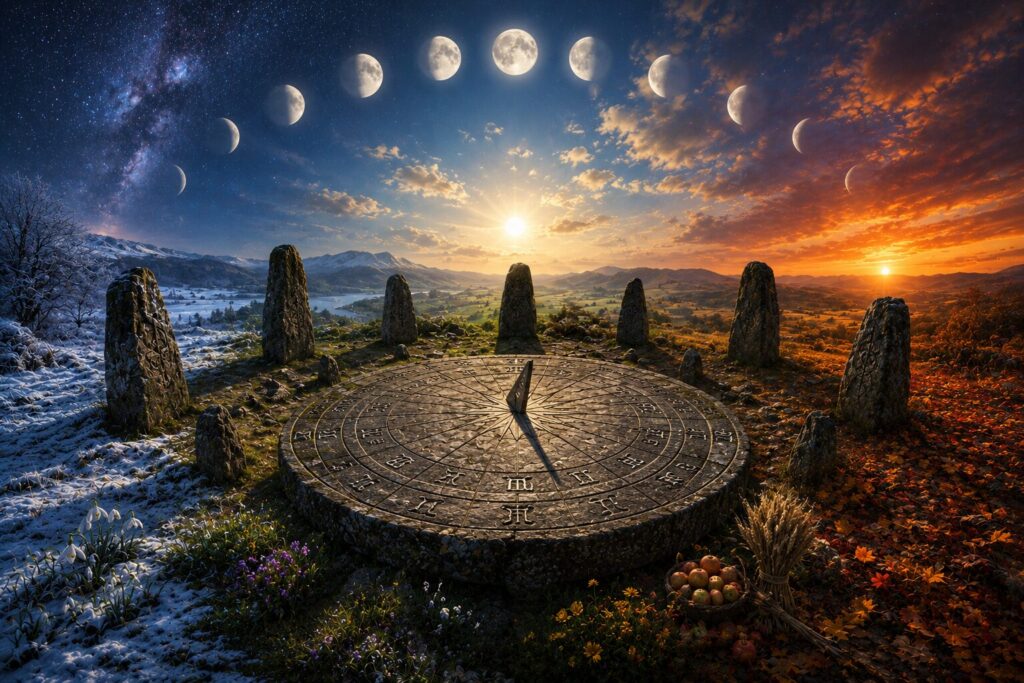
Most people spend their lives focused on destinations.
We look toward the next achievement, the next answer, the next relationship, the next chapter, the next version of ourselves. Yet some of the most meaningful experiences occur before we arrive. They occur while we are crossing.
Threshold magic teaches us to pay attention to these moments. It reminds us that change is not merely something that happens to us. Change is a place we inhabit for a time. The crossing itself possesses value, wisdom, and mystery.
A doorway does not remain open forever. Dawn eventually becomes day. Dusk gives way to night. A season turns. A life changes. Every threshold asks us to release something, even as it invites us toward something new.
For some, thresholds are places of spiritual encounter. For others, they are symbols of personal transformation. Many experience them as both. Regardless of how one understands them, thresholds remain among the oldest sacred ideas humanity has ever known. They remind us that reality is not fixed, and neither are we.
The road beyond the threshold may not always be visible. The destination may remain uncertain. Yet countless travelers, mystics, pilgrims, witches, seekers, and ordinary people have stood where you stand now: between what was and what will be.
Perhaps that is why thresholds continue to matter.
They remind us that becoming is every bit as sacred as arrival.
Continue the Journey