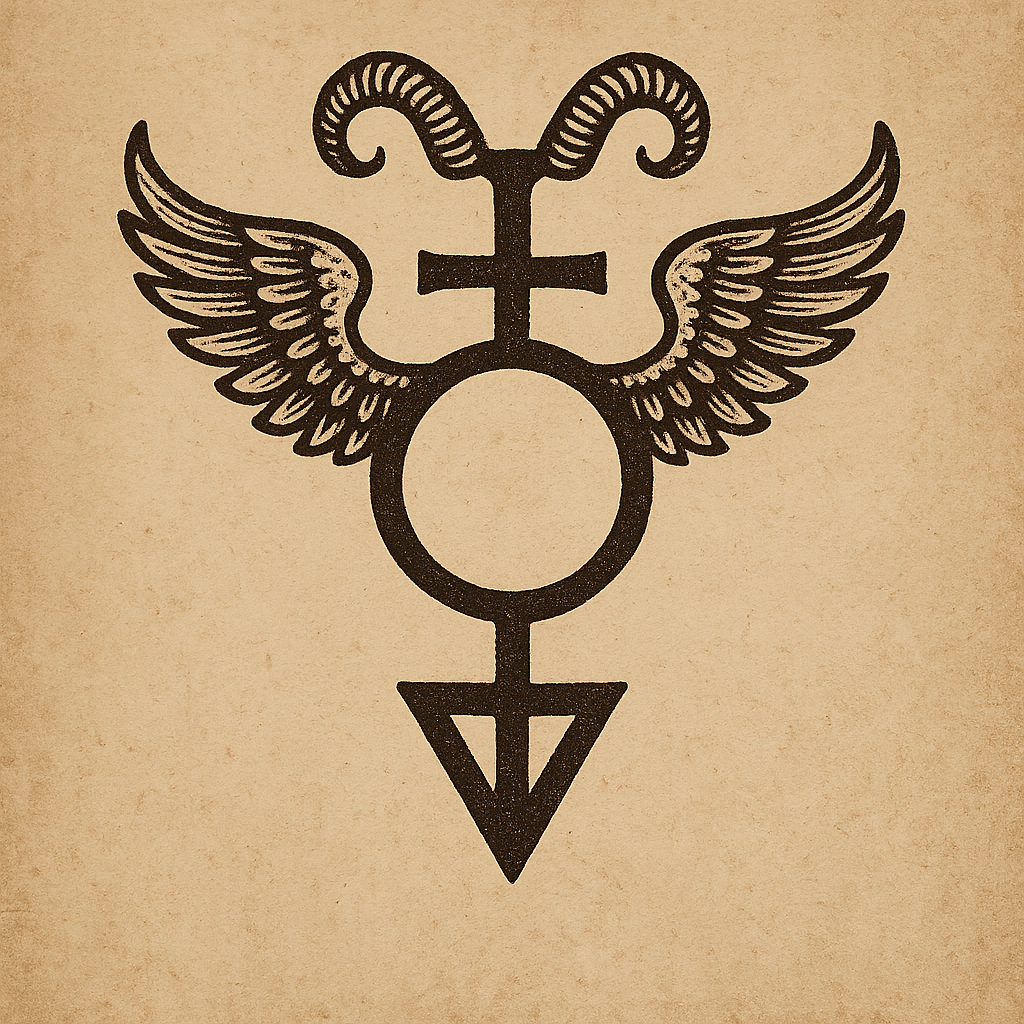
The Rising God
Sovereignty, Return, and the Flame of Becoming
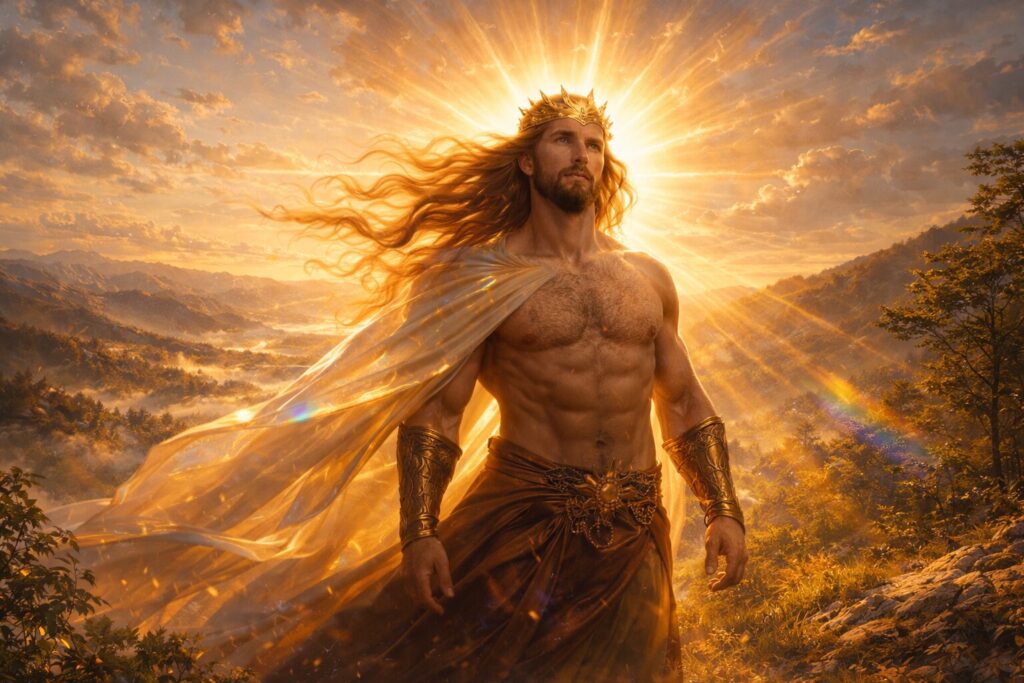
The Rising God is not merely a figure of myth, nor only a seasonal spirit, nor solely a symbol of the sun. He is a principle—one that reveals itself wherever something descends and yet returns, wherever life withdraws and yet rises again into form. If the world were only governed by decay, nothing would endure. If it were only governed by growth, nothing would complete. The Rising God belongs to the force that moves between these conditions and refuses finality. He is the return.
He appears first as emergence. Not yet crowned, not yet proven, but undeniable. The moment when something begins again—not as repetition, but as continuation with memory. In this way, he is often young. Not because youth defines him, but because rising carries with it a brightness, a forward motion, a clarity that has not yet been burdened by its own outcome. He is the first breath after silence, the first light after long dark, the first step taken when stillness can no longer hold.
But he does not remain there. The Rising God matures into presence. He becomes the one who holds what has been brought into being. Here he takes on sovereignty—not merely as rulership, but as the ability to stand within the world and sustain it. This is the kingly current: ordered vitality, creative force brought into structure, life not only rising, but remaining long enough to matter. In this phase, he is not fleeting. He is radiant and embodied, the visible strength of what has successfully come into form.
And yet, he does not escape decline. What rises must one day yield. The tradition of the Rising God has always known this, even when modern retellings try to soften it. His arc bends toward withdrawal, toward descent, toward a kind of disappearance that is not annihilation, but passage. He becomes the elder, the winter figure, the one who recedes so that return may be possible again. Even here, he is not absent. He is becoming.
Across cultures, this pattern has been seen again and again. Gods who die and return, kings who fall and are renewed, spirits who vanish and reappear with the turning of the year. Names differ—Adonis, Attis, Osiris, Dionysus, and, in another form, Jesus Christ—but the pattern persists. It is not necessary to claim that these are all the same being. It is enough to recognize that they express a shared current: the recognition that life does not simply end, but transforms and rises again through a deeper continuity.
Within the current of My Cousins Coven, the Rising God stands alongside other masculine expressions without collapsing into them. Where Pan embodies wild vitality and instinct, and Hermes carries movement, crossing, and communication, the Rising God represents something more ordered and sovereign. He is the one who rises into form, who takes on shape, who returns not as chaos, but as presence. Together, these currents reveal different dimensions of life itself: instinct, motion, and return.
To understand the Rising God, then, is not only to understand myth. It is to recognize a pattern within experience. There are times when something within you has fallen silent, disappeared, or been lost. There are times when what once defined you no longer holds. And yet, there are also moments—quiet at first—when something begins again. Not identical to what was, but unmistakably alive. That moment belongs to him.
He is not only the sun that rises.
He is the reason anything rises at all.
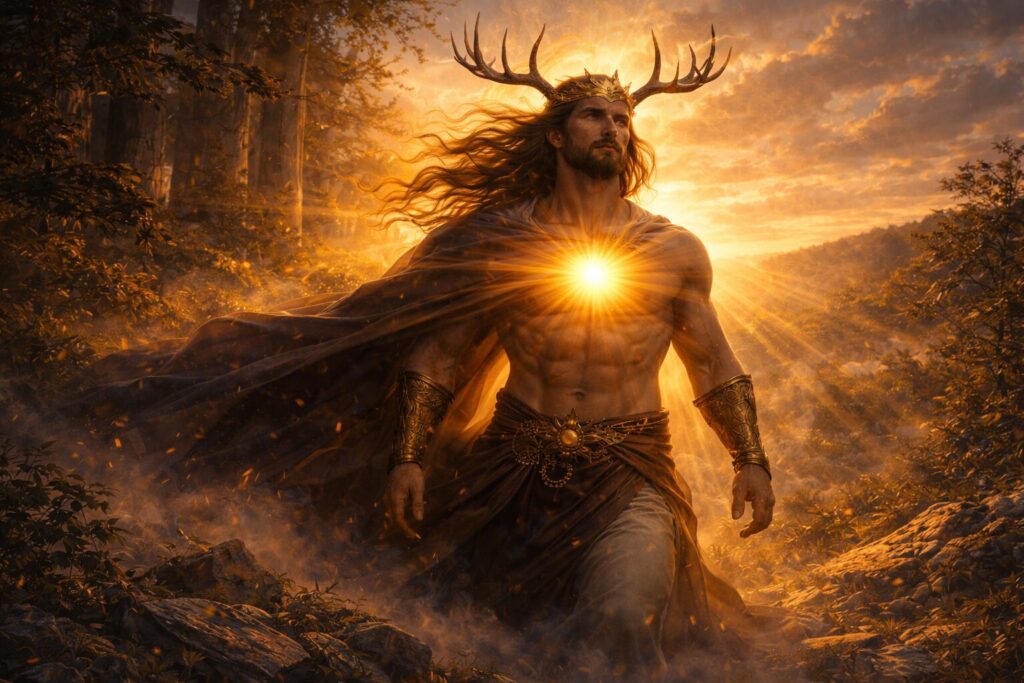
Working Within the Rising Current
The Rising God is not only contemplated—he is lived. His current appears whenever something must begin again, be rebuilt, or rise into form after absence. To work with him is to learn how to return.
Emergence and Beginning Again
The Rising God is strongest at the moment of return—the point where something re-enters life after absence. This may be a project restarted, a relationship repaired, a path resumed, or a self rediscovered. His current favors beginnings that carry memory, not naïve starts.
This is not reckless initiation. It is deliberate emergence. What rises under his influence tends to have already passed through loss, silence, or descent.
Sovereignty and Holding Form
To rise is one thing. To remain is another. The Rising God teaches the discipline of staying—of holding what has been brought into form long enough for it to matter. This is the kingly aspect: structure, responsibility, presence.
In practice, this means maintaining what you begin, sustaining energy over time, and allowing your work, identity, or path to stabilize rather than constantly restarting.
Return After Loss
One of his deepest teachings is that not all loss is final. There are times when something must fall away—but that does not mean it is gone forever. The Rising God governs what returns changed, strengthened, or clarified.
This applies especially to grief, identity shifts, and periods of disconnection. His current supports the quiet reappearance of life where there was once absence.
Sacrifice and the Cost of Rising
Nothing rises without cost. The traditions surrounding the Rising God often include sacrifice—not as cruelty, but as exchange. Something must be given, released, or transformed for return to occur.
This may be time, comfort, identity, or illusion. To rise is to change, and change always requires the surrender of what cannot come with you.
Seasonal and Solar Timing
The Rising God is most visible in spring and early summer—the time of emergence and visible strength. But his full arc includes maturity, decline, and return. To work with him fully is to recognize not only when to rise, but when to yield.
Dawn, spring, and moments of renewal are especially aligned with his current, but so too are the quieter transitions that precede them.
Paths of the Living Current
The Rising God does not stand alone. His current touches other expressions of life, movement, and presence. Each offers a different way of entering the same deeper force.
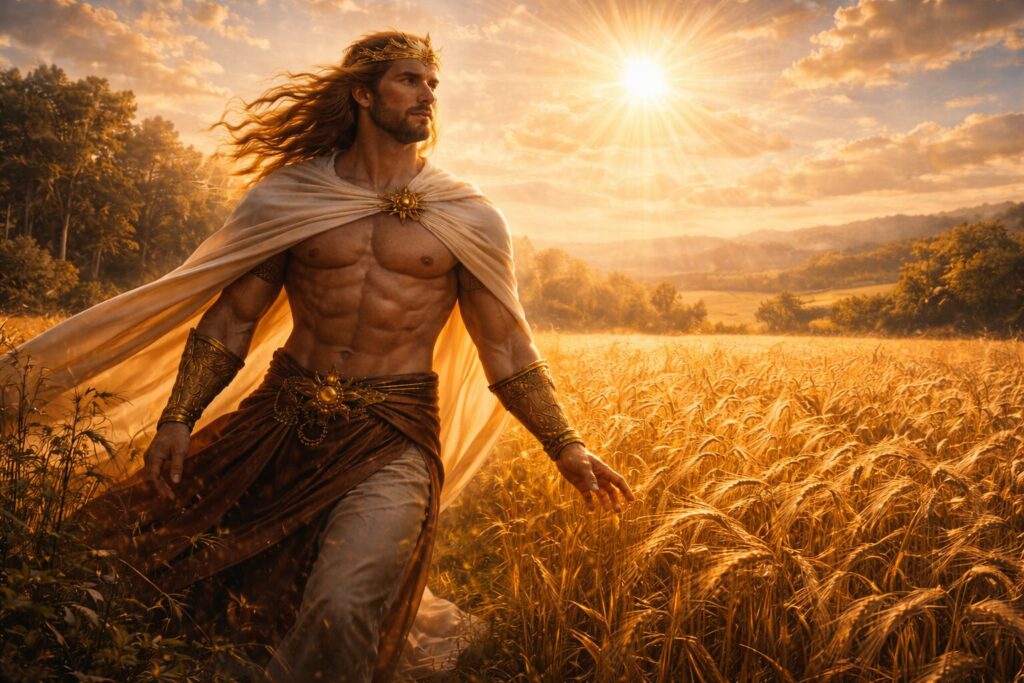
The Rising God is most easily recognized in the moment of ascent—the visible return, the reappearance of life, the brightness of emergence. But this is only half of his nature. What rises has first passed through absence. What returns has first been lost. To understand him fully, one must look not only at the light of his appearing, but at the depth from which he comes.
There is always a descent, though it is not always named as such. It may appear as loss, as exhaustion, as silence, as the end of something that once seemed stable. It may come as a season in which nothing moves forward, where effort no longer produces growth, where identity loosens and certainty thins. These are not failures of the cycle. They are part of it. The Rising God does not avoid this passage. He moves through it.
In myth, this descent takes many forms. Gods who are cut down, dismembered, buried, or taken below. Kings who fall. Youths who vanish. Figures who pass into an underworld, a hidden realm, or a condition of suspension before returning changed. The details differ across traditions, but the structure remains consistent: disappearance is followed by return, and return is never identical to what came before. Something has been altered. Something has been carried through.
This is why the Rising God is not simply a figure of rebirth in the shallow sense. He does not reset the world to an earlier state. He brings it forward. His return is not repetition—it is continuation shaped by what has been endured. In this way, he carries memory. The light that rises again is not the same light that set. It has passed through depth, and that passage remains within it.
This movement can be seen in the turning of the year. The vitality of spring does not emerge from nowhere; it follows the long quiet of winter. The strength of summer is not permanent; it yields, declines, and prepares for withdrawal. The elder figure of winter does not end the cycle; he shelters its continuation. Even in stillness, something is being held in preparation for return. The Rising God belongs to all of these phases, but he is most clearly felt in the moment when movement begins again.
In lived experience, this pattern is unmistakable. There are times when something within you disappears—when direction is lost, when energy fades, when what once defined you no longer holds. These are moments of descent, whether or not they are named that way. And yet, there are also moments when something begins to return. Not loudly, not all at once, but steadily. A thought that reappears. A desire that stirs again. A strength that was thought gone, now quietly present.
That movement belongs to him.
The Rising God is not only the one who stands in the light.
He is the one who has passed through the dark and rises anyway.
The Pattern of Rising
The Rising God is not confined to myth. His pattern appears across the world—in the sun, in the year, in the body, in story, and in the quiet return of life after absence.
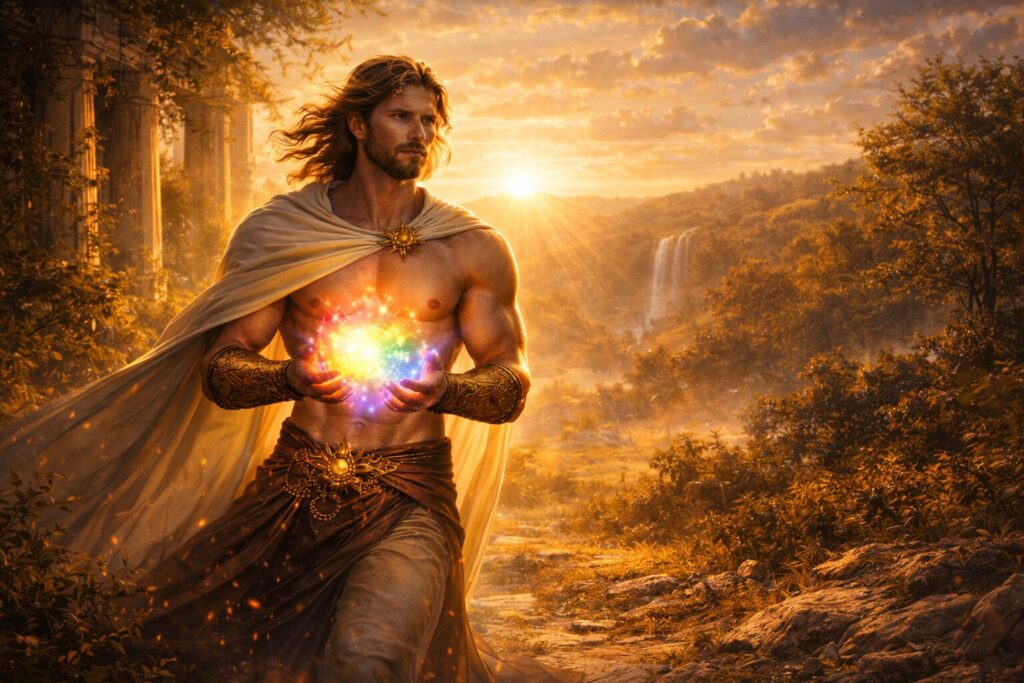
Not every expression of the Rising God appears as a clearly named deity. More often, he survives in fragments—in recurring figures, seasonal presences, wandering kings, wild men, green faces in stone, and stories that seem unrelated on the surface but carry the same underlying structure. As with the Triple Goddess, the pattern persists even where the theology has thinned or been forgotten.
One of the most enduring forms is the Green Man: a face emerging from leaves, carved into old buildings, hidden in architecture, or appearing in seasonal festivals. He is not always explained, and often not even named, but his meaning is unmistakable. Life pushing outward. Growth returning. The human form overtaken and renewed by the living world. He is not merely vegetation. He is emergence made visible.
There are also the figures of the wild man, the forest wanderer, the untamed masculine presence who exists outside the structures of civilization. These forms often blur with Pan, and sometimes belong more fully to that current, but they still carry something of the Rising God within them: vitality that cannot be extinguished, life that continues beyond containment, the reminder that what is wild does not disappear—it waits, and it returns.
The pattern sharpens further in the image of the king. Across cultures, the king is not only a ruler, but a bearer of the land’s vitality. His strength reflects the world’s strength; his decline mirrors its fading. In older traditions, this connection could become literal. The king might be symbolically—or sometimes actually—sacrificed, replaced, or renewed so that life could continue. Whether enacted or remembered, the idea remains: sovereignty is not permanent. It must be sustained, surrendered, and restored.
This gives rise to the motif of the dying and returning king, a figure who falls, disappears, or is overcome, only to rise again. Sometimes he returns visibly. Sometimes he remains in the unseen, sustaining life from beneath the surface. Sometimes he is replaced by another who carries the same current forward. The identity shifts, but the pattern holds. The king is not only a man. He is a role within the cycle.
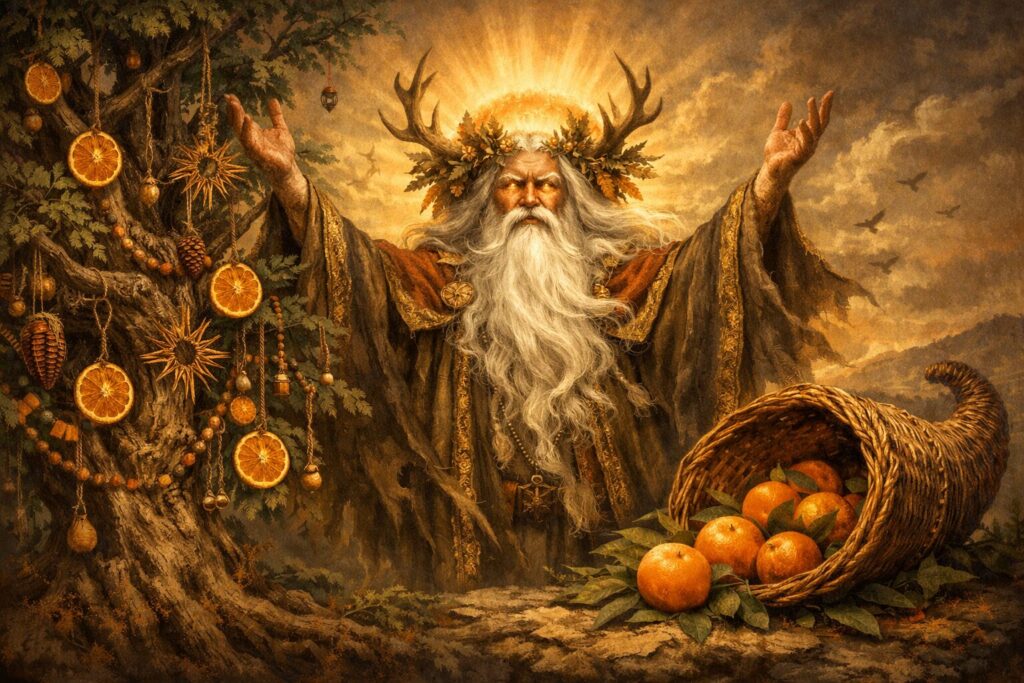
Even in more familiar or modern figures, the echo can still be felt. The winter elder, the robed figure who appears at the coldest point of the year, who brings gifts, who returns cyclically, who carries memory and presence through darkness—these too can be read as softened or transformed reflections of the same current. Not as literal survivals, but as expressions shaped by time, culture, and reinterpretation. The form changes. The structure does not.
There are also the more explicitly mythic forms—the beautiful youth who dies and returns, the radiant figure tied to the seasons, the god whose presence fades and reappears with the turning of the year. Adonis, Attis, Dionysus, Osiris, and others all participate in this pattern in different ways. And in another form, so too does Christ, whose death and resurrection follow the same structural arc of descent and return. These are not identical figures, nor should they be collapsed into one another. But they speak to a shared recognition: that life is not extinguished by its own ending.
What emerges across all of these is not a single character, but a recurring truth. The Rising God is remembered wherever something falls and yet is not lost, wherever something disappears and yet is not gone, wherever something returns that was thought finished.
The names change.
The stories shift.
But the pattern continues to rise.
Names of the Rising Flame
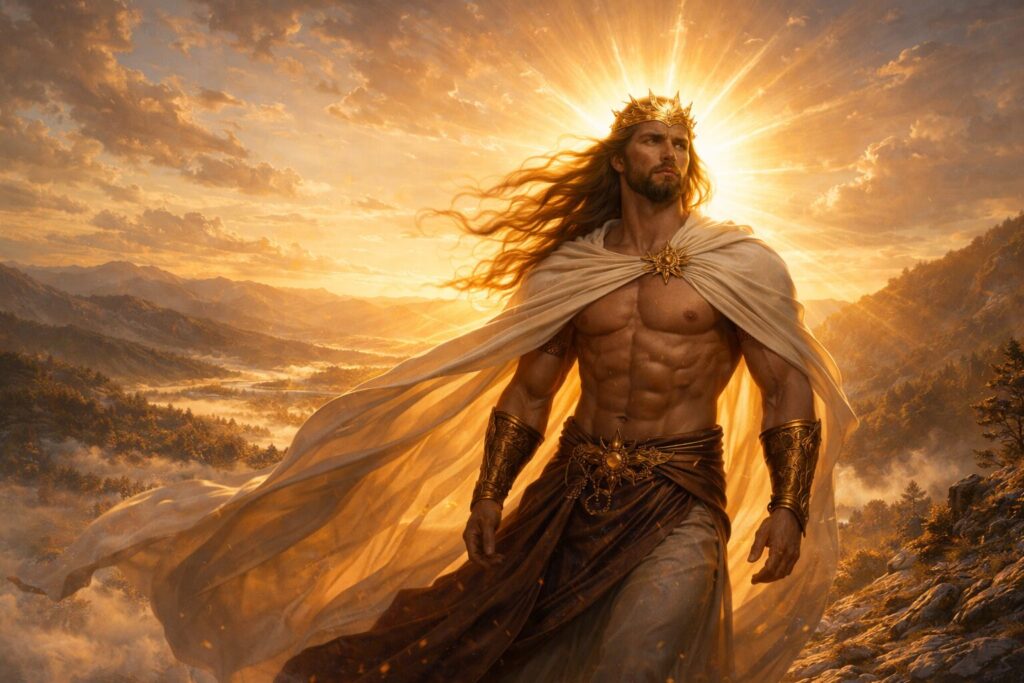
The Rising God is not confined to a single name. He is approached through titles, epithets, and recognitions—each one revealing a facet of his return, his sovereignty, and the light he carries forward from what has been.
In all chaos there is a cosmos, in all disorder a secret order.
Return, Sovereignty, and the Shape of Renewal
The Rising God can be approached mythically, philosophically, and experientially. None of these exhaust him. Each reveals a different dimension of what it means for life to return into form.
Archetype and Living Presence
The Rising God appears as a pattern across myth and psyche, but he is not reduced to a symbol. The recurring structure of descent and return is one way the divine becomes visible to human understanding, not the limit of its existence.
To call him archetypal is not to deny him, but to recognize that the mind encounters living intelligence through repeating forms. The pattern is the doorway, not the destination.
Resurrection and Transformation
The Rising God is often described in terms of resurrection, but this can be misleading if taken too literally. What returns is rarely identical to what was lost. His deeper nature is transformation through passage.
This is why the pattern appears across cultures. Life does not reset—it continues, shaped by what it has endured.
Christ and the Pattern of Return
The figure of Christ participates in this pattern through death and resurrection. Within this framework, he can be understood as a powerful expression of the Rising God’s current rather than its sole embodiment.
His story emphasizes transformation through sacrifice, descent into death, and return into a changed state—elements that align closely with the broader structure seen across myth.
Hermes, Pan, and the Living Triad
The Rising God stands alongside Hermes and Pan as part of a deeper masculine current. Hermes moves between worlds. Pan embodies life in its raw, untamed form. The Rising God brings life back into structure.
Together they express movement, vitality, and return—three aspects of the same underlying force.
Kingship and the Burden of Form
The Rising God often takes the form of a king—not merely as ruler, but as one who must hold what has been brought into being. Sovereignty requires endurance, stability, and responsibility.
The king is not free from the cycle. He must eventually yield, be transformed, or pass his role forward. His authority is real, but it is not permanent.
Sacrifice as Law
Sacrifice is not incidental to the Rising God—it is foundational. Something must be given for return to occur. This is not punishment, but exchange.
The willingness to release, surrender, or transform is what allows life to rise again in a new form.
To come to the Rising God in the end is not to discover a sequence of different figures, but to recognize a single current moving through many forms. He is not replaced each year, nor reborn as something entirely new. He returns. What changes is not his identity, but his condition. What rises is the same presence, carrying forward what has been, shaped by what it has passed through.
This is an important distinction. It is easy to imagine a cycle of death and rebirth as a kind of reset, as though each turning of the year produces a new god, untouched by what came before. But this is not how the pattern reveals itself. The Rising God does not begin again from nothing. He emerges from continuity. The youth of spring is not separate from the elder of winter; the king of summer is not independent of the one who yielded before him. These are not different beings. They are phases of a single journey.
To understand him, then, is to understand that return is not repetition. It is renewal through memory. What rises has been shaped by descent. What stands in strength has passed through weakness. What appears radiant has known obscurity. The cycle does not erase what came before—it carries it forward in altered form. This is why the Rising God is not merely a symbol of rebirth, but of continuation. He is the persistence of life through transformation.
This movement can be seen everywhere once it is recognized. In the year, where spring does not erase winter but follows it. In the body, where strength returns after exhaustion, not as something untouched, but as something rebuilt. In the self, where identity shifts, falls apart, and yet re-forms with greater clarity. These are not separate events. They are expressions of the same underlying process.
There is also a discipline within this recognition. To align with the Rising God is not only to seek ascent, but to accept the full arc of his path. One cannot rise without also yielding. One cannot return without having passed through absence. To deny the descent is to misunderstand the return. To cling to the height is to resist the cycle that makes height possible at all.
For those who walk a spiritual or magical path, this becomes a form of awareness. One begins to notice when something is rising, and when it is not yet time. One begins to recognize the difference between forcing emergence and allowing return. One learns that not every silence is emptiness, and not every ending is final. In time, this awareness becomes steadiness. The cycle no longer feels like loss and recovery, but like movement through a pattern that holds.
And perhaps most importantly, one begins to see that the Rising God is not distant. He is not confined to myth, nor to the turning of the seasons alone. He is present in the simple and profound reality that life continues. That something returns. That what has been lost is not always gone.
You have already moved through his cycle.
You have already descended.
You have already returned.
And you will again.
Walk the Paths of the Gods and Currents
The Rising God moves among many expressions—gods, currents, and traditions that reveal different aspects of life, return, and presence.