The Art of Magic
Explore Core Spellwork Essentials
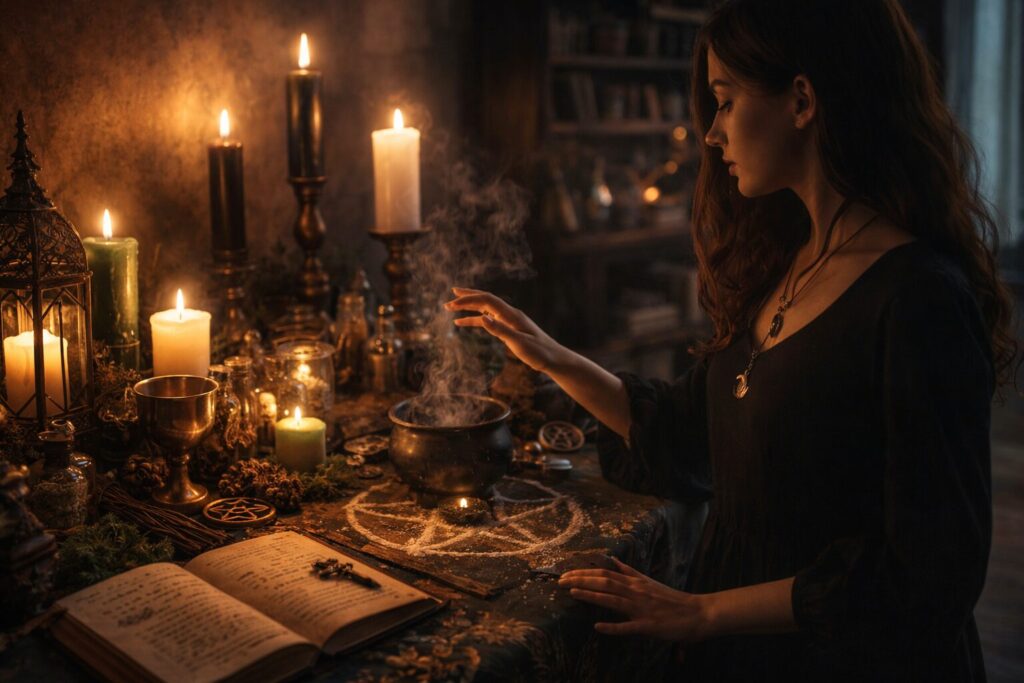
A spell is not merely a wish, nor a theatrical gesture, nor a shortcut around lived responsibility. In the broad umbrella of witchcraft, a spell is a crafted alignment: foundational forces shaped through will, focused by symbol and ritual, and carried into the world through deliberate action. If prayer and “manifesting” are often the softest expressions of this current—still valid, often meaningful—spellwork is typically a more concentrated form: structured, patterned, and intentionally charged.
Spellcraft treats reality as responsive, not mechanically so, but relationally. A spell operates through correspondences: word, gesture, object, timing, material, and relationship. At times, these workings are intensified through spirits, ancestors, land, or deity—but even then, they are not drawing from a separate source. They are amplifying and directing the same creative current, shaped by practice and clarity of will.
Within the Coven of the Veiled Moon, spellwork is considered a disciplined craft of alignment—a way of concentrating will into form, and form into consequence. We do not treat spells as escapes from responsibility, nor as substitutes for action. We treat them as intentional interventions in the relational field of self, world, and spirit.
We hold that spellwork gains strength when it is integrated into a wider way of life: ritual, meditation, study, ethical action, and community. Many witches are solitary by nature or circumstance—and even within covens, much practice remains individual. Witchcraft is not merely something one does; it is a worldview, a way of relating. Coven work is one expression of that life, not its sole measure.
“Community means strength that joins our strength to do the work that needs to be done.” — Starhawk
Modes of Practice
Most witches practice primarily alone—even within covens. These sections outline shared work, solitary craft, and distance practice as lived approaches.
Shared Shared Practice Coven work: coherence, accountability, amplification.
Coven work is not simply many people performing the same spell at once. It is a different mode of craft: multiple wills brought into coherence, multiple symbolic vocabularies aligned, and multiple perspectives refining the shape of a working. When done well, this does not dilute individual power—it clarifies it and deepens it.
The majority of witches are solitary practitioners, and many who belong to covens still practice primarily alone. Witchcraft is a lived orientation toward the world, not merely an organizational structure. Coven work is valuable not because it is exclusive, but because it allows for shared refinement, safety, and continuity.
Our coven’s practice is rooted in in-person ritual, where timing, physical presence, shared sensory space, and containment play a significant role in strengthening a working. We are also expanding into online collaboration carefully and intentionally, recognizing that distance work requires additional logistics, clarity, and consent.
Individual Individual Practice Focused, adaptive, experimental—often the most common path.
Individual practice has always been part of witchcraft. Cunning folk, hedge witches, kitchen witches, and household practitioners have long shaped the Craft through solitary work rooted in place, repetition, and lived experience. For eclectic witches especially, this remains the most accessible and natural form of practice.
Solitary work can be challenging. Without feedback, it is easy to drift into inconsistency or disconnection. But it also allows for intense focus, experimentation, and refinement. Many practitioners develop their strongest skills alone, through careful observation of results, adjustment of methods, and honest record-keeping.
Part of the purpose of this page—and of the Coven of the Veiled Moon more broadly—is outreach. We see education and shared knowledge as part of our responsibility to the wider community. Even when one practices alone, access to clear resources, tested frameworks, and ethical grounding strengthens the Craft as a whole.
Online Online & Distance Practice Possible, meaningful—logistically heavier and often less intense than in-person.
Online and distance spellwork introduces unique challenges. Timing becomes complex across time zones. Shared material components may not be possible. Synchronizing ritual space requires deliberate planning. These factors often make distance workings weaker than in-person coven work, though still typically stronger than solitary practice—assuming comparable experience levels.
Distance work functions best when practitioners are aligned through shared symbolism, shared correspondences, and a clear common framework of will. Some practitioners find that working near energetic features—such as ley lines, ancestral land, or personally significant power sites—can help amplify a working over distance.
It is important to be honest: an experienced solitary witch may outwork a newly formed coven, and a poorly coordinated group may underperform compared to a focused individual. Power in witchcraft is contextual, not hierarchical. Shared work online can succeed—it simply demands greater logistics, clearer roles, and disciplined follow-through.
We do not believe will alone is sufficient. Intension must be coupled with awareness and consequence. Spellwork functions like language: it can clarify or confuse, bind or liberate, depending on how it is shaped and where it is aimed. We encourage each practitioner to consider timing, symbolism, material sourcing, and spirit dynamics—not merely to cast a spell, but to craft one that is coherent, mindful, and ethically aligned.
Communally held spells are reviewed at least once per year. Members may annotate, challenge, or suggest alternatives, while all original versions are preserved in the coven’s living archive. Multiple versions of a single spell may exist in parallel, provided each is clearly attributed, tested, and contextualized. All spellwork shared with the coven must be credited, whether authored, inherited, channeled, or adapted. Plagiarism, intentional obfuscation, or misattribution is not tolerated; errors are addressed with the aim of correction and education, not shame.
Spellwork is power—and power asks for wisdom, reciprocity, and care. We do not claim perfection in our craft, but we do claim it with will. May each working shaped through this coven reflect that shared ethic: rooted, responsive, and evolving.
If you are new to spellwork, begin with curiosity and steadiness. Spellcraft rewards patience; it is a practice of wonder, yes—but also of responsibility. And read.
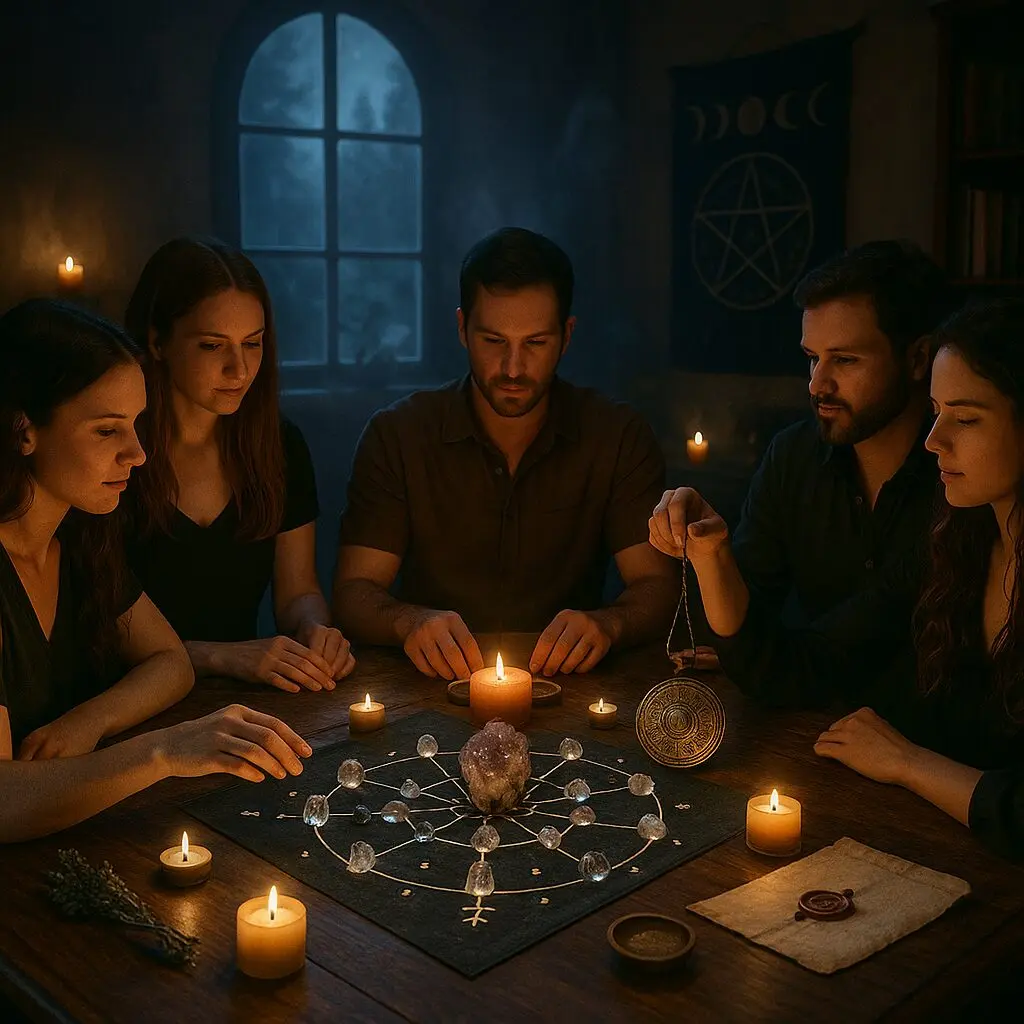
Spellcraft Tools & Foundations
Transformative Spellwork
Magic begins simply—perhaps with a candle, a whispered hope, a drop of tea. But as your path deepens, so too does your relationship with the tools that surround your work. Just as a musician finds intimacy in their chosen instrument, the witch slowly comes to understand which implements hum with power, which quiet the mind, which open the spirit.
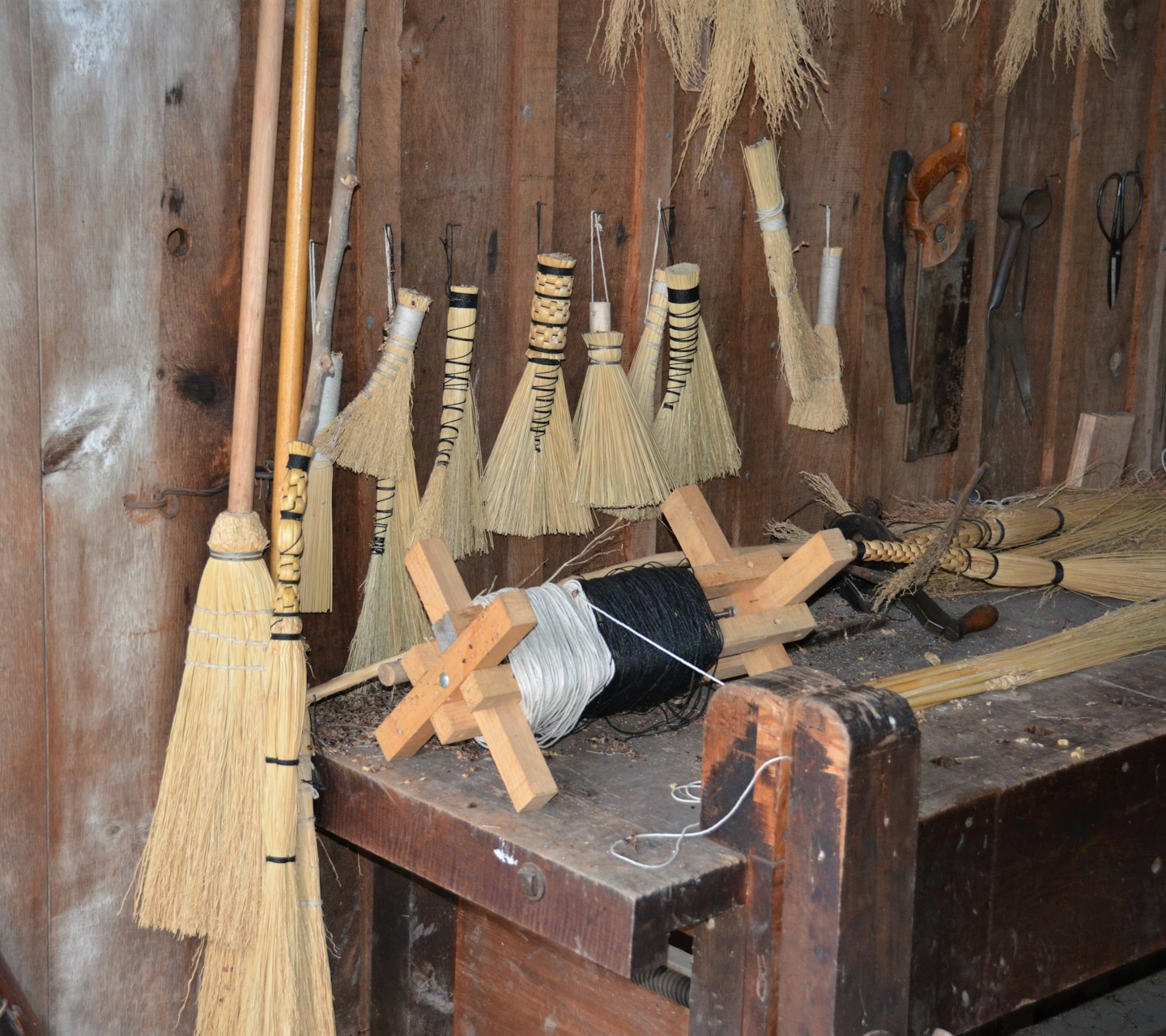
This is not a list of prescriptions, but a window into possibility. The tools below are not requirements but invitations. Each object—whether anointed talisman or humble broom—holds the potential to become an extension of your will, your devotion, and your evolving magical language. Tools do not make the witch, but they do reflect growth.
What follows are offerings: implements to explore, adapt, or ignore as your craft unfolds. Let intuition lead. Let experience refine. And let your altar, whether modest or sprawling, continue to grow with you.
Magic does not end when the candle goes out…
While the altar serves as a focal point, the deeper work of witchcraft unfolds in the spaces that surround it: the room you return to, the habits you cultivate, the boundaries you keep, and the conditions under which you practice again and again. These unseen factors shape magical outcomes just as surely as herbs or flame. A well-chosen tool may focus the work, but it is the environment that sustains it.
Much modern discussion places intention at the center of all magic, as though desire alone were sufficient. Intention matters—but it is not everything. Intention is best understood as directed will, not wishful thinking: the act of aligning mind, body, and attention toward a chosen outcome. Like prayer, intention carries power through sincerity and focus, yet its effect is limited without structure, discipline, and method to give it weight. Will without form disperses quickly.
Beyond the altar lies the work of form: how space is prepared, how energy is contained, how repetition builds strength over time. This includes how a room is arranged, how tools are stored and cared for, how rituals begin and end, and how the practitioner themselves is grounded before and after the work. These elements do not replace inspiration—they give it somewhere to land.
This section explores the conditions that allow magic to endure rather than flicker. It is about creating spaces—physical, mental, and ethical—that can hold real change. When intention is supported by will, and will is supported by structure, the craft moves from momentary act to living practice.

“Magic is the practical application of a knowledge of the hidden forces of the universe to bring about definite results.” -Dion Fortune

Questions of Practice
What are the core essentials needed for effective spellwork?
At its foundation, effective spellwork requires clarity of will, a focused ritual space, and an understanding of symbolic action. Tools, timing, and tradition support the work, but they do not replace attentiveness or discernment. Spellwork deepens as intention is paired with preparation, consistency, and respect for the forces being engaged.
What tools are traditionally found on a working altar?
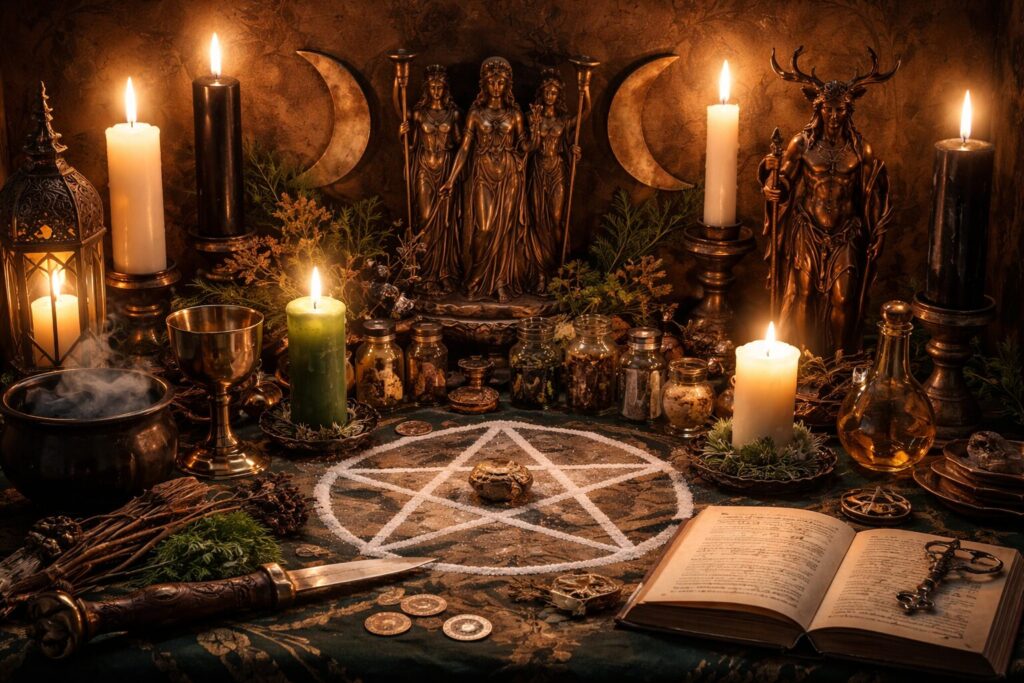
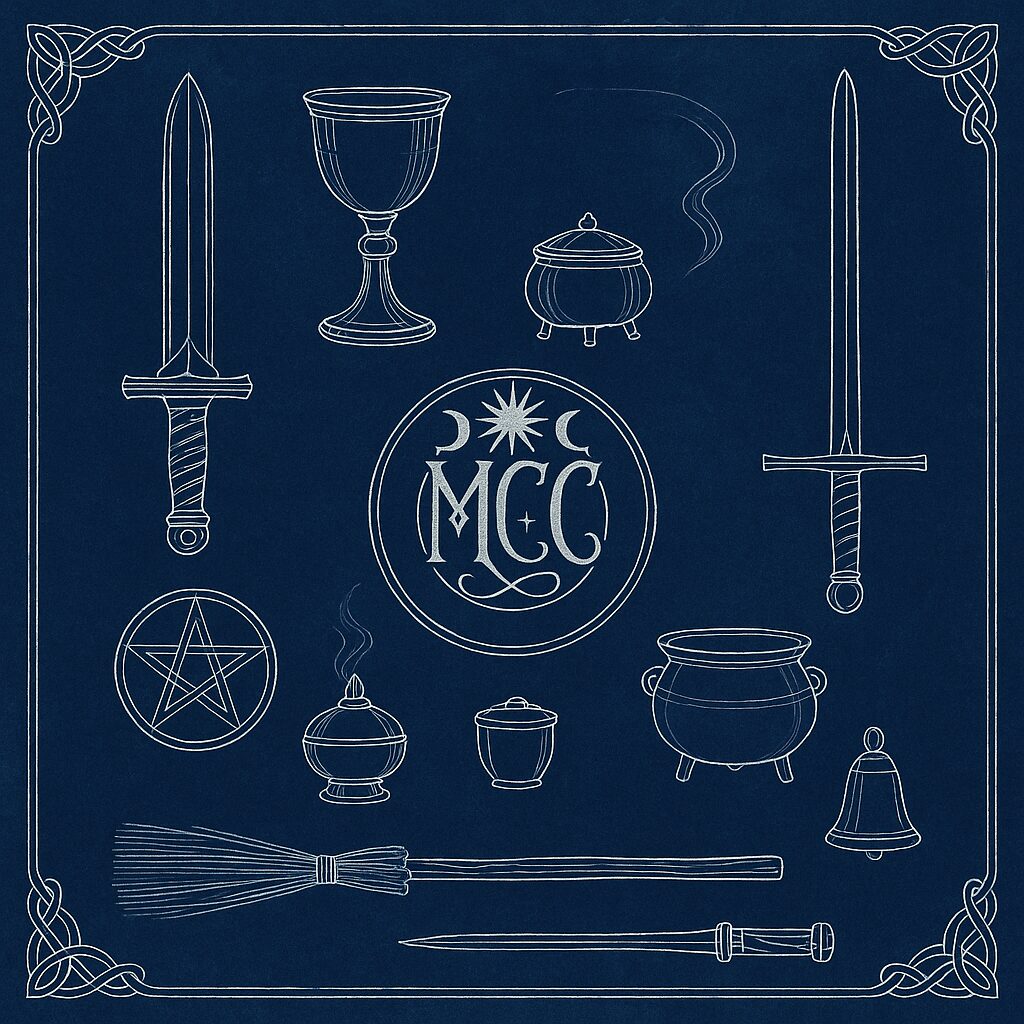
While there is variation across traditions, many altars include tools that represent action, focus, containment, and balance—often expressed through items like a blade or wand, a cup or bowl, a pentacle or marked surface, and a vessel for transformation. These tools need not be ornate or expensive; their effectiveness comes from familiarity, care, and repeated use.
How does keeping a Book of Shadows or grimoire support spellwork?
A Book of Shadows functions as both record and mirror. By documenting spells, observations, outcomes, and insights, it allows patterns to emerge over time. This reflective practice strengthens discernment, refines technique, and helps practitioners distinguish between coincidence, intuition, and genuine magical effect.
Why are cleansing and warding considered part of responsible spellwork?
Cleansing and warding help establish clarity and containment within a working space. They are not expressions of fear or superstition, but of attentiveness—marking the difference between everyday activity and intentional magical action. The degree to which cleansing or protection is needed varies with the nature of the work, the practitioner, and the context involved. Some workings require only minimal grounding, while others benefit from stronger boundaries and preparation. What matters most is not rigid procedure, but discernment: knowing when additional care supports focus, safety, and balance.
Why does timing matter in spellcraft?
Timing aligns a working with broader natural rhythms—lunar phases, seasonal cycles, or personal states of readiness. While spells can be performed outside ideal windows, attention to timing often improves clarity and coherence, reinforcing the sense that spellwork is a conversation with the world rather than an imposition upon it.
Can modern or everyday items be used in spellwork?
Spellwork has always adapted to the materials available to the practitioner. What matters is not whether an item is traditional, but whether it is used thoughtfully and with understanding. Modern tools can be just as effective when they are integrated intentionally, ethically sourced, and treated as meaningful instruments rather than conveniences.
What role does personal readiness play in spellwork?
Spellwork is shaped not only by tools and timing, but by the state of the practitioner. Focus, emotional clarity, and honest self-assessment influence how a working unfolds. Many experienced practitioners learn to postpone or reshape a spell when they are exhausted, distracted, or acting from urgency rather than intention. Readiness is not about perfection, but about awareness.
How does repetition and practice affect magical effectiveness?
Spellwork strengthens through repetition and reflection. Reworking similar spells, refining familiar techniques, and observing long-term outcomes allows a practitioner to develop fluency rather than novelty. Over time, this continuity builds confidence, precision, and a deeper relationship with the work itself.
How do you evaluate whether a spell was successful?
Evaluating spellwork involves observation over time rather than immediate results. Subtle shifts, altered opportunities, and changes in understanding often reveal themselves gradually. Keeping records and resisting the urge to force outcomes helps distinguish genuine effect from expectation.
How do ethics shape effective magical practice?
Ethics are not separate from spellwork—they are part of its structure. Decisions about sourcing, intention, consent, and consequence influence the stability and clarity of a working. Practices grounded in responsibility and relationship tend to endure, while those driven by impulse or entitlement often falter.
“Magic may be understood as the attempt to influence events by symbolic actions believed to operate through hidden correspondences within the cosmos.”
— Ronald Hutton