Methods • History • Practice
Divination
Reading pattern. Testing meaning. Choosing with clearer sight.
Divination begins with a simple premise: the world gives off information. Sometimes it arrives through a deliberate system — cards, runes, numbers, planetary cycles, cast objects, mirrors. Sometimes it arrives less neatly, through dreams, omens, synchronicities, or an impression that refuses to be ignored. The work is not merely to receive a message. It is to understand what kind of information has arrived, how much weight it deserves, and what to do with it.
Within witchcraft, divination is both a method and a discipline. It can clarify timing, expose hidden dynamics, test assumptions, help us approach communication with gods or spirits, and show where a magical working may need adjustment. It does not remove uncertainty. Done well, it gives us a better way to move through uncertainty without pretending that possibility has already become fate.
Different practitioners explain the source of divinatory information differently. Some understand it as communication with gods, spirits, ancestors, or other presences. Others emphasize synchronicity, symbolic correspondence, intuition, deeper perception, or patterns that become visible when attention is deliberately focused. These explanations do not always have to compete. A skilled practitioner learns to work with the language of the method while remaining alert to projection, coincidence, context, and the limits of interpretation.
The Languages of Divination
Major Methods of Divination
Divination is not one technique but a family of systems for receiving, organizing, and interpreting information. Some depend upon an established symbolic language. Others work through timing, number, chance arrangement, movement, or receptive sight. Each trains perception differently, and a practitioner does not need every method to practice deeply.
Cards & Symbols
Tarot
A structured symbolic system for examining relationships, choices, developing conditions, hidden dynamics, and the larger story forming around a question.
Explore Tarot →Cards & Intuition
Oracle Cards
Flexible card systems built around particular themes or symbolic vocabularies, often allowing greater freedom for intuition, reflection, and spiritual communication.
Explore Oracle →Lots & Symbols
Runes
A compact symbolic language used in modern divinatory practice for counsel, movement, circumstance, boundaries, and the forces shaping a situation.
Explore Runes →Material Patterns
Tea Leaves
Reading shape, placement, density, relationship, and emerging imagery in the patterns left within the cup.
Explore Tea Leaves →Timing & Cosmos
Astrology
Reading planetary cycles, relationships, and timing to understand larger patterns, periods of change, and the conditions surrounding action.
Explore Astrology →Number & Pattern
Numerology
Exploring symbolic meaning, recurring patterns, and relationships expressed through number.
Explore Numerology →Vision & Receptive Sight
Scrying
Working with mirrors, water, crystal, flame, darkness, and other receptive surfaces to allow images, impressions, and patterns to emerge beyond ordinary sight.
Explore Scrying →Movement & Casting
Pendulum & Kinetic Divination
Reading movement, direction, fall, balance, and spatial relationship through pendulums, cast objects, and other moving systems.
Explore Kinetic Divination →Other Ways Information Arrives
Not every divinatory experience begins with a formal tool. Dreams, signs, omens, and less common systems can also become meaningful sources of information, but they ask for their own forms of interpretation and discernment.
Dreams
Dreams combine memory, symbolism, emotion, altered consciousness, and sometimes spiritual encounter. They require interpretation rather than a simple dictionary of meanings.
Signs & Omens
Meaning may appear outside a formal reading through unusual timing, repetition, symbolic encounters, or events that seem to answer a question with particular precision.
Beyond the Main Eight
Divination has produced an enormous range of methods across history, from lots and casting systems to specialized forms of observation and symbolic interpretation.
Match the Tool to the Question
Choosing a Method
Different systems reveal different kinds of information. The best method is not necessarily the one that seems most dramatic; it is the one suited to the question being asked. A complex relationship may benefit from a layered symbolic system, while timing, a crossroads, or a simple directional question may call for something entirely different.
| Question | Strong Fits | What They Offer | Watch For |
|---|---|---|---|
|
“What is really going on?”
Hidden dynamics, relationships, influences, motives, and
conditions beneath the obvious surface.
|
Layered patterns, relationships between forces, emotional context, spiritual influence, and a fuller picture of how the situation is developing. | Confirmation bias. If the purpose of the reading is to prove what you already believe, interpretation begins with the answer instead of the evidence. | |
|
“When is the right time?”
Cycles, changing conditions, periods of movement, waiting,
preparation, or opportunity.
|
Cycles, trends, timing windows, larger conditions, and a clearer sense of when action may be supported, premature, or better delayed. | Waiting for perfection. Favorable timing can support an action, but no system should become an excuse to postpone every decision until the universe appears perfectly arranged. | |
|
“What choice serves me?”
Crossroads, competing directions, consequences, boundaries,
and practical next steps.
|
Comparison, counsel, directional information, likely consequences, and insight into where the real hinge of the decision may lie. | Handing over the decision. Divination can clarify the crossroads; it should not become a substitute for choosing. | |
|
“What is my inner work here?”
Self-knowledge, shadow, healing, emotional patterns,
integration, and personal meaning.
|
Archetypal patterns, emotional language, overlooked needs, internal conflict, and material that may be operating beneath conscious awareness. | Turning symbols into self-punishment. A difficult image is not automatically a judgment. Ask what needs attention, understanding, or integration. | |
|
“Was that a sign?”
Omens, synchronicities, repeated symbols, unusual encounters,
dreams, and meaningful timing.
|
A way to test context, repetition, relevance, timing, and possible communication rather than interpreting an unusual event in isolation. | Making everything meaningful. Pay closer attention when an event is unusually specific, timely, repeated, or independently confirmed. Ordinary encounters still happen in an ordinary world. | |
|
“Should I do spellwork?”
Diagnosis, feasibility, resistance, ethics, timing,
method, and possible consequences.
|
A chance to test assumptions, refine intention, identify resistance, consider timing, and determine what kind of working — if any — actually fits the situation. | Using divination as permission. A reading can inform magical action, but it does not replace ethics, judgment, consent, or necessary mundane action. |
These are tendencies, not rules. A skilled practitioner may use the same system for many different kinds of questions, and experience often matters more than owning the theoretically “perfect” tool.
Where Does the Information Come From?
How Divination Functions
Divination is practiced far more widely than any single explanation for it. Two skilled readers may use the same deck, receive similarly useful information, and understand what happened in very different ways.
Some practitioners understand divination primarily as communication. Others emphasize symbolic systems, meaningful coincidence, intuitive perception, or some combination of them. These explanations do not necessarily cancel one another out. In practice, the boundaries are often less tidy than the theories.
Communication
Spiritual Communication
For many practitioners, divination provides a structured language through which gods, spirits, ancestors, or other presences may communicate. The cards, runes, dream images, omens, or other tools do not necessarily create the message; they give it a form that can be received and interpreted.
In this model, discernment matters as much as receptivity. Receiving an impression is only the beginning. The practitioner still has to ask what spoke, whether the communication is coherent, and how much authority it should be given.
Language
Symbols & Correspondences
Divinatory systems develop languages of their own. Planets, numbers, images, elements, animals, colors, directions, and archetypal figures accumulate meanings through tradition, culture, and repeated use.
Those inherited meanings provide structure, but they are not always mechanical definitions. Context changes interpretation, and long practice can create a more specific symbolic vocabulary between the practitioner, the tool, and the spiritual relationships surrounding the work.
Relationship
Synchronicity & Pattern
Sometimes the information appears less like a message delivered by a speaker and more like an unlikely convergence of timing, symbol, and circumstance. A card, event, phrase, animal encounter, or repeated image may become meaningful because of how precisely it intersects with the question being asked.
This is also where discernment becomes especially important. Human beings are excellent pattern-finders. The work is learning which patterns deserve attention and which are simply part of the ordinary background of life.
Perception
Intuition & Deeper Perception
Divination also engages the practitioner directly. A symbol may bring forward something already sensed but not consciously recognized, while other impressions may arrive as images, sounds, bodily knowing, sudden associations, or a strong intuitive understanding that accompanies the formal reading.
Some practitioners experience these forms of perception strongly enough that they become practices in their own right. They are often discussed through the language of the Clairs. Clair-perception can work alongside Tarot, scrying, runes, or other systems, but it is not itself simply another deck or casting method.
Discernment Outside the Reading
Was That a Sign?
Sometimes divination begins without a deck, chart, mirror, or question deliberately placed before a tool. Something happens instead: an animal appears at an unusual moment, a phrase repeats from unrelated sources, a symbol keeps returning, a dream answers a question with uncomfortable precision, or an event arrives so strangely timed that ignoring it feels more difficult than noticing it.
We do believe signs and omens can be real. Gods, spirits, ancestors, and other presences have long been understood to communicate through the ordinary materials of the world. The difficulty is that those same materials are also simply part of the world. Birds fly overhead. Songs repeat. Numbers recur. Human minds recognize patterns very easily.
Discernment is therefore not the practice of explaining everything away. It is the practice of asking whether an experience carries enough specificity, timing, relationship, or confirmation to deserve greater attention.
Signs & Synchronicities
A sign is often experienced as relational: something seems to answer, acknowledge, redirect, confirm, or draw attention. Synchronicities are meaningful convergences in which timing and relationship make an otherwise ordinary event feel unusually precise.
Omens
An omen is more often interpreted as indicating a condition or suggesting what may follow. Historically, omens have been read in animals, weather, celestial events, dreams, accidents, and unusual occurrences. Traditions do not all use these terms in exactly the same way, so the boundary between sign and omen is not absolute.
Seven Questions for Discernment
Give the experience weight before giving it a verdict.
No single test proves that something was a message. Taken together, however, these questions can help distinguish an ordinary occurrence from something worth watching more closely.
1. Specificity
How closely did the event fit the actual question, relationship, or circumstance? The more unusually specific the correspondence, the more interesting it becomes.
2. Timing
Did it happen at a moment that gives it particular relevance — immediately after prayer, ritual, a request for guidance, or an event connected to the same subject?
3. Repetition
Does the symbol, theme, phrase, animal, dream image, or circumstance continue to appear in ways that are difficult to dismiss as a single coincidence?
4. Relevance
Does the possible sign belong meaningfully to the deity, spirit, question, place, or relationship involved, or was the association added only after the event occurred?
5. Confirmation
Does another form of information support it — a later reading, another unusual event, an independently received message, or the unfolding of circumstances themselves?
6. Mundane Explanation
Is there an obvious ordinary reason for what happened? A mundane explanation does not automatically erase possible meaning, but it helps determine how much weight the experience deserves.
7. Your Own State
Were you calm enough to observe, or were fear, grief, infatuation, desperation, or expectation making every event feel charged? Emotional intensity can sharpen perception, but it can also distort it.
And Sometimes It Is Simply Big
Repetition is useful, but it is not a law. Occasionally an event is so improbable, specific, immediate, or unmistakably connected to the matter at hand that waiting for it to happen three more times would miss the point. Pay attention to extraordinary specificity.
The Sleeping Oracle
Dreams & Divination
Dreams occupy an unusual place in divination because they do not begin with a tool placed deliberately in the hands. We enter them while asleep, carrying memory, emotion, fear, desire, symbolism, fragments of daily life, and whatever else the dreaming mind gathers in the dark. That makes dreams deeply interpretive from the beginning.
It also makes them one of humanity’s oldest places for encountering the sacred. Across religious and magical traditions, dreams have been understood as places where gods, spirits, ancestors, and other presences may approach us more directly. Within a believing practice, that possibility deserves to be taken seriously without requiring us to declare every vivid dream a visitation.
A useful dream may be psychological, spiritual, divinatory, or some mixture of all three. A deity can speak through symbols already living in the dreamer’s mind. An anxiety dream can still reveal something that needs attention. A repeated image may begin as personal symbolism and later acquire spiritual significance. The categories overlap because the dream itself is already moving through the dreamer.
Pay particular attention to dreams that are unusually coherent, emotionally different from your ordinary dreaming, repeated over time, associated with a known deity or presence, or followed by meaningful confirmation while awake. Just as with signs, extraordinary specificity matters. So does context. A dream about a person you spent six hours thinking about yesterday requires less explanation than a precise image, name, symbol, or message that arrives without an obvious waking source.
Record important dreams before interpretation begins. Memory changes quickly after waking, and it is easy to improve a dream unconsciously once we know what we hope it meant. Write down the sequence, setting, people, words, symbols, emotions, and anything that felt unusually vivid. Interpretation can come afterward.
What May Be Moving Through a Dream?
These layers can overlap. They are questions to consider, not boxes that every dream must fit neatly inside.
Memory & Daily Life
Recent conversations, worries, images, places, and unfinished thoughts are often rearranged during sleep. Start with what the dreaming mind already had available.
Personal Symbolism
A symbol may mean something very different to you than it does in a general dream dictionary. Personal associations deserve attention before inherited meanings are imposed.
Divinatory Information
Some dreams seem to reveal conditions, relationships, warnings, or developing events that the waking mind had not consciously recognized.
Spiritual Encounter
Some dreams are experienced as contact with a deity, spirit, ancestor, or other presence. Identity, consistency, context, and later confirmation matter here just as they do in waking practice.
A Very Short History
Old as We Are
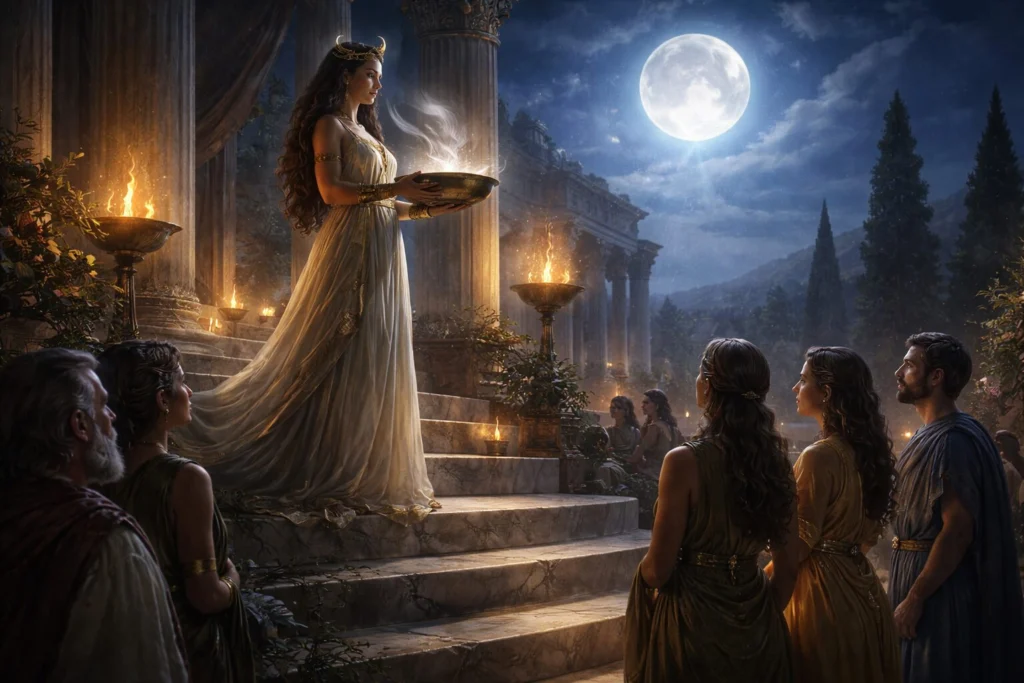
Divination is older than most of the names we now give its methods. Long before Tarot decks, crystal balls, or modern rune sets, people were already watching the sky, interpreting dreams, casting lots, examining unusual events, consulting oracles, and asking whether the visible world carried information about what could not yet be seen.
Some of the earliest surviving records show just how seriously that work could be taken. In ancient Mesopotamia, trained specialists developed extensive systems for interpreting celestial events, physical omens, and the bodies of sacrificed animals. In the Greek and Roman worlds, oracles, dreams, lots, augury, astrology, and other forms of divination could intersect with religion, politics, warfare, and ordinary decision-making.
The methods changed as cultures changed. Astrology, geomancy, dream interpretation, scrying, and systems of correspondence moved through medieval and Renaissance worlds. Later occult revivals reworked older material again, while entirely new divinatory traditions developed around familiar objects. Tarot is a good example: the cards began as a game in Renaissance Italy and only centuries later acquired the elaborate divinatory and occult identity now associated with them.
That history matters because age and authenticity are not the same question. A practice does not become less meaningful because its modern form is newer than people sometimes imagine. Divination has always borrowed, adapted, revived, translated, and discovered new languages for an old human impulse: asking what the pattern may be trying to tell us.
Ancient Worlds
Omens Become Systems
Mesopotamian scholars recorded celestial and terrestrial omens, while dreams, lots, oracles, and other methods developed across ancient cultures.
Greece & Rome
Divination in Public Life
Oracles, augury, dreams, astrology, and signs could influence religious decisions, civic affairs, warfare, and personal choices.
Medieval & Renaissance
Stars, Lots & Correspondence
Astrology, geomancy, dream interpretation, scrying, and learned systems of correspondence continued despite changing religious boundaries and periods of restriction.
18th–20th Centuries
Occult Revival & Reinvention
Tarot became a divinatory and esoteric system, Spiritualism changed Western ideas about unseen communication, and occultists reorganized older symbols into new systems.
Modern Practice
Old Questions, New Languages
Contemporary divination combines inherited traditions, reconstructed practices, new decks and systems, psychology, Paganism, mediumship, and increasingly digital forms of reading.
Beyond the Western Line
This page follows divination primarily through the cultures most closely connected to our own practice, but that is not the whole history. Chinese traditions of divination are ancient and extensive, and the I Ching — the Book of Changes — became especially influential among Western readers and occult practitioners. The deeper history page will acknowledge these intersections without pretending that traditions from different cultures are interchangeable.
There is much more to this story.
The deeper history follows the people, systems, religious changes, revivals, inventions, and cultural exchanges that shaped the methods practiced today — including the places where modern legend and the historical record do not quite match.
Explore the History of Divination →Skill Before Spectacle
Building a Reliable Practice
Divination becomes more useful when it becomes a practice rather than a reaction. Pulling cards only when frightened, grabbing a pendulum when desperate for reassurance, or opening a tool only after something has already gone wrong makes it difficult to learn how that system behaves under ordinary conditions.
Regular practice teaches something books cannot: how the language works in your own hands. You begin to notice which symbols repeatedly appear before certain kinds of events, when an intuitive impression adds information and when it merely echoes your expectations, and which questions consistently produce useful answers.
Familiarity also makes mistakes easier to recognize. A reader who keeps records eventually discovers personal habits — cards they routinely over-dramatize, situations in which desire bends interpretation, or a tendency to read uncertainty as danger. That knowledge is not evidence of failure. It is part of becoming better.
Ritual preparation can help, but it does not need to become elaborate. A cleared surface, a settled body, a deliberate question, and a few moments of quiet may be enough. The purpose is not theatrical atmosphere. It is to mark the difference between casually reacting to a feeling and deliberately entering a divinatory state.
A Working Discipline
Six habits that make a reader more reliable
Settle Before You Read
Notice your emotional state before opening the tool. You do not need to become perfectly neutral, but you should know what fear, hope, anger, grief, or desire you are carrying into the reading.
Ask the Question You Actually Mean
A vague or secretly loaded question creates muddy interpretation. Narrow the subject, identify what you genuinely want to understand, and avoid hiding a demanded answer inside the wording.
Record Before You Explain
Write down the cards, symbols, movements, impressions, or images before building a story around them. Observation first gives you something concrete to return to later.
Interpret in Context
Meanings do not exist in isolation. Consider the question, the surrounding symbols, the person’s circumstances, the tradition being used, and what has already appeared in the reading.
Let Reality Answer Back
Return to the reading later. What developed? What did you understand correctly? What did you overstate or miss? Outcome is one of the best teachers a diviner has.
Know When to Close the Tool
Once the reading has yielded useful information, stop. Give choices, events, and circumstances time to move before asking again simply because uncertainty remains uncomfortable.
Keep a Divination Record
Memory is generous to us. It tends to remember the startling hits and quietly lose the readings that went nowhere. A written record gives practice something more useful than memory alone.
- Record the date, question, method, and exact result.
- Separate what appeared from what you interpreted it to mean.
- Note strong intuitive impressions without rewriting the reading around them.
- Return later and record what actually happened.
- Watch for personal symbols and interpretive habits that repeat over time.
Over time, a divination system stops feeling like a collection of definitions and begins behaving more like a language. Fluency comes from study, but it also comes from use: asking, listening, recording, being wrong, recognizing why, and returning to the work with better eyes.
Discernment Is Part of the Craft
Discernment, Ethics & Bad Readings
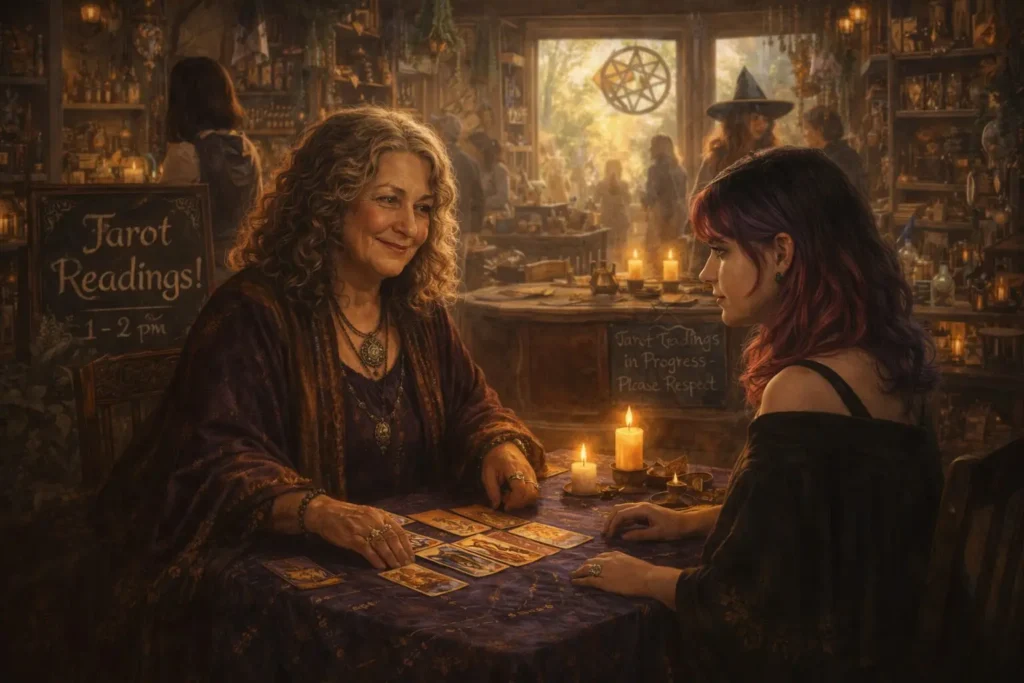
A divination can be sincere and still be wrong. That matters. Not every failed reading is evidence of deception, and not every strong impression deserves to be defended simply because it arrived with conviction. Readers misunderstand symbols, attach correct impressions to incorrect explanations, overlook context, and sometimes encounter information that is simply unclear.
The seeker also participates in the reading. Fear can make a warning feel catastrophic. Hope can turn possibility into promise. A reader may unconsciously follow the story the querent wants, while the querent may hear only the parts that confirm what they already believe. Divination happens through interpretation, and interpretation is a human act even when we believe the information itself may come from somewhere beyond us.
This is why confidence should never be mistaken for accuracy. A careful reader can say, “This is what I believe I am seeing,” without converting interpretation into absolute fact. Uncertainty does not weaken a reading. Sometimes it is the most accurate thing in the room.
Where Divination Goes Off Course
Common distortions in otherwise serious practice
Fishing for the Answer
Asking the same question repeatedly until one reading produces the answer you wanted does not create greater certainty. It gradually replaces divination with reassurance-seeking.
Projection
Fear, desire, suspicion, grief, attraction, and expectation can all be poured into ambiguous symbols. Before deciding what something means, ask what else it could reasonably mean.
Doom Reading
Difficult cards or impressions do not automatically mean curses, betrayal, angry gods, illness, death, spiritual attack, or catastrophe. Serious warnings deserve attention; fear by itself is not confirmation.
Certainty Theater
Absolute language can make a reader sound powerful while concealing how much interpretation is actually involved. “This must happen” should require far more evidence than “this appears likely.”
Reader Dependency
A healthy reading should return a person to their own judgment. Requiring constant readings before ordinary decisions gradually transfers authority from the seeker to the reader or the tool.
Invading Someone Else’s Privacy
Curiosity does not automatically create a right to information. Reading another person’s private thoughts, relationships, or life without meaningful reason raises the same questions of boundaries that exist elsewhere in magical practice.
Turning Interpretation into Fact
A symbol may suggest deception without proving who lied. An impression may indicate pressure without identifying its cause. Interpretation should not outrun what the reading actually supports.
Using Divination Instead of Living
Some questions eventually require conversation, investigation, decision, action, or simple patience. A reading can illuminate the situation without becoming a way to postpone participation in it.
When a Reading Feels Wrong
Do not force it into coherence. Sometimes the question was poor. Sometimes the reader was tired, emotionally entangled, distracted, or working beyond their present skill. Sometimes the symbols were clear and the interpretation was not. And sometimes a reading simply misses.
The useful response is not to invent increasingly elaborate reasons why the reading must secretly have been correct. Record it, identify what may have distorted the process, and allow later events to provide evidence.
Seeing Before Acting
Divination & Spellwork
Divination and spellwork do different jobs. Spellwork attempts to influence conditions; divination helps us understand the conditions already present. Used together, one can keep the other from becoming unnecessarily blunt.
Before a working, divination may reveal that the problem is not quite what it first appeared to be. What looks like a blocked road may really be poor timing. What feels like outside interference may be an unresolved relationship, a practical obstacle, or simply a situation still changing. A reading can help refine the intention before energy is applied in the wrong direction.
Before the Working
Diagnosis & Timing
The question is not only “Can I do this?” but “What is actually happening, and what kind of response fits it?”
- Diagnosis: What forces or conditions are active?
- Timing: Is the situation receptive, unstable, or better left to develop?
- Method: Does the situation call for pressure, protection, opening, repair, release, or something else?
- Resistance: What may work against the intended outcome?
After the Working
Feedback & Course-Correction
A working does not freeze the future. People continue making choices, circumstances change, and the result may develop differently than expected.
- Stabilization: Does the work need support or protection?
- Side effects: Did unexpected pressures appear?
- Maintenance: Is reinforcement actually needed?
- Course-correction: Is the result developing in the direction intended?
Let the field settle.
Reading immediately after a working can produce more anxiety than information, especially when the practitioner is emotionally invested in the outcome. Unless there is a reason to check immediately, give the working room to begin moving before asking what it has done.
Explore Divination & Spellwork →Coven of the Veiled Moon
Divination in Our Practice
Divination is woven deeply into our practice, but we do not treat it as spectacle. It is one of the ways we orient ourselves before acting: checking conditions, clarifying a question, testing assumptions, and listening for information that may not yet be obvious.
We use divination before some magical work to consider timing, resistance, intention, and the nature of the problem itself. We may use it during a longer process when conditions change, and sometimes after a working to understand how events are developing. It can also support spirit discernment, personal reflection, and decisions within coven practice.
None of this gives a reader authority over another person’s life. Consent, privacy, judgment, and sovereignty remain part of the work. Divination can illuminate a situation, but the person receiving the reading still has to decide what to believe, what to question, and what to do next.
How We Use It
Divination as orientation, not command
Timing & Preparation
We may read before beginning a working to understand the conditions around it, whether the timing is useful, and what preparation may be needed first.
Diagnosis & Clarification
Divination helps us test whether the problem is what it first appears to be and whether a different question, boundary, or practical action belongs ahead of magical intervention.
Spirit Discernment
A reading may help explore impressions or communication connected with gods, spirits, ancestors, or other presences, but identity and meaning are not accepted merely because a symbol appears once.
Reflection & Follow-Through
We use divination to examine what is developing, what may have shifted, and whether a situation needs further attention rather than treating every reading as a final verdict.
Divination, the Clairs & Mediumship
These areas overlap, but they are not interchangeable. A practitioner with developed clair-perception or mediumship experience may have an advantage in noticing, receiving, and sorting subtle impressions. That experience can enrich a reading considerably.
It does not, however, automatically teach the language of Tarot, runes, astrology, or another formal system. A medium still learns a deck. A clairvoyant still learns the structure of a spread. Divinatory tools bring their own grammar, history, and discipline to the information being received.
Personal Readings
Readings by Roen
A personal reading is different from reading for yourself. Another person brings a question, history, and lived circumstances that the reader cannot simply assume. Good divination therefore begins before the cards are laid: with enough communication to understand what is actually being asked.
Within the Coven, Roen brings formal study, long practice, intuition, and careful interpretation together in her readings. Her approach is not built around dramatic prediction. She looks at the relationships between the cards: what is strengthening, what is obstructing, what may be changing, and where the person receiving the reading still has room to act.
Because most of our work happens online, that process does not require a live session. We may ask a few questions first to understand the situation, clarify what the seeker most wants to know, or narrow a question that is trying to do too many things at once. The purpose is not to feed the reader an answer. It is to make sure the reading is aimed at the right question.
The Reading Still Belongs in Context
Roen brings the cards, their structure, interpretation, intuition, and her experience as a reader. The seeker brings the part no deck can provide by itself: the reality of the life in which those symbols have appeared.
That does not mean every detail must be explained beforehand. There is value in allowing a reading to speak without overloading it with information. But a relationship question, a spiritual question, and a question about a major life decision may require very different kinds of attention. A little clarity at the beginning often produces a much more useful reading at the end.
The result should offer something the seeker can work with: perspective, patterns, possibilities, cautions, or questions worth considering further. Sometimes a reading confirms what was already sensed. Sometimes it changes the angle entirely.
How the process begins
Tell us what is bringing you to the reading and what you most want clarity around. If the question needs refining, we may follow up before the reading begins. You do not need to arrive with perfect wording; helping identify the question worth asking is part of the process.
When You Want Another Perspective
Looking for Guidance?
If you already know that you would like a personal divination reading, you can request one directly. If you are less certain what kind of help, practice, or spiritual question you are dealing with, Ask a Witch gives us room to understand the situation first.
Divination
Divination does not require surrendering agency to fate. A reading may reveal possibilities, pressures, patterns, or likely directions, but the future is not always fixed. Good divination increases awareness so that choices can be made more consciously.
It is also not guaranteed prophecy, mind reading, or omniscience. A skilled diviner interprets what is presented within context, knowing that symbols can carry more than one layer of meaning and that circumstances continue to change. Guidance is not command, and certainty is not the goal.
Different traditions understand the source of divinatory knowledge differently. Some emphasize communication with spirits or deities. Others understand it through intuition, synchronicity, symbolic systems, the subconscious mind, or a patterned cosmos in which meaningful relationships can emerge. Witchcraft has room for more than one of these explanations, and they need not always exclude one another.
At its healthiest, divination sharpens perception while cultivating humility. It teaches us to notice carefully, interpret thoughtfully, and remember that insight carries responsibility.
A Brief History of Divination
Divination appears throughout recorded history and almost certainly draws upon much older human habits of watching dreams, animals, weather, celestial movements, and unusual events for meaning. What counted as divination—and how it was understood—varied enormously between cultures. There has never been one universal divinatory tradition.
In ancient Mesopotamia, divination became highly systematized. Scholars recorded celestial phenomena and other omens, building traditions that would strongly influence later astrology. Ancient Egypt developed forms of dream interpretation, oracle consultation, and temple-based inquiry. In Greece, sacred oracles such as Delphi were consulted on both personal and political matters, while Rome incorporated practices such as augury and haruspicy into public and religious life. In many of these societies, divination was not marginal; it could be woven into religion, governance, warfare, medicine, and everyday decision-making.
During the medieval and Renaissance periods, astrology, geomancy, dream interpretation, scrying, and related arts continued to develop, sometimes within learned circles and sometimes under considerable religious suspicion. Ideas of correspondence became especially influential: the belief that relationships between planets, elements, plants, metals, the body, and the wider cosmos could reveal hidden patterns. Divination was debated, restricted, practiced, condemned, and preserved in different ways depending upon time and place.
The occult revivals of the eighteenth through twentieth centuries reshaped many older systems for new practitioners. Tarot acquired an increasingly elaborate divinatory and occult language. Spiritualism renewed widespread interest in communication with the dead and unseen. Astrology, numerology, scrying, and other practices were reinterpreted through ceremonial magic, esotericism, psychology, and emerging modern Pagan traditions. Some practices used today—particularly modern forms of rune divination—are better understood as revivals or reconstructions inspired by older material rather than continuous ancient systems.
Today, divination remains a living and changing craft. For some it is communication with gods, spirits, or ancestors; for others it reveals synchronicity, intuition, psychological insight, or patterns within a meaningful cosmos. For many witches, several of these understandings comfortably coexist.
Its persistence is perhaps the simplest thing about its history: across very different cultures and eras, people have continued to seek ways of listening for meaning beyond what is immediately visible.
How Divination Functions
There is no single explanation for how divination works, and different traditions place emphasis in different places. Within MCC, we are comfortable allowing several explanations to coexist.
Spiritual communication. Divination can provide a structured language through which gods, spirits, ancestors, and other presences communicate. Cards, runes, dreams, omens, and scrying may become the medium through which information is received and interpreted. The tool does not necessarily create the message; it helps give the message form.
Symbols and correspondences. Divinatory systems develop languages of their own. Planets, colors, numbers, elements, plants, animals, images, and archetypal figures carry traditional correspondences that help the practitioner interpret what appears. Experience also teaches us that symbols may develop more specific meanings through repeated work with a particular deity, spirit, tradition, or personal practice.
Synchronicity and pattern. Sometimes meaning appears through timing and relationship rather than direct spirit communication. A card drawn at exactly the right moment, a repeated symbol, or an unlikely coincidence may reveal a pattern that would otherwise remain unnoticed. The significance lies not merely in the event itself, but in how precisely it meets the question or circumstance.
Intuition and deeper perception. Divination also engages the practitioner’s own perception. A symbol may bring forward knowledge that has been sensed but not yet consciously understood. Psychology can help explain part of this process, but it need not explain all of it. Intuition, spiritual contact, symbolic language, and subconscious recognition may operate together rather than competing for a single explanation.
A skilled diviner learns not only the meanings of the system being used, but also how to distinguish between interpretation, intuition, projection, and genuine communication. That discernment develops through study, repetition, record-keeping, and practice.
Divination works best when we neither reduce everything to imagination nor declare every impression supernatural. We listen carefully, interpret within context, and allow meaning to prove itself.
Major Paths of Divination
Divination is not a single method but a family of languages. Some systems work through structured symbols and archetypes, others through timing, number, chance arrangement, intuitive sight, or patterns formed in physical materials. Each trains perception differently, and no one method needs to answer every kind of question.
Tarot Cards
A structured symbolic system for exploring patterns, relationships, choices, and developing currents.
Explore TarotOracle Cards
Flexible decks that invite intuitive interpretation, guidance, reflection, and spiritual conversation.
Explore OracleRunes
A compact symbolic language used for counsel, pattern-reading, and questions of movement and circumstance.
Explore RunesTea Leaves
Reading shape, placement, density, and relationship in the patterns left behind within the cup.
Explore Tea LeavesAstrology
Reading planetary cycles, relationships, and timing to understand larger patterns and periods of change.
Explore AstrologyNumerology
Exploring symbolic meaning and recurring patterns expressed through number and numerical relationship.
Explore NumerologyScrying
Working with mirror, water, crystal, flame, and other receptive surfaces to perceive beyond ordinary sight.
Explore ScryingKinetic Divination
Reading movement, direction, fall, and spatial relationship through cast or moving objects.
Explore KineticReadings by Roen
Roen brings study, intuition, and disciplined interpretation together in readings designed to offer depth, clarity, and grounded guidance without surrendering the querent’s agency.
View Readings by Roen
Choosing a Method
Different forms of divination are suited to different kinds of questions. Use this crosswalk to choose a method that fits what you are actually asking—whether you need clarity, timing, counsel, inner work, interpretation, or guidance before magical action.
| Question Type | Best Fits | What It’s Best At | Watch-Outs |
|---|---|---|---|
|
“What’s really going on?” Hidden dynamics, motives, influences, and undercurrents. |
Tarot Oracle Scrying | Complex patterns, hidden relationships, emotional truth, spiritual influence, and narrative clarity. | Confirmation bias or interpreting every symbol as proof of what you already suspect. Tip: Ask “What do I need to understand?” rather than “Prove I’m right.” |
|
“When is the right time?” Cycles, seasons, timing windows, and developing conditions. |
Astrology Numerology Tarot | Timing, trends, cycles, energetic weather, and choosing when to move, wait, prepare, or reconsider. | Treating timing as destiny or waiting endlessly for a supposedly perfect moment. Tip: Use favorable timing to support action, not to surrender agency. |
|
“What choice serves me?” Decisions, crossroads, consequences, and practical next steps. |
Runes Kinetic Tarot | Practical counsel, comparing possible directions, recognizing consequences, and identifying the real hinge of a decision. | Repeating the same reading until you receive the answer you wanted, or asking the tool to make the decision for you. Tip: Once the answer is clear, act or allow circumstances to develop before asking the same question again. |
|
“What is my inner work here?” Healing, shadow, integration, self-knowledge, and meaning. |
Oracle Tarot Scrying | Self-reflection, emotional naming, shadow work, archetypal patterns, and recognizing what may be operating beneath conscious awareness. | Using difficult symbols to punish yourself or turning every challenging reading into doom. Tip: Ask “What needs my attention?” or “What supports healing?” rather than “What is wrong with me?” |
|
“What’s the omen?” Signs, synchronicities, repeated symbols, and meaningful timing. |
Tea Leaves Kinetic Scrying | Recognizing patterns, interpreting symbolic correspondences, exploring spiritual communication, and testing the meaning of unusual or repeated events. | Treating every coincidence as communication or searching so intensely for signs that ordinary patterns become messages. Tip: Notice first and interpret second. Give greater weight to unusual specificity, meaningful timing, repetition, and confirmation. |
|
“Should I do spellwork?” Feasibility, ethics, timing, likely resistance, and refinement. |
Divination & Spellcraft Astrology Tarot | Testing assumptions, clarifying intention, identifying resistance, choosing an approach, and considering timing before beginning the work. | Treating divination as a permission slip or using it instead of taking necessary mundane action. Tip: Let divination inform the working; do not ask it to replace judgment, responsibility, or action. |
Practice, Preparation, and Ethics
Divination is not only about technique; it is also about posture. The quality of a reading is shaped as much by the state of the practitioner as by the tool in their hands. Preparation can be simple—a cleared surface, a moment of quiet, an intentional breath—but it establishes a boundary between casual distraction and deliberate attention. For many witches, that pause also creates a small sacred space in which divination becomes conversation rather than reflex.
Good practice continues after the reading. Record what appeared, note your first impressions, and return to them later. Watching how symbols, predictions, and intuitions unfold over time develops discernment. The more familiar we become with our own habits of interpretation, the easier it becomes to distinguish insight from fear, desire, projection, or simple misunderstanding.
Repeated readings deserve particular care. Asking the same question again and again can stop being divination and become an attempt to force reassurance—or to obtain the answer we wanted in the first place. If a reading is unclear, a carefully framed follow-up question may help. But once an answer has emerged, allow time, action, or changing circumstances to provide additional information before asking again.
Ethics matter because readings touch real emotions, relationships, choices, and fears. Responsible divination respects the querent’s agency and does not manufacture certainty where certainty does not exist. Difficult cards, symbols, or impressions should not automatically be turned into claims of curses, spiritual attack, angry gods, betrayal, illness, or catastrophe. A warning may be genuine, and divination can reveal uncomfortable truths, but fear alone is not evidence.
A skilled reader offers interpretation without pretending to omniscience. Divination may reveal patterns, pressures, possibilities, spiritual communication, or likely directions, but the querent remains a participant in what follows. Guidance should strengthen judgment rather than replace it.
The purpose of divination is not to make us dependent upon the reading. It is to help us see more clearly when we return to our lives.
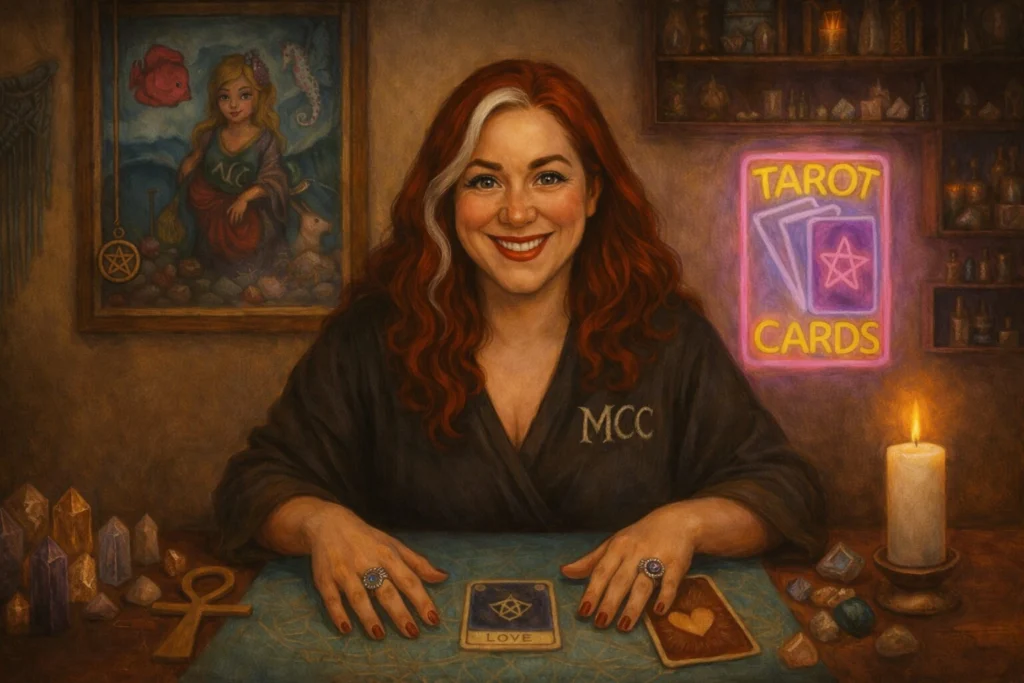
For many practitioners, divination becomes more than a technique — it becomes a relationship that matures through years of use. Tools may change, interpretations deepen, and the language of symbols becomes more familiar and precise. What begins as curiosity can develop into disciplined practice: learning when to trust an impression, when to question it, and how to distinguish perception from projection, urgency from timing, and fear from genuine warning.
Within the Coven, this approach is reflected in the work of Roen. Her practice has developed through study, intuitive work, reflection, and service to others. She does not approach divination as spectacle or claim certainty where none exists. Instead, the work depends upon careful listening, skilled interpretation, and respect for the person receiving the reading.
A good reading should not make the querent dependent upon the reader. The reader offers symbols, possibilities, patterns, and perspective; the querent brings context, judgment, and choice. At its best, divination becomes collaborative — insight that returns the seeker to their own life with greater clarity and a stronger sense of what they may choose to do next.
Explore Readings by RoenLooking for Guidance?
If you would like a personal divination reading, you can request one directly. If you are unsure what kind of guidance or practice fits your situation, Ask a Witch is a good place to begin.