
Paranormal Investigation: Tools, Methods & Help
A practical guide to equipment, spirit-work tools, evidence, boundaries, and knowing when to bring in help.
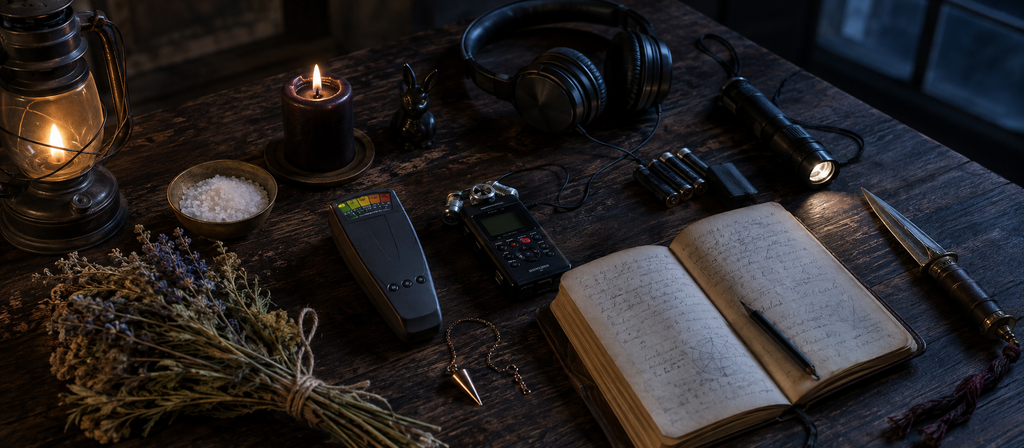
We believe ghosts and other presences are real. We also know that a strange sound is not automatically a ghost, a ghost is not automatically hostile, and an unexplained reading does not explain itself. Good investigation respects the experience while remaining careful about its interpretation.
The purpose of an investigation is not simply to collect eerie recordings or make a quiet house appear dramatic. It is to learn what is happening, whether it repeats, what conditions surround it, whether it responds intelligently, and—most importantly—whether anything actually needs to be done.
That requires more than equipment. It requires observation, context, human judgment, appropriate spiritual knowledge, and an understanding of what each tool can and cannot tell us. A meter may detect a change in the environment, but it cannot identify the cause of that change. A medium may perceive a presence, but perception still needs discipline and independent documentation. Neither batteries nor intuition remove the need to think.
What people casually call a “ghost” may also belong to a much broader ecology of the dead, spirits, land presences, residual phenomena, and experiences we do not yet know how to classify. That larger territory is explored in our pages on Ghosts & Hauntings and Fae. Here, we are concerned with how to approach unusual activity responsibly—and how to choose tools because they answer a useful question, not merely because they look impressive in the dark.
Trust the experience. Verify the interpretation. Respond to what is actually happening.
A reading is a clue, not a conclusion.
Equipment is useful only when it helps answer a question. Before switching on a recorder, raising an EMF meter, or attempting communication, decide what you are actually trying to understand.
Are you establishing whether unusual activity is occurring at all, or trying to determine what may be causing an experience already reported? Do you need to know whether it repeats under similar conditions, corresponds with an environmental change, responds intelligently, or appears connected to a particular person, object, room, or time? You may simply be trying to learn whether the activity presents any meaningful risk—or whether intervention is necessary in the first place.
Those questions determine which tools are worth using and why. A thermometer may help test a reported cold area, but it cannot establish that a spirit caused it. A stationary camera may show whether an object moves, while offering little insight into why. Historical research may explain a building’s alterations or former occupants, but it should not be used to force every experience into a convenient story about someone who once died there.
This is why a thoughtful investigation does not begin with “How do we find the ghost?” It begins with “What has been reported, and what would help us understand it?”
Sometimes the answer is paranormal. Sometimes it is structural, electrical, environmental, psychological, accidental, or simply unresolved. More than one explanation may also be operating at once. Finding an ordinary cause for one event does not automatically explain every other experience in the building—and finding one compelling anomaly does not make every creak supernatural.
A successful investigation does not require paranormal evidence. Sometimes understanding the house is the result.
Follow the Full Investigation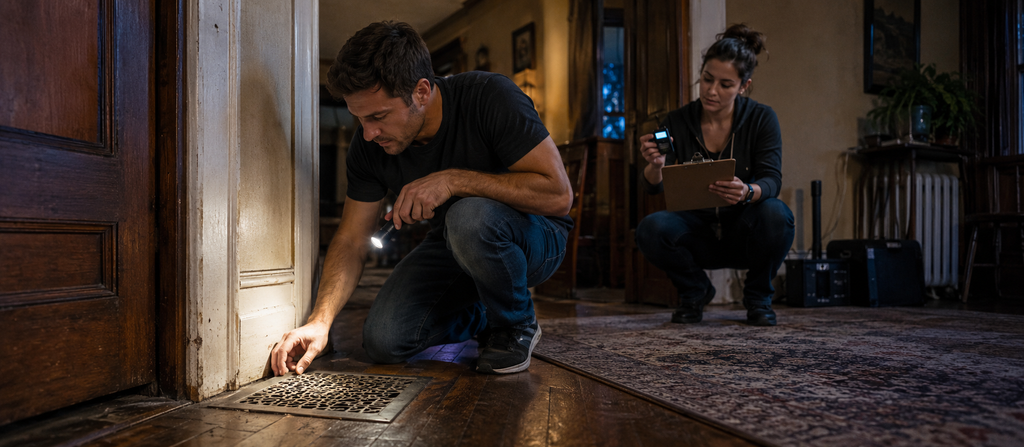
A useful field kit is not the largest collection of equipment—it is the smallest collection that can answer the questions of the case reliably.
Every tool should have a defined purpose before it is used. Some document what witnesses experience. Some measure the surrounding environment. Others help establish whether an event repeats or whether a person, animal, building system, or changing condition may be responsible. None of them independently identifies a ghost.
The best investigators also understand their equipment well enough to recognize ordinary interference. A reading becomes useful only when you know what the instrument measures, why you are measuring it, and what else could have produced the result.
Notebook or Case Log
What it does: Creates a time-stamped record of reported experiences, environmental conditions, equipment readings, investigator locations and actions.
Why use it: Memory changes quickly, especially during a tense or exciting investigation. A written log makes it possible to compare an experience with recordings, readings and the movements of other team members later.
What the result may mean: Repeated entries can reveal patterns connected with a room, time, person, object, weather condition or building system. The absence of a pattern is useful information too.
What can fool it: Suggestion and hindsight can alter how an event is described. Record what happened before discussing interpretations with the group, and distinguish direct observation from assumption.
Audio Recorder
What it does: Preserves voices, sounds and periods of silence for later review. It may also capture sounds that investigators did not consciously notice at the time.
Why use it: Audio provides a record that can be replayed, compared with the case log and reviewed by more than one person. It is especially useful when witnesses report voices, footsteps, knocking or responsive sounds.
What the result may mean: A recording may confirm that a sound physically occurred, help locate its direction or show that it followed a question. It may also reveal an ordinary source missed in the moment.
What can fool it: Whispering, clothing movement, stomach sounds, distant conversations, plumbing, animals, radio interference and handling noise can all become mysterious when heard without context. Investigators should announce their own movements and unusual sounds aloud.
Camera and Video
What it does: Documents rooms, objects, people, lighting and visible events before, during and after an investigation.
Why use it: Images preserve the physical arrangement of a location. They can show whether an object moved, a door changed position, a light appeared, or someone entered an area without being remembered later.
What the result may mean: Clear, continuous footage may corroborate movement or a visible anomaly. Still photographs are also valuable for documenting ordinary conditions that could later explain an experience.
What can fool it: Dust, insects, moisture, lens flare, reflections, slow shutter speeds, compression artifacts, autofocus and infrared illumination frequently produce strange-looking images. A photograph without context is rarely enough to identify a cause.
Flashlights and Red Light
What it does: Provides safe visibility while allowing investigators to control how much ordinary light is introduced into the location.
Why use it: The primary reason is safety. Red light can preserve more low-light vision than a bright white beam, while an ordinary flashlight is essential for stairs, debris, equipment checks and emergencies.
What the result may mean: A light can help test whether a reported shadow is created by traffic, windows, reflective surfaces or another investigator’s movement.
What can fool it: Loose switches, aging batteries, temperature changes and poor contacts may cause flickering or intermittent operation. A flashlight turning on or off is not meaningful until mechanical causes and handling have been considered.
Thermometer or Thermal Sensor
What it does: Measures temperature at a surface, in the surrounding air, or across an area depending on the type of instrument used.
Why use it: Witnesses often report sudden cold or hot areas. Measuring them can establish whether a temperature difference is physically present, where it begins and ends, and whether it changes over time.
What the result may mean: A repeatable change may point toward airflow, insulation, moisture, heating systems, sun exposure or another environmental condition. A change without an obvious source may warrant comparison with other observations.
What can fool it: Infrared thermometers measure surfaces rather than the air between the instrument and its target. Drafts, vents, exterior walls, reflective materials, body heat and incorrect distance can all create misleading results.
EMF Meter
What it does: Detects certain electromagnetic fields produced by wiring, appliances, electronics, radio transmissions and other sources, depending on the meter.
Why use it: EMF mapping can uncover electrical conditions that correspond with a witness’s experiences. It can also establish a baseline before investigators interpret an unexpected change as unusual.
What the result may mean: A change indicates that the meter detected a field—not what created it. A localized, repeatable reading may help identify faulty wiring, concealed equipment or another environmental source.
What can fool it: Phones, radios, cameras, wireless signals, electrical panels, appliances and investigators carrying electronic equipment can produce spikes. There is no established EMF reading that uniquely identifies a spirit.
Environmental Monitor
What it does: Tracks conditions such as temperature, humidity, air pressure, carbon dioxide, carbon monoxide or air quality, depending on the device.
Why use it: Environmental changes can affect buildings, equipment and the people inside them. Monitoring several conditions over time may reveal why activity seems to occur only in a particular room or under particular circumstances.
What the result may mean: A pattern may indicate ventilation problems, combustion hazards, changing weather, moisture, mold-supporting conditions or mechanical systems cycling on and off.
What can fool it: Poor placement, uncalibrated sensors, body heat, breath, open doors and movement between environments can alter readings. Hazardous carbon monoxide readings require immediate evacuation and professional attention—not further paranormal experimentation.
Motion Sensor
What it does: Signals when movement, heat or a change within a monitored area meets the sensor’s activation threshold.
Why use it: A motion sensor can watch an empty hallway, doorway or object while investigators work elsewhere. It is most useful when paired with a camera and a precise location log.
What the result may mean: An activation establishes that the sensor registered a change. Repeated activation in the same controlled conditions may justify closer observation.
What can fool it: Insects, rodents, pets, curtains, moving branches, heating systems, reflective surfaces, shifting sunlight and investigators entering the detection area can trigger sensors.
Infrared and Night-Vision Equipment
What it does: Allows cameras or viewers to record in very low light by amplifying available light or using infrared illumination.
Why use it: It helps document investigator movements and activity without filling a location with visible white light. It is particularly useful for continuous coverage of dark rooms.
What the result may mean: The footage may corroborate movement or show the ordinary source of a reported shadow. It records a part of the light environment differently from human vision; it does not reveal an inherently spiritual realm.
What can fool it: Insects and dust close to an infrared light can appear large and luminous. Reflective eyes, fabric, glass, glossy surfaces, lens artifacts and automatic exposure changes can also look extraordinary.
Static Camera
What it does: Records one controlled view continuously without being carried around by an investigator.
Why use it: A fixed camera provides context. It can show who entered a room, when equipment was moved, whether an object changed position, and what was happening around the time of another recorded event.
What the result may mean: Continuous footage may corroborate an incident and eliminate some forms of accidental contamination. Multiple synchronized cameras can help establish location and direction.
What can fool it: Blind spots, incorrect timestamps, dropped frames, motion-only recording, battery failure and compression can create gaps or apparent jumps. Camera placement should be documented before the investigation begins.
Two-Way Radios
What it does: Keeps team members in contact across a large property and allows urgent information to be shared quickly.
Why use it: Radios primarily support coordination and safety. They also help investigators determine whether a distant voice or sound came from another member of the team.
What the result may mean: Clear radio records can confirm investigator locations and explain sounds captured elsewhere. Unexpected transmissions may indicate interference from another radio user rather than paranormal communication.
What can fool it: Shared channels, signal overlap, accidental button presses, static and nearby radio traffic can produce fragments of speech. Radios should be logged as a possible source of contamination whenever audio is being recorded.
Basic Measuring and Marking Tools
What it does: Tape measures, removable markers, door-position indicators and simple levels document physical distances, positions and changes.
Why use it: Reports that an object moved, a door opened or a mark appeared are easier to evaluate when the original position was recorded precisely.
What the result may mean: A verified physical change establishes that movement occurred. It may then be compared with vibration, airflow, floor angle, human activity or other possible causes.
What can fool it: Inconsistent reference points, adhesive failure, settling floors and accidental contact can create apparent movement. Never use permanent markings or attach anything without the property owner’s permission.
First Aid and Mundane Safety Gear
What it does: Protects the living people conducting the investigation. A basic kit may include first-aid supplies, water, protective gloves, appropriate footwear, backup lighting and any personally required medication.
Why use it: Dark, unfamiliar and neglected buildings present ordinary hazards long before anything paranormal enters the question. An injured, dehydrated or exhausted investigator is also less able to observe accurately.
What the result may mean: Safety equipment is not evidence-gathering equipment. Its value is that it allows the investigation to proceed responsibly—or helps the team recognize when it should stop.
What can fool it: Adrenaline can disguise injury, fatigue and fear until symptoms become pronounced. Sudden illness should be treated first as a medical or environmental concern. Care for the person before attempting to interpret the experience.
Know what a tool measures before deciding what it means.
Not every device used in paranormal investigation is doing the same kind of work. Some instruments measure a physical condition. Others are used to document an event, attempt communication, or create an experiment in which investigators look for meaningful responses.
The distinction matters. A thermometer produces a temperature measurement. An audio recorder preserves sound. A spirit box generates a rapid stream of radio fragments that investigators may interpret as communication. A pendulum does not measure a presence at all; it is a divinatory instrument whose movement must be understood through an entirely different framework.
Calling all of these devices “scientific equipment” blurs what they actually do. An experiment can be thoughtful without proving a scientific claim, and a spiritual tool can be meaningful without pretending to be a laboratory instrument. Problems begin when investigators present interpretation as measurement or treat every coincidental response as confirmation.
A useful question is not simply “Did the device react?” Ask why it reacted, what normally produces that response, whether the timing was unusual, whether the result can be repeated, and whether anyone interpreted it before reviewing the surrounding context.
A device does not become scientific merely because it has batteries.
EVP Recording
What it is: The practice of reviewing an audio recording for voices or sounds that were not consciously heard or identified during the session.
Why use it: A recorder can preserve faint events for repeated listening and comparison with the investigation log. EVP sessions also create structured periods in which investigators ask clear questions and leave time for possible responses.
How much weight to give it: A clear voice that several listeners independently transcribe in the same way is more interesting than a faint sound that becomes meaningful only after someone announces what it supposedly says. Even a compelling recording establishes an audio anomaly, not the identity of its source.
What can fool it: Whispering, distant speech, radio or television audio, clothing, breathing, plumbing, animals, digital artifacts and the mind’s tendency to find words in ambiguous sound. Mark every investigator noise aloud and let reviewers record their impressions independently.
Spirit Box
What it is: A radio rapidly scanning broadcast frequencies and producing fragments of speech, music and static.
Why use it: Investigators use the stream as raw material for a communication experiment, looking for timely, relevant or repeated responses to questions.
How much weight to give it: An isolated word has very little evidential value. A specific response that is heard independently, fits an unknown fact and repeats under controlled conditions may be worth documenting—but it remains interpretive.
What can fool it: Ordinary broadcast fragments already contain thousands of voices and words. Expectation, selective attention and leading questions make accidental phrases feel personal. Record the entire session, including questions, and avoid counting only the apparent successes.
Estes Method
What it is: One participant listens to a spirit box through isolating headphones and reports what they hear without knowing the questions being asked by another investigator.
Why use it: Separating the listener from the questions reduces one obvious source of prompting. It can make a spirit-box session more disciplined and reveal whether apparent answers correspond with questions the listener could not hear.
How much weight to give it: A sustained, specific exchange is more interesting than scattered words that can be fitted loosely to the conversation. The method improves the experiment; it does not remove the radio fragments, subjective interpretation or possibility of coincidence.
What can fool it: Broad questions, delayed responses, generous matching and editing only the strongest moments can create the appearance of conversation. Preserve the full recording and decide in advance how closely a response must correspond to count.
REM-Type Devices
What it is: A device that creates or monitors a small electromagnetic field and signals when that field is disturbed.
Why use it: It can serve as a visible or audible target in an interaction experiment, particularly in an empty, controlled area where ordinary movement is limited.
How much weight to give it: An activation shows that the device registered a disturbance. Repeated responses following specific requests may justify further testing, but the device cannot identify what caused them.
What can fool it: People, phones, radios, wiring, metal objects, environmental conditions and equipment instability may trigger it. Establish the normal detection range and test known sources before beginning communication.
Laser Grid
What it is: A projected pattern of light used to make movement across a room easier to see on camera.
Why use it: When kept stationary and recorded continuously, the grid can provide a visual reference for changes within the illuminated area.
How much weight to give it: A disruption shows that something interrupted or altered the light. It does not establish whether the cause was a person, animal, insect, airborne material or anything paranormal.
What can fool it: Camera movement, vibration, insects, dust, reflective surfaces and investigators entering the beam. A laser grid is a visual aid—not a ghost detector—and lasers must never be aimed toward anyone’s eyes.
Random-Word and Ovilus-Style Devices
What it is: A device or program that selects words from a stored vocabulary, sometimes claiming to use environmental sensor changes as the selection mechanism.
Why use it: Investigators use the words as prompts in a communication experiment and watch for unusually specific correspondence with the location, question or event.
How much weight to give it: Very little unless the selection process is transparent, the output is recorded in full and the result is unexpectedly specific. A long stream of common words will eventually produce something that feels relevant.
What can fool it: Large word banks, undisclosed programming, confirmation bias and ignoring irrelevant results. If the manufacturer cannot explain how sensor input becomes a particular word, the device should not be presented as measuring or translating spirit communication.
Pendulum
What it is: A suspended weight used in divination or structured yes-and-no communication.
Why use it: For practitioners, a pendulum can provide a simple symbolic vocabulary for focused intuitive or spiritual inquiry. It is portable, quiet and familiar within many magical traditions.
How much weight to give it: Treat its responses as divinatory information, not environmental measurement. It may help a practitioner form questions or notice patterns, but it should not independently determine that a spirit is present, dangerous or truthful.
What can fool it: Tiny unconscious muscle movements, expectation, hand position and airflow readily affect the swing. Decide the response pattern beforehand, keep questions neutral and verify important claims through independent means.
Spirit Board
What it is: A shared divinatory surface on which participants use a movable pointer to select letters, numbers or short responses.
Why use it: In traditions that accept spirit communication, it provides a structured alphabet rather than limiting the exchange to yes-or-no answers.
How much weight to give it: A board session is a spiritual or psychological communication practice, not a scientific measurement. Information should be documented, considered carefully and verified before anyone acts on it.
What can fool it: Unconscious movement, group expectation, deliberate manipulation and the human tendency to complete partial words. Spirit communication also does not guarantee an honest or correctly identified communicator. Use boundaries, avoid frightened or highly suggestible participants, and close the session deliberately.
Ghost-Detecting Apps
What it is: Phone software claiming to detect, translate, visualize or communicate with paranormal activity through a phone’s sensors or generated content.
Why use it: Most are best understood as entertainment. A legitimate sensor-logging app may still be useful when it clearly identifies what phone sensor it reads and preserves the raw measurements.
How much weight to give it: Almost none when the app produces unexplained words, figures, radar images or dramatic warnings without showing how those results were generated. An unknown algorithm is not an unknown spirit.
What can fool it: Designed randomness, prerecorded assets, advertising features, ordinary phone-sensor fluctuations and opaque programming. If an app cannot tell you what it measures and how its output is produced, it is not an investigative instrument.
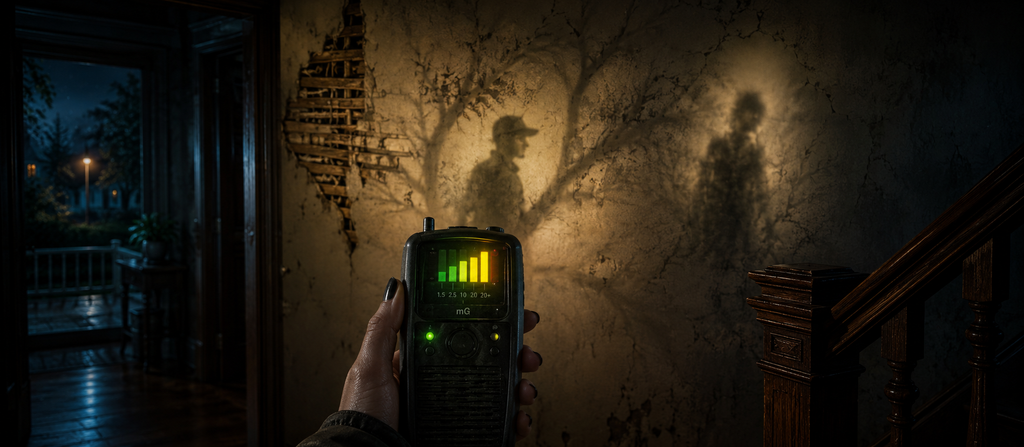
The Instrument Is Not the Evidence
An instrument can tell us that something happened within the limits of what it measures. It cannot, by itself, tell us why it happened.
An EMF meter may document a sudden change in an electromagnetic field. A thermometer may confirm that one part of a room is colder than another. A recorder may preserve a voice no one remembers hearing, and a camera may capture movement in a room believed to be empty. These results can be significant—but the instrument has not identified a ghost, spirit, haunting, or intention. It has given us an observation that still requires context.
This distinction protects good evidence rather than dismissing it. Measurement is not cause. An anomaly is not an explanation. Unexplained does not mean meaningless. Something genuinely unusual deserves careful attention precisely because we have resisted naming it too quickly.
The first comparison is usually the location’s ordinary state. Baseline readings help establish what the environment does when nothing unusual is being reported. Wiring produces fields. Heating systems create temperature changes. Houses shift, pipes knock, radios transmit, animals move through walls, and people unconsciously make sounds they later fail to recognize. Without that context, investigators can mistake the normal behavior of a building for a sudden paranormal event.
Human observations need similar care. If several people report the same figure only after discussing it together, we cannot know how much the later accounts influenced one another. Independent notes recorded before comparison are more useful. If an equipment change occurred at the same time, the timestamps should be compared. If the experience appears linked to a particular room, object, person or question, the team should look for repetition without forcing it.
Replication does not mean demanding that a presence perform on command. It means asking whether the condition, reading or event occurs again—and whether an ordinary source can reproduce it. Evidence review should also include the quiet and irrelevant material, not only the few seconds that seem impressive. A persuasive story built from selected moments may conceal hours of contradictory context.
Good investigation preserves two separate statements:
What happened: The recorder captured a voice-like sound at 11:42 p.m.
What we think caused it: The sound may be connected with the reported presence.
The first statement documents the observation. The second is an interpretation that may strengthen, weaken or remain unresolved as other information is considered. Keeping those statements separate allows investigators to take extraordinary experiences seriously without claiming more than the evidence supports.
Preserve the observation before naming the cause. Baselines, independent notes, replication and complete evidence review give an anomaly the context it needs.
Learn the Investigation Method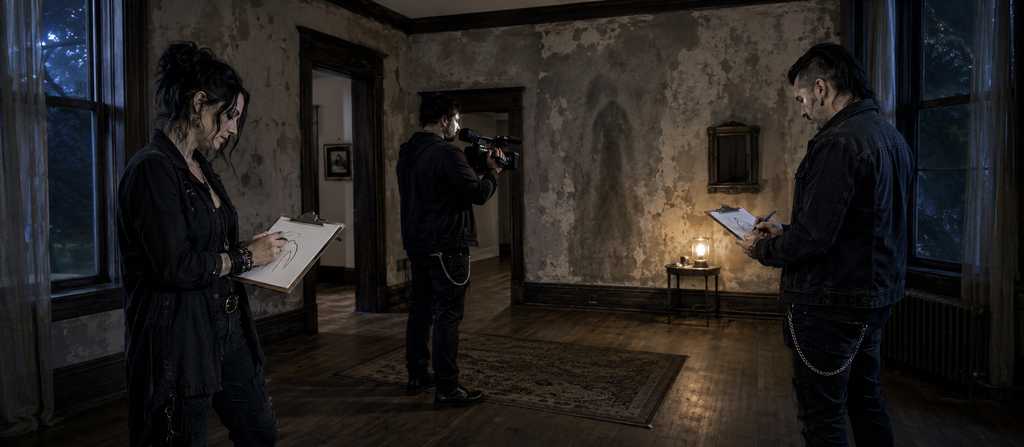
The Human Instrument
Some investigators notice a room’s atmosphere, emotional tone or apparent presence before any device records an unusual change. Others receive images, words, physical sensations or information they understand as communication. These experiences belong in an investigation—but they require a method suited to subjective information.
A human perception cannot be calibrated like a thermometer. That does not make it worthless, nor does it make it automatically correct. Its value depends on specificity, independent documentation, consistency and whether information can be verified without stretching it to fit.
The simplest discipline is one of the most important:
Record impressions before people compare notes.
If one person describes a woman near the stairs and three others later report sensing a woman, we have one original impression followed by three potentially influenced responses. If four people independently record similar details before speaking, the correspondence is much more interesting.
Intuition, sensitivity, mediumship and spirit work are also not ranks in a hierarchy. They describe different ways of perceiving or engaging with a case. A skilled technical investigator may have no interest in spirit communication. A medium may provide compelling information without understanding electrical systems or evidence handling. An experienced spirit worker may know how to establish boundaries but have no special ability to identify the source of a mechanical sound.
Most importantly, detecting activity is not the same as knowing how to interact with it—and neither automatically qualifies someone to remove it.
Intuitive
What this means: An intuitive notices impressions, patterns or changes that may not arise through an obvious chain of conscious reasoning. This may feel like a sudden certainty, discomfort, attraction to a location or sense that something deserves closer attention.
Why include one: Intuition can direct attention toward a room, object, question or inconsistency the rest of the team has overlooked. Experienced intuition often draws quietly upon details the conscious mind has not yet assembled.
What it may contribute: A specific impression recorded in advance can be compared with case history, witness accounts and later findings. It may suggest where to investigate without being treated as proof of what will be found.
What can mislead it: Expectation, fear, architecture, personal associations and information learned before entering the location can all shape intuition. Record the impression plainly and separately from the explanation attached to it.
Sensitive or Empath
What this means: A sensitive reports heightened awareness of emotional, atmospheric, physical or energetic changes. An empath may experience those changes particularly through emotion or bodily sensation.
Why include one: A sensitive may notice when the character of a room changes, when discomfort clusters around a particular area or when activity appears to coincide with the presence of certain people or objects.
What it may contribute: Repeated, independently recorded sensations can help identify patterns and suggest where environmental measurements or closer observation may be useful.
What can mislead it: Anxiety, fatigue, suggestion, interpersonal tension, poor air quality, temperature, mold, sound and expectation can produce strong physical or emotional responses. A sensation may be real while its proposed cause remains uncertain.
Medium
What this means: A medium understands some impressions as communication from the dead or other nonphysical presences. The information may arrive through images, words, sensations, emotions, dreams or a distinct sense of personality.
Why include one: A disciplined medium may provide information that helps investigators form better questions, distinguish one apparent presence from another or understand behavior that equipment alone cannot interpret.
What it may contribute: Specific details recorded before access to witness testimony or property history can later be checked. Mediumistic information may also help establish respectful communication or clarify whether a presence appears confused, settled, responsive or uninterested in the investigation.
What can mislead it: Prior knowledge, leading questions, symbolic impressions, personal projection and pressure to produce dramatic answers can distort a reading. Even genuine communication may be incomplete, misunderstood or dishonest. A medium’s identification should remain an informed interpretation, not an unquestionable verdict.
Experienced Spirit Worker
What this means: A spirit worker has an established practice of communicating with, setting boundaries around or otherwise engaging spiritual presences. Depending on the tradition, this may include offerings, divination, cleansing, protection, severing, quieting, banishing or psychopomp work.
Why include one: Some cases move beyond documentation. Residents may need help establishing boundaries, ending unwanted contact or deciding whether intervention would improve the situation or merely provoke it.
What it may contribute: A competent spirit worker can assess relationships and obligations that technical equipment cannot measure, select an appropriately limited response and explain what that response is intended to change.
What can mislead it: Tradition, ego and personal cosmology can cause a practitioner to force every case into the same explanation. Competence in one kind of spirit work does not confer universal authority. A responsible practitioner names uncertainty, respects the household and does not escalate intervention simply to appear powerful.
Carry intention, not an arsenal.
The Witch’s Field Kit
A witch’s field kit is not a collection of miniature weapons for fighting whatever may be present. Its purpose is to support perception, establish personal and household boundaries, communicate deliberately, and provide the least disruptive intervention appropriate to the situation.
Tools should be chosen for a reason. Salt may define a boundary, but scattering it through a historic building without permission is neither respectful nor useful. A bell may interrupt a heavy atmosphere, but it may also announce your presence or disturb something that had not been engaging with you. Divination may help clarify a relationship, but it does not transform an uncertain impression into a verified identity.
A trained practitioner also knows that a tool’s meaning comes from its material, history, preparation and use—not from a correspondence list alone. An ordinary key may become a personal protective object through longstanding practice. Consecrated water may carry the authority of a particular tradition. A charm worn for years may be more dependable to its owner than an elaborate object assembled five minutes before entering the house.
Tools for Relationship, Boundary and Response
Bring what your practice has taught you to use well. Every tool should have a purpose, a method and a clear reason for being introduced into the case.
Salt
What it is: A mineral associated across many traditions with preservation, purification, protection and the establishment of boundaries.
Why bring it: A practitioner may use salt to mark a temporary threshold, reinforce a defined boundary or support a cleansing practice. Its usefulness comes from deliberate placement and meaning—not from throwing it everywhere.
Practice and lore: Salt’s preservative qualities helped give it a broad protective reputation. In magical practice it often represents integrity, incorruptibility or a line that unwanted influence should not cross.
Use with care: Salt can damage plants, soil, wood, metal, stone and historic surfaces. Never scatter it without permission, and do not assume that every spirit relationship calls for exclusion.
Water
What it is: Water used plainly or prepared through blessing, prayer, consecration, collection from a meaningful source or combination with other materials.
Why bring it: Water may be used for cleansing, blessing, cooling an agitated atmosphere, marking a boundary or carrying the authority of a practitioner’s religious tradition.
Practice and lore: Water is associated with purification, transition, memory, healing and passage. Its meaning varies considerably depending on its source and preparation; holy water, spring water and ordinary clean water are not interchangeable in every practice.
Use with care: Do not sprinkle unknown liquids on people, objects, electrical equipment or historic surfaces. Water can support a working, but it is not a universal solvent for every spiritual problem.
Iron and the Iron Key
What it is: A piece of iron carried for protection, grounding or authority. A key adds the symbolism of opening, closing, access and the guardianship of thresholds.
Why bring it: Iron may serve as a personal protective object, while a key can support work involving doors, permissions, boundaries and the symbolic closing of unwanted access.
Practice and lore: Iron has a strong apotropaic reputation in European folklore and is often said to repel or disrupt particular spirits and faery beings. Keys have long been associated with household authority, secrecy, guardianship and deities of the crossroads or threshold.
Use with care: If a case may involve the Fae, land spirits or an existing relationship with place, iron should not be introduced casually. A protective material in one relationship may be an insult or threat in another.
Hagstone
What it is: A naturally pierced stone traditionally carried or hung as a protective object.
Why bring it: A practitioner may use a hagstone as a personal ward, a means of examining a space symbolically or a reminder to look beyond first appearances.
Practice and lore: Hagstones appear in British and European folk traditions as protections against harmful influence, nightmares, witchcraft or interference with animals. Later lore also associates looking through the opening with perceiving what is normally hidden.
Use with care: A hagstone supports the practitioner’s method; it does not function as an objective viewing instrument. Do not remove stones or other natural objects from protected or culturally sensitive places.
Protective Cord or Personal Charm
What it is: A prepared cord, amulet, token or familiar personal object carried or worn as a protective and grounding anchor.
Why bring it: Investigation can be disorienting. A familiar charm reinforces the practitioner’s established boundaries without immediately imposing a ritual upon the location.
Practice and lore: Knotted cords, bound threads, amulets and carried protections appear throughout folk and magical traditions. Their strength is often understood to come from preparation, relationship and repeated use rather than the material alone.
Use with care: A charm supports personal protection; it is not evidence that a location is dangerous. If it breaks or is lost, examine ordinary physical causes before declaring that it absorbed an attack.
Bell
What it is: A sound-producing ritual tool used to announce, clear, call, separate or mark a transition.
Why bring it: A bell can open or close deliberate communication, interrupt an oppressive atmosphere, mark a boundary or help a practitioner regain focus after a difficult encounter.
Practice and lore: Bells have been used in religious and folk settings to bless space, repel unwanted influence, summon attention and signal sacred time. The same sound that is understood to clear may also function as a call.
Use with care: Know whether you are announcing, inviting or dismissing before you ring. Sound carries, startles people and animals, and may be inappropriate at cemeteries, historic sites or occupied properties.
Chalk, Charcoal and Temporary Marking Tools
What it is: Materials used to draw temporary boundaries, seals, symbols or reference marks.
Why bring it: A visible mark can define exactly where a boundary begins, support a protective working or help investigators document whether an object or doorway changes position.
Practice and lore: Drawn circles, crosses, sigils and protective marks have been used in ceremonial magic, folk practice and household protection. Charcoal may also carry associations with fire, transformation and the remains of consecrated material.
Use with care: “Temporary” materials can stain plaster, stone, fabric and wood. Obtain permission, test the material and never draw over an existing historic or magical mark.
Herbs and Incense
What it is: Plant materials selected for their ritual, sensory, medicinal, folkloric or religious associations.
Why bring it: A practitioner may use herbs or incense to cleanse, bless, protect, calm, offer hospitality or create a deliberate transition between ordinary activity and spirit work.
Practice and lore: The same plant can carry different meanings across traditions. Its value should come from the practitioner’s knowledge of the plant and method, not merely from an online list declaring that one herb “banishes ghosts.”
Use with care: Smoke can trigger allergies, asthma and alarms; flame can endanger buildings; some plants are toxic to people or animals. Never burn or leave plant material without explicit permission and adequate ventilation.
Offerings
What it is: Food, drink, water, flowers, light, incense, prayer, service or another deliberate gesture of respect and reciprocity.
Why bring it: An offering may acknowledge an existing presence, open respectful communication, repair an offense or establish the terms of a peaceful relationship.
Practice and lore: Offerings are central to many devotional, ancestral and spirit-working traditions. They create relationship; they are not bait, payment for a performance or a universal method of making spirits obedient.
Use with care: Do not offer indiscriminately to an unidentified presence or promise an ongoing relationship you do not intend to maintain. Avoid leaving food, alcohol, wax, glass or non-biodegradable materials on land without permission.
Tarot and Other Divination Tools
What it is: Tarot, playing cards, runes or another established symbolic system used to examine the dynamics of a case.
Why bring it: Divination can help a practitioner explore whether communication is advisable, what relationship may be operating, where a boundary is needed or what intervention is most appropriate.
Practice and lore: Divination does not need to identify a spirit by name to be useful. It may be better suited to questions about condition, intention, relationship and consequence than to producing a dramatic biography of the dead.
Use with care: Ask specific, neutral questions and record the reading before consulting other team members. Divination is interpretive guidance—not proof that a particular person or entity is present.
Pendulum
What it is: A suspended weight used for divination, focused inquiry or simple yes-and-no communication.
Why bring it: A pendulum offers a compact method for checking the practitioner’s impressions or conducting a deliberately bounded communication session.
Practice and lore: Pendulum work is sometimes understood as spirit communication and sometimes as access to intuition or unconscious knowledge. The practitioner should know which framework they are using before interpreting the result.
Use with care: Unconscious muscle movement readily affects the swing. Establish responses before asking questions, avoid frightening diagnoses and corroborate important information through another method.
Scrying Surface
What it is: A mirror, dark bowl, water surface, crystal or other visual focus used for receiving images and impressions.
Why bring it: Scrying allows an experienced practitioner to enter a receptive state without attempting to provoke a response through noise or electronic stimulation.
Practice and lore: Reflective and dark surfaces have longstanding associations with vision, revelation, spirit communication and the crossing of perceptual thresholds.
Use with care: Low light, reflections and prolonged staring naturally produce visual distortions. Scrying impressions should be recorded as subjective material and the practice closed deliberately when the session ends.
Consecrated Light
What it is: A candle, lamp or safe electric light prepared to represent protection, guidance, sacred presence or the authority of a particular deity or tradition.
Why bring it: Consecrated light can establish a calm working center, support communication with the dead or reinforce a household’s claim to safety and order.
Practice and lore: Light is widely associated with guidance, vigil, remembrance, revelation and protection. Its meaning should be defined by the rite rather than assumed to frighten away everything unseen.
Use with care: Open flame may be prohibited or unsafe. A prepared electric candle can carry the ritual intention without risking a fire or contaminating environmental conditions with heat and smoke.
Grounding Object, Food and Water
What it is: A familiar stone, token or tactile object accompanied by ordinary drinking water and appropriate food.
Why bring it: Grounding helps a practitioner return attention to the body, present location and ordinary surroundings. Food and water address the equally real effects of fatigue, low blood sugar, stress and dehydration.
Practice and lore: Magical traditions often use contact with earth, stone, breath or food to close ritual work and restore ordinary awareness. The physical and spiritual purposes support one another.
Use with care: Do not interpret every headache, tremor or wave of nausea as paranormal contact. Stop, move to fresh air, check the environment and care for the person first.
Protective Oil
What it is: An oil prepared through prayer, consecration or the inclusion of materials associated with blessing and protection.
Why bring it: A practitioner may anoint themselves, a personal charm or a permitted threshold to reinforce a defined protective intention.
Practice and lore: Anointing has deep religious and magical associations with blessing, dedication, healing, authority and protection. The oil’s meaning depends upon its preparation and the tradition using it.
Use with care: Essential oils and herbs may irritate skin, harm animals or damage surfaces. Label ingredients, dilute appropriately and never anoint another person or their property without consent.
Cloth or Containment Vessel
What it is: A clean cloth, padded container or other temporary means of covering and safely transporting an object that should not be handled directly.
Why bring it: If an object appears connected with the activity, physical isolation allows it to be observed or moved without unnecessary contact, damage or immediate magical alteration.
Practice and lore: Wrapping, binding and enclosing are longstanding magical actions associated with separation, limitation and containment. The material may be prepared if the practitioner’s method calls for it.
Use with care: A box is not automatically a magical prison. Do not take, move, wrap or cleanse another person’s property without permission, and consider whether disturbing the object is necessary at all.
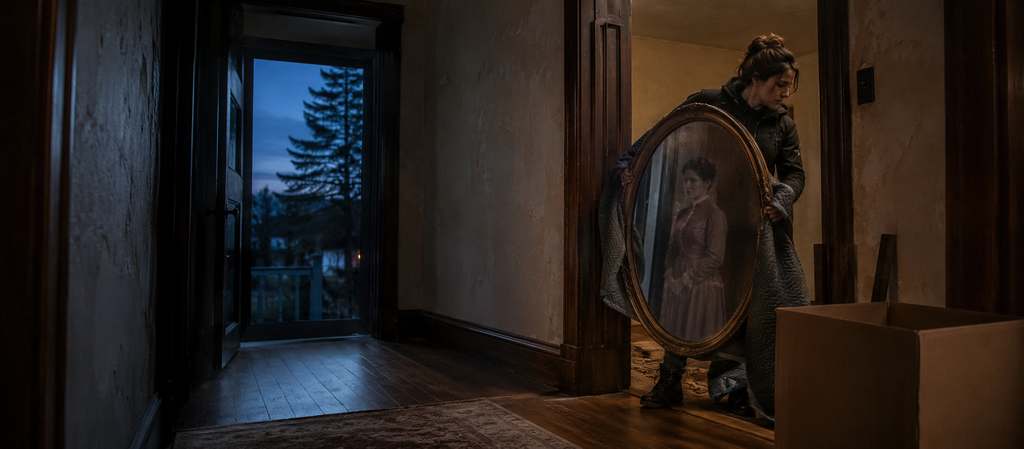
When the Object Is Part of the Haunting
Some reports appear to follow an object rather than remain within a particular room or building. Activity may begin after an item is acquired, occur most often near it, stop when it is removed, or appear again wherever it is taken. That pattern deserves investigation—but it does not justify immediately declaring the object cursed.
An object may seem to carry a residual impression connected with its history or former owner. It may serve as a focus for a dead person, spirit or living person’s attention. It may have been deliberately blessed, protected, bound or used in ritual. In rarer cases, it may appear connected with intentionally harmful work. These are different possibilities and should not be collapsed into the single dramatic category of “haunted object.”
The central investigative question is:
Does the phenomenon remain when the object moves?
That question should be approached carefully. First document where the object normally rests, who handles it, what witnesses report and whether the activity predates its arrival. Research its provenance when possible: where it came from, who owned it, how it was used, whether it was altered, and why someone believed it mattered.
If the owner agrees, the object may be observed in place, temporarily isolated or moved under controlled conditions. The goal is not to provoke a performance but to determine whether the reported pattern changes. If activity continues unchanged at the original location, the object may not be central. If the activity consistently follows it, that relationship becomes more significant.
Immediate cleansing, dismantling or destruction may erase information before the relationship is understood. It may also damage a meaningful heirloom, historic artifact, devotional object or existing protection. If the object contains intentional spirit work, breaking it open or aggressively attempting to purge it can alter the situation in ways the investigator is not equipped to manage.
The least dramatic response is usually the wisest beginning: document, research, limit unnecessary handling, establish boundaries and ask what outcome the owner actually wants. Some objects need only respectful placement or separation from a sleeping area. Others may require return, ritual care or attention from an experienced spirit worker. Destruction should never be treated as the automatic solution.
Observe the relationship before changing it.
Does activity remain at the location, follow the object, follow a person who handles it, or stop when the object is isolated? That pattern matters more than the object’s frightening appearance or reputation.
Record its position, condition, history and the activity reported around it.
Look for changes when the object is present, absent, moved or handled.
Limit unnecessary contact and establish boundaries without altering the object.
Choose care, separation or intervention only after the pattern is clearer.
Do not cleanse, open, dismantle or destroy an object merely because someone has called it haunted.
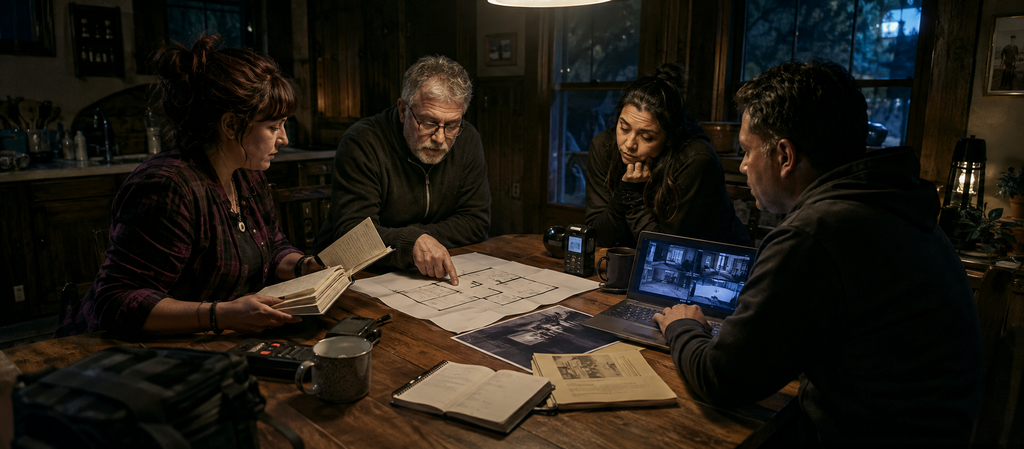
Building a Good Team
A good paranormal team is not simply a collection of people carrying different gadgets. It is a group in which each person has a defined responsibility, understands the limits of that responsibility and contributes information that can be checked against the work of the others.
Not every investigation requires every role. A small residential case may need only two or three competent people, while a large historic property may require technical coverage, research, safety coordination and specialist support. Adding more investigators can also add noise, equipment interference, conflicting accounts and unnecessary pressure on residents.
The important principle is:
Psychic ability, technical knowledge and spiritual authority are not the same competency.
Someone may be excellent at documenting anomalies but unqualified to communicate with a presence. A medium may perceive useful information without knowing how to conduct evidence review. A witch may be capable of establishing boundaries but should not assume that every case requires magical intervention. A good team values different forms of expertise without allowing any one person to dominate the interpretation.
Lead Investigator
What this person does: Defines the purpose and scope of the investigation, assigns responsibilities, coordinates the team and serves as the primary contact for the property owner or witnesses.
Why the role matters: Without clear leadership, investigators may duplicate work, contaminate recordings, wander into unsafe areas or begin experiments that have little connection to the reported activity.
What this person should contribute: A plan based on the case rather than a standard performance. The lead should know what questions need answering, what evidence would be useful and when the team should stop.
What this role does not mean: The lead investigator is not automatically the best medium, technician or spirit worker. Leadership requires coordination, judgment and accountability—not control over every interpretation.
Research and Case History
What this person does: Examines ownership records, newspapers, maps, architectural changes, local history, witness timelines and other sources relevant to the location or object.
Why the role matters: Good research can explain building sounds, identify earlier uses of a room, verify a name or reveal when the reported activity actually began. It prevents folklore from quietly turning into fact.
What this person should contribute: Documented information with sources, dates and a clear distinction between verified history, family story and local legend.
What this role does not mean: Finding that someone died nearby does not prove that person is responsible for the activity. Research should test interpretations, not manufacture a tragic biography for every unexplained event.
Technical Investigator
What this person does: Selects, places, tests and monitors equipment while maintaining timestamps, baseline readings and records of interference.
Why the role matters: Equipment is useful only when someone understands what it measures and what can trigger it. Proper setup also makes recordings and environmental readings easier to compare later.
What this person should contribute: Reliable documentation, known equipment limitations and an honest account of whether a result is ordinary, anomalous or inconclusive.
What this role does not mean: Technical equipment does not grant scientific authority by itself. The technician should not label an unexplained reading paranormal merely because no cause was immediately obvious.
General Investigator
What this person does: Observes assigned areas, keeps notes, conducts agreed experiments, monitors equipment and helps document team movements and environmental changes.
Why the role matters: Much of an investigation depends on careful, consistent observation rather than specialized ability. A reliable general investigator often provides the context that makes another person’s recording or experience understandable.
What this person should contribute: Clear observations, accurate timestamps, disciplined communication and willingness to report ordinary explanations as readily as unusual events.
What this role does not mean: An investigator should not improvise rituals, provoke possible presences or roam outside the assigned area simply to create a more exciting experience.
Sensitive or Medium
What this person does: Records intuitive, emotional, physical or mediumistic impressions separately from information supplied by witnesses, researchers and other team members.
Why the role matters: A disciplined sensitive or medium may notice patterns, relationships or apparent communication that instruments cannot identify.
What this person should contribute: Specific impressions recorded before comparison, a clear distinction between perception and interpretation, and a willingness to leave uncertain material unresolved.
What this role does not mean: A medium does not automatically control or remove spirits, and mediumistic information should not override safety findings, documented history or the experiences of the people who live there.
Skeptical or Critical Observer
What this person does: Looks deliberately for alternative explanations, weaknesses in the method, contamination, suggestion and conclusions that exceed the available information.
Why the role matters: Every team needs someone willing to ask whether a result can be reproduced ordinarily or whether the group is becoming attached to a preferred explanation.
What this person should contribute: Constructive testing, careful questions and an equal willingness to acknowledge genuinely unresolved evidence.
What this role does not mean: A critical observer is not there to mock witnesses, dismiss experience without examination or “win” against believers. Reflexive disbelief is no more careful than reflexive belief.
Safety and Logistics
What this person does: Tracks access, investigator locations, building hazards, weather, first-aid needs, emergency plans, property restrictions and the arrival or departure of team members.
Why the role matters: Unfamiliar buildings, darkness, fatigue and excitement create ordinary risks. Someone must retain enough distance from the investigation to notice when conditions are becoming unsafe.
What this person should contribute: A check-in system, emergency contacts, safe routes, clear stop conditions and the authority to end an activity when people or property are at risk.
What this role does not mean: Safety is not secondary because the team hopes to capture evidence. No recording is worth an injury, trespass charge, fire, environmental exposure or medical emergency.
Witch or Spirit Specialist
What this person does: Evaluates spiritual relationships, existing protections, ritual history, boundaries and whether intervention is appropriate. When authorized, the specialist may communicate, cleanse, quiet, separate, protect or perform other work within their competence.
Why the role matters: Investigation and intervention are different tasks. When a household needs more than documentation, an experienced practitioner can help select a response that matches the actual problem.
What this person should contribute: Knowledge of spirits and magical practice, respect for the residents’ beliefs, clearly stated intentions and the least disruptive effective response.
What this role does not mean: The specialist should not impose ritual, diagnose demons, destroy existing magic or attempt removal simply to demonstrate power. Spiritual authority is limited by tradition, experience, consent and the specific relationship involved.
Not every presence requires pursuit.
Do You Actually Need an Investigation?
Sometimes the responsible answer is no.
An occasional footstep, familiar scent, fleeting figure or sense of presence does not automatically require a team, a night of attempted communication or a collection of instruments. If the activity is infrequent, stable, nonthreatening and understood by the people who live there, an investigation may produce more disruption than clarity.
Investigation changes a location. Strangers enter the home, equipment is placed, attention becomes concentrated on every sound, and communication experiments may invite a response from something that had previously been quiet. Residents can become more frightened as ordinary events are repeatedly examined for paranormal meaning. An investigation performed for excitement or content may turn a manageable experience into the dominant story of the household.
This is particularly important because ghosts and spirits are not necessarily intruders entering an otherwise empty world. A dead person may have a longstanding attachment to a home or family. A household spirit may already be part of the place’s character. A presence associated with the land may have a relationship with that location far older than the current building or its occupants. Even when people experience something unusual, they may not be the only beings with a meaningful claim to the place.
Coexistence does not require pretending nothing is happening. It means observing whether the activity has limits, whether anyone is being harmed and whether the household can live comfortably without provoking or expelling the presence. Residents may acknowledge it, set modest expectations, protect private areas or simply allow it to remain without attempting further contact.
A presence also does not need to be identified by name before coexistence is possible. The woman seen occasionally on the staircase may never provide a biography. The sense of watchfulness near an old tree may not fit comfortably into the category of “ghost.” Insisting upon a human identity can distort a relationship that was already stable.
There are still times when documentation is worthwhile: activity may be escalating, witnesses may be distressed, physical conditions may need checking, or the pattern may be too disruptive to ignore. But the decision should begin with the residents’ needs—not an investigator’s desire to capture evidence.
The goal is usually coexistence before expulsion, and sometimes peaceful coexistence begins by leaving a quiet situation alone.
Ask whether attention will improve the situation.
The activity is occasional, stable and not causing meaningful distress or danger.
The presence may remain, but particular rooms, times or behaviors need to be restricted.
The activity is persistent, escalating, independently reported or unclear enough to warrant careful documentation.
Perhaps the house is not empty. That does not necessarily mean something is wrong.
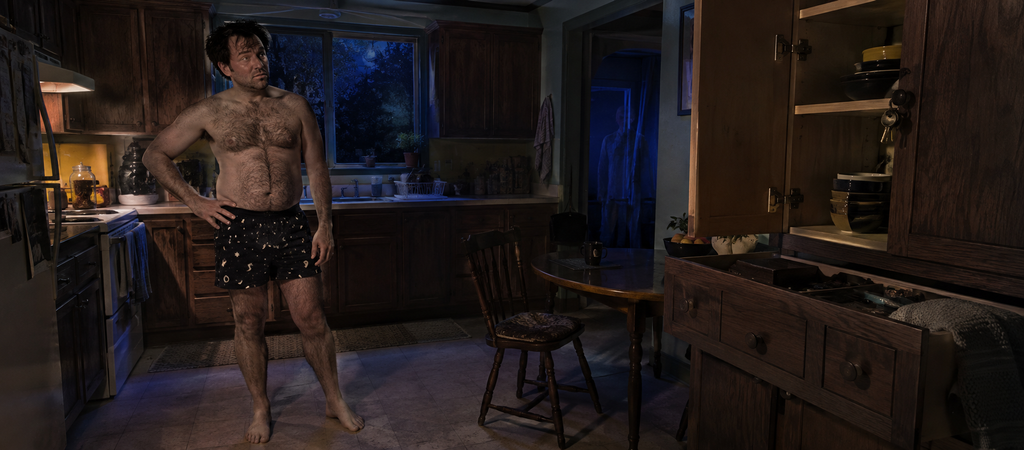
Annoying Is Not the Same as Dangerous
A presence does not have to be malicious before the people living with it are entitled to object.
Repeated knocking, hidden objects, disrupted sleep, unwanted dream contact, footsteps in private rooms or the persistent sense of being watched may not indicate danger. They can still make a home difficult to inhabit. Fear, exhaustion and loss of privacy are real effects even when the activity itself appears more intrusive than threatening.
This distinction matters because paranormal accounts often jump from disruptive to hostile, and from hostile to demonic, without examining what the behavior actually suggests. A presence may be seeking attention, repeating an old pattern, reacting to changes in the household or failing to understand that its behavior is unwelcome. It may also be indifferent to the distress it causes. None of those possibilities requires pretending that the activity is acceptable.
The first response should usually be proportionate. Communication may establish whether the activity is responsive. A spoken boundary may define rooms, hours and behaviors that are prohibited. Quieting or settling work may reduce disruptive activity without forcing a presence from a place where it has a longstanding relationship. Separation may be appropriate when the problem is attached to a person or object rather than the entire home.
What matters is whether the response improves the life of the household without escalating the situation unnecessarily. Aggressive confrontation can strengthen fear, encourage investigators to interpret every reaction as a battle and provoke a presence that was irritating but manageable. Doing nothing can be equally unhelpful when residents are losing sleep or no longer feel comfortable in their own rooms.
Coexistence is a relationship, not surrender. It requires limits.
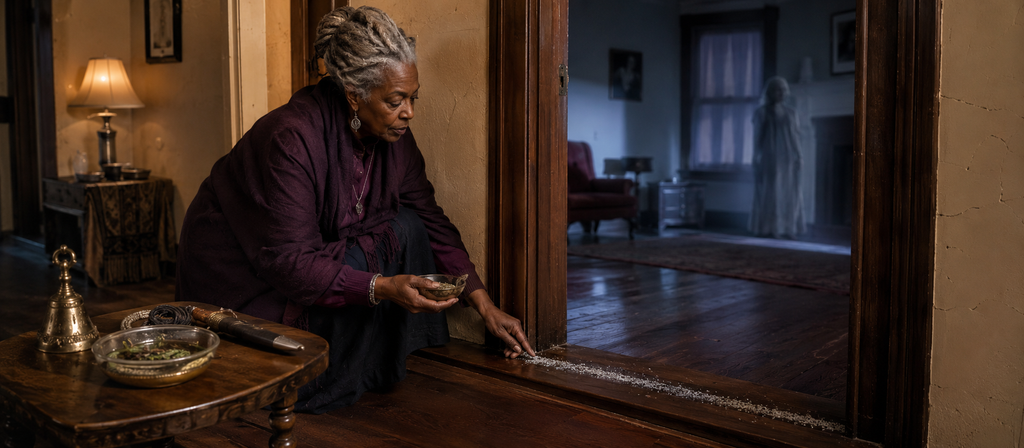
Boundary, Cleansing, Quieting—or Banishing?
Paranormal intervention is often discussed as though every unwanted experience requires a cleansing followed by banishment. These are not interchangeable actions. Each is intended to change something different, and using the wrong one may fail because it does not address the actual relationship.
A boundary governs behavior or access. Cleansing addresses unwanted residue, atmosphere or influence. Quieting seeks to reduce activity without necessarily removing its source. Severing breaks a particular connection. Banishing attempts to force separation from a person, object or defined place. Psychopomp work assists a dead person toward whatever comes next.
Before choosing among them, ask what the household actually needs. Do residents want the presence gone, or do they want the footsteps to stop after midnight? Is the problem the presence itself, an emotional residue, a particular attachment, or the atmosphere left after a frightening event? Has anyone attempted communication, and are the people performing the intervention qualified to deal with the response?
The strongest ritual is not automatically the best ritual. The better response is the one that changes the correct thing with the least unnecessary disruption.
What are you actually trying to change?
These practices overlap, but they are not synonyms. Begin with the smallest action suited to the behavior, relationship and needs of the household.
Boundary
Restricts behavior, access or contact.
A boundary may close bedrooms, prohibit touching, limit communication to certain times or forbid a presence from following residents away from the property.
Why choose it: The presence may remain while the disruptive behavior stops. This is often appropriate when coexistence is possible.
It does not necessarily remove a presence or cleanse the atmosphere.
Cleansing
Removes or changes unwanted residue, influence or atmosphere.
Cleansing may be appropriate after conflict, illness, frightening activity, ritual work or a period in which a space has accumulated an oppressive emotional or spiritual quality.
Why choose it: The problem may be what remains in the space rather than an active presence that needs to be expelled.
Cleansing is not automatically banishing and may not end an attachment.
Quieting or Settling
Reduces disruptive activity without requiring expulsion.
Quieting may involve communication, offerings, prayer, environmental changes or ritual work intended to settle a restless atmosphere or establish a calmer relationship.
Why choose it: The presence may not be dangerous or unwelcome, but the household needs less activity and greater peace.
It may reduce activity without identifying the presence or ending the relationship.
Severing
Breaks a particular attachment, connection or channel of contact.
Severing may be directed toward a link involving a person, object, place, agreement or repeated pattern rather than toward every presence in the surrounding space.
Why choose it: The problem appears to travel through one specific relationship, and broad cleansing or removal would not address that connection.
It requires clarity about what is being separated and what should remain intact.
Banishing
Forces separation from a person, object or defined place.
Banishing may be appropriate when boundaries have failed, coexistence is not possible, the activity is harmful or the presence has no acceptable place within the household.
Why choose it: The goal is no longer modified behavior but removal from a clearly established sphere.
Removal should not be attempted casually or without considering what happens beyond the immediate space.
Psychopomp Work
Assists a dead person toward whatever comes next.
Psychopomp work may be appropriate when a presence appears to be a deceased person who is confused, caught in repetition, unable to separate or actively seeking help with passage.
Why choose it: The aim is assistance rather than punishment, control or forced displacement.
Not every ghost is trapped, and not every nonhuman presence should be treated as a dead person needing to cross over.
If You Remove It, Where Does It Go?
We do not pretend there is one universal answer. A presence may appear to leave, relocate, become attached elsewhere, fall quiet or move beyond further contact. A dead person may seem to continue onward. In other cases, the result may be temporary or impossible to confirm.
An attempted removal may also produce a sudden increase in activity, especially when the presence has been misidentified, has a longstanding relationship with the location, or is not an ordinary human ghost. Escalation does not necessarily prove that the ritual is working. It may mean the intervention was poorly chosen.
This is why enthusiastic investigators should not perform casual banishings merely because a session became frightening. Investigation asks what is happening. Intervention changes the relationship—and the person performing it assumes responsibility for that change.
If anyone experiences nausea, dizziness, shaking, vomiting, confusion or sudden exhaustion, move them to safety and check physical and environmental causes first. Care for the person before interpreting the reaction.
A boundary does not need to be threatening, theatrical or complicated. It should identify who holds authority within the household, state what behavior is prohibited, define any private spaces and clearly close unwanted communication.
The words matter less than clarity, conviction and consistency. Everyone in the household should understand the boundary and avoid repeatedly reopening contact in ways that contradict it.
Say Clearly What Is—and Is Not—Permitted
These statements may be spoken plainly. No elaborate ritual is required, although practitioners may support them with prayer, protection, consecrated light or another method appropriate to their tradition.
A Boundary for Peaceful Coexistence
This is our home, and we intend to live here peacefully. You may remain without interference, but you may not frighten, touch, follow, wake or harm anyone who lives or visits here. Bedrooms and private spaces are closed to you. You may not attach yourself to any person, animal or object, and you may not follow anyone beyond this property. These boundaries begin now and will be respected.
Why it is structured this way: It acknowledges the household’s authority, permits coexistence without inviting greater contact, names prohibited behavior and defines private space.
Closing Communication
This investigation and all communication connected with it are now closed. No person here has given permission to be followed, touched, entered, influenced or contacted after we leave. Nothing from this place may attach itself to us, our equipment, our vehicles or anything we carry. We depart separately and in peace.
Why it is structured this way: It ends the session, withdraws access, includes people and equipment, and makes clear that participation in an investigation was not permission for an ongoing relationship.
Call for help when the pattern outgrows the household.
When to Bring in a Paranormal Investigator
A single strange experience does not always require an investigation. Sometimes a witness needs only to document what happened, check the environment and observe whether it occurs again. Outside help becomes more useful when the activity is persistent, independently reported, escalating or difficult for the household to evaluate from inside the situation.
An investigator may also be appropriate when experiences seem connected with a particular room, object, person or environmental condition; when residents disagree about what is happening; or when competent outside observation would help separate recurring patterns from fear and expectation. People do not need to prove that their home is dramatically haunted before asking for another set of careful eyes.
Before inviting anyone in, decide what you want them to accomplish. Are you hoping to document an experience, identify environmental causes, learn whether the activity responds, understand its pattern, receive reassurance, or determine whether spiritual intervention is warranted? Those are different objectives and may require different expertise.
A good investigator may clarify the timeline, compare witness accounts, locate building or electrical conditions, document anomalies, test whether an event repeats and identify which experiences remain unresolved. They may conclude that something unusual appears to be occurring without claiming to know exactly what it is.
They should also be willing to say when they do not know.
Investigation does not automatically include cleansing, communication, mediumship or removal. Those activities should be discussed in advance and performed only with the residents’ informed permission. Inviting a team to document activity is not blanket consent for them to provoke a presence, conduct ritual or attempt to change the spiritual relationships of the household.
A perfectly legitimate conclusion is:
Something unusual seems to be happening, but it does not appear harmful and no intervention is necessary.
What Are You Hoping They Will Accomplish?
Choose an investigator according to the question that needs answering, not according to who owns the most equipment or promises the most dramatic conclusion.
An Investigation May Be Useful When
- Activity is persistent, escalating or affecting daily life.
- Multiple witnesses have reported experiences independently.
- A pattern appears connected with a room, object, person or time.
- Environmental or structural causes need closer examination.
- The household needs careful documentation from someone outside the situation.
- Residents need help deciding whether any intervention is warranted.
A Good Investigator May Help
- Clarify the timeline and compare witness accounts.
- Establish ordinary environmental conditions and possible causes.
- Document events, readings and recurring patterns.
- Determine whether activity appears responsive or interactive.
- Separate observations from interpretations.
- Recognize when another kind of professional is needed.
When You Need More Than an Investigator
An investigation can document activity, test environmental conditions and clarify patterns. It cannot supply every form of expertise a case may require.
A building professional may recognize a structural cause no paranormal team is qualified to evaluate. An archivist may uncover the history behind an object. A medium may assist with communication, while a witch or spirit worker may establish boundaries or perform intervention. Clergy may bring a practiced ritual tradition and institutional accountability. Medical, mental-health and emergency professionals address needs that should never be delayed while people attempt to decide whether an experience is paranormal.
The right person is determined by the problem—not by which explanation the household finds most compelling.
Investigation asks what is happening. Intervention asks what should be done about it. Those questions may require different expertise.
Building, Electrical or Environmental Professional
When to call: Experiences correspond with one room, appliance, electrical system, odor, vibration, area of moisture, physical discomfort or change in the building.
Why this person matters: Electricians, HVAC technicians, inspectors, engineers and environmental professionals can test conditions beyond the competence of most paranormal investigators.
What they may contribute: Identification of wiring faults, ventilation problems, carbon monoxide, plumbing noise, pests, structural movement, mold-supporting moisture or other conditions that may explain some experiences or create genuine danger.
Important limit: Finding an ordinary explanation for one event does not automatically account for every report. Correct the hazard first, then observe what—if anything—continues.
Historian, Archivist or Genealogist
When to call: A case involves an older property, repeated names, family history, historic objects, former land uses or stories that have become difficult to separate from fact.
Why this person matters: Accurate research can verify dates, identities, alterations and events while preventing local legend from being repeated as documented history.
What they may contribute: Property records, maps, newspapers, photographs, census material, probate records, oral histories and historical context for objects or protective practices found at the location.
Important limit: A person’s connection with a location does not prove that they are the presence being experienced. History supplies context, not automatic identification.
Audio or Video Specialist
When to call: A recording appears unusually clear, important to the case or difficult for the investigation team to evaluate reliably.
Why this person matters: A specialist may recognize compression artifacts, radio contamination, reflections, frame blending, editing, mechanical noise or other technical features that nonexperts overlook.
What they may contribute: Examination of original files, metadata, recording conditions, frequency information, image sequence and whether the published clip differs from the source material.
Important limit: Enhancement can make existing material easier to perceive, but it can also introduce artifacts. A dramatically processed clip should never replace preservation of the original recording.
Experienced Paranormal Investigator
When to call: Activity is persistent, independently reported, escalating, object-associated or unclear enough to benefit from structured outside documentation.
Why this person matters: A competent investigator understands interviews, baselines, equipment limitations, contamination, evidence review and the difference between an unresolved event and a proven cause.
What they may contribute: Organized records, environmental testing, corroboration, alternative explanations and a clearer account of which aspects of the case remain unusual.
Important limit: An investigator is not automatically a medium, clergy member or spirit worker. Documentation does not qualify someone to perform spiritual intervention.
Medium
When to call: The case appears interactive, residents want respectful communication or investigators need help exploring impressions that equipment cannot interpret.
Why this person matters: A disciplined medium may receive specific information, distinguish apparent personalities or help establish whether communication is possible and advisable.
What they may contribute: Independently recorded impressions, possible communication, insight into apparent intention and a less confrontational way of engaging with the dead.
Important limit: Mediumistic information remains interpretive. A medium is not automatically correct, and communication does not guarantee that the communicator is honest, correctly identified or fully understood.
Witch or Spirit Worker
When to call: The household needs boundaries, protection, cleansing, quieting, severing, removal or help understanding an existing magical or spiritual relationship.
Why this person matters: A competent practitioner can distinguish documentation from intervention and choose a response intended to change the specific problem rather than simply intensify the ritual.
What they may contribute: Spirit communication, divination, household protection, assessment of existing magic and appropriately limited ritual work.
Important limit: No practitioner is an authority over every kind of presence. Avoid anyone who diagnoses every case through the same cosmology or escalates immediately to spiritual combat.
Clergy or Religious Specialist
When to call: Residents understand the experience through a particular religion, want help consistent with their faith or believe the activity is responding specifically to religious practice and symbols.
Why this person matters: Long training, a practiced ritual system, community support and accountability can make qualified clergy effective in cases that fall within their tradition. In MCC’s experience, Catholic traditions in particular possess unusually developed formal structures for evaluating and responding to alleged spiritual affliction.
What they may contribute: Pastoral care, blessing, prayer, discernment, religious protection and access to senior or specialized authorities when the case warrants it.
Important limit: Religious authority within one tradition is not universal authority over every presence. Avoid helpers who frighten residents or force every experience into their preferred theology.
Medical or Mental-Health Professional
When to call: Someone is experiencing physical illness, severe anxiety, persistent sleeplessness, confusion, memory changes, overwhelming fear, possible medication effects or experiences that place them or others at risk.
Why this person matters: Health conditions deserve timely care regardless of whether a spiritual dimension is also suspected. Treatment and paranormal belief do not have to be treated as mutually exclusive.
What they may contribute: Evaluation of symptoms, stabilization, treatment, coping support and protection against harm while other aspects of the experience are considered responsibly.
Important limit: Seeking healthcare should not be used to mock or automatically dismiss a person’s spiritual interpretation. At the same time, spiritual explanations must never be used to delay necessary care.
Emergency Services or Authorities
When to call: There is fire, suspected carbon monoxide, gas odor, active electrical danger, structural instability, violence, a missing person, evidence of intrusion, serious injury or an immediate risk of harm.
Why this person matters: Immediate danger requires trained emergency response. Determining whether a strange event was paranormal can wait until everyone is safe.
What they may contribute: Evacuation, medical care, fire response, hazard control, scene security and documentation of possible criminal activity.
Important limit: Do not remain in danger to gather evidence, complete a ritual or prove what caused the event. Leave first and contact the appropriate service.
What Not to Tell a Frightened Person
Words become part of a case.
Telling frightened residents that they have opened a portal, attracted a demon, received a curse or become spiritually attached can alter how they interpret every sound, dream and physical sensation afterward. Family members may stop sleeping alone, become afraid of particular rooms, distrust one another or begin treating ordinary setbacks as evidence that the situation is spreading.
This does not mean that harmful presences, attachments or deliberate magical work can never occur. It means that serious interpretations require serious grounds. A dramatic possibility should not be presented as a diagnosis merely because it creates an exciting story or makes the investigator appear knowledgeable.
Fear can narrow attention, disturb sleep, intensify physical symptoms and make people more suggestible. It can also change the social and spiritual atmosphere of a household as everyone repeatedly anticipates danger. An investigator who supplies the frightening explanation may therefore become one of the forces escalating the case.
Be honest about uncertainty. Describe the reported behavior, explain what has and has not been established, and separate immediate safety needs from spiritual speculation. Residents deserve information that helps them make decisions—not language designed to make them dependent upon the person delivering it.
Do Not Escalate the Story Faster Than the Evidence
A frightening possibility is not a diagnosis. Speak in a way that preserves uncertainty, supports safety and leaves room for the case to become clearer.
Hostile, frightening or unfamiliar behavior does not identify the kind of presence involved.
An increase in activity does not establish that anyone created a permanent spiritual doorway.
A strange experience after leaving a location may have many causes and should be documented before attachment is assumed.
Fatigue, anxiety and physical symptoms require care and evaluation, not an immediate predatory explanation.
A period of misfortune or distress is not proof that deliberate harmful magic has been performed.
Acknowledging the experience does not require identifying its cause.
Uncertainty is an honest result, not a failure of the investigation.
Repetition and context provide more information than immediate labels.
Physical care, environmental checks and practical support should not wait for a paranormal conclusion.
Residents may restrict unwanted behavior before the presence or phenomenon is fully understood.
A good investigator protects the resident as carefully as the evidence.
Finding a paranormal team is easy. Finding one that will enter a frightened person’s home without exaggerating the case, violating privacy or treating the residents as material for entertainment is much harder.
Before contacting anyone, look for a clearly described method, respect for ordinary explanations, confidentiality, informed permission before publishing evidence and an honest distinction between investigation and spiritual intervention. Ask whether services are free, what records will be retained, who will see them and whether the team carries insurance or requires access agreements.
No directory can guarantee how an individual case will be handled. The organizations below were included because their publicly stated work and methods appeared useful when MCC reviewed them—not because inclusion constitutes a permanent or universal endorsement.
Finding Competent Paranormal Help
Availability, membership and policies can change. Read each organization’s current information, ask questions before granting access and never surrender control of your home, recordings or story.
Pacific Northwest
Oregon Paranormal
Where: Oregon and the surrounding Pacific Northwest, subject to case availability.
What they do: Consult on reported activity in homes, businesses and historic sites and conduct open-ended paranormal investigation.
Case status: Their current site provides a help and investigation-request process. They state that requests are reviewed according to workload and that they may refer cases they cannot accept.
Why MCC includes them: Their published approach emphasizes honesty, impartiality, open-ended research and a balance of open-mindedness with skepticism. Their site also describes preliminary documentation before a case moves forward.
Inclusion reflects their published standards. Discuss confidentiality, costs, evidence use and the scope of any spiritual intervention directly before inviting a team onto the property.
Midwest
Paranormal Activity Investigators
Where: Kansas City metropolitan area and surrounding region.
What they do: Investigate allegedly haunted locations, research local reports and record environmental information alongside human experiences.
Case status: Their site describes assisting people experiencing paranormal phenomena and provides current contact information, although availability should be confirmed directly.
Why MCC includes them: Their published standards emphasize research, analysis, care in presenting evidence, respect for locations and confidentiality according to the client’s request.
Ask whether the team accepts residential cases in your area and how recordings, witness information and possible public evidence will be handled.
United Kingdom and Wider Europe
Association for the Scientific Study of Anomalous Phenomena
Where: Based in the United Kingdom, with educational and research resources useful more widely.
What they do: Investigate and research anomalous experiences, accept case reports and train investigators through a structured accreditation program.
Case status: Their current site includes a “Report a Case” process and states that their investigators and advisory resources support the documentation of unusual experiences.
Why MCC includes them: ASSAP publicly emphasizes neutral descriptions, standardized practice, open-minded investigation and avoiding conclusions that exceed the observations.
ASSAP is a research and educational charity, not a spiritual-removal service. Reporting a case does not guarantee an in-person investigation.
Society for Psychical Research — Report an Experience
Where: Based in the United Kingdom and able to receive reports from other locations.
What they do: Receive accounts of anomalous experiences for evaluation, documentation and possible investigation through the Spontaneous Cases Committee.
Case status: Submitted reports are reviewed by a case coordinator. Cases considered appropriate may be assigned to a committee member for further documentation.
Why MCC includes them: The SPR offers a serious route for people whose primary goal is careful case documentation and contribution to psychical research rather than entertainment or immediate removal.
Read the organization’s privacy explanation before submitting. Information may be retained in anonymized research records, and not every report will receive further investigation.
Research and Professional Organizations
Parapsychological Association
Where: International.
What they do: Serve as a professional organization for scientists and scholars studying psi, mediumship, hauntings, poltergeists, survival-related experiences and other parapsychological subjects.
Case status: This is not a household investigation or emergency-referral service.
Why MCC includes them: Their publications, events and professional network help readers distinguish scholarly parapsychology from entertainment-oriented ghost hunting.
Use this resource for research, education and locating serious scholarship—not for urgent residential intervention.
Inclusion is not an eternal endorsement. MCC periodically reviews public methods, case availability and contact information. Residents should conduct their own conversation with any investigator or organization before sharing personal information or granting access.
Investigators, researchers and relevant spiritual practitioners may contact us to be considered for inclusion. Submission does not guarantee placement, and inclusion indicates potential usefulness for some readers—not MCC’s agreement with every belief, method or service offered.
Permission is specific; respect is continuous.
Field Safety & Good Manners
Paranormal investigation does not suspend ordinary law, safety or courtesy. A reportedly haunted building is still someone’s property. A cemetery remains a place of burial. A historic object is not an experimental prop, and permission to enter a location does not automatically include permission to perform ritual there.
Good manners also improve evidence. Trespassing, intoxication, uncontrolled movement and crowded rooms create contamination while placing people and property at risk. A disciplined investigation should leave the location, its residents and its dead no worse than it found them.
Respect the Living, the Dead and the Place Itself
Permission to investigate is limited to what the owner or responsible authority has actually approved. Ask before entering, recording, moving, burning, leaving or performing anything.
Property Permission and Trespassing
What is required: Obtain permission from the property owner or the person legally authorized to grant access. Confirm which rooms, buildings, hours and activities are permitted.
Why it matters: Abandoned-looking property still belongs to someone. Entering without permission creates legal risk, endangers investigators and makes any evidence ethically compromised.
Good practice: Keep written access terms when possible. Do not copy keys, enter locked areas, invite additional people or return later without renewed permission.
MCC’s rule: Being invited onto the land is not necessarily permission to do ritual on it.
Unsafe Buildings and Restricted Areas
What to assess: Look for unstable floors, damaged stairs, exposed nails, broken glass, weak railings, low ceilings, unsecured wells, hazardous materials and areas without a safe exit.
Why it matters: Darkness and excitement make ordinary hazards more difficult to see. Old buildings may deteriorate without appearing dangerous from the entrance.
Good practice: Conduct a daylight walkthrough, identify exits, use appropriate footwear and close unsafe areas to the team. No possible recording justifies entering a space judged structurally unsafe.
Carbon Monoxide, Electrical Problems and Air Quality
What to watch for: Headache, dizziness, nausea, confusion, unusual fatigue, odors, visible moisture, damaged wiring, sparking, overheating equipment or several people becoming ill in the same area.
Why it matters: Carbon monoxide, gas, electrical faults, mold-supporting moisture and poor ventilation can cause serious harm. Some may also contribute to experiences that witnesses interpret as paranormal.
Good practice: Use appropriate environmental detectors, know their limitations and move everyone to safety when a hazardous reading or symptom appears. Contact the relevant professional or emergency service.
Immediate priority: Do not continue investigating to determine whether illness is spiritual. Care for the person and secure the environment first.
Weather, Terrain and Animals
What to assess: Consider temperature, rain, wind, ice, smoke, flooding, uneven ground, wildlife, livestock, pets, insects and plants that may be toxic or irritating.
Why it matters: Outdoor conditions can endanger investigators and create sounds, shadows, movement and equipment changes that later appear unexplained.
Good practice: Dress for the conditions, carry water, respect closures and identify who is responsible for animals on the property. Never chase or deliberately frighten an animal to test a paranormal theory.
Fire, Candles, Smoke and Incense
What requires permission: Candles, charcoal, incense, smoke cleansing, burning petitions and any tool that produces heat, smoke, ash or an open flame.
Why it matters: Historic buildings, dry vegetation, alarms, animals, respiratory conditions and unknown materials can turn a small ritual action into a serious hazard.
Good practice: Use flameless alternatives when possible. If flame has been explicitly approved, keep suitable extinguishing equipment nearby and assign one person to monitor it continuously.
Important limit: Never disable a smoke alarm for an investigation or ritual.
Cemeteries and Burial Places
What is required: Follow posted hours, local rules and any requirements of the cemetery, landowner, religious authority or descendant community.
Why it matters: Cemeteries are not abandoned supernatural laboratories. They are maintained places of burial, mourning, ancestry and continuing relationship.
Good practice: Stay on permitted paths, avoid touching memorials, keep voices and lights respectful and do not photograph mourners or private ceremonies.
Leave nothing carelessly: Offerings may harm wildlife, interfere with groundskeeping or violate cemetery rules. Never remove soil, plants, stones or objects from a grave.
Historic Sites and Existing Protective Practices
What to protect: Architecture, furnishings, concealed objects, written material, carvings, protective marks, ironwork and unusual items found within walls, hearths, thresholds or roofs.
Why it matters: What appears to be damage or debris may be historically significant or part of an earlier magical, religious or household-protection practice.
Good practice: Photograph an item in place, note its surroundings and consult the site’s curator or an appropriate historian. Do not clean, redraw, remove or “activate” it.
MCC’s rule: Do not destroy somebody else’s magic while investigating their ghost.
Ghost Tours and Public Investigations
What they are: Public events designed to combine history, entertainment and some form of paranormal participation. Their goals may differ from a controlled private investigation.
Why the distinction matters: Large groups, known stories, alcohol, repeated prompts and shared excitement create suggestion and extensive audio, video and equipment contamination.
Good practice: Enjoy the event for what it is. Do not present a reaction from a crowded tour as though it came from an isolated research setting, and never wander away from the permitted group.
Recording People and Protecting Privacy
What requires agreement: Interviews, photographs, audio, video, livestreams, publication of evidence and identifying details about residents or the property.
Why it matters: A haunting report may expose medical history, family conflict, religious belief, trauma, finances, addresses and images of private living spaces.
Good practice: Explain who will see the material, where it will be stored, whether it may be published and how consent can be withdrawn. Obscure identifying information when requested.
Important limit: Permission to investigate is not automatically permission to create content.
Offerings, Ritual Materials and Leaving Things Behind
What requires permission: Food, drink, flowers, herbs, salt, water, oils, wax, written petitions, coins, crystals, cords and other objects placed or left at the location.
Why it matters: Offerings create relationship and may carry obligations within the practitioner’s tradition. Physically, they may attract animals, damage surfaces or become litter.
Good practice: Ask the owner and consider the ecology of the place. Remove materials unless the offering has been explicitly approved and can remain safely.
Important limit: Do not establish a continuing spiritual relationship on behalf of residents who did not request one.
Alcohol, Drugs, Fatigue and Impairment
What to avoid: Investigating while intoxicated, severely sleep-deprived, medically unwell or otherwise unable to observe and make decisions reliably.
Why it matters: Impairment affects perception, balance, memory, emotional regulation and the ability to respond to hazards. It also weakens the value of witness testimony.
Good practice: Keep transportation safe, schedule breaks, eat, hydrate and permit anyone to step away without ridicule. Necessary medication should not be skipped to make an experience appear more evidential.
Knowing When to Leave
Leave when: The building becomes unsafe, permission is withdrawn, severe weather develops, someone becomes ill or overwhelmed, conflict cannot be resolved, equipment indicates a hazard or the team can no longer maintain reliable control of the investigation.
Why it matters: Continuing after judgment and safety have deteriorated produces poorer evidence and greater risk. Leaving is not a spiritual defeat.
Good practice: Account for every team member, close any deliberate communication, collect equipment, document why the investigation ended and address urgent physical needs first.
Final rule: You can return to an unresolved case. You cannot undo every injury, violation of trust or damaged relationship with a property owner.
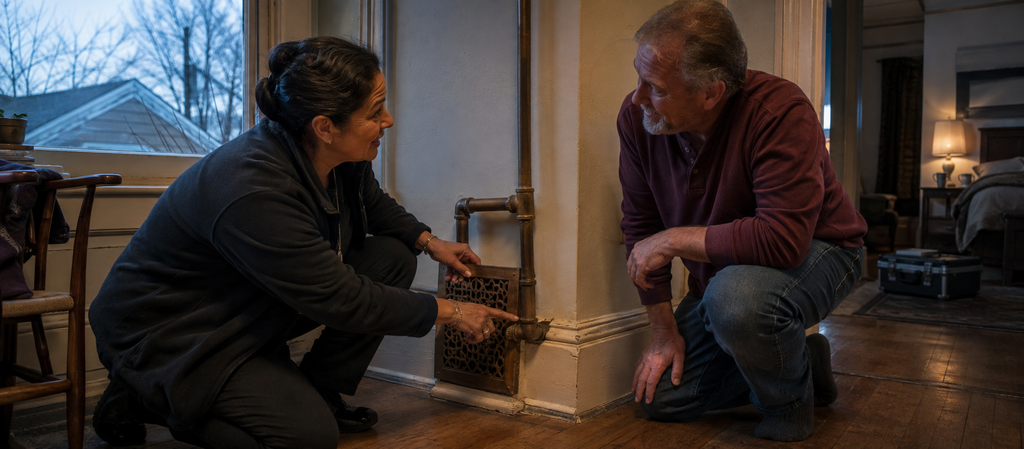
After the Investigation: What Counts as a Result?
An investigation does not end when the team packs its equipment. The recordings, case log, witness reports and environmental measurements still need to be compared before anyone decides what the investigation found.
A result should describe the strength and limits of the information rather than reward the most dramatic interpretation. Explained does not mean that a witness imagined the experience. Unresolved does not mean paranormal. Anomalous means that something departed from the expected pattern and deserves attention. Corroborated means that more than one independent source supports the occurrence of an event. A possible paranormal interpretation becomes reasonable only after the observation has survived careful review without being stretched beyond what it can support.
These terms are not intended to create a rigid scientific taxonomy. They provide honest language for reporting what is known, what remains uncertain and what may warrant further observation.
The team should preserve original files, document any processing performed and return the results to residents in understandable language. Evidence that may identify residents, expose private areas or reveal sensitive history should not be published without explicit permission. Follow-up matters too: activity may stop, change, relocate, remain stable or become clearer only after the investigators have left.
Then comes the more important question:
Did anything actually need fixing?
Sometimes the result is an electrician, pest professional or adjustment to a heating system. Sometimes it is a boundary, a change in where an object is kept or the decision to stop attempting communication. Sometimes it is learning that the woman seen on the staircase appears to have no objection to the people living there.
Sometimes something unusual is happening, but the residents are safe and no intervention is necessary. In other cases, the investigation reveals that the household needs help from a medium, spirit worker, clergy member or another professional. The value of the investigation lies in reaching the most appropriate response—not in producing the most supernatural conclusion.
Describe the Result Without Exceeding It
These terms help separate what was observed from what may have caused it. More than one may apply to the same case.
Explained
A credible ordinary source accounts for the event, such as wiring, airflow, plumbing, animals, human activity or equipment behavior.
Why it matters: An explanation resolves that event without dismissing the witness or every other report in the case.
Unresolved
The available information is insufficient to determine what caused the experience or recorded event.
Why it matters: “We do not know” preserves the case honestly and prevents uncertainty from being turned into false proof.
Anomalous
A documented event differs meaningfully from the established conditions or expected behavior of the location or equipment.
Why it matters: A genuine anomaly may deserve further attention even when its source cannot yet be identified.
Corroborated
Independent witnesses, synchronized recordings or multiple forms of documentation support that an event occurred.
Why it matters: Agreement from independent sources gives an observation more weight than an impression shaped by group discussion.
Possible Paranormal Interpretation
The event remains unexplained after review, appears meaningfully connected with the reported activity and may support a paranormal interpretation without proving a single cause or identity.
Why it matters: This language allows investigators to acknowledge genuinely compelling material without claiming that one recording or reading has proven a ghost.
Did Anything Actually Need Fixing?
The answer may be a repair, a boundary, qualified spiritual help, continued observation—or the reassurance that something unusual appears to be present without being harmful.
Continue with the Field Guide
Living in a Crowded World
Paranormal investigation is not primarily about hunting things in darkness. It is the work of learning enough to respond intelligently to experiences that may involve buildings, memory, human perception, the dead, other spirits, or phenomena that remain difficult to classify.
That requires humility in both directions. Not every unexplained sound is supernatural, but an experience does not become meaningless simply because an instrument cannot measure it neatly. Mundane explanations should be taken seriously without being used to silence witnesses. Spiritual interpretations should be considered without allowing certainty, fear or entertainment to outrun what actually happened.
This page has been written through the lens of My Cousin’s Coven. We are practitioners and researchers rather than a full-time paranormal investigation team. Our perspective comes from witchcraft, spirit work, mediumship, folklore, religious practice, research and experience helping people make sense of unusual events. That gives us particular insight into relationship, boundaries and intervention, but it does not make MCC the final authority on every location, presence or investigative method.
Technical investigators, historians, building professionals, mediums, clergy, medical professionals and experienced spirit workers may each understand something the others do not. Good judgment includes knowing when another kind of expertise is needed—and when no further action is required.
Not every ghost needs rescue. Not every spirit needs removal. Not every noise needs a supernatural explanation. A presence may belong to a place in ways its current occupants do not fully understand, while the living still retain the right to safety, privacy and peaceful use of their home. Coexistence is often possible; boundaries are sometimes necessary; stronger intervention should be proportionate and informed.
The world may be more crowded than it appears. If so, investigation is one way of learning to live within it responsibly: observing carefully, naming uncertainty honestly, recognizing relationship where it exists and acting only when there is a clear reason to act.
Observe well. Know your tools. Know your limits. Be a good neighbor when you can—and know what to do when you cannot.
Practitioners and Researchers
My Cousin’s Coven is not a full-time paranormal investigation team. This guide reflects our experience as witches, spirit workers, mediums and researchers, considered alongside responsible investigative practice. It offers a framework for understanding and response—not a claim to universal authority or a substitute for the appropriate professional.
Observe well. Know your tools. Know your limits. Be a good neighbor when you can—and know what to do when you cannot.