
Coven of the Veiled Moon

Shared Paths · Living Traditions

The Work We Share

A reflection on witchcraft, Wicca, Paganism, shared practice, difference, and the spiritual and magical work of learning together.
Many Ways of Belonging

Many Paths, Shared Ground

Witches, Wiccans, Pagans, Neo-Pagans, occultists, folk practitioners, devotional polytheists, and other spiritual and magical people do not all follow the same path. We may understand divinity differently, explain magic through different philosophies, inherit different traditions, or use familiar words in very different ways.

Yet our practices often meet. We create sacred space, mark seasons, tell old stories, work with symbols, honor gods or spirits, seek insight through divination, tend relationships with land and community, and ask how intention can be translated into meaningful action. Even where our explanations differ, we may recognize something familiar in one another’s work.

That familiarity does not mean that every tradition is the same. Shared tools do not always carry shared meanings, and similar rituals may grow from very different histories, cultures, and theologies. Connection becomes more meaningful when it is strong enough to acknowledge difference rather than erase it.

The work we share begins there: in the space between distinction and relationship. We can learn across paths, recognize common ground, and build community without forcing every belief or practice into one universal system.
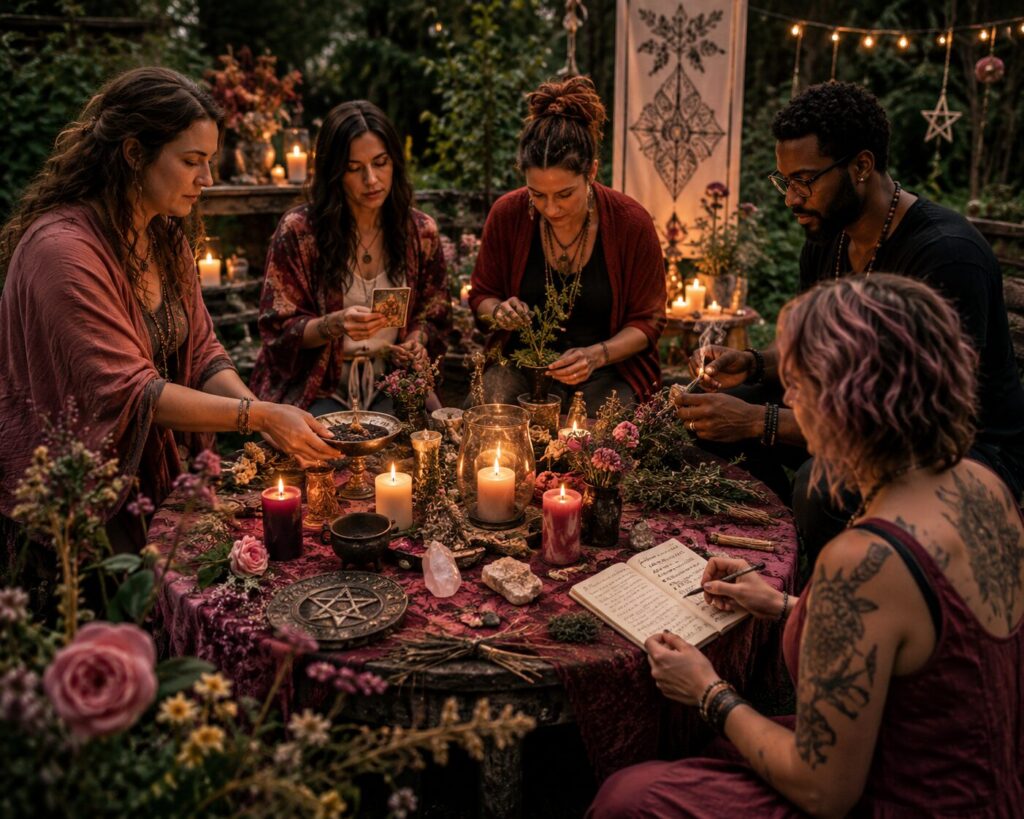
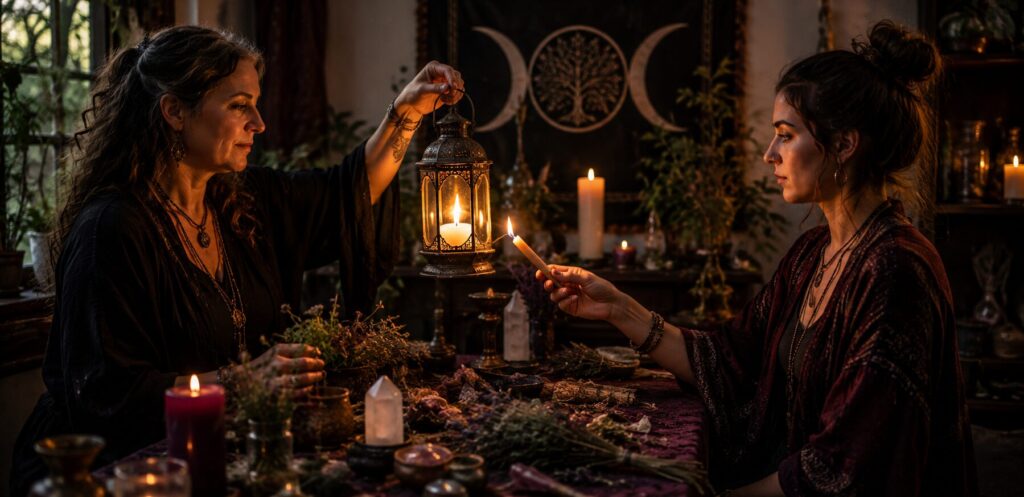
We can recognize common ground without flattening every tradition into one universal system.
Related, but Not Interchangeable

Witchcraft, Wicca, Paganism, and Neo-Paganism

These words are often used together, and their communities overlap, but they do not describe exactly the same thing. A person may belong to more than one of these categories—or to one without identifying with the others.

Witchcraft is a broad field of magical practice. For some, it is also a spiritual or religious identity; for others, it is a practical craft used within another religion, philosophy, or personal worldview. Witchcraft may be initiatory or solitary, ceremonial or folk-based, devotional or non-devotional, highly structured or deeply personal.

Wicca is a Pagan religion in which witchcraft, ritual, sacred cycles, and relationships with divinity are generally central. Wicca includes several traditions, lineages, and contemporary expressions, so no single description captures every Wiccan community or practitioner.

Paganism is a broad religious and spiritual umbrella. It can include polytheistic, nature-centered, devotional, reconstructionist, revivalist, animist, and other paths connected in different ways to pre-Christian religions and living cultural traditions.

Some Pagan paths aim to remain as close as possible to surviving texts, historical evidence, language, ritual forms, and cultural context. These approaches may be more reconstructionist or textually focused, while still recognizing that no ancient religion can be recovered perfectly.

Neo-Paganism more openly describes the interpretation and renewal of older religious ideas through contemporary life. Neo-Pagan paths may draw from history, mythology, folklore, ritual experimentation, modern ethics, and personal experience while being direct about the gaps in what has survived and the creative work involved in forming a living practice.

Pagan and Neo-Pagan approaches spring from much of the same source, but may differ in how they relate to historical continuity, reconstruction, adaptation, and uncertainty. In ordinary conversation, however, most people simply use the word Pagan for both. The distinction is most useful when discussing method, historical orientation, or the way a tradition understands its relationship with the past.

Not all witches are Wiccan, not all Pagans practice witchcraft, and not every magical practitioner identifies as Pagan. At the same time, many people live comfortably within more than one of these worlds. Their identity, beliefs, and practical work may overlap without being identical.

Overlap Without Erasure

Shared Practice Without Forced Sameness

Different traditions often meet in practice. Witches, Wiccans, Pagans, and other magical or spiritual practitioners may all create sacred space, light candles, make offerings, observe seasonal rites, consult divination, work with herbs, honor spirits, or use ritual to focus intention.

The outward form may look familiar while the meaning beneath it is quite different. One person may understand a ritual as devotion to a literal deity, another as communion with nature, another as symbolic psychology, and another as a magical technology that does not require a settled theology at all.

Similarity does not make these approaches interchangeable. The same candle, circle, offering, or spoken invocation can carry different histories, obligations, relationships, and expectations depending on the tradition and the practitioner.

At the same time, a person or group does not always fit inside only one category. Religious belief, cultural orientation, magical practice, and community identity can overlap in ways that are coherent without being identical.

Belief
How divinity, spirit, nature, and magic are understood.
Orientation
How a path relates to history, tradition, reconstruction, and change.
Practice
What is actually done through ritual, spellwork, devotion, and study.

The Coven of the Veiled Moon is one example. We are Wiccan-adjacent in much of our belief, Neo-Pagan in orientation, and primarily witches in practical practice. Those descriptions refer to different dimensions of the same living path rather than competing labels from which only one may be chosen.

Shared ground allows us to recognize one another, exchange knowledge, and work together. Difference helps us understand what each person or tradition is actually bringing to that shared space.

We may share a ritual form without sharing every belief—and we may carry more than one spiritual or magical identity at the same time.
Practice · Identity · Accusation · Archetype

What Is a Witch?

The word witch appears simple until we ask what it actually means. It has been used to describe a magical practitioner, a religious or spiritual identity, a member of a particular tradition, a feared enemy, a social outsider, and a figure of cultural imagination.

Some people choose the word for themselves. Others have had it placed upon them by neighbors, institutions, courts, churches, or hostile communities. Still others encounter the witch first as a figure in folklore, literature, religion, film, family history, or political resistance.

These meanings overlap, but they should not be mistaken for one another. A person accused of witchcraft was not necessarily practicing anything that a modern witch would recognize, while someone who consciously identifies as a witch is making a very different kind of claim.

The Accused Witch

A person named by others as magically harmful, dangerous, heretical, immoral, or socially disruptive—sometimes with little connection to that person’s actual beliefs or conduct.

The Practicing Witch

Someone who intentionally and repeatedly engages in witchcraft, spellwork, ritual, magical study, or related practical disciplines.

The Self-Identified Witch

Someone who consciously adopts the word as part of a magical, spiritual, religious, cultural, philosophical, or personal identity.

The Traditional or Initiatory Witch

A practitioner whose identity is grounded in a lineage, coven, initiation, inherited body of work, regional tradition, or defined community of practice.

The Archetypal Witch

The witch as healer, outsider, wise figure, feared enemy, rebel, scapegoat, keeper of forbidden knowledge, or symbol of independent power.

It can therefore help to distinguish between an external definition and an internal definition. The external definition is created by the surrounding society: who it fears, condemns, romanticizes, or marks as different. The internal definition belongs to the practitioner: what the word means when it is chosen, practiced, and lived.

Neither definition exists entirely alone. Modern witches inherit centuries of stories, accusations, fantasies, and fears surrounding the word. Choosing it may involve accepting some of that history, challenging it, transforming it, or consciously reclaiming power from a name once used to shame and isolate.

At My Cousin’s Coven, we generally understand a witch as someone who intentionally engages with witchcraft as an ongoing practice or identity. We leave room for different traditions to define membership more specifically, especially where training, initiation, lineage, or community recognition carry particular meaning.

“The witch is one of the very few images of independent power that traditional European culture has bequeathed to us.”

That independent power is part of the reason the word continues to attract, disturb, and inspire. To reclaim the witch is not necessarily to claim the exact identity of everyone once accused. It is to enter a continuing conversation about knowledge, autonomy, difference, responsibility, and the right to define one’s own relationship with the sacred and the magical.

The Authority We Carry

Authority, Self-Definition, and Responsibility

To call oneself a witch is an act of self-definition. It may name a practice, a spiritual commitment, a religious identity, a place within a tradition, or a relationship with the history and symbolism of the witch. No central institution speaks for every witch or grants the word to all who use it.

That freedom matters. It allows people to examine inherited beliefs, form direct relationships with the sacred, develop practices that reflect their experience, and decide which language truthfully describes the path they are walking.

But self-definition is not the same as self-certification. Choosing an identity does not automatically confer expertise, initiation, historical knowledge, cultural authority, or the right to speak for every tradition. A person may be the primary authority over their own path while remaining a student in many areas of the craft.

“The Craft calls on each of us to be our own authority.”
Starhawk , The Spiral Dance

Personal authority is therefore not permission to act without reflection. It asks more of us, not less. Without an external institution making every decision, practitioners must learn to examine their motives, evaluate sources, acknowledge uncertainty, consider consequences, and accept responsibility for the work they choose to perform.

Authority over one’s own path also does not create authority over another person’s body, consent, culture, tradition, or spiritual experience. Nor does it make disagreement a form of persecution. Independence becomes meaningful when it is joined to honesty, restraint, and the willingness to listen.

We may define ourselves, but we do not define ourselves in a vacuum. Our choices affect other people, draw upon histories we did not create, and enter communities where words and practices already carry meaning. A living path balances personal freedom with relationship, context, and responsibility.

Authority
The right and responsibility to examine, choose, and direct one’s own spiritual and magical path.
Integrity
The discipline to be honest about what we know, what we believe, what we have earned, and what remains uncertain.
Responsibility
The willingness to consider consequences, respect boundaries, correct mistakes, and remain accountable for our choices.
Personal authority does not mean that every answer is already within us. It means accepting responsibility for how we seek, test, choose, and act upon the answers we find.
Where Many Ways of Knowing Meet

Witchcraft as an Interdisciplinary Craft

Witchcraft rarely belongs to only one field of knowledge. It exists where spiritual practice, practical skill, cultural memory, observation, symbolism, and personal experience meet. A single working may involve history, ritual, plants, planetary timing, prayer, psychology, art, and ethical judgment at once.

This is one reason the craft can feel so expansive. To study it seriously is not merely to collect spells. It is to examine the languages, stories, materials, philosophies, communities, and environments from which magical practices emerge.

No practitioner needs to become an expert in every field. The value lies in recognizing when another discipline can deepen understanding—and when responsible practice requires us to consult someone who knows more than we do.

Religion and Theology

Gods, spirits, sacred relationships, cosmology, prayer, devotion, ritual meaning, and differing ideas about the divine.

History and Folklore

The origins of claims, inherited customs, regional lore, changing traditions, historical evidence, and cultural memory.

Herbalism and Ecology

Plants, land, seasons, cultivation, traditional uses, physical safety, sustainability, and relationships with place.

Psychology and Symbolism

Imagination, archetype, perception, memory, altered states, meaning-making, discernment, and the inner effects of ritual.

Astrology and the Heavens

Planetary symbolism, celestial cycles, timing, observation of the sky, and the distinction between astronomy and astrological interpretation.

Philosophy and Ethics

Questions of truth, power, consent, consequence, responsibility, freedom, knowledge, and what makes an action right or harmful.

Art, Music, and Story

Poetry, visual art, music, myth, fiction, performance, and the creative forms through which magical imagination finds a voice.

Family and Regional Tradition

Household customs, inherited knowledge, local practice, community memory, migration, adaptation, and the wisdom carried through ordinary life.

Practice and Experiment

Repeated observation, personal records, comparison of results, practical testing, disciplined reflection, and lived experience.

Interdisciplinary practice asks us to remain curious while also respecting the limits of our knowledge. A magical interpretation does not replace medical science. Folklore does not automatically establish historical fact. Personal experience may be meaningful without proving that every other person must understand it in the same way.

The craft becomes stronger when these fields speak to one another without one pretending to replace all the rest. History can correct romantic invention. Art can express what literal language cannot. Ethics can restrain power. Practice can test theory. Spiritual experience can give personal meaning to what study first reveals.

Witchcraft often develops where different ways of knowing meet. Its depth lies not in possessing every answer, but in learning how to bring knowledge, experience, imagination, and judgment into responsible relationship.
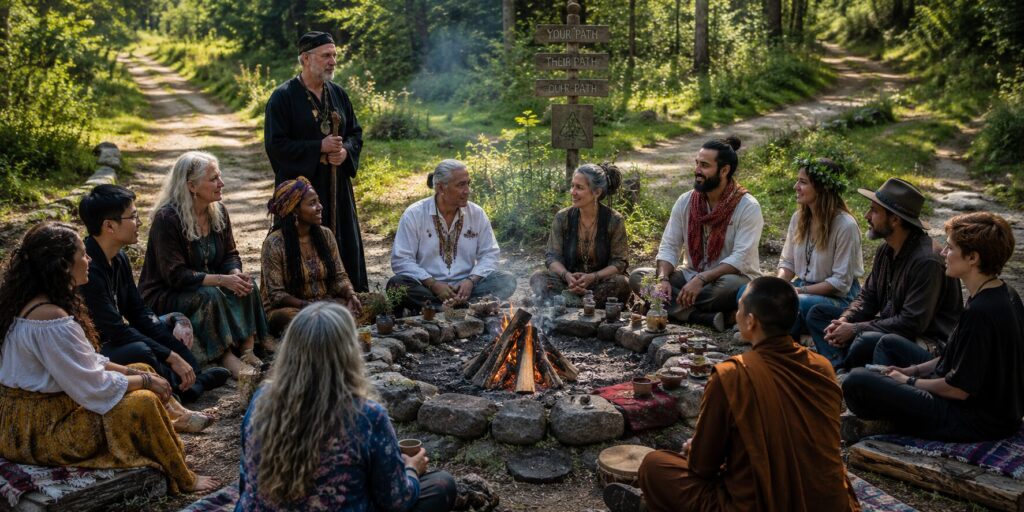
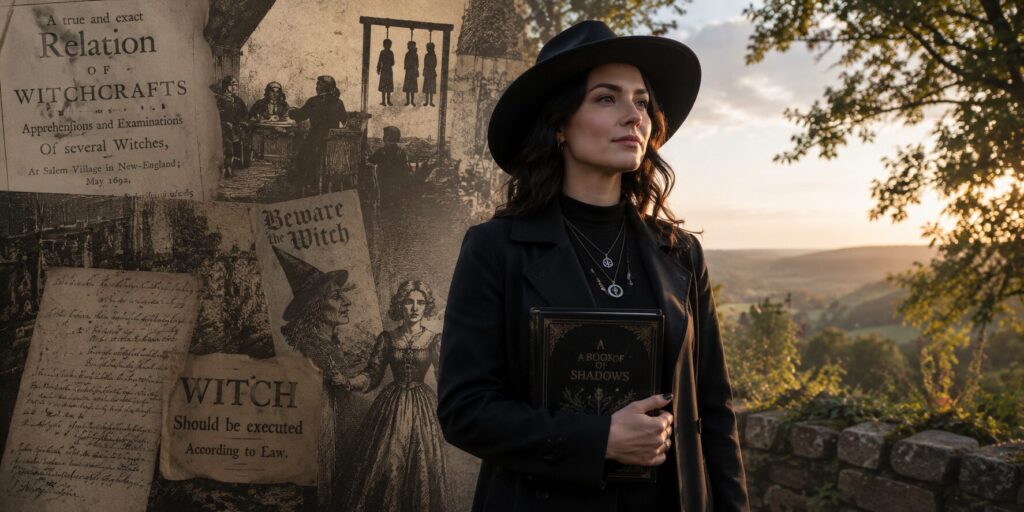
Witchcraft is interdisciplinary not because every subject is magical, but because responsible magical practice asks us to understand the many worlds our choices touch.
Learning Across Boundaries

Exchange Without Erasure

Magical and religious traditions have never developed in complete isolation. People travel, trade, migrate, marry, translate texts, exchange stories, adapt rituals, and learn from neighbors. Ideas move across time and culture, and modern witchcraft is especially shaped by many streams of influence.

Exchange can be creative, generous, and spiritually meaningful. It can help traditions survive, allow communities to understand one another, and give practitioners language for experiences they had not previously known how to express.

But influence does not make every practice ownerless. A symbol, ceremony, title, spirit relationship, or sacred object may carry obligations that are not visible from the outside. Some practices are openly shared; others depend upon initiation, family, community, cultural belonging, or earned trust.

Responsible exchange begins by asking not only “Can I use this?” but also “Where did it come from, what does it mean there, who has the authority to teach it, and what might be lost if I remove it from its setting?”

Learn the Origin
Know where a practice, name, symbol, or teaching comes from before separating it from its history.
Name the Influence
Acknowledge the tradition, teacher, community, or source rather than presenting borrowed material as a personal invention.
Respect Boundaries
Accept that some practices require invitation, initiation, relationship, or community standing that cannot be claimed from a book or social-media post.
Be Honest About Adaptation
When changing a practice, describe it as an adaptation rather than claiming that the altered version is ancient, original, or universally traditional.

Exchange with Care

Learning openly, crediting sources, listening to practitioners, understanding context, respecting limits, and allowing another tradition to remain fully itself.

Erasure

Removing a practice from its people, renaming it without credit, claiming authority that was never given, ignoring sacred restrictions, or flattening distinct traditions into a generic idea of magic.

Syncretism—the joining of elements from different traditions—can be a sincere and coherent form of spiritual life. Many living religions have grown through encounter and adaptation. The question is not whether traditions may ever influence one another, but whether that influence is approached with knowledge, honesty, relationship, and respect.

We should also avoid imagining cultures as sealed containers that have never changed. People within the same tradition may disagree about what is open, what is protected, and what respectful adaptation looks like. Listening to those conversations is more responsible than searching only for the answer that grants us permission.

Shared practice becomes richer when origins remain visible. We can appreciate what another path offers without claiming to own it, imitate every part of it, or reduce it to material for our own use.

Shared practice does not make every tradition interchangeable. Connection should allow us to see one another more clearly—not make every difference disappear.
Accusation · Memory · Reclamation

The Inherited Shadow of the Witch

The witch has long existed not only as a practitioner, but as an accusation. Across different periods and cultures, the word and its equivalents have been used to identify people as dangerous, corrupting, heretical, immoral, unnatural, deceptive, or outside the accepted order.

Those accused were not one single kind of person. Some were feared as harmful magical practitioners. Others were caught in local conflict, religious panic, political pressure, family disputes, prejudice, rumor, or systems of law that transformed suspicion into punishment. Many may not have understood themselves as witches at all.

For that reason, historical victims of witch accusation should not simply be described as modern Wiccans or contemporary witches born in the wrong century. Their lives, beliefs, circumstances, and the accusations made against them were far more varied than that comparison allows.

Yet modern witches still inherit the cultural shadow created by those histories. The same word continues to carry associations with danger, secrecy, moral corruption, irrationality, sexual deviance, rebellion, forbidden knowledge, and power that exists outside approved institutions.

The Feared Outsider
The person imagined to possess secret, uncontrolled, or socially dangerous power.
The Social Scapegoat
The person blamed when illness, hardship, conflict, or uncertainty demands a human target.
The Religious Threat
The figure portrayed as rejecting sacred authority, accepted doctrine, or the proper spiritual order.
The Independent Figure
The person whose knowledge, sexuality, gender, autonomy, or refusal to conform becomes threatening to others.

Witches, Pagans, occultists, folk practitioners, religious minorities, healers, queer and gender-nonconforming people, and others outside dominant social expectations have all encountered forms of suspicion or exclusion. Their histories overlap in places, but they are not identical and should not be collapsed into one simple story of persecution.

Discrimination also changes according to place, culture, race, class, gender, sexuality, religion, and political power. Some people can publicly claim the witch with little risk, while others may still face family rejection, workplace consequences, harassment, housing concerns, religious hostility, or threats to personal safety.

Remembering that difference helps prevent us from turning persecution into mythology or using another person’s suffering as decoration for our own identity. Historical care and present-day solidarity both require attention to who was harmed, how, and why.

Reclaiming the Name

Many contemporary practitioners find power in consciously reclaiming the word witch. A name once used to define people through fear can become a chosen declaration of knowledge, autonomy, spiritual relationship, resistance, and responsibility.

Reclamation does not erase the history of accusation. It answers that history by refusing to let hostility remain the only voice permitted to define what a witch may be.

To reclaim the witch is not to claim that we are identical to every person who was once accused. It is to recognize the power of the image, confront the fear attached to it, and choose what we will carry forward.

The inherited shadow remains, but it is no longer the whole story. Modern witches may stand within that history with care while also creating identities, communities, and practices defined from within rather than imposed from outside.
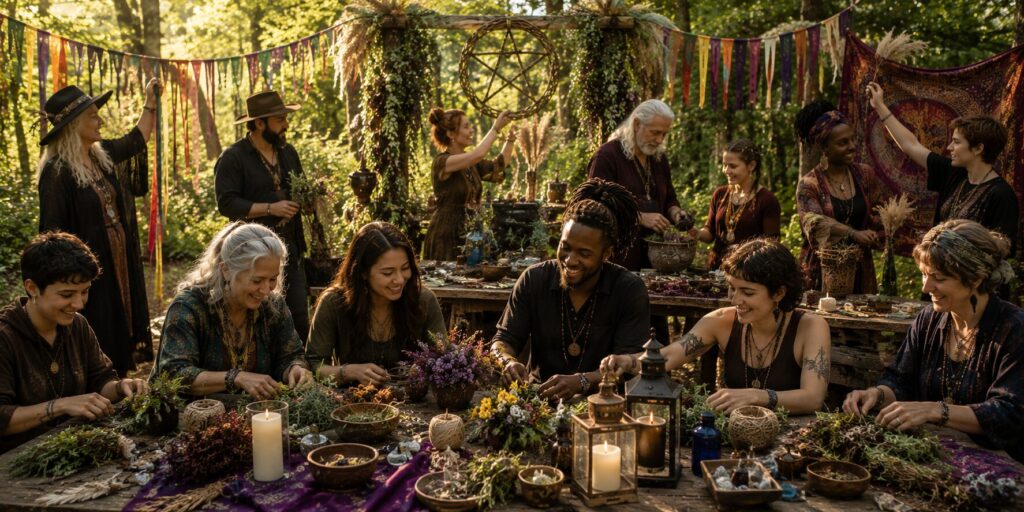
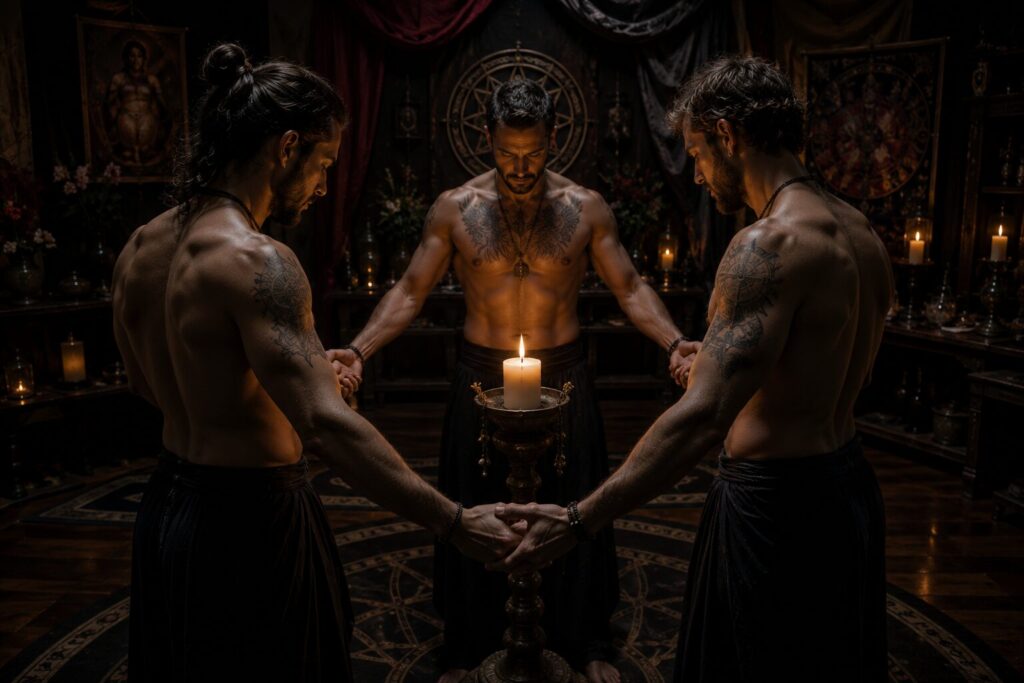
The word carries an inherited history of accusation. Reclaiming it means remembering that history without allowing fear to speak the final definition.
Many Voices · A Living Community

Difference, Diversity, and the Living Community

Witchcraft and Pagan community do not form one single tradition with one history, one theology, one authority, or one correct style of practice. We are a living collection of paths, cultures, lineages, philosophies, identities, and personal journeys.

Diversity appears not only in who we are, but in how we understand the world. Some practitioners are polytheists, while others approach divinity through symbolism, nature, psychology, animism, pantheism, agnosticism, or a mixture that does not fit neatly into one category.

Some work within formal traditions or initiatory covens. Others are solitary, eclectic, reconstructionist, devotional, folk-oriented, or still discovering what language best describes them. Some focus upon spellcraft, while others emphasize ritual, service, study, healing, land, spirits, art, family practice, or relationships with particular gods.

A healthy community does not require those differences to disappear. It asks whether we can remain curious, respectful, and accountable while sharing space with people whose beliefs and experiences are not identical to our own.

“The Goddess, like nature, loves diversity.”
Starhawk , The Spiral Dance

Starhawk’s statement arises from a Goddess-centered tradition, but the wider principle reaches beyond any one theology. Living systems do not become resilient by making every part identical. They develop through relationship among different forms, roles, strengths, and ways of responding to the world.

Human communities are not ecosystems in a purely literal sense, but they also become narrower and less capable when only one type of person, body, background, experience, or viewpoint is permitted to define what is normal.

Listen Before Assuming
Allow people to explain their own beliefs, identities, traditions, and experiences rather than deciding what they must mean.
Make Room
Inclusion is not simply allowing others to enter. It also means creating space in which they can participate without becoming copies of those already present.
Respect Boundaries
Community does not require unlimited access to every person, tradition, experience, or sacred practice.
Learn and Revise
None of us enters community free from assumptions. Growth requires a willingness to learn, unlearn, apologize, and change.

Diversity includes differences in culture, race, ethnicity, gender, sexuality, age, body, disability, class, location, family structure, education, access, theology, and magical experience. These dimensions shape what resources are available to us, what risks we carry, and how freely we can participate.

Diversity does not mean that every claim must be accepted, every disagreement avoided, or every practice treated as equally ethical. Communities still need discernment, boundaries, standards of conduct, and the ability to address harm.

Nor should difference become a hierarchy of worth. A reconstructionist is not automatically more authentic than an eclectic practitioner. An initiate is not more human than a solitary. A devotional relationship is not necessarily deeper than a symbolic one. Experience deserves respect, but it does not make one person’s path the measure of all others.

The living community grows when people can bring their real paths into relationship—sharing what can be shared, protecting what must be protected, challenging harm, and allowing one another to remain distinct.

Unity does not require uniformity. Community becomes stronger when many voices can remain recognizable within the shared conversation.
The Language Beneath the Path

Practice, Identity, Belief, and Will

Words such as practice, identity, belief, and will are often used together, but they describe different parts of spiritual and magical life. Understanding the distinction can help explain how people with very different worldviews may still recognize something familiar in one another’s work.

These parts influence one another, but none automatically determines all the rest. Two people may perform the same ritual while explaining it differently. Two people may share an identity while practicing in very different ways. A person may also practice sincerely while remaining uncertain about the ultimate nature of what they experience.

Practice
What someone repeatedly does through ritual, spellwork, devotion, study, divination, observation, or disciplined magical activity.
Identity
How someone understands, names, and situates themselves within a spiritual, magical, religious, cultural, or communal landscape.
Belief
The ideas through which someone interprets divinity, spirit, consciousness, nature, symbolism, causation, and magical experience.
Will
The disciplined direction of attention, intention, choice, energy, and action toward a consciously held purpose.

Practice is observable, at least in part: a candle is lit, words are spoken, an offering is made, a record is kept, or a ritual action is performed. Identity concerns the meaning a person gives to their place within that work. Belief provides one or more explanations for why the practice matters and what may be occurring.

Will is the focusing movement that carries intention into action. Within many magical systems, belief strengthens will by giving it structure, emotional force, symbolic coherence, and confidence. Belief can help a practitioner commit fully to a working rather than approaching it with scattered or divided attention.

Yet practitioners do not all require identical beliefs in order to focus magical work. One may understand a spirit as an independent being, another as an archetypal presence, and another may suspend judgment while working through the ritual relationship itself. Their explanations differ, but each may still bring disciplined will, attention, preparation, and purpose to the act.

This does not make belief meaningless. Belief shapes expectations, ethics, symbolism, interpretation, and the kinds of relationships a practitioner believes are possible. It may support and organize the will, but will is what gives magical intention direction—regardless of whether practitioners agree about the unseen structure behind it.

Similar Practice, Different Belief

Two people may cast a circle or make an offering while holding very different ideas about deity, energy, symbolism, spirit, or the nature of ritual itself.

Shared Identity, Different Practice

Two people may both identify as witches while one emphasizes devotional ritual and the other focuses upon practical spellcraft, folklore, divination, or household magic.

Shared language can also conceal difference. Words such as energy, spirit, manifestation, divine, and even magic do not carry one universally accepted meaning. Understanding another practitioner often requires asking what they mean rather than assuming that familiar words prove familiar beliefs.

Clear language cannot remove every disagreement, but it helps us distinguish real differences from arguments created by terminology. It also allows practitioners to speak more honestly about what they believe, what they have experienced, what they practice, and what remains unknown.

Belief may give will structure and strength, but will is what focuses intention into chosen action. Practice, identity, and explanation may differ even where that focused movement is shared.
Power · Consent · Accountability

The Ethical Ground Beneath the Work

Shared practice requires more than common symbols or compatible beliefs. It requires an ethical ground strong enough to hold difference, power, uncertainty, and disagreement without allowing carelessness to become harm.

Magic is often described as the shaping of intention through will, symbol, relationship, and action. That makes ethics inseparable from practice. What we choose to seek, influence, promise, reveal, protect, or interfere with matters as much as the method used to do it.

Ethical practice does not mean that every witch must follow one universal rulebook. Traditions differ in theology, custom, and judgment. Some emphasize strict prohibitions, while others evaluate context, consequence, relationship, necessity, or responsibility.

Yet meaningful cooperation becomes difficult without certain shared commitments: honesty, consent, accountability, cultural awareness, humility, and respect for the dignity and boundaries of others.

Respect
Treat people, traditions, spirits, communities, and sacred relationships as more than tools for personal use.
Consent
Recognize that another person’s body, privacy, relationships, choices, and spiritual life are not automatically ours to direct.
Honesty
Be truthful about sources, experience, training, uncertainty, results, limitations, and the origins of what we teach.
Accountability
Accept responsibility for choices, consequences, promises, mistakes, and the need to repair harm where possible.
Humility
Remember that meaningful experience does not make us infallible, omniscient, or qualified to speak beyond what we know.
Cultural Awareness
Consider origin, history, power, access, community boundaries, and the people whose traditions inform our work.
Discernment
Examine claims, motives, risks, evidence, intuition, and consequences before accepting or acting.
Willingness to Revise
Let better information, deeper reflection, and honest correction change the way we understand and practice.

Ethics also includes how power is held within groups. Teachers, readers, clergy, healers, coven leaders, experienced practitioners, and people offering spiritual services may be trusted with vulnerable information or significant influence. That trust should never be treated as permission to create dependency, demand obedience, exploit fear, or isolate someone from outside support.

Spiritual language does not excuse manipulation. Claims of divine instruction, psychic certainty, energetic danger, fate, initiation, or special authority should never be used to override consent or pressure someone into money, sex, secrecy, loyalty, or continued spiritual work.

Nor does ethics require passivity. Protection, boundaries, confrontation, refusal, and consequences may all be necessary. Compassion does not mean allowing harm to continue, and respect does not require pretending that every action or teaching is equally responsible.

Ethical judgment is therefore not a decorative layer added after practice. It is part of the practice itself: the discipline of deciding what should be done, what should not be done, what must be questioned, and what responsibility remains afterward.

Questions Beneath the Working

Who may be affected by this choice?
Whose consent or privacy is involved?
What authority am I claiming?
What do I know, and what am I assuming?
What consequences am I prepared to accept?
What would responsibility require afterward?

My Cousin’s Coven does not expect every practitioner to reach the same conclusion in every situation. We do expect the questions to be taken seriously. Ethical practice begins in the willingness to ask them before will becomes action.
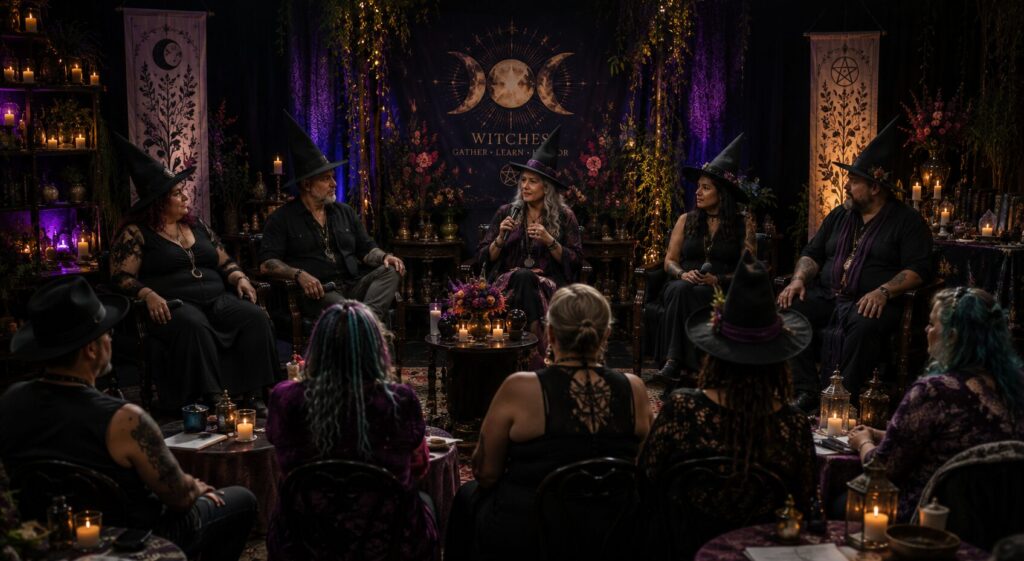
Ethics is not separate from magical power. It is the discipline that determines how power is carried, where it stops, and what we owe to others when we choose to act.
Knowledge as Living Work

Study and Writing as Practice

My Cousin’s Coven is an information-sharing project as much as a spiritual and magical one. Each page begins broadly and unfolds into greater depth, bringing history, symbolism, practical experience, interpretation, and reflection into conversation.

We understand study as part of practice rather than preparation that happens somewhere outside it. Reading carefully, tracing a claim to its source, comparing interpretations, recording experience, and reconsidering an old conclusion can all shape the way a person approaches ritual, relationship, and magical work.

Writing also asks something of the writer. To explain an idea is to examine whether it is clear. To describe a tradition is to consider whether it has been represented fairly. To share advice is to accept responsibility for the effect those words may have upon someone else’s choices.

For us, research and reflection are not substitutes for lived practice, nor is personal experience a substitute for every kind of evidence. Each can challenge, refine, and deepen the other.

To learn is to listen;
to write is to speak back with care.
Knowledge becomes part of the work when it changes how carefully we observe, how honestly we speak, and how responsibly we act.
Study
Listening to sources, traditions, history, teachers, evidence, and experiences beyond our own.
Reflection
Examining how knowledge meets belief, experience, uncertainty, ethics, and the realities of practice.
Writing
Giving ideas a form that can be examined, questioned, corrected, remembered, and shared with others.
Study becomes practice when it changes how we see. Writing becomes practice when it asks us to answer for what we place into the shared conversation.
Many Voices · Earned Wisdom

No Single Voice Defines the Path

Within My Cousin’s Coven, no single person defines the whole path. Our members and contributors bring different traditions, philosophies, practices, histories, and ways of understanding spiritual and magical experience.

We do not always reach the same conclusion. One person may approach a deity devotionally while another understands the same figure through mythology, symbolism, or ritual relationship. One may favor inherited structure while another learns through experimentation and personal practice.

These differences are not automatically weaknesses in the work. They can reveal assumptions, expose gaps, and prevent one person’s experience from being mistaken for a universal rule.

At the same time, respecting multiple voices does not mean pretending that experience, training, and sustained study carry no weight. Some people have walked a path longer, studied a tradition more deeply, practiced a skill repeatedly, or accepted responsibilities that others have not yet encountered.

The Value of Mentorship

A thoughtful teacher can help a practitioner avoid preventable mistakes, understand context, develop discipline, and recognize questions they would not yet know to ask. Good mentorship can shorten confusion without attempting to shorten the path itself.

To learn from someone more experienced is not to surrender personal authority. It is to recognize that independence and humility can coexist—and that wisdom is often carried through relationship.

Responsible Mentorship

A responsible mentor explains the scope of their knowledge, encourages questions, respects consent, distinguishes tradition from personal preference, and wants the learner to become more capable rather than more dependent.

Unquestionable Authority

Authority becomes unhealthy when a teacher cannot be questioned, demands obedience outside the work, conceals ordinary preferences behind claims of divine command, or treats another person’s growth as a threat to their position.
Listen
Hear what another person has learned before assuming that a different conclusion means nothing was understood.
Question
Respect does not forbid careful questions, requests for context, or disagreement with a teacher’s interpretation.
Acknowledge Depth
Honor the time, discipline, initiation, service, and experience through which genuine knowledge has been developed.
Retain Discernment
Experience deserves consideration, but no person becomes incapable of error, bias, misuse of power, or incomplete understanding.

Collective work does not mean that every voice contributes in the same way at every moment. A specialist may lead discussion within their area. A teacher may guide a student through foundational material. An initiate may carry responsibilities or knowledge that are not yet available to someone outside that path.

The difference lies between recognizing earned depth and creating an unquestionable hierarchy of human worth. Greater experience may support greater responsibility or authority within a particular field, but it does not make one person’s dignity greater than another’s.

A good teacher does not need every student to become a replica. A healthy tradition can transmit its essential structure while still allowing each practitioner’s understanding, talents, and responsibilities to mature over time.

No single voice defines the path, but every responsible voice can add something to it. The work grows through dialogue between experience and curiosity, inheritance and interpretation, teaching and discovery.

Personal authority allows us to walk our own path. Mentorship reminds us that we do not have to discover every part of it alone.
Source · Interpretation · Experience

Ancient Sources, Modern Sources, and Living Experience

The study of magic and spirituality is never finished. We encounter fragments from the ancient world, inherited stories, historical records, ritual texts, folklore, modern scholarship, contemporary teachers, and the testimony of people practicing now.

Each kind of source can offer something valuable, but no single kind answers every question. An old text may show what one writer or community believed without representing an entire culture. A modern book may make difficult material accessible while also reflecting the author’s own assumptions. Lived experience may reveal how a practice functions for someone without establishing that every person will experience it in the same way.

Responsible study asks us to understand what kind of information we are holding, what it can reasonably support, and where uncertainty remains.

Ancient and Historical Sources

Texts, objects, records, inscriptions, art, folklore, and surviving ritual material can bring us closer to earlier worlds. They must still be translated, dated, interpreted, and placed within their own cultural setting.

Modern Scholarship and Interpretation

Historians, folklorists, religious scholars, archaeologists, translators, and contemporary practitioners compare evidence, challenge older conclusions, and offer new ways of understanding what has survived.

Living Experience

Practice reveals how teachings are embodied, adapted, tested, remembered, and passed between people. Experience gives knowledge life, while reflection helps us distinguish personal meaning from universal claim.

Age alone does not make a source accurate, complete, or spiritually superior. Ancient writers disagreed with one another, repeated rumors, served political interests, interpreted older material, and wrote from within the limitations of their own societies.

Modernity does not automatically make a source shallow or inauthentic either. Contemporary scholars may have access to wider bodies of evidence, improved dating and translation, comparison across cultures, and perspectives excluded from earlier accounts. Modern practitioners also participate in the continuing development of living traditions rather than merely imitating the past.

The task is not to choose between old and new as though one must defeat the other. It is to ask what each source is, what question it can help answer, whose voice it preserves, whose voice may be missing, and how later interpretation has shaped what we now receive.

Knowing What Kind of Claim We Are Making

Evidence
What surviving material, records, observation, or reliable documentation can reasonably establish.
Interpretation
The meaning drawn from evidence through comparison, reasoning, context, theory, or symbolic reading.
Belief
A spiritual, religious, philosophical, or magical understanding that may guide practice without being historically provable.
Experience
What a person has perceived, practiced, or learned through lived encounter, recorded honestly without requiring universal agreement.

These categories can overlap. Interpretation grows from evidence. Belief shapes the meaning given to experience. Experience may inspire new questions for scholarship. Problems arise when one kind of claim is presented as another—when personal revelation is called historical fact, when speculation is described as established tradition, or when missing evidence is treated as proof of whatever we most wish to believe.

We seek accuracy where it is possible and humility where mystery remains. Not knowing is not failure. Sometimes it is the most honest position available and the beginning of a better question.

“By writing about the past they may come to help change the present.”

Writing about the past changes the present because the histories we tell shape identity, authority, ritual, and the possibilities we imagine for the future. Better history does not remove mystery or spiritual meaning. It gives them firmer ground from which to speak.

Our task is not to freeze tradition at one historical moment, nor to invent freely while hiding the invention. It is to know what has been inherited, acknowledge what has been lost, identify what has been newly created, and participate honestly in what the tradition is becoming.
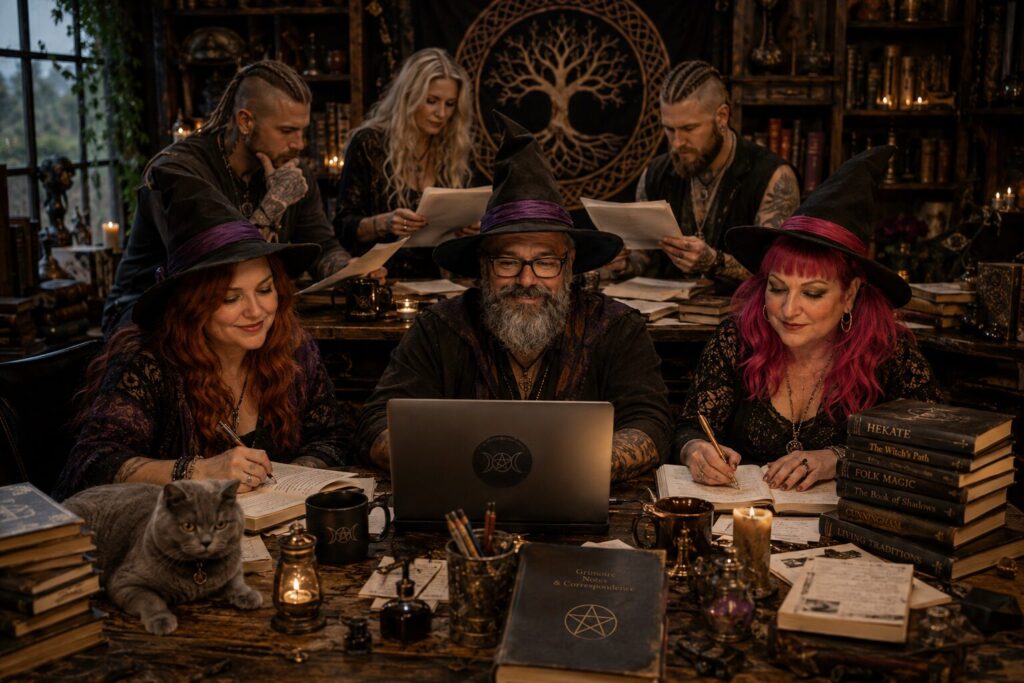
We study the past without pretending that it can be recovered perfectly. We practice in the present without pretending that everything newly created is ancient.
Read · Question · Correct · Return

Review, Correction, and Collective Refinement

The pages within My Cousin’s Coven are not written once and treated as permanently complete. They are part of a continuing process of research, discussion, drafting, reading, correction, and return.

An idea may begin with one member’s knowledge or experience, but the finished page rarely belongs to one voice alone. Sources are compared, language is reconsidered, practical claims are questioned, and different readers may notice omissions or assumptions that the original writer could not see.

Collective review does not guarantee perfection. It does make the work more accountable. When several people examine a page from different backgrounds and areas of practice, the result is less likely to depend entirely upon one person’s memory, preference, or interpretation.

Publication is therefore not the end of the process. New evidence, clearer explanations, reader questions, changed understanding, and honest criticism may all give us reason to return and revise.

Research
Gather sources, trace claims, compare interpretations, and identify what can be established and what remains uncertain.
Draft
Give the subject an initial structure, explain the larger idea, and allow the material to unfold into depth.
Review
Read for clarity, accuracy, tone, missing context, ethical concerns, practical usefulness, and unintended implications.
Revise
Rewrite where needed, clarify distinctions, correct errors, and strengthen the relationship between evidence and interpretation.
Publish
Offer the page as our best current understanding—not as a final, unquestionable statement.
Return
Revisit the work when better information, experience, feedback, or clearer language gives us reason to change it.

Correction Is Part of the Work

Discovering that a statement is incomplete or mistaken does not invalidate the entire project. Refusing to correct it would do far greater damage.

A living resource should be capable of learning. Correction shows that accuracy matters more than preserving the appearance of having always been right.

Feedback can come from within the coven, from specialists, from readers, or from people whose traditions and experiences reveal something we overlooked. Not every criticism will lead to a change, but responsible criticism deserves consideration rather than automatic defensiveness.

Review also includes more than factual correction. A sentence may be technically accurate but misleading without context. A page may need clearer boundaries between history and belief. Advice may require stronger cautions, better sources, or acknowledgment of people whose perspectives were absent.

Revision does not always mean replacing what came before. Sometimes it means adding nuance, naming disagreement, linking to deeper material, or making clear that an interpretation belongs to a particular practitioner rather than to every witch or Pagan.

Discussion, correction, and feedback are part of our rhythm; they keep the current alive. The work remains living because it can respond to what it encounters.

A Stronger Revision

Clarifies what changed, incorporates better evidence, represents disagreement honestly, and leaves the reader with a more accurate understanding.

A Cosmetic Revision

Changes language while avoiding the underlying problem, hides an error without acknowledging it, or protects authority at the expense of clearer understanding.

We share what we know as carefully as we can, while accepting that every serious body of work remains open to deeper reading, better questions, and responsible change.

The goal is not to appear incapable of error. It is to build a body of work capable of recognizing error, learning from it, and becoming more useful because it did.
Guidance · Conversation · Choice

Invitations, Not Commandments

The words that fill these pages are not commandments. They are invitations to look more closely, think more deeply, compare perspectives, and consider how knowledge might become responsible practice.

We share explanations, traditions, methods, experiences, and conclusions that have been useful to us. Readers are not expected to accept every interpretation or reproduce every practice exactly as it appears here.

A useful resource should help people become more capable of asking their own questions—not more dependent upon someone else to answer every question for them. It should offer context without closing inquiry, direction without demanding obedience, and caution without extinguishing curiosity.

We encourage readers to examine sources, learn from experienced practitioners, listen to communities whose traditions are being discussed, and allow practice to test what reading first introduces. Agreement is not required for the conversation to be worthwhile.

Think Deeply
Ask what a claim means, what supports it, and how it fits within the larger subject.
Question Kindly
Curiosity and disagreement can remain direct without becoming dismissive, hostile, or careless.
Practice Responsibly
Let ethics, preparation, context, and honest reflection accompany magical intention.
Find Your Way
Use what proves meaningful, continue learning, and allow your path to develop with experience.
We write to understand, and we share what emerges—not as the final boundary of the path, but as a doorway into further exploration.

Readers may discover that a question requires more context than one page can provide, or that their circumstances do not fit a general explanation. Some subjects are easier to understand through direct conversation than through another paragraph.

Questions, suggestions, corrections, and thoughtful differences of perspective are welcome. We may not have every answer, but we will help when we can and listen when another person sees something we have missed.

The work is shared when knowledge is offered with care and received with enough freedom to be questioned, examined, and made meaningful.
The Living Current

The Conversation Continues

We share what we have learned, what practice has shown us, what history can support, and what remains unresolved. We also share the questions that continue to follow us, because uncertainty can be as important to honest work as certainty.

Others will see differently, notice what we have missed, remember another version of the story, or carry the conversation somewhere new. That is not a weakness in the work. It is part of the work.

Witchcraft, Wicca, Paganism, and the wider esoteric world remain living because people continue to practice, question, interpret, preserve, challenge, and create. Tradition gives us something to inherit; experience gives us something to add.

We hope these pages offer useful beginnings, deeper pathways, and enough room for readers to develop understanding that is informed, ethical, and genuinely their own.

Here begins the conversation that keeps the current alive.
Read deeply. Practice thoughtfully. Question honestly. Share with care.

You cannot copy content of this page